Louisiana Gopher Tortoise Range
Y'all ever been out in the woods, maybe scouting for deer or calling turkeys, and stumbled across something completely unexpected? Louisiana's landscapes are full of surprises, and one of the most unique residents you might encounter, though it's pretty rare, is the gopher tortoise. While many of us are focused on game animals, understanding the range and needs of creatures like the gopher tortoise is part of being a well-rounded outdoors person, especially since they're quite particular about where they live. This guide is all about shedding light on this fascinating reptile, its specific stomping grounds in our state, and why its presence is so vital.
Understanding the Gopher Tortoise: What it Is and Why it Matters
The gopher tortoise isn't your average turtle found in a bayou. It's a land-dwelling reptile, a true relic of ancient ecosystems, and a creature that plays an outsized role in the health of its environment. Many hunters might not even realize we have a native tortoise here in Louisiana, so let's get acquainted with this unique resident.
The Keystone Species of the Longleaf Pine
When you hear "keystone species," think of it like the central stone in an archway – remove it, and the whole structure crumbles. That's the gopher tortoise for the longleaf pine ecosystem. These tortoises dig extensive burrows that can be incredibly deep, sometimes over 30 feet long and 10 feet deep. These burrows aren't just for them; they serve as critical refuges for hundreds of other species, including insects, snakes, frogs, rabbits, and even bobcats, especially during wildfires, extreme weather, or when predators are about. Imagine a wildfire sweeping through a pine forest; these burrows become underground bunkers, protecting countless animals. Without the gopher tortoise, a whole community of creatures would lose their safe haven, fundamentally altering the entire habitat. This interconnectedness is a prime example of why species beyond the ones we hunt are so important to the overall health of the land we cherish.
Physical Characteristics and Lifestyle
Gopher tortoises are pretty distinctive. They're medium-sized, typically growing up to about 15 inches long, with sturdy, elephantine legs and flattened, shovel-like front feet perfectly adapted for digging. Their shells are somewhat dome-shaped, usually a dull brown or gray, which helps them blend into their sandy, forest floor environment. Unlike aquatic turtles, they don't have webbed feet. They are herbivores, primarily munching on grasses, legumes, and fruits, which means they're constantly foraging across their specific habitats. They're also diurnal, meaning they're active during the day, especially in the mornings and late afternoons when temperatures are milder. You won't find them swimming in a pond or scaling a tree; their world is firmly on the sandy ground, revolving around their burrows. This slow, deliberate lifestyle, and their reliance on a specific type of habitat, makes them particularly vulnerable to changes in their environment.
Pinpointing the Louisiana Gopher Tortoise Range
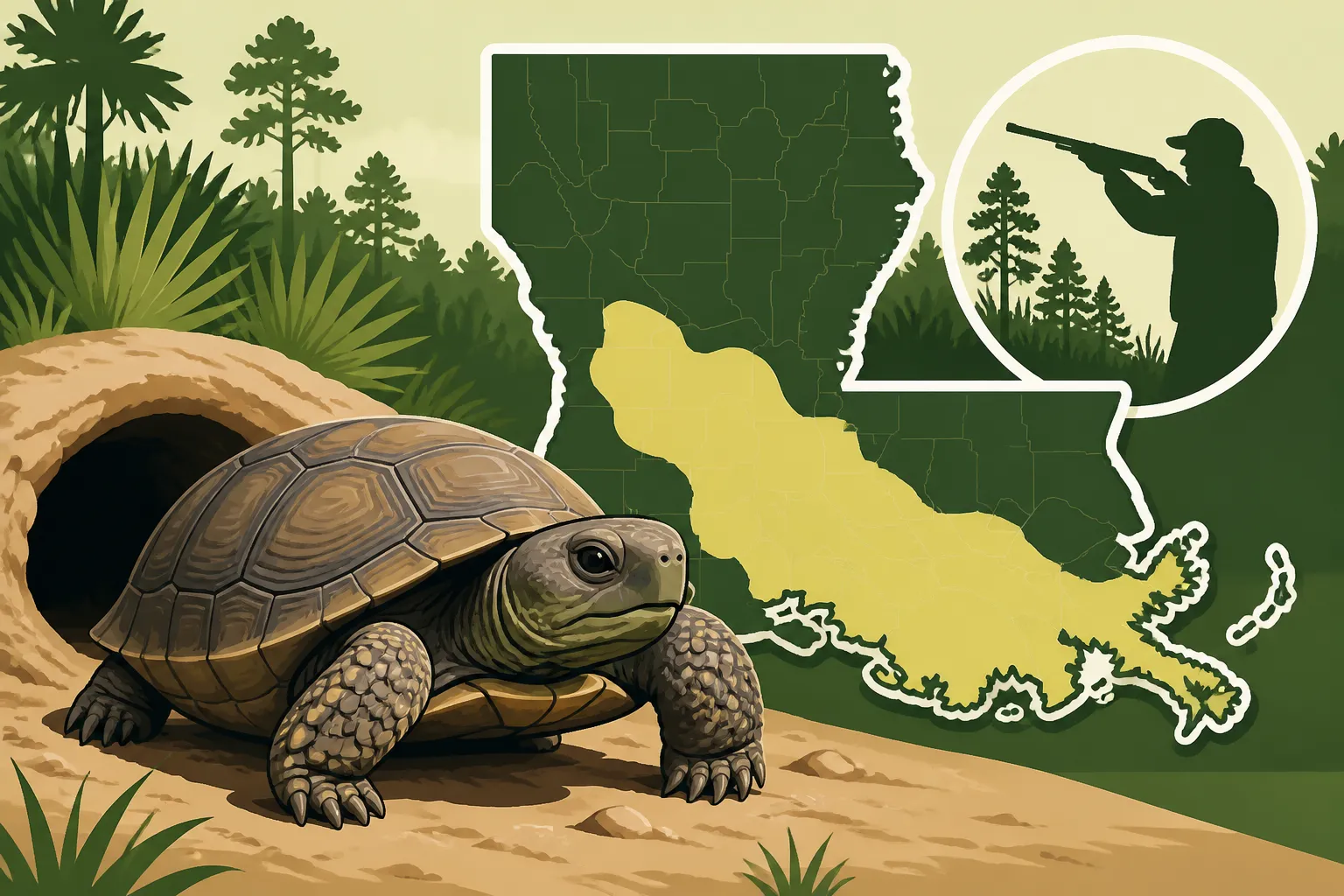
Now, if you're thinking, "I've never seen one of these," you're not alone. The gopher tortoise's range in Louisiana is quite limited, making any sighting a truly special event. They aren't found statewide; they have very specific habitat requirements that narrow down their presence to a few key areas.
Historical Presence and Current Strongholds
Historically, gopher tortoises were found across much of the longleaf pine forests that once dominated the southeastern United States, including parts of western and central Louisiana. These days, their presence in Louisiana is considerably smaller. The bulk of Louisiana's gopher tortoise population, and certainly its most significant stronghold, is found in the Kisatchie National Forest, particularly within the Vernon Unit and the Kisatchie Hills Wilderness Boundaries. This area, with its sandy soils and remaining longleaf pine stands, provides the specific conditions these tortoises need to thrive. They prefer well-drained, sandy soils for digging their burrows and open, sunny areas with plenty of herbaceous vegetation for food. While some isolated, smaller populations might exist on private lands that mimic this habitat, the Kisatchie National Forest is undeniably the most crucial public land for this species in our state. Anyone Scouting Louisiana Public Land Before Season in this region should be aware of these unique inhabitants.
The Crucial Role of Longleaf Pine Habitat
You can't talk about gopher tortoises without talking about longleaf pine. These two are intrinsically linked. Longleaf pine forests, characterized by widely spaced trees, a sparse canopy, and a rich, diverse herbaceous understory maintained by frequent, low-intensity fires, are the gopher tortoise's ideal home. The sandy soils allow for easy burrow excavation, and the open understory provides abundant sunlight for the low-growing plants that make up their diet. Over the last century, vast expanses of longleaf pine forest were harvested and replaced with faster-growing pine species or converted to agriculture. This massive habitat loss is the primary reason for the gopher tortoise's decline. Without mature longleaf ecosystems, the tortoises simply can't survive. Efforts to restore longleaf pine are not just about trees; they're about bringing back an entire ecosystem, including iconic species like the gopher tortoise. Tools like those found on GoHunt can help visualize these specific habitat types when planning excursions.
Conservation Challenges and Efforts in Louisiana
The gopher tortoise faces an uphill battle for survival, and understanding these challenges helps us appreciate the efforts being made to protect them. Their struggles are a stark reminder of how quickly habitats can change and impact even the most resilient creatures.
Habitat Loss and Fragmentation
The single biggest threat to gopher tortoises is the continued loss and fragmentation of their longleaf pine habitat. When forests are clear-cut, developed, or converted to other land uses, it directly destroys tortoise burrows and eliminates their food sources. Even if some habitat remains, if it's broken up into small, isolated patches, populations can't connect, leading to genetic isolation and making them more vulnerable to local extinctions. Imagine a population of tortoises on one side of a new highway, unable to reach suitable habitat on the other side. This "fragmentation" stops natural migration and makes it impossible for them to find new mates or colonize new areas. This isn't just an issue for tortoises; many species, including deer, struggle with fragmented landscapes that break up traditional travel corridors and food sources. It's a significant challenge that requires broad-scale conservation strategies.
State and Federal Protection Status
Because of these threats, the gopher tortoise is a protected species. Federally, the tortoise is listed as "Threatened" under the Endangered Species Act in the western part of its range, which includes Louisiana. This federal protection means it's illegal to harass, harm, capture, or kill a gopher tortoise, or to damage its burrows. On the state level, Louisiana has also afforded protection to the gopher tortoise. This dual protection underscores the severity of its situation and the commitment to its recovery. For hunters, this is crucial information. While you're unlikely to specifically target gopher tortoises (they are, after all, game you cannot hunt in Louisiana), knowing their protected status means if you encounter one, or a burrow, you need to exercise extreme caution and avoid any disturbance. These regulations exist to give these vulnerable populations a fighting chance to recover.
Gopher Tortoises and Louisiana Hunters
While gopher tortoises aren't game animals, hunters spend more time immersed in Louisiana's natural environments than most. This unique position means we have a role to play, however small, in understanding and respecting all wildlife, including protected species like the gopher tortoise.
Encounters in the Field: What to Do
The chances of encountering a gopher tortoise in Louisiana are slim, given their limited range. But if you're hunting in or around the Kisatchie National Forest, especially in areas with sandy soils and open pine stands, it's not impossible. If you do happen to spot one, consider yourself lucky! The best thing you can do is observe it from a distance and leave it undisturbed. Never attempt to pick it up, move it, or harass it in any way. Remember, they're federally protected, and disturbing them is against the law. If you come across a burrow, treat it with the same respect. Avoid driving ATVs over them, or intentionally collapsing them, as these burrows are vital homes for many creatures. A quick photo from a distance is fine, but otherwise, just appreciate the rare sighting and continue your hunt, leaving the tortoise to its peaceful existence.
Supporting Tortoise Conservation Through Habitat
For those who own or manage private land, or for hunters involved in clubs on leased property, there's a real opportunity to support gopher tortoise conservation by promoting and restoring longleaf pine habitat. Even if you don't have tortoises on your property, restoring longleaf benefits countless other species, from quail to deer, that thrive in that ecosystem. This might involve prescribed burning to maintain an open understory, planting native longleaf seedlings, or removing invasive species. Many Louisiana Wildlife Management Areas are actively engaged in habitat management that benefits these ecosystems. By learning about and potentially participating in such efforts, hunters can contribute significantly to broader conservation goals. Understanding the subtle nuances of Reading Aerial Photos for Central Louisiana Deer can also help in identifying potential longleaf stands or suitable tortoise habitat.
Table: Gopher Tortoise Habitat Preferences vs. Common Louisiana Habitats
| Feature | Gopher Tortoise Preferred Habitat (Longleaf Pine) | Typical Louisiana Bottomland Hardwood | Typical Louisiana Coastal Marsh |
|---|---|---|---|
| Soil Type | Well-drained, sandy soils | Loamy, often poorly drained | Mucky, saturated, brackish |
| Tree Canopy | Open, sparse canopy | Dense, closed canopy | Sparse trees, mostly grasses |
| Understory | Abundant herbaceous plants, grasses | Dense shrubs, vines, sparse grasses | Marsh grasses, emergent aquatics |
| Water Proximity | Upland, rarely near standing water | Flood-prone, near rivers/sloughs | Directly in or near water |
| Fire Regime | Fire-adapted, frequent low-intensity fires | Less fire-adapted, rarer fires | Limited fire, or marsh fires |
| Key Species | Longleaf pine, wiregrass, gopher tortoise | Cypress, tupelo, oaks, deer, hogs | Cordgrass, ducks, alligators |
This table really highlights just how specific the gopher tortoise's habitat needs are, setting it apart from the more generalized habitats many of our game species call home.
How to Identify Gopher Tortoise Sign
Since spotting an actual gopher tortoise can be like finding a needle in a haystack, learning to identify their burrows is often the best way to confirm their presence in an area. Knowing what to look for can turn a regular scouting trip into a mini-wildlife expedition.
Recognizing Burrows and Feeding Habits
The most obvious sign of a gopher tortoise is its burrow. These aren't just simple holes; they're distinctive, half-moon shaped entrances, typically wider than they are tall, and often with a mound of excavated sand at the entrance. The shape is usually described as a "D" on its side. You'll often find distinct claw marks in the sand around the entrance from where the tortoise has been digging. The size of the burrow entrance can give you a clue about the size of the tortoise living there. Look for them on slight rises or well-drained areas within longleaf pine stands, or on sandy ridges. As for feeding, you might not see the tortoise eating, but you could notice patches of low-growing vegetation, like grasses and wildflowers, that look nipped off close to the ground. They're not picky, but they prefer fresh, tender growth, so look for these grazing patterns near their burrows. Using a detailed mapping app like GoHunt can help you mark potential burrow locations for future observation, helping you understand the local wildlife patterns.
Differentiating From Other Burrowing Animals
Louisiana has its fair share of burrowing critters, so it's important to differentiate a gopher tortoise burrow from, say, a armadillo, rabbit, or even a snake hole. Armadillo burrows tend to be more circular and often have a messier, more irregular appearance, with dirt scattered about rather than a neat pile. Rabbit burrows are typically smaller and rounder. While some snakes will use existing burrows, they don't dig their own in the same way, and their entry points are usually much smaller and less defined. The key indicators for a gopher tortoise burrow are that characteristic D-shape and the fan-shaped mound of sand at the entrance. If you're on public land, especially in areas like Kisatchie National Forest Hunting, recognizing these signs can make you an even more informed and respectful visitor to these sensitive habitats. It's all part of understanding the wild places we love to hunt.
Disclaimer
This article is for general informational purposes only and does not constitute professional advice. Laws, prices and regulations vary by location and change over time. Consult a qualified professional for guidance on your specific situation.