Crop Damage Hogs Cause in Louisiana
For Louisiana farmers, seeing their hard-earned crops laid to waste by rampaging feral hogs is a heartbreaking, wallet-emptying reality. It’s not just a minor annoyance; it’s a constant battle against an intelligent, prolific, and incredibly destructive force that can wipe out a season's profits overnight. This guide dives deep into the profound economic and ecological damage caused by feral hogs in Louisiana agriculture and explores practical strategies for managing this relentless pest.
The Silent Scourge: Understanding Feral Hog Damage in Louisiana Agriculture
If you've spent any time on a Louisiana farm, especially near timber edges or waterways, you've likely seen the tell-tale signs: fields that look like they've been rototilled, cornstalks snapped like matchsticks, and entire acres of prime crops flattened. This isn't just a nuisance; it's a full-blown agricultural crisis that costs Louisiana farmers millions of dollars annually. The sheer scale of the problem can feel overwhelming, leaving many wondering how to even begin fighting back against an enemy that seemingly multiplies overnight and disappears into the thickest cover as soon as you turn your back.
The Ever-Present Threat to Farmers
Imagine pouring your sweat and resources into planting a field of soybeans or corn, watching it grow day by day, only to wake up one morning and find swaths of it torn apart. That's the daily dread many Louisiana farmers face. Feral hogs aren't picky eaters; they'll devour almost anything, from tender young sprouts to mature crops ready for harvest. Their opportunistic feeding habits mean they can target different crops at various stages of growth, extending their destructive season virtually year-round. This makes planning and protection incredibly difficult, as a strategy that works for corn in spring might be useless against a mature sugarcane field in the fall. It's a constant game of cat and mouse, where the mouse seems to always be one step ahead, or more accurately, multiplying exponentially.
The impact isn't just about what they eat; it's about what they ruin. Their incessant rooting for grubs, bulbs, and roots disturbs the soil structure, leading to costly erosion. Their heavy bodies trample young plants, destroying far more than they consume. And their sheer numbers mean that even a "small" sounder can cause massive damage in a single night. This consistent pressure on agricultural lands forces farmers to invest in costly mitigation efforts, from fencing to baiting, diverting precious funds that could otherwise be used for improving yields or upgrading equipment. It's a tax on their livelihood that they never signed up for, and one that seems to grow heavier with each passing season as the hog population continues its relentless expansion.
Economic Impact Beyond the Field
The economic fallout from feral hog damage extends far beyond the immediate loss of crops. There are significant indirect costs that often go unnoticed or are difficult to quantify. For instance, the constant need for repair and maintenance on farm equipment damaged by running over deep hog ruts or obstacles they've unearthed can be substantial. Tires get punctured, cultivators get bent, and even heavy machinery can suffer stress from operating on uneven ground. Then there's the increased labor cost associated with managing the problem. Farmers or their hired hands spend countless hours scouting for hog sign, setting traps, repairing fences, and monitoring fields, time that could otherwise be dedicated to productive farming tasks.
Consider the ripple effect on crop insurance premiums or the reduced market value of a field that consistently suffers hog damage, making it less attractive to potential renters or buyers. Wildlife agencies and landowners also invest heavily in research and control programs, which, while necessary, represent a collective economic burden. In 2023, the Louisiana Department of Wildlife and Fisheries (LDWF) reported that feral hogs cause an estimated $90 million in agricultural damage annually across the state, a staggering figure that underscores the severity of this issue. This isn't just about individual farmers; it's a drain on Louisiana's agricultural economy as a whole, affecting everything from local co-ops to national food supplies.
Tracking the Rampage: How Hogs Devastate Louisiana Crops
Feral hogs aren't subtle in their destruction. Their methods are brutal and effective, often leaving behind a scene that looks like a small bulldozer has gone through the field. Understanding the specific ways they inflict damage is crucial for developing targeted strategies to protect crops. From the moment a seed is planted to the day of harvest, these animals pose a continuous threat, adapting their destructive habits to whatever food source is available.
Rooting, Trampling, and Eating: The Triple Threat
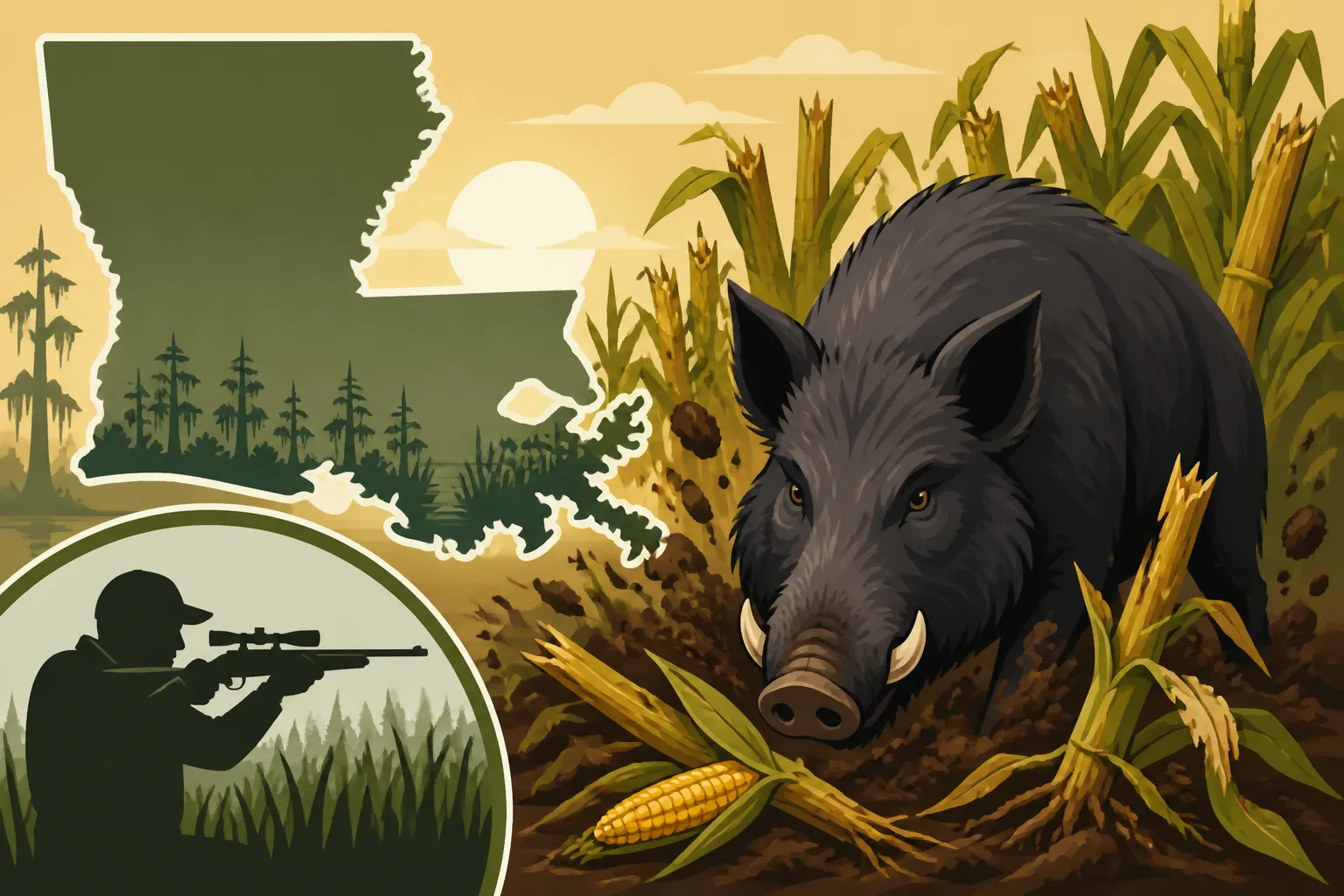
The most iconic sign of feral hog presence is their incessant rooting. These animals possess powerful snouts, often compared to a plow, which they use to dig several inches deep into the soil in search of tubers, roots, grubs, and fungi. When this happens in a cultivated field, it can be absolutely devastating. Young corn or soybean plants, with their shallow root systems, are easily uprooted and destroyed. Fields can be transformed from smooth, productive ground into a chaotic moonscape of craters and furrows, making mechanized harvesting nearly impossible without damaging equipment. Even if the plants aren't eaten, the mere act of rooting renders them unviable.
Beyond rooting, hogs are heavy animals, with mature boars often weighing over 200 pounds. A sounder of hogs moving through a field, especially one with young, tender plants, will trample and flatten a significant portion of the crop. This mechanical damage can be just as destructive as rooting, particularly for row crops or fields of wheat and rice. Imagine a sounder of ten or twenty hogs running through a young rice field – the flattened plants will often die or become so stunted they produce no grain. Then, of course, there's the eating. Hogs will consume virtually any crop, preferring high-energy options like corn, rice, and sweet potatoes. They'll strip ears of corn, dig up potatoes, and feast on ripe soybeans. For crops like sugarcane, they'll often bite off the stalk at the base, eating only the sweet interior and leaving the rest to rot, a particularly wasteful form of destruction.
Waterways and Infrastructure: Hidden Costs
The destruction caused by feral hogs isn't limited to the crops themselves. Their activities extend into critical farm infrastructure and natural waterways, creating a cascade of additional problems and costs. When hogs root along ditch banks, canal edges, and pond dams, they compromise the integrity of these structures. This can lead to increased erosion, sloughing of banks, and even breaches in critical irrigation or drainage systems. Imagine a hog rooting through a levee that protects a field from flooding; a small breach can quickly become a major washout with heavy rains, causing massive crop loss.
Furthermore, hogs frequently wallow in shallow water bodies to cool off and remove parasites. This activity stirs up sediment, contaminates water sources with their feces, and can spread diseases. This turbidity and contamination can negatively impact water quality for irrigation, livestock, and local aquatic ecosystems. Farmers might face increased costs for water filtration or be unable to use certain water sources due to contamination. They also damage fences, gates, and roads as they move through properties, requiring constant repair. A broken fence, for instance, not only allows hogs free access but can also lead to livestock escaping, adding another layer of management headaches and potential financial loss. It's a constant battle against their presence, where every piece of infrastructure is vulnerable.
The Domino Effect: Broader Ecological and Agricultural Consequences
The widespread damage inflicted by feral hogs isn't confined to immediate crop losses and farm infrastructure. These intelligent and adaptable animals trigger a broader ecological domino effect, impacting soil health, water quality, and even native wildlife populations. Their uncontrolled proliferation poses a significant threat to Louisiana's delicate ecosystems and long-term agricultural sustainability.
Soil Erosion and Water Quality Degradation
One of the less visible, yet profoundly damaging, impacts of feral hogs is their effect on soil. As discussed, their continuous rooting disrupts the soil structure, breaking up the natural root mats of plants and turning over compact layers. This churning action, especially prevalent in sensitive areas like riparian zones or sloped fields, drastically increases the susceptibility of soil to erosion. When heavy Louisiana rains hit, loose soil is easily washed away, carrying valuable topsoil and nutrients into waterways. This runoff not only depletes the fertility of agricultural lands but also deposits sediment into streams, rivers, and lakes, reducing water depth, impacting aquatic habitats, and potentially clogging irrigation intakes.
Moreover, the sheer volume of waste produced by large hog populations directly contaminates water bodies. Their feces contain high levels of nutrients and bacteria, including E. coli, which can degrade water quality, lead to algal blooms, and make water unsafe for human consumption or recreational use. This contamination can impact not only the farm's own water sources but also downstream communities and ecosystems. The introduction of these pollutants into Louisiana's bayous, rivers, and coastal marshes has significant environmental consequences, threatening native fish populations and overall water health. It’s a vicious cycle where agricultural damage directly contributes to broader environmental degradation, creating a problem far larger than just damaged crops.
Disease Transmission and Wildlife Interactions
Feral hogs are notorious carriers of numerous diseases and parasites that can pose a significant threat to both domestic livestock and native wildlife. This silent transmission is a major concern for Louisiana's agricultural sector and its rich biodiversity. They can transmit diseases like brucellosis, leptospirosis, salmonellosis, and pseudorabies (Aujeszky's disease) to cattle, sheep, goats, and even pets. While some of these diseases have minimal impact on humans, they can cause reproductive issues, sickness, and economic losses in livestock, forcing farmers to implement costly testing and quarantine measures.
Beyond domestic animals, hogs compete directly with native wildlife for food resources, especially acorns and other mast crops that are vital for deer, squirrels, and turkeys. This competition can impact the health and population dynamics of desirable game species. Furthermore, hogs are known to prey on ground-nesting birds, like quail and wild turkeys, and can destroy their nests and eggs. They also consume the fawns of white-tailed deer, adding another layer of predation pressure. The risk of disease transmission to native wildlife populations is also high; for instance, the spread of Chronic Wasting Disease (CWD) is a major concern in some areas, and while hogs don't carry CWD themselves, their habitat destruction and competition can indirectly stress deer populations, potentially making them more susceptible to other illnesses. Hunters play a crucial role in managing these populations, which is why understanding How Wild Hogs Spread Across Louisiana and Louisiana Feral Hog Regulations is so important for those who help control them.
Mitigation and Management: Strategies for Louisiana Landowners
Dealing with feral hogs requires a multi-faceted and persistent approach. There’s no silver bullet, but a combination of active control methods, exclusion techniques, and even working with state resources can significantly reduce their impact on your Louisiana property. Farmers and landowners must be proactive, adapting their strategies as hogs learn and change their behavior.
Active Control Methods and Their Challenges
Active control methods are often the first line of defense against feral hogs. Trapping is widely considered one of the most effective methods for removing large numbers of hogs, especially when targeting entire sounders. Modern hog traps, often equipped with remote monitoring and cellular triggers, allow landowners to capture multiple animals at once, significantly reducing the population pressure on crops. These can be simple corral traps or more sophisticated models. However, trapping requires consistent effort, strategic placement, and the right bait. Hogs are smart; they can become trap-shy if traps are not managed properly, making future efforts much harder. Knowing how to effectively use a bait site is crucial, and understanding Building and Freshening a Hog Bait Site can greatly improve success.
Hunting is another important control method, particularly for removing individual nuisance hogs or for recreational purposes. While recreational hunting alone rarely controls large populations, targeted hunting can be effective in reducing localized damage. Night hunting with lights, where legal on private land, can be incredibly efficient, especially when paired with thermal or night vision optics. This allows hunters to capitalize on hogs’ nocturnal feeding habits. However, hunting can also disperse sounders, spreading the problem to neighboring properties. Night Hunting Hogs With Lights on Private Land delves into the specific regulations and tactics. Combining hunting with trapping often yields the best results, ensuring constant pressure on the population. It’s a marathon, not a sprint, and consistency is key.
Exclusion Techniques and Deterrents
Sometimes, the best offense is a good defense. Exclusion techniques aim to prevent hogs from accessing vulnerable areas in the first place. Fencing is the most common and effective method, but it needs to be robust. Standard barbed wire fences designed for cattle are often insufficient. Hogs can crawl under, push through, or even jump over weaker fences. Electric fencing, particularly multi-strand designs with wires placed close to the ground, can be highly effective. The lowest wire should be no more than 6-8 inches off the ground, with additional wires at various heights to deter different-sized animals. While initial costs can be high, a well-maintained electric fence can save a tremendous amount in crop losses over time.
Other deterrents, such as noisemakers, lights, or even chemical repellents, have shown limited long-term success. Hogs are intelligent and quickly habituate to non-threatening stimuli. However, a combination of these elements, used intermittently, might provide temporary relief. For landowners looking to manage large tracts, especially for specific crop types, precise mapping tools can be invaluable. Using platforms like GoHunt, for instance, allows farmers to meticulously map out their fields, identify high-traffic hog areas, strategically place traps, and plan fence lines. This kind of detailed planning, leveraging technology to understand land features and hog movement, can transform random efforts into a highly organized and effective control strategy. By mapping out potential entry points and areas of frequent damage, resources can be allocated much more efficiently.
Collaborative Efforts and State Resources
The sheer scale of the feral hog problem often means that individual landowners cannot tackle it alone. Collaborative efforts among neighboring farmers and communities are essential. Hogs don't respect property lines, and a successful control program on one farm can be undermined if adjacent properties serve as refuges. Forming local partnerships to coordinate trapping efforts, share information on hog movements, and even collectively invest in larger traps or specialized equipment can lead to more widespread and lasting results.
The Louisiana Department of Wildlife and Fisheries (LDWF) offers various resources and guidance to landowners struggling with feral hogs. They provide information on effective control methods, conduct workshops, and occasionally participate in joint trapping efforts. Programs may include technical assistance for trap deployment or even loaning traps in some areas. Staying informed about state-level initiatives and participating in surveys helps biologists track hog populations and develop broader management strategies. Additionally, the USDA’s Natural Resources Conservation Service (NRCS) sometimes offers financial assistance for implementing conservation practices, which can include feral hog control measures. Landowners should reach out to their local extension office or LDWF representatives to inquire about available support and how to best integrate their efforts into a larger, regional management plan.
The Future of Hog Control: Innovation and Persistence
While the challenge of feral hogs in Louisiana agricultural lands is immense, it's not insurmountable. The continuous evolution of technology, combined with ongoing research and the unwavering persistence of landowners and wildlife managers, offers hope for more effective long-term solutions. The battle against these destructive animals is a testament to human ingenuity and determination.
Advanced Trapping and Surveillance Technologies
The future of feral hog control is increasingly linked to technological advancements. Traditional trapping methods are being augmented by sophisticated systems that make them more efficient and user-friendly. Remote-triggered traps, which can be monitored via cellular networks, allow landowners to observe hog activity at a bait site and close the trap door remotely once an entire sounder has entered. This maximizes capture rates and minimizes the risk of educating hogs to traps. These systems often integrate cameras that send real-time photos or videos, providing invaluable intelligence on sounder size, composition, and movement patterns.
Furthermore, thermal imaging drones and aerial surveillance are becoming more accessible, allowing landowners to locate hog populations in dense cover that would be impossible to scout on foot. This information can then be used to strategically place traps or plan targeted hunting efforts. Advanced mapping software, like those offered by GoHunt, is also evolving, providing not just property boundaries but also detailed topographical data, vegetation analysis, and the ability to overlay hog activity patterns. This data-driven approach allows for precise planning, optimizing trap placement and understanding hog travel corridors. The integration of artificial intelligence into these systems could one day predict hog movements based on environmental factors, crop cycles, and past observations, making control efforts even more proactive and efficient.
The Role of Hunters and Public Awareness
While farmers bear the brunt of crop damage, hunters play a vital role in population control. Louisiana's year-round hog hunting season on private land, with no bag limits, is a testament to the state's recognition of the problem. Encouraging responsible hunting, especially through methods like Hunting Louisiana's Year-Round Feral Hogs or organized community hunts, helps remove significant numbers of animals. Public awareness campaigns are also crucial, educating non-farming citizens about the ecological and economic damage caused by hogs. This can foster support for control programs and encourage more individuals to participate in hunting efforts where appropriate. Understanding Shot Placement on a Feral Hog ensures humane and effective harvesting, contributing positively to control efforts.
Another aspect is the responsible disposal and utilization of harvested hogs. While some meat is consumed, promoting processing and use can incentivize hunting. Additionally, continued research into hog biology, reproductive rates, and behavioral patterns is essential. The more we understand these animals, the better equipped we are to develop innovative and sustainable control strategies. The fight against feral hogs is a long-term commitment, requiring collaboration, adaptation, and a deep understanding of both the problem and the available solutions. By combining traditional knowledge with modern technology, Louisiana can strive for a future where agricultural lands are protected and ecosystems can thrive without the constant threat of this persistent pest.
| Crop Type | Typical Damage | Impact on Harvest | Season of Vulnerability |
|---|---|---|---|
| Corn | Rooting for seeds/sprouts, eating ears, trampling | Reduced yield, difficult machine harvest | Planting to mature (all stages) |
| Soybeans | Rooting for seeds, eating pods, trampling | Significant yield reduction, lodging | Planting to mature |
| Rice | Rooting young plants, eating grains, wallowing | Reduced stand, flattened fields, water contamination | Planting to mature, especially early |
| Sugarcane | Biting off stalks, eating sweet interior | Direct yield loss, waste, disease entry points | Mature cane (late summer/fall) |
| Sweet Potatoes | Extensive rooting, digging up tubers | Major crop loss, fields torn up, equipment damage | Growing season to harvest |
| Wheat/Oats | Grazing young sprouts, trampling, rooting | Reduced forage, bare spots, soil erosion | Fall/Winter (grazing season) |
Disclaimer
The information provided in this article is for general guidance and informational purposes only, and does not constitute professional advice. Hunting regulations and agricultural best practices can change, and it is always the responsibility of the individual to verify current laws and seek expert advice for their specific situation. Always prioritize safety and adherence to all local, state, and federal regulations when engaging in hunting or wildlife management activities.