Louisiana Rabbit Season Opening Day
There's a special kind of anticipation that builds when you're counting down to a hunting season opener, and for many, the start of rabbit season in Louisiana brings a unique blend of excitement and a touch of confusion. You've been thinking about those crisp mornings, the sound of beagles baying, or the thrill of busting a bunny from a briar patch, but before you head out, you're probably asking yourself, "When exactly does Louisiana rabbit season open?" It's not always as straightforward as it seems with different regulations for various lands and species, but don't you worry, this guide is here to clear up all that uncertainty, so you can hit the woods ready for action.
Understanding Louisiana's Rabbit Season Structure
Louisiana's rabbit season might seem like a simple affair on the surface, but like many things in the Sportsman's Paradise, there are nuances that hunters need to be aware of. It's not just a single, universal date; instead, it often intertwines with other hunting seasons and varies slightly depending on where you plan to chase those cottontails and swamp rabbits. Ignoring these details can quickly turn a fun outing into a frustrating one, or worse, a legal issue.
General Opening Dates and Deer Area Overlap
For most of us, the general rabbit season across private lands in Louisiana usually kicks off around the beginning of October. This early start means that rabbit hunting often overlaps quite a bit with the archery deer season. Imagine this: you're out bowhunting in the morning, and later in the day, you can swap your archery gear for a shotgun and chase rabbits. This dual-purpose timing is fantastic for maximizing your time afield, but it also means you need to be extra vigilant about safety, blaze orange requirements, and knowing exactly what’s in season for your specific location.
The Louisiana Department of Wildlife and Fisheries (LDWF) typically sets a statewide opening date for rabbits and squirrels on private lands that remains consistent year to year. However, it's crucial to remember that Wildlife Management Areas (WMAs) and National Wildlife Refuges (NWRs) often have their own unique season dates and regulations that can differ significantly from private land rules. For instance, some WMAs might open later, or have specific days of the week designated for small game hunting. Always check the individual WMA schedule before you plan your trip, because relying on the general statewide date could lead to disappointment. Knowing Finding Which Deer Area Your Parish Sits In can also be helpful for understanding the broader hunting landscape and how rabbit season fits in.
Public vs. Private Land Differences
This is where many hunters, especially those new to Louisiana or visiting from out of state, can get tripped up. The vast majority of our rabbit hunting happens on private land, which generally follows the simpler statewide season. If you have access to family land, a private lease, or have secured permission from a landowner, you'll likely be operating under these more straightforward rules. You'll still need to ensure you have all the necessary Louisiana Hunting Licenses and What They Cost, but the season dates are usually consistent.
However, if you're like many of us who rely on Louisiana's public hunting opportunities, WMAs and NWRs are a game-changer – but they also come with a different set of rules. WMAs, for example, are managed intensively for various game species, and their small game seasons are often staggered or have different closing dates to minimize conflict with other popular hunts, like deer or duck season. You might find a WMA that only opens for rabbits after the deer firearms season concludes, or one that has specific weekend-only hunts. This is where resources like the LDWF website and their mobile app become your best friend. They allow you to look up specific WMAs and their detailed regulations, so you don't show up on opening day only to find out you're a week early or that rabbit hunting isn't allowed that particular day. It's a bit of extra homework, but it's essential for a successful and legal hunt.
Daily Bag Limits and Possession Limits
When you finally get out there and those rabbits start hopping, it's easy to get caught up in the moment. But just like with any game species, Louisiana has strict daily bag limits and possession limits for rabbits to ensure sustainable populations. The daily bag limit refers to the maximum number of rabbits you can harvest in a single day. The possession limit, on the other hand, is the total number of rabbits you can have in your possession at any given time, which usually applies to game stored at home, in camp, or in your vehicle.
Currently, Louisiana’s daily bag limit for rabbits is generally 8, with a possession limit of 24. These numbers are pretty generous, allowing for a good day's hunt and plenty of fresh rabbit for the table. However, it's always smart to double-check the latest regulations in the current hunting digest, as these numbers can change from year to year based on population surveys and management goals. For example, some specialized hunts or specific public lands might have different, more restrictive limits. Understanding these limits is crucial not just for legal compliance, but also for being a responsible steward of our wildlife resources. You don't want to be the one who over-harvests and impacts the future of rabbit hunting for everyone else.
Here's a quick look at the general limits:
| Species | Daily Bag Limit | Possession Limit | General Private Land Season |
|---|---|---|---|
| Rabbit | 8 | 24 | October – February (Approx.) |
| Squirrel | 8 | 24 | October – February (Approx.) |
Note: These are general guidelines for private lands. Always consult the current LDWF Hunting and Fishing Regulations pamphlet for the most accurate and up-to-date information for specific WMAs, NWRs, and any special conditions.
Preparing for Opening Day: What You Need to Know
Alright, now that we've got the season dates and limits sorted, let's talk about getting ready for opening day. Rabbit hunting might seem like a casual pursuit, and in some ways it is, but a little preparation goes a long way. Trust me, showing up unprepared can lead to discomfort, inefficiency, and even a missed opportunity at a plump cottontail. This isn't just about bagging game; it's about enjoying the experience safely and effectively.
Essential Gear for Rabbit Hunting
When it comes to rabbit hunting, you don't need a massive array of specialized equipment, but a few key items will make your day infinitely better. First and foremost, a good shotgun is usually the weapon of choice. Most hunters opt for a 12-gauge or 20-gauge, loaded with game loads like 6 or 7 ½ shot. This provides a good pattern for quick-moving targets in dense cover. A lighter shotgun can be a blessing when you're busting brush all day.
Beyond the firearm, comfortable, durable clothing is paramount. Think briar-resistant pants or chaps, a sturdy canvas or denim jacket, and waterproof boots. You'll be pushing through thickets, walking through wet grass, and probably getting scratched up, so protection is key. Don't forget a blaze orange vest or hat – this isn't just a recommendation, it's often a legal requirement in Louisiana during firearms seasons, especially when sharing the woods with deer hunters. A good game vest or bag to carry your harvest, extra shells, water, and perhaps a small first-aid kit for those inevitable briar scratches rounds out the essential gear. And if you're bringing a dog, make sure they have their own protective gear like a cut-proof vest in dense areas.
Licensing Requirements and HIP Certification
Before you even think about stepping into the field, you need to ensure your paperwork is in order. Louisiana requires all hunters, resident and nonresident alike, to possess a valid hunting license. For rabbit hunting, you'll typically need a basic hunting license. If you're a nonresident, make sure you look into the Louisiana Nonresident Hunting License Options or perhaps the Louisiana's Five-Day Nonresident License if you're only visiting for a short trip. You can purchase these online through the LDWF website, via their mobile app, or at authorized license vendors across the state.
Crucially, because rabbits are considered migratory game birds for some federal regulations (even though they aren't birds!), if you're hunting them, you'll need a Harvest Information Program (HIP) certification. This is a federal requirement for anyone hunting migratory game birds. It's usually a free endorsement you add to your license when you purchase it, but forgetting it can land you in trouble. It's a small detail, but an important one! Also, if you're under a certain age or were born after a specific date, you might need to show proof of Louisiana Hunter Education Requirements. Always carry your license and HIP certification with you while hunting – a physical copy or a digital copy on your phone through the official LDWF app is acceptable.
Scouting for Success Before the Season Begins
Rabbit hunting isn't typically thought of as needing intense scouting, but a little pre-season reconnaissance can dramatically improve your chances, especially on public land. Rabbits, whether cottontails or swamp rabbits, are creatures of habit and prefer specific types of cover and food sources. They love dense, brushy areas – think briar patches, honeysuckle thickets, downed trees, abandoned farm equipment, and the edges of clearcuts or fields. Swamp rabbits, as their name suggests, will favor wetter, lowland areas with dense cane or palmetto.
Using tools like mapping apps (GoHunt is a fantastic resource here, with its detailed public land overlays and aerial imagery) can help you identify these prime habitats before you ever step foot in the woods. Look for areas where different cover types meet, or where dense escape cover is close to a food source like agricultural fields or succulent grasses. You don't need to spend days, but even a quick walk-through or a look at satellite maps can highlight promising spots. This pre-season intel is particularly valuable if you're Hunting Pressure on Louisiana Public Land and trying to find less-disturbed areas.
Rabbit Hunting Tactics for Louisiana Terrain
Once opening day arrives and you've got your gear and licenses in order, it's time to talk tactics. Louisiana's diverse landscape, from piney uplands to dense swamps, offers varied challenges and opportunities for rabbit hunters. Whether you prefer the traditional method of hunting with dogs or the more solitary pursuit of stalking, understanding the terrain and rabbit behavior is key.
Hunting with Dogs vs. Stalking
This is probably the biggest differentiator in rabbit hunting styles.
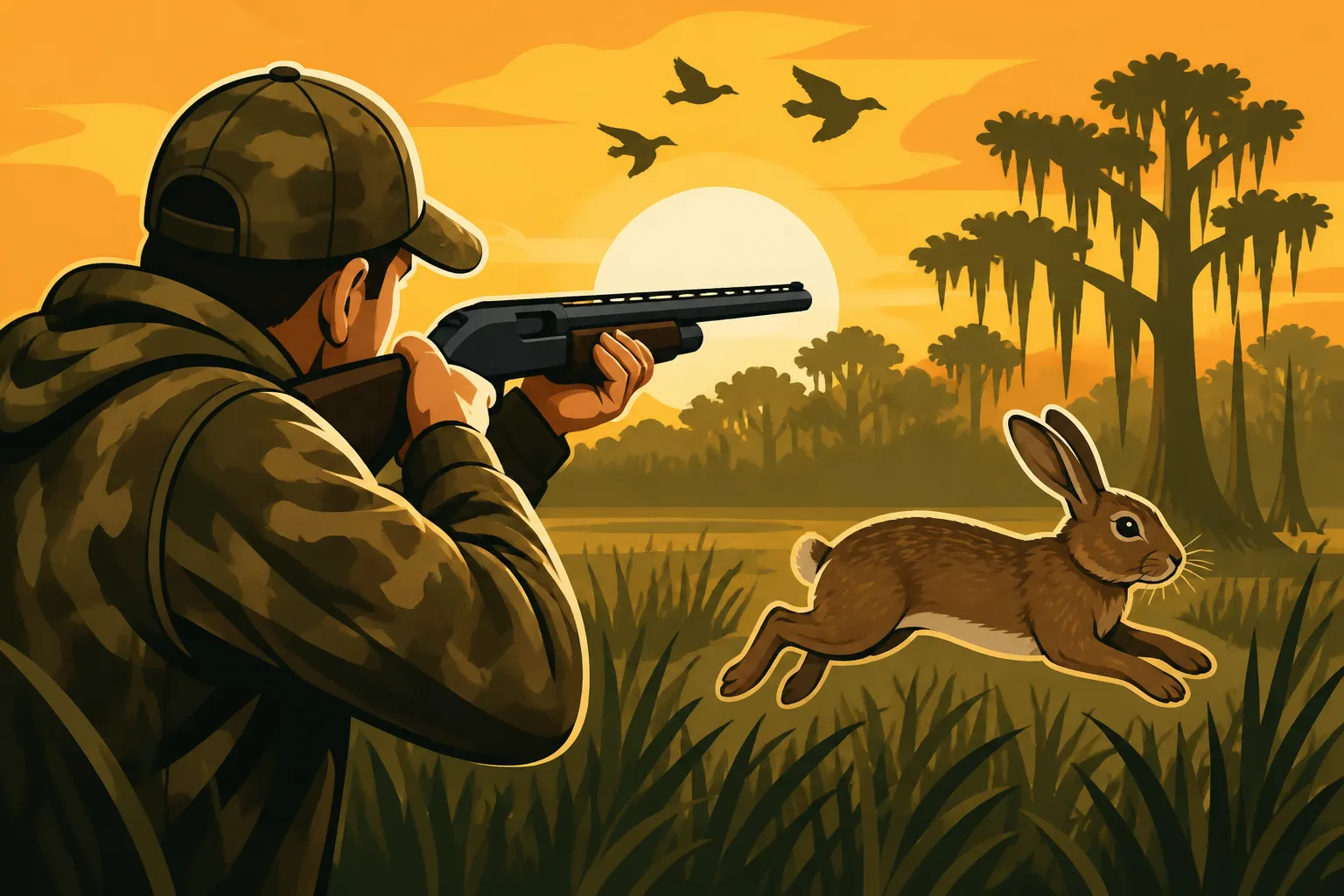
Hunting with Dogs: For many, rabbit hunting is beagle hunting. There's nothing quite like the music of a pack of hounds on a hot trail, pushing a rabbit through the briars. Beagles are perfectly suited for this, with their keen noses and relentless drive. The advantage of hunting with dogs is that they can cover far more ground than a human, pushing rabbits out of thick cover where you might never find them otherwise. This is especially effective in large, dense patches of woods or overgrown fields. Typically, hunters position themselves around the edges of known cover, listening to the dogs, and waiting for the rabbit to circle back or break cover. It's a social hunt, often enjoyed with friends and family, and the dogs do most of the hard work. However, hunting with dogs requires well-trained dogs, and you need to be mindful of private property boundaries and other hunters in the area.
Stalking (Still-Hunting): If you don't have dogs or prefer a quieter, more solitary hunt, stalking or still-hunting for rabbits is absolutely viable. This method involves slowly and quietly moving through prime rabbit habitat, trying to spot rabbits before they bolt. It requires patience and a sharp eye. Focus on areas where rabbits are likely to be hiding – under brush piles, at the base of thick bushes, or along the edges of dense cover. Sometimes, simply walking through a thicket will "jump" a rabbit, giving you a quick shot. This method is particularly effective in smaller patches of cover or areas where dogs might push rabbits out too quickly. It's a more challenging hunt, often requiring you to be ready for quick, instinctive shots. Knowing how to Reading Louisiana Mud for Fresh Deer Movement can also help you spot other game sign while stalking for rabbits, providing a richer overall experience.
Finding Rabbit Habitat: Brush Piles and Thickets
Regardless of your chosen method, knowing where to find rabbits is paramount. Rabbits are masters of camouflage and cover. They need dense cover for protection from predators and the elements, and they need food nearby.
Brush Piles: These are absolute magnets for rabbits. Whether they're natural piles of storm-downed trees, logging debris, or man-made piles from clearing land, rabbits will utilize them extensively. They offer immediate escape routes and a safe haven. Approach brush piles cautiously and quietly, as a rabbit might be sitting right on the edge, ready to dart in. If hunting with dogs, they'll often go right into the pile, pushing the rabbit out the other side.
Thickets and Briar Patches: These are the bread and butter of rabbit habitat. Think blackberry bushes, greenbrier, honeysuckle, and any dense, thorny vegetation that's difficult for larger predators (and humans!) to penetrate easily. Rabbits thrive in these areas. Walking the edges of these thickets, or slowly pushing through them, is a great strategy. For swamp rabbits, look for cane breaks, palmetto thickets, and dense undergrowth along sloughs and bayous. If you're really getting into the thick stuff, checking out advice on Rabbit Hunting Thick Louisiana Brush will give you even more specialized tips.
Field Edges and Drainage Ditches: Rabbits often use the transition zones between open fields and dense woods, or the cover provided by drainage ditches overgrown with weeds and brush. These areas offer both food (from the field) and cover (from the ditch/woods edge). They can be excellent spots for stalking or setting up to intercept rabbits pushed by dogs.
Safety Considerations in Dense Cover
Hunting in dense Louisiana cover, especially for fast-moving rabbits, comes with its own set of safety considerations.
Shotgun Safety: Always be aware of your muzzle direction. When pushing through thickets, it's easy for a barrel to get snagged or pointed in an unsafe direction. Keep your finger off the trigger until you're ready to shoot, and use the safety religiously.
Visibility: As mentioned, blaze orange is often a legal requirement and always a smart choice. When you're in heavy cover, it's easy to lose sight of your hunting partners or dogs. The more visible you are, the safer everyone is.
Obstacles and Terrain: Louisiana's terrain can be uneven, muddy, and full of hidden obstacles like fallen logs, stumps, and unseen holes. Watch your footing carefully to avoid falls. Be especially cautious near water bodies if you're in swampy areas, and know how to safely Recovering a Deer From a Basin Slough – many of those same challenges apply to retrieving a rabbit.
Snakes and Insects: Louisiana is home to venomous snakes, particularly in warmer months or during early season. Keep an eye out, especially when reaching into dense brush. Ticks, mosquitoes, and chiggers are also a constant companion in the brush. Long sleeves, pants, and insect repellent are highly recommended.
Beyond Opening Day: Extending Your Rabbit Season
While opening day holds a special allure, the Louisiana rabbit season typically runs for several months, offering ample opportunities to get out and enjoy the chase. Don't think of opening day as your only chance; think of it as the start of a long period of potential enjoyment.
Late Season Opportunities and Winter Tactics
As the season progresses into late fall and winter, rabbit hunting can actually improve. The cooler weather means less foliage on deciduous trees and bushes, which can make rabbits easier to spot and dogs more effective as scenting conditions improve. Rabbits will still gravitate towards the densest cover available, but they might be more visible on the edges of those thickets, trying to catch some sun on a cool day.
In winter, food sources might become scarcer, making agricultural fields (especially those with standing crops or residue) even more attractive. Rabbits will often concentrate in areas with both food and dense thermal cover to escape the cold. Focus your efforts on these transition zones and heavy cover areas that offer protection from chilling winds and frost. This is also a great time to practice some Still-Hunting Kisatchie Hills Wilderness techniques for other small game.
Regulations on WMAs and Refuges
As noted earlier, public lands often have different rules. For many WMAs, the rabbit season might extend past the general private land season, or it might have specific late-season dates. This can be a fantastic opportunity to extend your hunting year. However, WMAs can also have specific restrictions on hunting days, methods, or even areas within the WMA. For example, some WMAs might prohibit hunting with dogs, or only allow certain calibers of firearms. Always, always check the individual WMA regulations for the current season before you go. The LDWF website and app are invaluable for this. Using a detailed map like those found on Scouting With the LDWF App can help navigate these complex regulations.
Cleaning and Preparing Your Harvest
Once you've had a successful hunt, the work isn't over! Proper field dressing and cleaning are crucial for ensuring your rabbit meat is delicious and safe to eat. In the field, it's best to gut the rabbit as soon as possible to cool the carcass down, especially in Louisiana's often warm weather. You can then skin and quarter the rabbit back at camp or at home.
Rabbit meat is lean and flavorful, often compared to chicken or even pork, but with a unique wild game taste. It's incredibly versatile and can be fried, stewed, roasted, or used in gumbo. Many hunters consider fried rabbit a classic Louisiana delicacy. Don't be intimidated by cleaning your own game; there are plenty of online tutorials if you're new to it. Plus, there's immense satisfaction in preparing a meal from game you've harvested yourself. It's a wonderful way to honor the animal and connect with your food source.
Disclaimer
Please remember that hunting regulations in Louisiana can change. Always consult the most current Louisiana Department of Wildlife and Fisheries (LDWF) hunting regulations pamphlet or their official website before heading afield. This guide is for informational purposes only and should not be considered a substitute for official legal documentation. It is your responsibility as a hunter to know and abide by all applicable laws and regulations.