Louisiana’s Ten Deer Hunting Areas Explained
Anyone who's spent more than a season chasing whitetails in the Bayou State knows that trying to understand Louisiana's deer hunting regulations can feel like trying to navigate a cypress swamp in the dark – confusing, to say the least. With different season dates, weapon restrictions, and bag limits seemingly changing from one parish line to the next, it's easy to get overwhelmed. This comprehensive guide is here to untangle the complexities of Louisiana's ten distinct deer hunting areas, helping you plan your hunts with confidence and clarity.
Understanding Louisiana's Deer Hunting Zones: Why It Matters
Louisiana is a land of incredible diversity, from the sprawling pine forests of the north to the dense, marshy coastal plains in the south. This incredible variation in habitat directly impacts deer populations, their behavior, and the best management strategies. What works for a hunter in the Kisatchie National Forest simply won't cut it for someone stalking deer in the Atchafalaya Basin, and the Louisiana Department of Wildlife and Fisheries (LDWF) recognizes this.
The Challenge of Diverse Habitats
Imagine trying to apply a one-size-fits-all hunting season to the entirety of Louisiana. It would be a disaster. The deer in the northern parishes, living amongst rolling hills and vast timberlands, face different pressures and have different breeding cycles than their cousins living in the floodplains of the Mississippi River or the coastal fringes. For instance, deer in areas with more agriculture might have abundant food sources and different movement patterns compared to those in more natural, wooded environments. Understanding these nuances is absolutely critical to successful deer management and, by extension, to effective hunting. Without tailored approaches, some areas could suffer from overharvest, while others might become overpopulated, leading to habitat degradation and unhealthy herds.
Think about the difference in vegetation: robust hardwoods in the river bottoms providing acorns versus the sparse, scrubby growth you might find closer to the Gulf. Each ecosystem supports deer in unique ways and presents unique challenges for hunters. This is why when you're using a tool like GoHunt to scout public lands, you need to filter not just by WMA but also consider the overarching deer area rules. It's not just about what type of land it is, but where it is on the state map and what area governs it.
The LDWF's Approach to Management
The LDWF's decision to divide the state into ten distinct deer hunting areas is a pragmatic response to this ecological mosaic. Each area is managed with specific goals in mind, taking into account deer density, habitat quality, hunting pressure, and the timing of the rut. Their aim is to provide sustainable hunting opportunities while maintaining healthy deer populations across the state. This means setting different archery season opening days, varying the length of the primitive firearms season, and carefully controlling when and where either-sex harvest is permitted.
For example, areas with higher deer densities or a need to reduce antlerless deer populations might have longer either-sex days or an extended season. Conversely, areas where the herd is still recovering or needs more protection might see shorter seasons or more restrictive bag limits. The LDWF uses scientific data, hunter harvest reports, and biological surveys to make these informed decisions annually. This targeted management helps ensure that hunters in, say, Area 1 are contributing to the health of their local herd, rather than a broad, ill-fitting state average. It's a complex dance, but it's designed to keep Louisiana's deer hunting robust for generations to come.
Breaking Down the Areas: A Quick Overview
So, how do these areas actually work, and what should you, the hunter, be looking for? It boils down to understanding the general geography and the typical season structure for each. While specific dates change year to year, the patterns of season lengths and either-sex opportunities tend to remain consistent within each area.
How the System Works
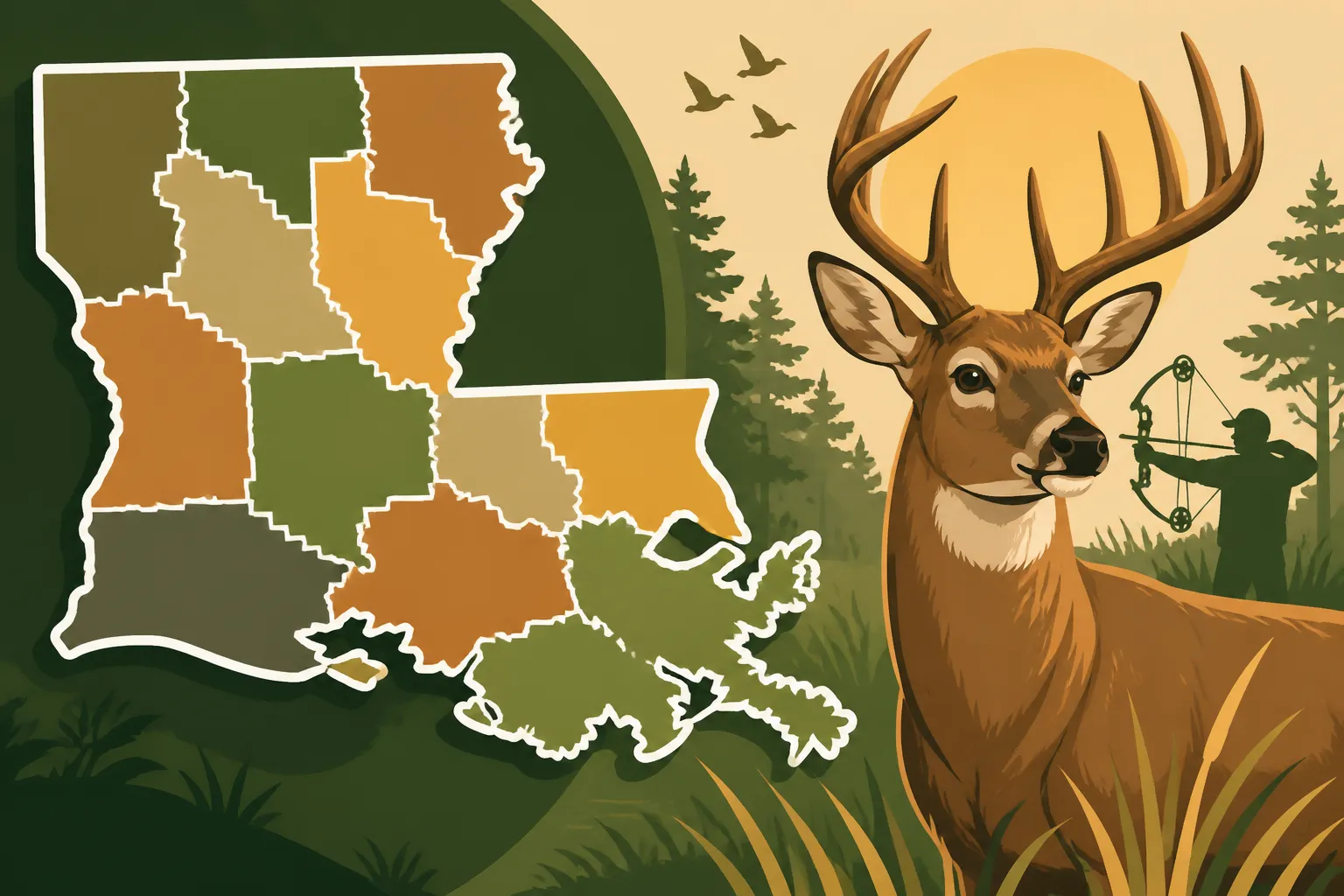
At its core, the LDWF's deer area system overlays geographical boundaries with specific regulatory frameworks. Each of the ten areas encompasses a collection of parishes or portions of parishes, and within these boundaries, a standardized set of season dates and bag limits applies. This means that if you're hunting in, say, Rapides Parish, you'll need to know which deer area it falls into – in this case, a mix of Area 2 and Area 8, depending on the specific location – to understand your legal hunting window and harvest opportunities.
This structured approach aims to simplify regulations, as much as possible, for hunters who might hunt across different parishes within the same area. It also allows the LDWF to implement highly localized management strategies. For instance, the timing of the rut can vary significantly across the state, and the area system allows the LDWF to align hunting seasons with these biological realities. You might find a late rut in some southern parishes while the deer further north are already winding down their breeding activity. The area system accommodates these natural differences.
Key Differences You'll Encounter
The most significant differences you'll notice between areas typically revolve around season length, the timing of either-sex opportunities, and the specific dates for primitive firearms and modern gun seasons. Some areas, particularly those in the northern and central parts of the state, often have earlier starts to their archery seasons and more liberal either-sex days. Others, especially closer to the coast or in certain eastern parishes, might have later opening dates and more restricted either-sex opportunities.
For example, you'll see some areas referred to as "early-start" zones for archery, meaning you can get into the woods sooner, while others might have a slightly delayed opening. Then there's the critical difference in the "either-sex window," which is when you can legally harvest a doe. This window can be very brief in some areas, extended in others, or even run for nearly the entire season in a few specific zones. Staying on top of these specific nuances is paramount to a successful and legal hunt. A great resource for tracking these is the official LDWF website, and many hunters also rely on mapping apps that can help you discern specific parish and area boundaries while scouting, even if you are checking out a new spot with GoHunt.
The Early-Start Areas: 1, 3, 7, 8, and 10
These areas are generally located in the northern and central parts of Louisiana, and they often boast earlier archery season openings, offering hunters a chance to get into the woods well before the general gun season kicks off. They represent a significant portion of the state's diverse hunting landscape, from pine plantations to hardwood bottoms.
Area 1: Northern Piney Woods and River Bottoms
Area 1 primarily covers the northwestern corner of Louisiana, characterized by rolling pine hills, extensive timber company lands, and fertile river bottoms along waterways like the Red River and the Ouachita. Hunters here often find themselves navigating a mix of private timber leases and some public land opportunities within larger tracts. The deer herd in Area 1 is typically robust, and the earlier archery start allows hunters to pursue bucks before significant hunting pressure sets in.
The rut in Area 1 generally occurs earlier than in many other parts of the state, often peaking in late October to early November. This aligns well with the earlier archery and primitive firearms seasons, providing excellent opportunities for hunters employing calling tactics or focusing on scrape lines. For more on this, you might want to read our article on Hunting the Rut in the Early-Start Areas. While much of this land is privately owned or leased, understanding the flow of deer movement through the piney woods and along creek drains is key to success. Deer often move between bedding areas in dense pines and feeding areas in thinned timber or agricultural fields.
Areas 3, 7, 8, and 10: Central and North Louisiana's Diverse Terrain
These areas collectively encompass a vast stretch of north and central Louisiana, featuring an incredible variety of habitats. Area 3 covers parts of the Florida Parishes and some central delta areas, known for their productive soils and often dense deer populations. Area 7 focuses on a central band, including parts of the Atchafalaya Basin fringes and productive agricultural landscapes. Area 8 dips further south into the central part of the state, often blending agricultural lands with bottomland hardwoods. Area 10 is located in the northeastern corner, known for its rich delta soils and impressive deer.
The common thread for these areas is their generally earlier season starts compared to the southernmost regions. While the specific rut timing might vary slightly between them, they all benefit from management strategies that account for substantial deer numbers and a mix of habitats. For instance, in parts of Area 10, particularly around the Tensas River Basin, you'll find some of the state's best habitat for producing trophy bucks, making early season scouting for food sources and travel corridors essential. Our guide on Louisiana Deer Hunting Area by Area provides even more detailed insights into what makes each zone unique. When utilizing your GoHunt app, paying close attention to the specific land features within these diverse areas will be crucial for pinpointing deer activity.
The Long Either-Sex Window Areas: 5, 6, and 9
These areas are often distinguished by their extended either-sex harvest opportunities, which is a significant departure from the more restrictive frameworks found elsewhere. These zones are typically located in the southern and southeastern parts of the state, often influenced by coastal habitats and unique ecological conditions.
Area 5: Southwest Marsh and Prairies
Area 5 encompasses the southwestern portion of Louisiana, extending into the vast coastal marsh and some transitional prairie lands. This area presents a completely different hunting challenge compared to the pine forests up north. Deer here adapt to living in dense marsh grasses, thick brush, and often near agricultural fields that border the wetlands. The hunting can be physically demanding, requiring boat access in many places and an understanding of marsh dynamics.
What makes Area 5 particularly notable is its often very long, almost season-long, either-sex harvest window. This is usually a reflection of higher deer densities in certain parts of the area and a management strategy aimed at controlling populations. Hunters in Area 5 have a prolonged opportunity to harvest does, which is excellent for meat hunters and those looking to help manage the local herd. The rut here tends to be later than in northern Louisiana, often pushing into December and even early January in some parts. This late rut, combined with the extended either-sex window, means hunters have a unique set of circumstances to work with. You'll find specific details on how to maximize your opportunities in our article on Hunting the Long Either-Sex Window in Areas 5, 6 and 9.
Areas 6 and 9: Southeastern Flatlands and Coastal Influence
Area 6 covers a swath of southeastern Louisiana, often characterized by flat terrain, mixed pine and hardwood forests, and increasingly, suburban encroachment. Area 9 is adjacent to it, further east, bordering the Pearl River and extending into the coastal zone. Both areas share some common characteristics, including a relatively later rut and a tendency towards extended either-sex windows, albeit sometimes with specific restrictions. The habitats here can vary from traditional timberlands to dense, swampy bottoms and agricultural fields.
For hunters in Area 6 and 9, the longer either-sex window provides flexibility, allowing them to focus on buck-specific tactics during the peak of the rut, knowing they'll still have ample time to fill their freezer with venison later in the season. These areas can experience significant hunting pressure, especially on public lands or smaller private tracts near populated areas. Successful hunting often involves extensive scouting to find less-pressured pockets of deer. Using tools like GoHunt can help identify potential public access points and analyze historical harvest data, even if it's just to understand general patterns. The deer in these areas often rely heavily on native forage, but also agricultural crops where available.
The Central and Western Fronts: Areas 2 and 4
These two areas represent crucial segments of Louisiana's deer hunting landscape, each with its own distinct characteristics and challenges. They bridge the gap between the northern pine forests and the southern coastal influences, offering varied terrains and hunting experiences.
Area 2: Central Louisiana's Kisatchie Focus
Area 2 is primarily situated in central Louisiana, and a significant portion of its identity is shaped by the presence of the Kisatchie National Forest. This expansive public land offers vast opportunities for hunters willing to put in the effort. The terrain here ranges from rolling pine hills and bottomland hardwood creek drains to dense clear-cuts and replanted timber. Deer populations in Kisatchie are spread out, and hunting often requires considerable legwork and an understanding of how deer use the diverse forest habitat.
The seasons in Area 2 typically feature a solid archery season, followed by primitive firearms and then modern gun seasons. Either-sex days are usually provided but might be more structured than in the long-window areas. The rut in this region can be somewhat variable but generally falls into the traditional late October to mid-November timeframe. Hunters focusing on Kisatchie often employ tactics like still-hunting, setting up along travel corridors between different timber types, or targeting areas with mast production. Our article on Treestand Setups in Kisatchie National Forest delves deeper into effective strategies for this challenging but rewarding public land. Planning your hunt, especially during high-pressure periods, means looking for overlooked pockets that might hold deer seeking refuge.
Area 4: The Western Borderlands and River Systems
Area 4 is located along Louisiana's western border, stretching from the northern reaches down towards the central part of the state, adjacent to Texas. This area is characterized by a blend of pine forests, mixed hardwoods, and river systems like the Sabine River. It often shares ecological characteristics with East Texas, which can influence deer genetics and behavior. Much of the hunting here takes place on private lands, including timber company leases and agricultural tracts, though public land opportunities exist on certain WMAs.
Similar to Area 2, Area 4 typically follows a traditional season structure, with archery, primitive, and modern firearms seasons. The either-sex opportunities are generally well-defined but not as extended as in areas 5, 6, and 9. The rut usually occurs in late October through November, providing excellent opportunities for hunters during this peak activity period. Because of the mix of private land and various timber management practices, deer movement can be influenced by logging activity and food plot development. Hunters here often focus on funnel points, natural pinch points between different habitat types, and areas with preferred forage. Understanding local land use patterns is key to consistently finding deer in Area 4.
Navigating Regulations Within Each Area
Once you understand the general characteristics of each deer area, the next step is to dive into the nitty-gritty of the regulations. This is where the rubber meets the road, and knowing the specifics can make or break your hunt, ensuring you stay legal and ethical.
Archery, Primitive, and Modern Firearms Seasons
Each of Louisiana's ten deer hunting areas will have distinct opening and closing dates for archery, primitive firearms, and modern gun seasons. These dates are crucial and vary significantly. For instance, some areas might open archery season in early October, while others might be a week or two later. The same goes for primitive firearms season, which typically serves as an intermediate season between archery and modern gun, offering a chance to hunt with traditional weapons like muzzleloaders or single-shot breechloaders before the full rifle season opens.
Modern firearms season, often the busiest and most anticipated, also has varied opening and closing dates depending on the area. It's not uncommon for a deer area in North Louisiana to have its gun season open weeks, or even a month, earlier than an area further south. Always consult the current LDWF hunting regulations pamphlet or their official website to verify these dates for the specific area you plan to hunt. Never assume dates carry over from year to year or from one area to another. A quick check, perhaps through the official LDWF app or a reputable source like GoHunt, will prevent any accidental violations.
| Deer Area | General Habitat | Typical Archery Start | Typical Gun Season Length | Either-Sex Opportunities | Common Challenges |
|---|---|---|---|---|---|
| Area 1 | Pine Hills, River Bottoms | Early October | ~45-60 days | Moderate, structured | Private land access, timber cuts |
| Area 2 | Kisatchie N.F., Mixed Pine/Hardwood | Early October | ~45-60 days | Moderate, structured | Public land pressure, vastness |
| Area 3 | Florida Parishes, Mixed Agriculture/Timber | Early October | ~45-60 days | Moderate, structured | Suburban influence, fragmentation |
| Area 4 | Western Pine/Hardwood, River Systems | Early October | ~45-60 days | Moderate, structured | Private land access, heat |
| Area 5 | Coastal Marsh, Prairies, Agriculture | Mid-October | ~60-75 days | Long/Extended | Access (boat), marsh conditions |
| Area 6 | Southeastern Flatwoods, Mixed | Mid-October | ~60-75 days | Long/Extended | Population density, suburban edge |
| Area 7 | Central Farmland, Bottomland Hardwood | Early October | ~45-60 days | Moderate, structured | Public land pressure, WMA rules |
| Area 8 | Central/SW Mixed, Atchafalaya Fringe | Early October | ~45-60 days | Moderate, structured | Swamp access, mosquitoes |
| Area 9 | Eastern Flatwoods, Coastal Plain | Mid-October | ~60-75 days | Long/Extended | Private land access, pressure |
| Area 10 | Northeast Delta, River Bottoms, Agriculture | Early October | ~45-60 days | Moderate, structured | Private land access, flooding |
Note: "Typical" refers to general patterns; always confirm current year's dates with LDWF.
Bag Limits and Either-Sex Opportunities
Beyond season dates, understanding the bag limits and the specific days designated for either-sex harvest is paramount. Louisiana typically has a daily bag limit for deer (often two deer per day, provided only one is antlered), and an annual limit for antlered and antlerless deer, which is tied to your deer tags. However, the biggest variable across areas is the timing and duration of the "either-sex" days. These are the days when you can legally harvest a doe (antlerless deer).
In some areas, either-sex days might only be a handful of specific dates, often towards the end of the season or during a particular primitive firearms window. In other areas, particularly 5, 6, and 9, you might find either-sex hunting is permitted for a much longer stretch, sometimes running for months or nearly the entire season. This extended opportunity is generally put in place to help manage deer populations and can be a huge benefit for hunters looking to fill their freezer. Always double-check the current regulations for the specific area and parish you are hunting, as even within a general area, there can be localized nuances, especially on public lands like WMAs. Getting familiar with Louisiana Deer Tag Add-On Cost is also vital, as you need to have the correct tags for your harvest.
Strategic Hunting Based on Area Characteristics
Knowing the regulations is one thing, but translating that knowledge into successful hunting strategy is another. Each deer area's unique characteristics—from habitat type to rut timing—demand a tailored approach from hunters.
Adapting Tactics to Terrain and Pressure
Just as you wouldn't use duck calling tactics for turkey hunting, you shouldn't approach deer hunting in a pine forest the same way you would a coastal marsh. The terrain profoundly dictates deer behavior and, by extension, your hunting strategy. In the vastness of Kisatchie National Forest (Area 2), for example, deer might travel long distances between bedding and feeding areas. Here, tactics like still-hunting, scouting for subtle funnels, or focusing on water sources in dry periods become critical. Pressure on public land can be intense, so seeking out remote pockets or using quiet entry/exit routes, as described in Finding Ground That Sees Fewer Hunters, is often more effective than hunting right off a main road.
Conversely, in areas with extensive agriculture, such as parts of Areas 3, 7, or 10, deer might be more nocturnal and move primarily under the cover of darkness, venturing into fields only at dawn and dusk. Here, stand placement on field edges, understanding crop rotations, and observing entry and exit points are paramount. In the swampy or marshy regions of Areas 5, 6, 8, or 9, boat access might be necessary, and elevated blinds or stands overlooking dry ground or ridges become crucial. Wind and thermals in these bottomland areas behave differently than in upland terrain, so understanding those dynamics is vital for scent control. Every specific micro-habitat within each area requires adjustments to your game plan.
Scouting and Planning for Success
Regardless of the deer area you choose, meticulous scouting is the cornerstone of success. This goes beyond simply looking for fresh tracks; it involves understanding the deer's seasonal patterns, their preferred food sources, bedding areas, and travel corridors. In areas with an early archery season (like Areas 1, 2, 3, 4, 7, 8, and 10), pre-season scouting for white oak acorn drops, persimmon trees, or recent clear-cuts can give you a significant advantage. Using aerial maps and topo maps, perhaps through a platform like GoHunt, to identify pinch points, saddles, or drainages before you even step foot in the woods is an excellent starting point.
For areas with a later rut, such as 5, 6, and 9, your scouting might involve focusing on sign like rubs and scrapes closer to the actual breeding season. It's also important to factor in hunting pressure, especially on public lands. If you're hunting during Why Louisiana's Gun Opener Draws the Biggest Crowds, you'll need to find areas where deer feel secure. Planning your entry and exit routes to minimize disturbance is crucial. Remember, deer are creatures of habit but are also incredibly adaptable, especially to human pressure. The more you know about your specific hunting area and its deer, the better equipped you'll be to put a tag on a deer. Consider reading our guide on Scouting Louisiana Public Land Before Season for even more in-depth tips.
Staying Current with LDWF Regulations and Tools
The world of hunting regulations is ever-evolving, and what was legal last season might have changed for the current one. Staying informed is not just good practice; it's a legal requirement.
Utilizing the LDWF Website and App
The Louisiana Department of Wildlife and Fisheries (LDWF) provides several invaluable resources for hunters. Their official website, www.wlf.louisiana.gov, is the definitive source for current regulations, season dates, WMA specific rules, and license information. Before every season, and especially if you plan to hunt a new area, make it a point to download and thoroughly read the latest "Louisiana Hunting and Fishing Regulations" pamphlet. This document is your Bible for the season.
Beyond the website, the LDWF also offers a fantastic mobile app for both iOS and Android devices. This app is incredibly useful in the field, allowing you to access regulations, check deer reporting requirements, and even report your harvest directly from your phone. Many hunters find the built-in mapping features and ability to find your current location relative to WMA boundaries to be a game-changer. It's truly like having a game warden in your pocket, making it easier than ever to ensure you're hunting legally and responsibly. Getting familiar with Using the LDWF App can save you a lot of headaches in the field.
The Importance of Annual Regulation Changes
It's critical to understand that hunting regulations, including season dates, bag limits, and even area boundaries, can change from year to year. These changes are often driven by biological data, population trends, habitat conditions, or specific management goals. For example, if a particular area experiences a significant EHD (Epizootic Hemorrhagic Disease) outbreak or a severe drought, the LDWF might adjust either-sex days or season lengths to protect the herd.
Always make it a habit to check the current year's regulations before you head out. Don't rely on memory from last season or hearsay from other hunters. The LDWF works tirelessly to manage Louisiana's wildlife resources, and their regulations are designed to ensure sustainable hunting for everyone. Staying current with these changes not only keeps you compliant with the law but also makes you a more informed and ethical participant in Louisiana's rich hunting tradition. For any specific questions, don't hesitate to reach out to the LDWF directly.
Disclaimer
The information provided in this guide is for general informational purposes only and is not intended as legal advice. Hunting regulations, season dates, and bag limits are subject to change by the Louisiana Department of Wildlife and Fisheries (LDWF). Hunters are solely responsible for knowing and abiding by all current state and local hunting laws and regulations. Always consult the official LDWF website or publications for the most up-to-date and accurate information before engaging in any hunting activities.