Working a Bayou Bank for Late-Season Deer
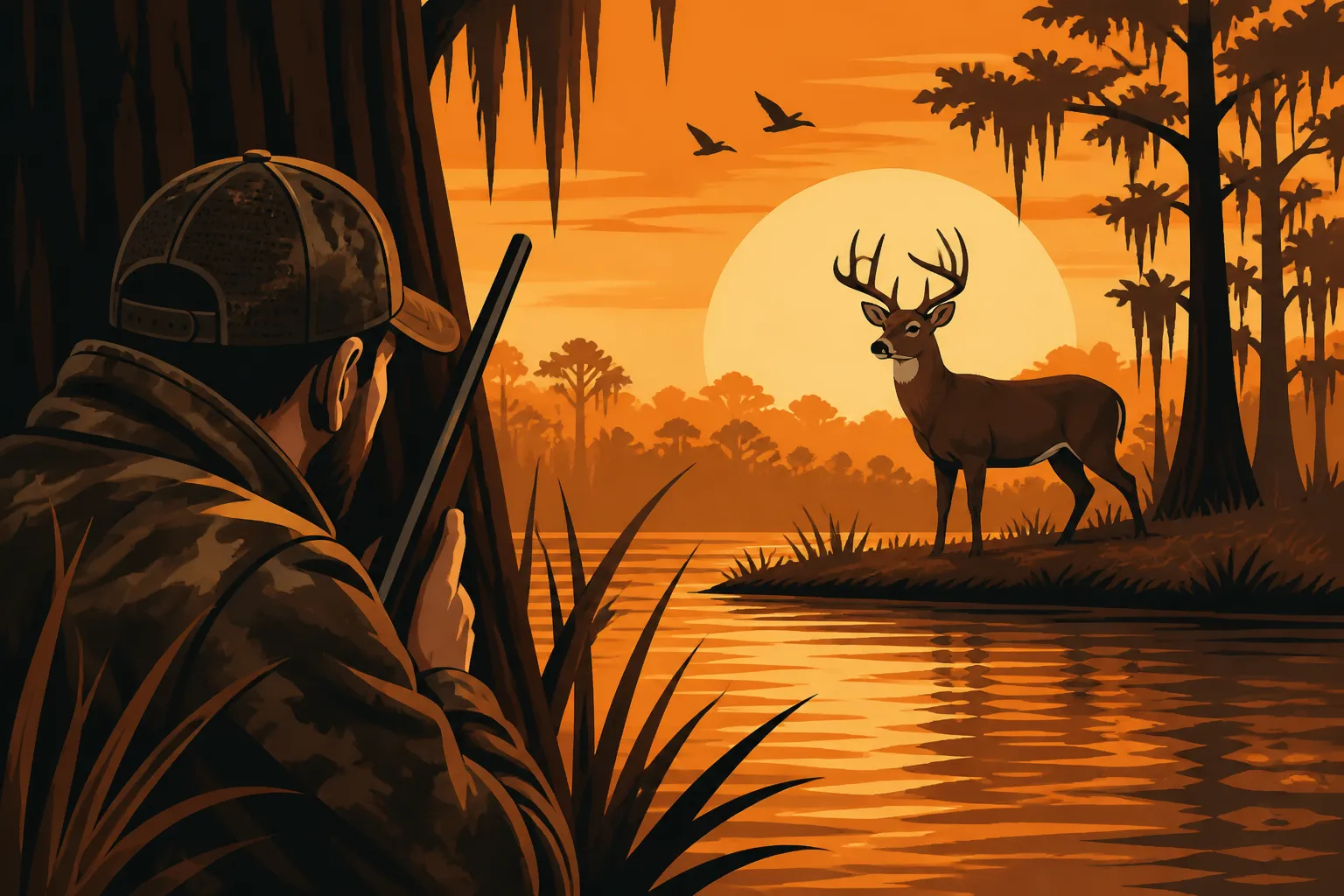
Man, late season deer hunting in Louisiana can really test your patience, can't it? The deer have seen more hunters than a Walmart on Black Friday, food sources are looking pretty sparse, and sometimes it feels like they just vanish into thin air. You’ve put in the time, walked the miles, and seen fewer deer than you have empty coffee cups. But don't throw in the towel just yet. There’s a quiet magic to hunting those bayou banks in the late season, a secret whispered amongst the cypress and tupelo that can turn your luck around. This guide is all about peeling back the layers of these often-overlooked hotspots, helping you understand how to scout them, set up effectively, and finally tag that elusive late-season buck.
Understanding Late-Season Deer Behavior Near Bayous
As the calendar pages thin and the air gets a little crisper (or sometimes, just a little less sweltering, because, well, Louisiana), deer behavior shifts dramatically. They're not just moving from food plot to food plot anymore. The pressure from earlier seasons, combined with dwindling natural forage, pushes them into cover so thick you could lose a tractor in it. And that, my friend, is where the bayou banks truly shine.
Food Sources and Shelter Along the Bank
By late season, the prime acorns are long gone, and those lush green fields have been browsed down or dried up. So, what are deer looking for? They're turning to woody browse, the tender tips of privet, green briar, and other tenacious plants that thrive in the rich, moist soil along bayou edges. Think about those hidden patches of Japanese honeysuckle, the last few persimmons clinging to branches, or even browse on the edges of planted rye grass if you're lucky enough to find some on private land nearby. Deer will work these areas meticulously, taking advantage of every last calorie.
But it's not just about food. These bayou banks are sanctuaries. The dense, often tangled vegetation – think cypress knees, palmetto thickets, and fallen timber – provides incredible thermal cover. On a chilly morning, a deer can bask in the sun filtering through the canopy, tucked just out of sight. On a warmer, windier day, that same thicket offers a welcome reprieve from the elements. This combination of available browse and impenetrable cover makes bayou banks prime real estate for deer seeking refuge and sustenance when other areas are barren or too exposed. It's their safe haven, where they can survive the lean times. You'll often find these deer moving slowly, nibbling as they go, rather than making long, hurried trips across open ground. They’re conserving energy and staying hidden. For more insights on what whitetails are munching on during the colder months, check out our guide on Late-Season Food Sources for Louisiana Whitetails.
Pressure and Seclusion
Let's be real: deer get smart, fast. After weeks of gunshots, rattling antlers, and hunter scent wafting through the woods, the older, wiser deer become masters of evasion. They've learned to avoid popular trails, open areas, and anything that screams "human." This is precisely why bayou banks are so valuable. They often represent some of the most difficult-to-access terrain, acting as natural barriers and creating a buffer zone from human intrusion.
Imagine a heavily hunted public land tract. While hunters are pounding the ridges and logging roads, those wary bucks are often pushed down into the deepest, nastiest bayou bottoms. They know they're less likely to be disturbed there. The water, the thick mud, the nearly impassable cane brakes – it all works in their favor. These areas offer the seclusion they crave, allowing them to feel safe enough to move during daylight hours, even if it’s just for short distances between bedding and feeding areas. Your frustration trying to find a deer in those traditional spots is valid, because those deer have literally left those spots. They're often hunkered down, just a stone's throw from where you'd least expect them.
Water Access and Movement Corridors
Another critical aspect of bayou banks is the ever-present water source. Deer, like all living creatures, need to drink. And while they can get some moisture from their browse, easy access to fresh water is always a draw. Beyond drinking, bayous themselves act as natural funnels and travel corridors. Instead of navigating dense, unforgiving woods, deer will often parallel the bank, using the slightly clearer path to move efficiently.
Think of a narrow strip of high ground squeezed between a bayou and a slough. That’s a natural pinch point, a choke-hold where deer traffic is almost guaranteed. Bucks will use these natural contours to travel between bedding areas on one side and feeding or staging areas on the other. They’re less likely to cross open water unless absolutely necessary, preferring to stick to the edges. Understanding these travel patterns, especially how they relate to the wind and thermals, is key. Even a subtle bend in the bayou can concentrate deer movement. Don't underestimate how deer utilize these features to their advantage, particularly when trying to stay hidden. You'll find that mastering the nuances of Wind and Thermals in Swamp Bottomland is absolutely critical when hunting these watery environments.
Scouting and Locating Key Bayou Bank Hotspots
Okay, so you understand why bayou banks hold deer in the late season. Now, how do you actually find them? This isn't your typical walk-and-look scouting; it requires a blend of technological savvy and old-fashioned boots-on-the-ground grit.
Reading the Topography and Cover
Before you even step foot in the woods, pull out your mapping apps. I personally rely on tools like GoHunt, which lets you layer aerial imagery with topographical maps. What you're looking for are those subtle changes in elevation, even a foot or two can make a huge difference in a swampy environment. Identify pinch points where the bayou narrows, or where a slough branches off, creating a small island of high ground. Look for oxbow lakes—old bayou channels cut off from the main flow—which often have exceptionally dense cover and unique food sources.
Zoom in on the satellite view and identify areas of particularly dense vegetation. These are your potential bedding areas. Look for those dark green blobs of cypress and tupelo mixed with thick undergrowth. Pay close attention to any dry ridges or slightly elevated hammocks running parallel to the bayou. These will often be primary travel routes. If you can find a spot where two such features converge or funnel deer into a tight space, you’ve hit a goldmine. Using a mapping app like GoHunt to mark potential stand locations and entry routes during this pre-scouting phase can save you hours of wasted effort and ensure you're going into the woods with a solid plan. For a deeper dive into utilizing technology for your scouting, consider reading our guide on Reading Aerial Photos for Central Louisiana Deer.
Interpreting Sign: Rubs, Scrapes, and Trails
Once you're on the ground, the real detective work begins. While fresh rubs and scrapes might be less common than in the peak of the rut, don't ignore them completely. You might find some new ones, especially if a buck is still chasing a late-breeding doe. However, your primary focus should be on fresh tracks and well-worn trails. Deer will often leave very distinctive tracks in the soft, muddy banks, and you can tell a lot about their size and recent activity.
Walk slowly, parallel to the bayou, eyes peeled. Look for trails running along the bank itself, but also for smaller, less obvious trails leading up into the thicker cover or down to specific watering holes. Pay attention to any signs of browsing on woody stems. A good rule of thumb: if you see a well-used trail suddenly disappear into an impenetrable thicket, that’s likely a bedding area. If it leads to a small opening with some persistent greenery, it's a feeding area. Don't forget to look for droppings—fresh droppings indicate very recent activity. Marking these signs directly on your GoHunt app or other mapping tool as you find them helps you build a comprehensive picture of deer movement. It helps you understand exactly where deer are spending their time. For more on reading the signs, check out Reading Louisiana Mud for Fresh Deer Movement.
Access and Wind Considerations
This is where many hunters get frustrated and give up, which is exactly why these spots are so good! Accessing bayou banks often means dealing with water. A small boat, kayak, or pirogue can be your best friend. This allows for quiet, stealthy entry and exit, minimizing scent and disturbance. When planning your access, consider prevailing winds. You absolutely must approach your stand with the wind in your face or quartering. The complex topography near bayous, with thick cover and water, can create tricky thermal drafts, especially at dawn and dusk.
Early morning thermals will often pull your scent down towards the water, while evening thermals will cause it to rise. Understanding this dance of the air currents is paramount. If your chosen stand site is right on the water's edge, think about how your scent will disperse across the water. It can carry a long way. Always, always have multiple entry and exit routes planned for different wind directions. Your goal is to become a ghost, slipping in and out without the deer ever knowing you were there. Nothing blows a hunt faster than a bad wind. For a comprehensive guide to maneuvering through these conditions, be sure to read Wind and Thermals in Swamp Bottomland.
Effective Hunting Strategies for Bayou Banks
You've scouted, you've located a promising spot – now it's time to execute. Hunting bayou banks demands precision, patience, and often, a willingness to get a little dirty.
Stand Placement and Concealment
Your stand placement is probably the most crucial decision you'll make. Given the dense cover, you often need to get higher than you might in more open woods. A sturdy hang-on stand or a ladder stand secured to a cypress or tupelo tree can give you the elevation needed to see over the palmettos and identify deer moving through the thicket. Look for trees that offer natural concealment both from the ground and from the direction deer are likely to approach. Don't be afraid to trim a few shooting lanes carefully on the day of your hunt, but keep it minimal to maintain cover.
Consider the sun's position throughout the day. You don't want to be silhouetted or have the sun directly in your eyes during prime hunting hours. Your entry and exit routes are just as important as the stand itself. You need a path that allows you to get in silently, without disturbing potential bedding areas, and to leave without bumping deer that might have moved in after you started your hunt. This often means coming in by boat or taking a long, circuitous route. Avoid walking directly down the bayou bank if possible, as deer frequently use it as a travel corridor. Instead, find a slightly elevated path behind the primary bank or utilize a waterway.
| Stand Type | Pros | Cons | Ideal Use on Bayou Bank |
|---|---|---|---|
| Hang-on Stand | Lightweight, versatile, portable, allows high placement | Requires climbing sticks, setup can be noisy, less comfortable | Good for tight spots, getting above dense cover on a specific tree. |
| Ladder Stand | Stable, comfortable, easy to ascend/descend, safe | Bulky, heavy, less portable, more visible, limited placement | Best for semi-permanent sets in areas with consistent activity and easy access. |
| Ground Blind | Excellent concealment, weather protection, comfortable | Limited visibility in thick cover, scent management crucial, setup time | Effective in clearings, funnel points, or where thick natural cover can be utilized to brush in the blind. See Using a Ground Blind on Louisiana Public Land for more. |
Still-Hunting and Sneaking the Banks
Sometimes, sitting still in a stand isn't the only answer. In late season, with deer moving cautiously and often unpredictably, still-hunting or carefully sneaking along the bayou bank can be incredibly effective, especially if you have a good understanding of the local topography and wind. This method requires extreme patience and a meticulous pace. Take a step, stop, look, listen. Repeat. Your eyes should be constantly scanning for movement, an antler tip, or an ear twitch.
Focus on working points, bends, and areas where the cover density changes. These are natural places for deer to pause, browse, or survey their surroundings before moving on. The trick is to mimic their slow, deliberate movement. Use the natural cover to your advantage, keeping cypress knees, fallen logs, and thick palmetto patches between you and where you expect deer to be. Always hunt into the wind, paying close attention to slight shifts. This isn't a fast-paced hunt; it's a game of chess played at a snail's pace. If you're proficient in this method, you can cover a lot of ground and increase your chances of encountering a cruising buck.
Calling and Decoying Considerations
Late season isn’t typically known for aggressive calling, but it’s not entirely out of the question. While the peak of the rut has passed in most of Louisiana, some secondary rut activity can occur, especially in areas with a skewed buck-to-doe ratio or younger does cycling later. A soft grunt or a doe bleat can sometimes pique the curiosity of a cruising buck, especially if he thinks he's hearing a late-season breeding opportunity or another deer moving through his secluded space. Don't overdo it. Subtle and infrequent is the key. A few soft grunts from a Grunt Calls in Mature Louisiana Timber might be all it takes to stop a buck long enough for a shot.
Decoys are generally less practical in the dense, thick cover of bayou banks. Visibility is often limited, making it hard for a deer to even see your decoy, and the added bulk can make quiet, stealthy entry a nightmare. However, if you find a rare, small opening or a field edge right on the bayou, a single doe decoy might just work to draw a curious buck into range. Always position your decoy downwind of your stand, allowing any approaching buck to circle and come into your shooting lane, rather than winding you. For the most part, though, focus on stealth and smart stand placement; calling and decoying are secondary tools for these specific environments.
Gear and Safety Specifics for Bayou Hunting
Hunting Louisiana's bayou banks isn't like hunting a clear-cut or an open hardwood bottom. The environment itself presents unique challenges that demand specialized gear and heightened safety awareness.
Essential Gear for Swamp and Water Environments
You absolutely must stay dry and comfortable in these wet environments. A good pair of waterproof boots or chest waders (depending on water levels and your hunting spot) is non-negotiable. There's nothing worse than cold, wet feet at dawn. Scent control is also paramount. Even in late season, Louisiana can be humid, and your scent will linger. Consider using activated carbon clothing or ozone treatments.
Beyond personal comfort, bring the right tools. A high-quality set of binoculars is invaluable for picking apart dense cover. A reliable headlamp for early morning entries and late evening exits is a must. A tree stand safety harness is not optional – always wear it. A strong rope for hauling up your bow or rifle, and for dragging out a deer, is also critical. Don't forget bug spray, even in late season; mosquitoes can still be a nuisance. And, of course, your trusty firearm or bow, ready for action.
Navigating Water and Terrain
Getting to your spot on a bayou bank often means crossing water or navigating extremely muddy terrain. A small boat, pirogue, or kayak is often the best way to get in quietly and access spots others can’t reach. If you’re boating, remember that water levels can change rapidly, especially after heavy rains, so be aware of potential changes to your entry and exit points. When walking, be mindful of mud that can suck your boots right off, fallen trees that create obstacles, and sharp cypress knees that can trip you up.
Always scout your walking path in daylight if possible, identifying stable ground, log crossings, or areas to avoid. Consider carrying a walking stick or a pair of hiking poles for added stability in the muck. It's slow going, but rushing will only lead to a slip, a splash, or spooking every deer within a quarter-mile. And trust me, dragging a deer out of a swamp is a whole different beast than dragging one across a field, so anything that makes the initial access easier is a win. If you're fortunate enough to connect, knowing how to approach Dragging a Deer Out of a Swamp will be a huge advantage.
Safety Precautions in Remote Bayou Areas
Hunting remote bayou banks means you're often far from help. Always, always let someone know exactly where you’re going and when you expect to return. Give them specific details, like your boat launch, your general hunting area, and any planned routes. A fully charged cell phone is a start, but don't rely solely on it for navigation. Carry a reliable GPS device or use a robust mapping app like GoHunt that allows for offline map downloads.
A basic first-aid kit with essentials for cuts, scrapes, and snake bites (though less active in cooler weather, still a consideration) should always be in your pack. Be aware of local wildlife, particularly alligators and snakes; while they're less active in cooler temperatures, they're still present. The biggest hazard is often the terrain itself – slips, falls, and getting lost. Carrying a whistle can be helpful for signaling if you get disoriented or need help. These areas are wild, beautiful, and challenging, so respecting them and preparing for the unexpected is part of the deal. Remember, a safe hunt is a successful hunt, no matter what you bring home.
Disclaimer
Hunting is an inherently dangerous activity. Always prioritize safety, follow all local and state regulations, and obtain proper licenses and permits. The information provided in this guide is for informational purposes only and should not replace professional guidance or proper hunter education. Always be aware of your surroundings, hunt ethically, and respect wildlife and the environment.