Rabbit Hunting Thick Louisiana Brush
There's nothing quite as frustrating as busting through thick Louisiana cover, knowing rabbits are hiding deep within, yet struggling to get a shot. That dense undergrowth, be it thorny briar patches or tangled palmetto, often feels like an impenetrable fortress. This guide cuts through the confusion, offering practical strategies and gear insights specifically for pursuing cottontails and swamp rabbits effectively, even in the gnarliest Louisiana brush.
Understanding Louisiana Rabbit Habitat
Rabbit hunting in Louisiana, especially in the thick stuff, really boils down to knowing where these critters prefer to hang out. They're not just anywhere; they have specific hideouts that offer them protection from predators, a steady food source, and a comfortable place to bed down. Understanding these preferences is the first step to putting more rabbits in the game bag.
Where Rabbits Hide in Dense Cover
Louisiana's landscape offers an abundance of incredibly dense cover, and rabbits, particularly cottontails and the larger swamp rabbits, are masters at utilizing it. Think about those areas that you, as a hunter, might shy away from because they're too thick, too thorny, or just plain miserable to walk through – that's often exactly where the rabbits are. Briar patches, especially those with greenbrier or blackberry canes, are prime real estate. The interlocking thorns create a nearly impenetrable barrier to larger predators, offering a safe haven. You'll often find rabbits nestled deep inside these tangles, sometimes barely a few feet from an open field edge but completely invisible.
Another favorite spot for rabbits in our state is thick stands of palmetto. These low-growing, fan-leafed plants form dense, shaded clumps that provide excellent concealment. They're particularly common in bottomland hardwoods and swamp edges. Similarly, cane breaks, which are dense stands of switch cane, offer incredible cover. These areas often have a soft, loamy soil underneath, making it easy for rabbits to dig shallow scrapes or burrows beneath the roots. Don't overlook fallen timber or brush piles either. A large blowdown or a farmer's brush pile on the edge of a field creates a miniature fortress, full of nooks and crannies where rabbits can dart in and out, feeling secure. Knowing these specific types of cover is paramount for any successful rabbit hunter in the Pelican State.
Reading the Landscape for Rabbit Sign
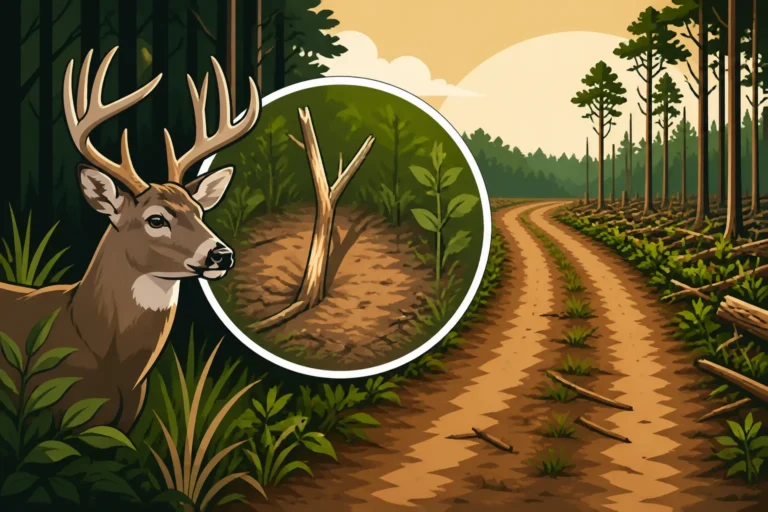
Even in the densest thickets, rabbits leave clues if you know what to look for. One of the most obvious signs is their droppings. Rabbit scat is typically small, round, and dark, looking a bit like tiny peppercorns. If you find concentrations of these, especially in open areas adjacent to heavy cover, it's a strong indicator that rabbits are frequenting that spot. Another key sign is clipped vegetation. Rabbits are herbivores, and they leave distinct, clean cuts on twigs and grasses, often at a sharp angle. Look for these clipped stems on briar canes, young saplings, or even crops like clover or winter wheat along the edges of their preferred cover.
Runways are perhaps the most exciting sign to discover. These are well-worn paths through thick vegetation, often only a few inches wide, created by rabbits repeatedly using the same route. You'll find them weaving through briar patches, under palmetto leaves, or along the base of fallen logs. These runways lead from bedding areas in the thick cover to feeding grounds and escape routes. Identifying these can give you a significant advantage, helping you anticipate where a rabbit might run when flushed. Using a good mapping app like GoHunt can help you visualize the landscape, identify potential travel corridors, and mark where you find these crucial signs, making your next hunt much more efficient.
Essential Gear for Brush Busting
Taking on thick Louisiana brush for rabbits isn't something you can do effectively without the right equipment. The wrong gear will leave you scratched, frustrated, and empty-handed. From what you carry to what you wear, every piece of equipment plays a role in your success and comfort.
Shotguns and Ammunition Choices
When you're hunting rabbits in dense cover, you're looking for quick, close-range shots. A shotgun is undeniably the king of rabbit hunting for this reason. The spread of pellets gives you a much greater chance of hitting a fast-moving target that might only be visible for a split second. While a 12-gauge is always a popular choice for its stopping power and pellet count, don't overlook the lighter, faster-swinging 20-gauge. Many seasoned brush hunters swear by the 20-gauge for its maneuverability in tight spaces. The key is often an open choke, like an improved cylinder or even a skeet choke, to maximize your pattern spread at the close distances you'll encounter.
As for ammunition, stick with smaller shot sizes. Number 6 shot is an excellent all-around choice for rabbits, offering a good balance of penetration and pattern density. Some hunters prefer number 7.5 or even 8 shot for cottontails, especially in extremely thick cover where shots are almost guaranteed to be within 20 yards. The goal is a dense pattern that will quickly dispatch a rabbit without over-penetrating and destroying too much meat. Forget the heavy magnum loads; standard game loads are more than sufficient and produce less recoil, allowing for quicker follow-up shots if needed. Always check the Louisiana Small Game Season Rules for any specific regulations on ammunition, though generally, these are pretty open for rabbits.
Protective Clothing and Footwear
If you're going to bust brush, you need to dress the part. This isn't a sit-in-a-stand-all-day kind of hunt; it's active, gritty work that will put your clothing to the test. The absolute must-have item is a good pair of briar pants or chaps. These are made from tough, thorn-resistant materials like cordura or specialized nylon that will deflect thorns and prevent your legs from becoming a pincushion. Believe me, trying to push through a briar patch in regular jeans is a miserable experience you won't want to repeat.
Pair those pants with a durable, tear-resistant jacket, preferably one with some water resistance for those damp Louisiana mornings. Don't forget tough gloves – leather or synthetic gloves with reinforced palms are crucial for protecting your hands as you push aside thorny branches. Finally, your footwear needs to be up to the task. Waterproof boots are non-negotiable in Louisiana's often wet and muddy terrain. Look for boots with good ankle support and aggressive tread for traction on uneven ground and through slippery mud. Brands like Lacrosse or Muck Boot Company offer excellent options that can withstand the rigors of our swamps and thickets.
Dog Breeds for Thick Cover
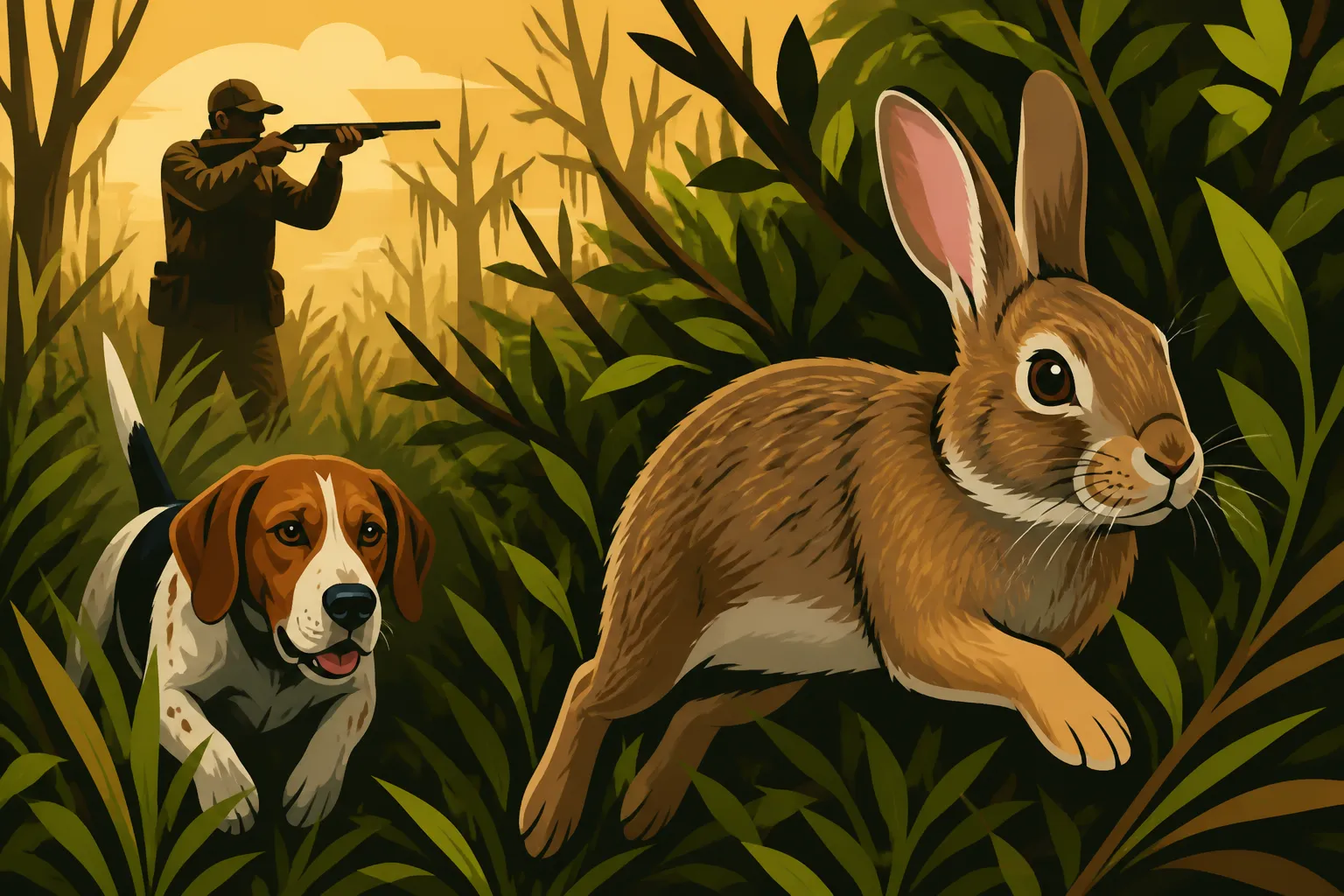
While it's certainly possible to jump-shoot rabbits without dogs, having a good rabbit dog, or a brace of them, exponentially increases your success and makes the hunt incredibly enjoyable. Beagles are the quintessential rabbit dog for a reason. Their incredible noses, relentless tracking ability, and distinctive baying when on a hot trail are legendary. They are built for pushing through dense cover, often disappearing into thickets that you wouldn't dare enter, and their shorter legs allow them to stay on a rabbit's trail without outrunning it too quickly.
Basset Hounds, with their exceptional scenting abilities and even shorter legs, are another fantastic choice for really dense, slow-paced rabbit hunting. They might not be as fast as a beagle, but they're incredibly methodical. Some hunters also utilize various spaniel breeds or even versatile gun dogs like Brittanys as "jump dogs" to flush rabbits, though these breeds might be less inclined to stay on a prolonged track like a beagle. The key with any dog is consistent training and a clear understanding of their natural instincts. A well-trained dog working through the cover can turn a frustrating hunt into a productive one.
| Dog Breed | Key Trait | Best For | Typical Speed in Brush | Scenting Ability |
|---|---|---|---|---|
| Beagle | High energy, strong voice | Classic rabbit chasing, dense cover | Medium | Excellent |
| Basset Hound | Exceptional nose, methodical | Very thick cover, slower pursuits | Slow | Outstanding |
| Cocker Spaniel | Flusher, eager to please | Busting small patches, quick retrieves | Fast | Good |
| Brittany | Versatile gun dog, pointer | Flushing, retrieving, wider areas | Medium-Fast | Very Good |
| Terrier Mix | Fearless, tenacious | Aggressive flushing, tackling brush piles | Variable | Good |
Effective Hunting Strategies in Thick Brush
Hunting rabbits in dense Louisiana cover requires a blend of tactics, patience, and often, teamwork. It's less about sitting and waiting and more about active engagement with the habitat. Whether you're hunting solo or with a crew, understanding how to move and position yourself is critical.
The Art of the Push
A "push" is a classic and highly effective rabbit hunting strategy, particularly when working with dogs or a small group of hunters. The idea is simple: a hunter (or dog) systematically moves through a dense patch of cover, pushing the rabbits out towards waiting shooters. If you're hunting solo without a dog, you become the "pusher." Move slowly and deliberately through the thicket, pausing frequently. Rabbits will often hold tight, hoping you'll pass them by, but a sudden noise or a prolonged pause can make them break. When they bolt, they'll usually run along familiar runways or seek out the nearest similar cover.
When hunting with a small group, the push becomes even more strategic. One or two hunters, often called "beaters" or "drivers," will slowly work through the heaviest cover, making noise and encouraging rabbits to move. The other hunters, the "blockers" or "shooters," position themselves strategically around the edges of the cover, often along suspected escape routes like logging roads, field edges, or thinner lines of trees. Communication is key here. Ensure everyone knows their position and direction of travel. This is where a mapping app like GoHunt can be invaluable for coordinating movements and marking boundaries, especially on public land where you might have to share space.
Working With Beagles and Jump Dogs
This is where rabbit hunting truly shines for many Louisianans. When you unleash a pack of beagles, the hunt takes on a whole new dimension. The dogs will dive into the thickets, quickly picking up a rabbit's scent. Once a rabbit is jumped, the real magic begins: the dogs will open up with their characteristic baying, a sound that gets any rabbit hunter's heart pumping. Rabbits, when chased by dogs, often run in large circles. They typically don't run straight away for miles; instead, they'll try to outmaneuver the dogs and eventually circle back towards where they were jumped, or to another familiar piece of cover.
Your job as the hunter is to position yourself to intercept the rabbit on its return or as it cuts across an opening. Listen intently to the dogs' voices. When the barking intensifies and sounds closer, it means the rabbit is nearby. Find a clear shooting lane and be ready. This requires patience and a good understanding of how rabbits behave under pressure. Sometimes, the rabbit will hole up, and the dogs will "hole bark" indicating they've got it cornered. Other times, it's a fast-paced chase through the woods. It's a truly immersive experience that highlights the incredible instincts of these hunting dogs.
Slow and Steady Stalking
Even without dogs, a patient hunter can still find success in thick brush, though it requires a different approach. This method is often called "jump shooting" or "still-hunting" for rabbits. The key is to move incredibly slowly, taking one or two steps, then pausing for several seconds, sometimes even a full minute. During these pauses, scan the cover intently. Look for any slight movement, an ear twitch, a dark eye, or the outline of a rabbit nestled tight against the ground. Your peripheral vision will often pick up movement better than a direct stare.
As you move, try to anticipate where a rabbit might be hiding – along the edge of a small clearing, at the base of a dense clump of palmetto, or tucked into a log pile. When you spot one, you'll need to be quick to get a shot off before it bolts. This method works best in areas with scattered patches of dense cover rather than vast, impenetrable swamps. It demands keen observational skills and quick reflexes, but the reward of outsmarting a wary rabbit on its home turf is incredibly satisfying. Remember, checking the Louisiana Rabbit Season Opening Day and other Louisiana Public Land Hunting Hours is crucial for planning any hunting trip, ensuring you're there at the right time.
Safety Considerations in Dense Undergrowth
Hunting in thick Louisiana brush is inherently more challenging and carries certain risks that you might not encounter in more open terrain. Prioritizing safety is paramount, not just for you, but for any hunting partners and the public.
Navigating Tricky Terrain
The undergrowth in Louisiana can be deceptively tricky. Hidden stumps, fallen logs covered by leaves, roots, and uneven ground are common hazards that can lead to trips and falls. Add to that the pervasive presence of briars and thorns, and simply moving through the landscape becomes an obstacle course. Always watch your footing, and if you're carrying a firearm, ensure it's handled safely at all times, pointed in a safe direction regardless of a potential fall. Using a walking stick can be a huge help for balance and probing ahead, especially in areas where visibility is limited to just a few feet.
Furthermore, it's easy to get disoriented in dense brush, especially if you're focused on following a dog or a rabbit. Trees all start to look the same, and landmarks disappear. Always carry a compass or, better yet, a GPS device or a smartphone with a reliable mapping app like GoHunt. Mark your starting point and periodically drop waypoints as you move deeper into the cover. This can be a lifesaver if you find yourself turned around. Being prepared for minor injuries, like cuts and scrapes from thorns, with a small first-aid kit is also a smart move.
Shot Placement and Backstops
The close-quarters nature of brush hunting means you need to be extra vigilant about shot placement and, critically, your backstop. When a rabbit flushes and darts through thick cover, it's often a fleeting target. It's incredibly tempting to swing and shoot as soon as you see a flicker of movement, but you must resist this urge if you're not absolutely certain of your target and what's beyond it. A pellet from a shotgun can travel a surprising distance, and in dense woods, a hunting partner or even a structure could be obscured by foliage.
Always identify your target clearly before pulling the trigger. Ensure you have a safe backstop, which means a solid object that will absorb your shot, like a dirt bank, a large tree, or the ground itself. Avoid shooting at game silhouetted against the skyline, as this offers no natural backstop. This discipline is even more critical when hunting with dogs or other people. A quick, ethical shot on a rabbit is satisfying, but never at the expense of safety.
Communicating in a Group Hunt
If you're hunting with a group, clear and constant communication is the cornerstone of a safe and successful hunt. Before you even step foot in the woods, establish clear signals. This might include whistle blasts, specific calls, or hand signals. Crucially, designate a "line" and ensure everyone understands how to maintain it, preventing anyone from getting ahead of the shooters or lagging behind the drivers. The thick brush can easily muffle voices, so agree on how you'll communicate effectively.
Portable two-way radios can be a game-changer for group hunts in dense cover, allowing for real-time updates on rabbit movement or changes in position. Always announce when you're shooting, or when a rabbit has been jumped and its direction of travel. Never shoot directly into a thicket if you don't have a clear view of your target and are certain no one else is in the line of fire. A good hunter always prioritizes safety over a shot. Taking the time to properly brief your group ensures everyone has a fun, productive, and most importantly, safe day afield.
Post-Hunt Care and Regulations
Bringing home delicious rabbit meat is the goal, but the work isn't over once the shot is fired. Proper care of your harvest and adherence to regulations are crucial for enjoying the fruits of your labor and respecting our wildlife resources.
Field Dressing and Transport
Louisiana's warm climate means you need to act quickly to field dress your rabbits. Rabbit meat is delicate, and heat can spoil it fast. The sooner you clean your rabbit, the better the meat will be. The simplest method involves making an incision across the belly, pulling back the skin like a jacket, and eviscerating the animal. Some hunters even break the hind legs and use them as "handles" to pull the skin off in one swift motion. Remove all internal organs immediately. This not only cools the carcass quickly but also removes any potential source of spoilage. For more detailed insights on handling game in warm conditions, you might find our guide on Field Dressing a Deer in Warm Weather helpful, as many principles apply to smaller game too.
Once field dressed, place the rabbits in a cooler with ice, ensuring they're not submerged directly in water unless they're in a sealed bag. This keeps the meat cool and prevents contamination. If you're hunting with dogs and need to carry them for a while, consider a game vest with a waterproof lining or a dedicated game bag that allows for airflow while protecting the meat. Proper handling ensures you're bringing home quality protein that's perfect for a variety of dishes, earning rabbit its spot as one of the Best-Eating Game in Louisiana.
Legal Bag Limits and Season Dates
Before you even head out, it's imperative to check the current regulations for rabbit hunting in Louisiana. The Louisiana Department of Wildlife and Fisheries (LDWF) sets specific season dates and bag limits for cottontail and swamp rabbits, and these can sometimes vary between private land and Wildlife Management Areas (WMAs). You can usually find a comprehensive overview in the annual hunting regulations pamphlet or on the LDWF website. Our article on Louisiana Small Game Season Rules provides a great starting point for understanding these regulations.
Typically, there's a generous daily bag limit, but it's important to know it and stick to it. Overharvesting is irresponsible and can negatively impact local populations. Also, be aware of when the season opens and closes. Missing the opening weekend can be a bummer, but violating closed season rules can result in hefty fines and loss of hunting privileges. Always be sure to verify regulations for the specific area you plan to hunt, whether it's private land or a public access area like one of the many Louisiana Wildlife Management Areas. These areas sometimes have different dates or restrictions, so a quick check beforehand can save you a lot of trouble and ensure your hunt is fully legal and ethical.
Disclaimer
Please remember that hunting regulations and conditions can change. Always consult the latest Louisiana Department of Wildlife and Fisheries (LDWF) regulations and local ordinances before heading into the field. Safety should always be your top priority when handling firearms and navigating outdoor environments.