Anchoring an Alligator Line Legally
The dream of alligator hunting in Louisiana is a powerful draw, conjuring images of thrilling encounters in the bayous and swamps. But for many, especially those new to this unique pursuit, the practicalities of setting lines can quickly turn exciting anticipation into a confusing challenge. One of the most common hurdles, and a place where hunters can inadvertently run afoul of the law, involves properly and legally anchoring those alligator lines. It’s not just about keeping your bait from floating away; it’s about adhering to specific regulations designed to protect public safety, property rights, and the magnificent alligator resource itself. This guide aims to demystify the process, offering a clear, comprehensive breakdown of exactly how to anchor your alligator lines legally and effectively in Louisiana's diverse waterways.
Understanding Louisiana's Alligator Line Regulations
It's easy to feel a bit lost in the dense "legal-speak" of Louisiana's alligator hunting regulations. They can seem like a tangled mess of mandates, but understanding the purpose behind these rules makes navigating them much more straightforward. The Louisiana Department of Wildlife and Fisheries (LDWF) isn't just trying to make things difficult; these regulations are carefully crafted to ensure hunter safety, protect the alligator population, and respect the boundaries of private property owners. When you're out there on the water, whether deep in the Atchafalaya Basin or spread across the vast coastal marshes, you're operating within a complex tapestry of public and private lands, each with its own set of considerations.
The Importance of Legal Compliance
Let's face it, no one wants to receive a citation, especially when you're simply trying to enjoy a hunt. However, beyond avoiding penalties, legal compliance is a fundamental aspect of being a responsible steward of Louisiana's incredible natural heritage. Ignoring the rules can not only cost you a hefty fine and your harvested alligator, but it can also jeopardize future hunting opportunities for everyone. For example, an improperly anchored line might drift into a navigation channel, creating a serious hazard for boaters, or even worse, become lost and turn into a "ghost line" that can snare and harm other wildlife. It's a collective responsibility that begins with a thorough understanding of the regulations. LDWF outlines specific requirements for gear and methods, which serve as your essential roadmap to a successful and legal hunt. For an in-depth look at these methods, be sure to consult our detailed guide on Louisiana Alligator Legal Methods.
Prohibited Anchoring Locations
This particular area is where many hunters, especially those venturing out for the first time, frequently stumble. You simply cannot anchor an alligator line just anywhere you please, even if you possess a valid tag. Private property is a significant concern. You might be cruising along a public waterway, but if the land bordering that waterway is privately owned, you absolutely cannot anchor your line to the bank or any structure on that property without explicit permission from the landowner. This isn't just about common courtesy; it's a direct trespass violation. Imagine a line of alligator baits strung along someone's private pier or tied to their meticulously maintained cypress trees – it's simply unacceptable.
Furthermore, there are strict restrictions on anchoring in navigable waterways. While much of Louisiana's water is publicly accessible, areas specifically designated as clear boat lanes, channels, or marked routes are off-limits for setting lines. This is primarily a public safety measure, designed to prevent your lines from becoming a dangerous obstruction to passing vessels, particularly during low light conditions or at night. It is incredibly important to grasp these distinctions before you even launch your boat. Many experienced hunters find that modern mapping applications, such as GoHunt, are invaluable tools here. They allow you to visualize property boundaries and identify navigable channels well in advance, helping you avoid issues when Finding Louisiana Property Lines and steering clear of these prohibited zones.
Legal Anchoring Methods and Best Practices
Once you've wrapped your head around the basic framework of why these regulations exist, the how of legal anchoring becomes much clearer. Louisiana's rules are designed to offer hunters flexibility while maintaining control and ensuring safety. The overarching principle is to secure your line firmly, mark it clearly, and ensure it remains within legal boundaries. This isn't just about avoiding a fine; a properly anchored line means your bait stays precisely where you intend it to, significantly increasing your chances of a successful harvest and preventing the frustration of lost gear.
Approved Anchor Types and Materials
When it comes down to the actual anchors you use, there's a good deal of leeway, but reliability is absolutely paramount. You need something robust enough to withstand the incredible power of a large alligator and the often-strong currents found in Louisiana's diverse waterways. Common and effective choices include:
- Concrete Blocks: These are heavy, widely available, and generally quite affordable. A standard cinder block or a purpose-poured concrete weight with an embedded loop or drilled hole works exceptionally well. Just ensure any loops are set before the concrete fully cures.
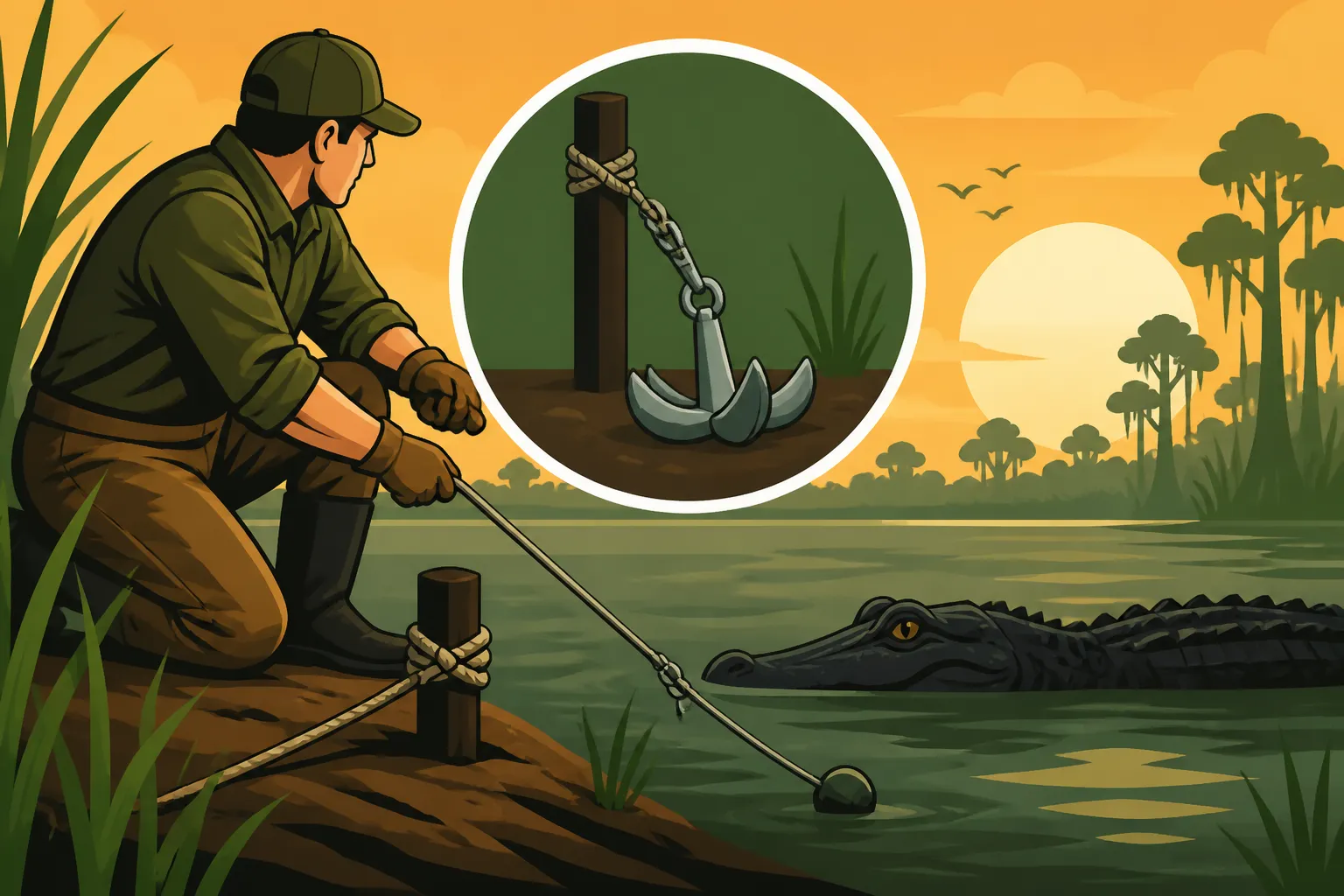
- Rebar Stakes: In marshy areas or locations with soft, muddy bottoms, a long piece of rebar, securely pounded deep into the sediment, can provide excellent holding power. You'll typically want stakes that are at least 3-4 feet long, often with a loop welded on top for line attachment, to ensure they penetrate deep enough to resist a powerful pull.
- Spud Poles: Similar in concept to rebar, spud poles are usually larger diameter pipes or sturdy wooden poles driven into the bottom. They are particularly effective for very soft mud or when you need a more substantial anchoring solution for deeper water or stronger currents.
- Heavy Weights/Mushroom Anchors: For more open water or areas with harder bottoms where stakes won't easily penetrate, conventional boat anchors (like small mushroom anchors) or even heavy pieces of scrap metal can be effective. The primary goal here is sufficient weight and resistance to dragging.
The material and strength of your main line are equally important. Regulations typically specify a minimum breaking strength—often 300 pounds—for your alligator line. This isn't just for holding the gator; it's also to ensure the line can withstand environmental stressors and prevent the anchor from snapping free. Many hunters opt for sturdy nylon or braided polypropylene rope, often in a bright color to enhance visibility.
Proper Line Buoy and Tagging Requirements
This is a critical legal aspect that, surprisingly, is often overlooked: every single alligator line you set must be clearly marked. Think of it as the alligator equivalent of your deer tag; it identifies your property and ensures accountability. Each line must have a float or buoy attached, and this buoy must prominently display your LDWF alligator hunter license number. Not just your name, not just your phone number – specifically your official LDWF license number. This allows enforcement agents to easily identify the owner of the line and verify its legality.
The buoy itself should be durable and highly visible. A robust plastic gallon jug, a purpose-designed fishing buoy, or even a sturdy PVC pipe sealed at both ends can work. The key is that it remains buoyant, is not easily pulled under by a caught alligator, and your license number is clearly and legibly marked on it. Some savvy hunters even add reflective tape to their buoys for easier location during early morning checks, which can be a real advantage when you’re trying to find your lines in the pre-dawn gloom, much like you would when Hunting the Vermilion Parish Marsh for ducks.
Another crucial detail involves the length of your line. Regulations generally stipulate that the line should be no longer than one-half the width of the waterway at the exact point where it’s set. This rule is in place to prevent lines from stretching completely across channels, which could obstruct navigation or create hazards for other boaters. Always err on the side of caution here; a shorter line is always preferable to one that is too long when it comes to compliance.
Step-by-Step Anchoring Process
Let's walk through a typical setup process, assuming you've found a promising spot that is legally accessible and well away from any prohibited areas.
- Scout Your Location Thoroughly: Before you even load your boat, use reliable maps and, if available, digital tools like GoHunt (which offers excellent features for Scouting Louisiana Public Land Before Season) to thoroughly scout the area. Look for alligator sign, but also verify public access and assess the bottom conditions. Will a rebar stake hold effectively, or do you need a heavier concrete block?
- Prepare Your Gear: Have all your necessary equipment ready to go: your main line, bait, anchor, and buoy. Double-check that your LDWF license number is clearly and legibly marked on your buoy. For bait, remember that using game animals is typically prohibited; most hunters rely on rotten chicken quarters, various fish, or commercially prepared alligator bait.
- Approach Your Spot Carefully: Navigate slowly and deliberately to the precise location where you intend to set your line. Pay close attention to current and wind direction, as these environmental factors will influence how your line lays out in the water.
- Deploy the Anchor: Gently lower your chosen anchor into the water. If using a stake, drive it firmly into the bottom using a sledgehammer or a specialized driving tool from your boat. The anchor must be heavy enough or driven deep enough that it will not easily drag if a large alligator strikes the bait.
- Set the Line: Securely attach your main line to the anchor. Ensure the line is taut enough to keep the bait suspended in the desired location but not so rigid that it cannot absorb the shock of a powerful strike. Allow just enough slack for the alligator to pull the line without immediately breaking it, but not so much that it becomes a tangled, unmanageable mess.
- Attach Bait: Securely fasten your chosen bait (chicken, fish, etc.) to the bait hook. Make absolutely certain that the hook is strong and firmly attached to the main line.
- Attach Buoy: Finally, attach your clearly marked buoy to the line, typically a few feet from where the bait is suspended. The buoy should float freely and visibly above the water, prominently displaying your license number. Double-check that the overall line length, from anchor to bait to buoy, complies with the one-half waterway width rule.
- Record Your Set: Developing the habit of recording the GPS coordinates of each line is an excellent practice. This will make checking your lines much more efficient, especially in the vast and often confusing environments of the marsh or swamp.
Common Pitfalls and How to Avoid Them
Even the most experienced hunters can occasionally make mistakes, and when you're out on the water, small oversights can quickly escalate into significant problems. Understanding the common traps that hunters fall into when anchoring alligator lines can save you a great deal of frustration, and potentially a lot of money in fines. The Louisiana marsh and swamp are often unforgiving environments, and being aware of these pitfalls can make your hunt much smoother and more successful.
Incorrect Line Placement
One of the most frequent issues arises from simply placing your line in the wrong location. This isn't always due to malicious intent; sometimes, it's simply a lack of understanding regarding property lines or navigation rules. We touched on anchoring to private property without permission earlier, but it's a point worth reiterating forcefully. Always know exactly where you are. Ignorance of property boundaries is not a valid defense in the eyes of the law. While mapping resources like GoHunt can be invaluable for visualizing land ownership on the water, always carry physical maps or a reliable GPS unit that clearly displays these boundaries.
Another common error is placing lines too close to public boat launches, marinas, or established recreational areas. Even if the waterway is technically public, setting lines in high-traffic zones is generally discouraged and can quickly lead to complaints from other users. Use common sense and try to seek out more secluded areas that do not interfere with other public uses of the water. This also applies to placing lines that completely block small bayous or cuts, which can obstruct the passage of other boats. Remember, the regulation regarding the line being no more than half the width of the waterway is in place for a crucial reason!
Inadequate Anchoring and Visibility
Picture this scenario: you've confidently set a line, but a massive alligator strikes the bait with incredible force, and your anchor begins to drag. Now you have a lost line, a potentially injured alligator, and a hazardous piece of gear drifting uncontrolled through the waterway. Inadequate anchoring is a major pitfall. Using an anchor that is too light for the specific bottom type or too short to hold against the current can easily result in the line breaking free. Always choose an anchor that is overkill for the expected conditions. If you're in soft, mucky mud, a longer, heavier rebar stake or a robust spud pole driven deep will serve you far better than a small concrete block that might simply sink and disappear.
Visibility is another critical component. Your buoy serves not only as a place for your license number but also as a vital marker. If your buoy is too small, dull in color, or easily submerged by a strong alligator, it fails its purpose entirely. Investing in a brightly colored, robust buoy with large, clear lettering for your license number is non-negotiable. Some proactive hunters even add small reflective strips to their buoys for those early morning checks that occur before the sun fully illuminates the horizon, a practice familiar to anyone who's spent time Working a Bayou Bank for Late-Season Deer or trying to locate their alligator lines at first light.
Failure to Check and Retrieve Lines Promptly
Louisiana regulations clearly mandate that you must check your alligator lines at least once every 24 hours. This is not a suggestion; it is a strict, enforceable rule. Failing to check your lines not only carries the risk of a fine but is also inhumane to any alligator that may be caught and left on the line for an extended period. Animals must be dispatched quickly and humanely. A responsible hunter understands this obligation and makes a firm commitment to checking lines diligently.
Equally important is the prompt retrieval of all lines at the conclusion of your season or if you decide to pull them early. Leaving old lines, hooks, and bait in the water creates potential entanglement hazards for other wildlife, marine vessels, and even swimmers. It also contributes to litter and pollution in our invaluable waterways. Always plan your hunt with the understanding that you will need to remove all your gear once you are finished, leaving no trace behind. This practice aligns perfectly with the broader principles of conservation and responsible hunting, ensuring that future generations can continue to enjoy Alligator Hunting Louisiana's Coastal Marsh.
Ensuring Safety While Setting Alligator Lines
Beyond the legal technicalities of anchoring, there's a vital additional layer of consideration: your personal safety and the safety of anyone accompanying you. Hunting alligators is an inherently exciting, yet potentially dangerous, endeavor. These are incredibly powerful, wild animals, and the natural environment they inhabit can be challenging and unpredictable. A smart hunter always prioritizes safety, understanding that a truly successful hunt is always, first and foremost, a safe hunt.
Handling Alligators on the Line
Once you’ve successfully hooked an alligator, the real challenge begins, and safety becomes paramount. A seemingly "dead" alligator on the line can suddenly explode into violent action, and their raw power is truly astonishing. Never approach an alligator on a line casually. Always assume it is capable of sudden, powerful movements and act accordingly.
- Approach Cautiously: Use your boat to approach the alligator from a safe distance, typically from the tail end, moving slowly and deliberately.
- Secure the Head: The primary and most critical goal is to gain control of the alligator's head. Many hunters utilize a catch pole or snare to secure the alligator’s snout and neck, carefully pulling it alongside the boat.
- Dispatch Humanely: Once the alligator is securely controlled, it must be dispatched quickly and humanely. This is most commonly accomplished with a bangstick (a specialized firearm designed for close-range dispatch) or a .22 caliber pistol aimed precisely at the brain. Always strictly adhere to LDWF guidelines for humane dispatch.
- Never Reach Over the Side: Resist any urge to lean or reach over the side of the boat to grab a line or an alligator directly. One sudden lunge from the animal can easily pull you into the water, creating an extremely dangerous situation that you absolutely want to avoid at all costs. Our comprehensive guide on Landing an Alligator From a Small Boat provides even more detailed, step-by-step instructions for safely managing this critical phase of the hunt.
Navigating Hazardous Louisiana Waterways
Louisiana's intricate network of waterways is undeniably beautiful, but it can also be incredibly treacherous. When you're out setting or checking lines, you’re often operating in remote areas characterized by rapidly changing water levels, hidden submerged obstacles, and active wildlife.
- Know Your Boat and Your Water: Be intimately familiar with your boat's capabilities and the specific waters you are navigating. Shallow spots, submerged logs, and sharp oyster reefs can appear without warning. A reliable GPS unit equipped with up-to-date mapping (applications like GoHunt can be particularly helpful here, especially for identifying navigable channels and potential hazards) is an invaluable piece of equipment.
- Weather Awareness: The weather in Louisiana can shift dramatically in a matter of minutes. Thunderstorms, strong winds, and sudden cold fronts are common occurrences. Always check the detailed weather forecast before heading out and be prepared to cut your trip short if conditions begin to deteriorate. Getting caught in a severe squall in the open marsh is not only unpleasant but also extremely dangerous.
- Buddy System: Whenever humanly possible, hunt with a partner. If something unexpected goes wrong—be it a medical emergency, a boat breakdown, or an issue with a particularly large and aggressive alligator—having another person there can genuinely be a lifesaver. Ensure that someone on shore is aware of your float plan: specifically where you are going, when you expect to return, and what actions they should take if they do not hear from you by your designated check-in time.
- Essential Safety Gear: This should be considered standard practice for any boating excursion in Louisiana, but it becomes even more critically important when hunting alligators in remote areas. Always carry:
- Life jackets for every individual on board (and wear them!)
- A comprehensive first-aid kit
- A loud whistle or horn
- A marine-rated fire extinguisher
- Fully functional navigational lights (essential if hunting at dawn/dusk or in low visibility)
- A paddle or push pole for shallow water
- Extra fuel beyond what you think you'll need
- A reliable communication device (a fully charged cell phone, or a satellite messenger if you're in truly remote areas with no cell service).
By being meticulously prepared, maintaining constant vigilance, and deeply respecting the immense power of these incredible creatures and their natural environment, you can ensure that your alligator hunting adventures in Louisiana are not only legal and successful but, most importantly, exceptionally safe.
Table: Legal Alligator Line Anchoring Considerations
| Aspect | Legal Requirement | Best Practice | Notes |
|---|---|---|---|
| Anchor Type | Securely holds line (no specific material required) | Concrete block, heavy rebar stake, spud pole, mushroom anchor | Choose based on bottom type (soft mud vs. hard bottom) and current. |
| Line Strength | Minimum 300 lbs breaking strength | Over 400 lbs is ideal, durable nylon or braided polyprop. rope | Prevents breakage from alligator, current, or snags. |
| Line Length | No more than ½ width of waterway at point of set | As short as possible while allowing for effective bait placement | Avoids obstructing navigation and reduces entanglement risk. |
| Buoy/Float | Clearly displays LDWF Alligator Hunter License Number | Brightly colored, durable, clearly legible, securely attached | Essential for identification and visibility. Reflective tape for low light. |
| Placement | Public waters, not blocking navigation, not on private property | Consult maps (GoHunt for property lines), avoid high-traffic areas | Respect private land, public safety, and other water users. |
| Checking Lines | At least once every 24 hours | Check at dawn, as early as possible, daily | Humane dispatch, legal compliance, and prevents lost animals. |
| Retrieval | All gear removed at season end or when hunt concludes | Leave no trace; remove all lines, hooks, and anchors | Protects environment, prevents "ghost lines" and hazards. |
Understanding Water Depth and Current Dynamics
When you're out there on Louisiana's diverse waterways, especially in larger bodies of water like parts of the Atchafalaya River or some of the deeper, faster-moving bayous, gaining a precise understanding of both water depth and current dynamics is absolutely crucial for effective and, perhaps more importantly, legal anchoring. A small, lightweight anchor that might work perfectly well in a still, shallow marsh pond simply will not suffice in a fast-moving river or a deep, active channel. The consistent force of the current can exert immense pressure on your line and anchor, potentially dragging it far from your intended setting spot, or even causing it to break free entirely, creating a hazard and a lost opportunity.
Before committing to setting your lines, take a deliberate moment to assess the water flow. You can utilize your boat's depth finder or even a simple weighted line to get an accurate idea of the bottom contour and the specific depth. If you’re operating in an area with a notably strong current, you will undoubtedly need a significantly heavier anchor or a longer, more robust stake driven much deeper into the sediment to ensure it holds. Strategically positioning your bait just outside the main current, perhaps in a calmer eddy or snugly along a tranquil bank, can also significantly help ensure your line stays securely in place and your bait remains prominently visible to passing alligators. This acute awareness of water conditions is quite similar to how an experienced duck hunter meticulously reads the water for Reading a Marsh Pond for a Morning Flight in order to predict precisely where birds will likely land.
Ignoring the powerful effects of current can lead to more than just lost gear; it can inadvertently cause your line to drift into a prohibited area, such as a designated navigation channel or over a private property boundary, which could lead to an unwelcome encounter with law enforcement. Always, without exception, consider the dynamic and ever-changing nature of Louisiana's complex waterways when you are selecting and deploying your alligator line anchoring system.
Disclaimer
Hunting is an inherently dangerous activity that carries risks. This guide provides general information for educational purposes only and is not a substitute for official Louisiana Department of Wildlife and Fisheries (LDWF) regulations. Always consult the most current LDWF hunting regulations and any applicable local ordinances before engaging in any hunting activities. Strict adherence to all laws, safety practices, and ethical considerations is the sole responsibility of the individual hunter.