Late-Season Food Sources for Louisiana Whitetails
As the crisp bite of winter truly settles into Louisiana, deer hunters often face a frustrating reality: the deer seem to vanish. After the excitement of the rut dies down and the leaves fall, those prime early-season spots that were buzzing with activity can become eerily quiet. This guide is all about peeling back the layers of that late-season mystery, diving deep into where Louisiana whitetails go when natural food sources get scarce and how you can adapt your hunting strategy to find them.
Understanding the Late-Season Shift in Louisiana Deer Habits
By December and January, things are completely different for whitetails across Louisiana. The abundance of early-season forage has dwindled, the frantic energy of the breeding season has passed, and deer are primarily focused on two things: survival and recovery. Ignoring this fundamental shift in their priorities is a sure way to spend many cold mornings staring at empty woods.
The Post-Rut Reality and Nutritional Needs
The rut is incredibly taxing on bucks, who can lose a significant portion of their body weight chasing does, fighting rivals, and barely eating. Does, especially those bred successfully, also experience nutritional demands as they enter gestation. This means that after the rut, both sexes are desperate to replenish their energy reserves. They're not looking for love anymore; they're looking for calories, and lots of them. Their metabolism is working overtime to put on fat for the leanest months ahead and to repair muscle tissue.
This intense drive for energy means deer will prioritize the most calorie-rich and digestible foods available, even if it means venturing into areas they might have avoided earlier in the season due to pressure or perceived risk. They'll also become more predictable in their feeding patterns, often moving to and from these limited food sources with a renewed urgency. Understanding this biological imperative is the first step to successful late-season hunting. If you're still hunting travel corridors from the rut, you're probably missing the boat entirely.
Impact of Weather on Foraging Behavior
Louisiana's late-season weather can be fickle. One day it's a balmy 60 degrees, the next a hard freeze drops temperatures into the 20s. These fluctuations dramatically influence deer movement and their reliance on specific food sources. A mild winter might mean some green browse persists longer, scattering deer more. But a severe cold snap, particularly one that includes ice or snow (rare, but it happens!), will consolidate deer onto the most accessible and nutrient-dense foods.
Deer have to work harder to maintain body temperature when it's cold, burning more calories. This amplifies their need for high-energy foods and encourages them to feed more frequently, often during daylight hours when temperatures are at their warmest. Conversely, on warmer late-season days, their movement might be more subdued, perhaps feeding more during twilight hours. Keeping a close eye on the forecast and how it impacts deer's caloric needs is crucial. A good resource like the GoHunt app can help you track weather patterns and even predict deer activity based on local conditions, giving you an edge when planning your hunt. Remember, that crisp morning after a sharp drop in temperature can be golden for seeing deer on their feet. If you want to learn more about how deer react to these conditions, check out our guide on Hunting After a Cold Front.
Primary Natural Food Sources When the Woods Go Brown
When the vibrant greens of summer and fall fade, and the acorns are mostly gone, the natural world offers a limited buffet for whitetails. Identifying these often-overlooked sources is key to finding late-season deer. These aren't always the flashy, obvious choices, but rather the subtle, persistent, and often less palatable options that deer turn to out of necessity.
Overlooked Browse and Woody Stems
While the tender leaves of early season are long gone, deer are masters of adaptation. In the late season, they shift their focus to woody browse – the twigs, buds, and terminal ends of small trees and shrubs. These aren't as nutritious as lush leaves, but they provide essential roughage and some residual nutrients. Look for signs of heavy browsing on species like:
- Greenbrier: This thorny vine is a deer favorite year-round, and its evergreen leaves and succulent stems are a lifesaver when other food is scarce. You'll often find deer trails leading directly into dense greenbrier thickets.
- Honeysuckle: Another evergreen vine, honeysuckle, remains palatable and provides crucial forage. In areas with a lot of honeysuckle, deer can sustain themselves quite well.
- Privet: While an invasive species, privet holds its leaves late into the winter and is readily browsed by deer.
- Blackberry canes: Deer will strip the tender outer bark and buds from dormant blackberry and dewberry canes.
- Maple and Sweetgum saplings: The tender shoots and buds of young maple and sweetgum trees are also targeted.
You'll need to get out and scout these areas extensively. Look for clipped ends on twigs, often at deer-mouth height, and areas where small patches of green persist amidst the barren landscape. Deer will frequent these spots heavily, so fresh tracks and droppings can confirm active feeding. If you're trying to figure out where deer are moving in specific regions, our article on Louisiana Deer Hunting Area by Area can provide valuable insights into regional habits.
Persistent Mast and Remaining Acorns
Even after the main acorn drop, observant hunters know that some mast crops can linger, especially after a mild fall or in specific microclimates. While the big white oak and red oak acorns might be gone, don't write off every oak tree.
- Late-dropping oaks: Some red oak varieties, like Nuttall oaks or Willow oaks, might hold onto their acorns longer, especially if they are growing in wetter soils or protected areas. These acorns are often still viable and sought after.
- Water oak acorns: These smaller acorns are not typically preferred due to their high tannin content, but in times of scarcity, deer will absolutely devour them. Water oaks are common in Louisiana, particularly in bottomland areas.
- Persimmons: While most persimmons drop in the fall, some trees, especially those with smaller fruit, might retain a few shriveled, yet still edible, persimmons well into winter. These are a treat for deer due to their high sugar content.
- Mushrooms/Fungi: After certain rain events and temperature shifts, various fungi can sprout. While not a primary food source, deer will opportunistically graze on these, adding moisture and trace nutrients to their diet.
The key here is diligent scouting. Walk through your hunting area after a hard frost and look for areas where acorns might be concentrated, perhaps under a specific grove of oaks that got overlooked or where water has kept them from being completely consumed or washed away. You might find pockets of activity around these "leftover" food sources.
Aquatic Vegetation in Bottomland and Swamps
Louisiana's vast bottomland hardwoods and cypress-tupelo swamps offer a unique set of late-season food sources not found in drier upland areas. While many plants die back, aquatic and semi-aquatic vegetation can remain accessible and vital.
- Duckweed and other surface plants: In calm backwaters and sloughs, mats of duckweed or other small floating plants can persist. Deer will wade into shallow water to browse on these.
- Submerged vegetation: Certain submerged grasses and plants, particularly in areas with stable water levels, can offer food. Deer are surprisingly adept at feeding on these, especially if they are close to the surface.
- Cypress and tupelo knees: While not a primary food source, deer will browse on the tender tips of cypress and tupelo knees, particularly in areas with heavy deer pressure and limited options.
- Swamp Privet: Similar to upland privet, swamp privet often retains its leaves and offers good browse in wet areas.
Hunting these areas requires specific tactics, often involving boats or specialized waders, but the reward can be significant. Deer in these environments are often less pressured due to the difficulty of access. If you're looking for strategies to hunt these challenging areas, our guide on Hunting the Atchafalaya Basin Swamp Deer might be a great read to expand your knowledge. When you're Reading Aerial Photos for Central Louisiana Deer, pay close attention to the waterways and low-lying areas where these aquatic foods might be found.
Agricultural Fields and Planted Food Plots as Magnets
Once natural food sources dwindle, agricultural fields and well-maintained food plots become absolute magnets for late-season deer. These areas offer concentrated, high-calorie meals that deer desperately need, making them prime hunting locations.
Winter Wheat and Cool-Season Legumes
Many Louisiana landowners and hunters plant cool-season food plots designed specifically to attract deer and provide nutrition through the winter. These plots are a lifesaver for deer and a hotspot for hunters.
- Winter Wheat: This is perhaps the most common and effective late-season food plot choice in Louisiana. It sprouts quickly, withstands heavy grazing, and remains green and palatable even through mild frosts. Deer will hit these fields hard, often multiple times a day, especially as natural browse disappears. Look for fresh tracks and droppings in wheat fields, indicating consistent use.
- Clover: Varieties like Durana or Ladino clover can persist through milder Louisiana winters, offering high-protein forage. While not as robust as wheat in very cold conditions, clover patches can be a consistent draw.
- Oats and Rye: Similar to wheat, oats and rye are cool-season grasses that provide excellent forage. Often planted in mixes, they offer a diverse food source that deer relish.
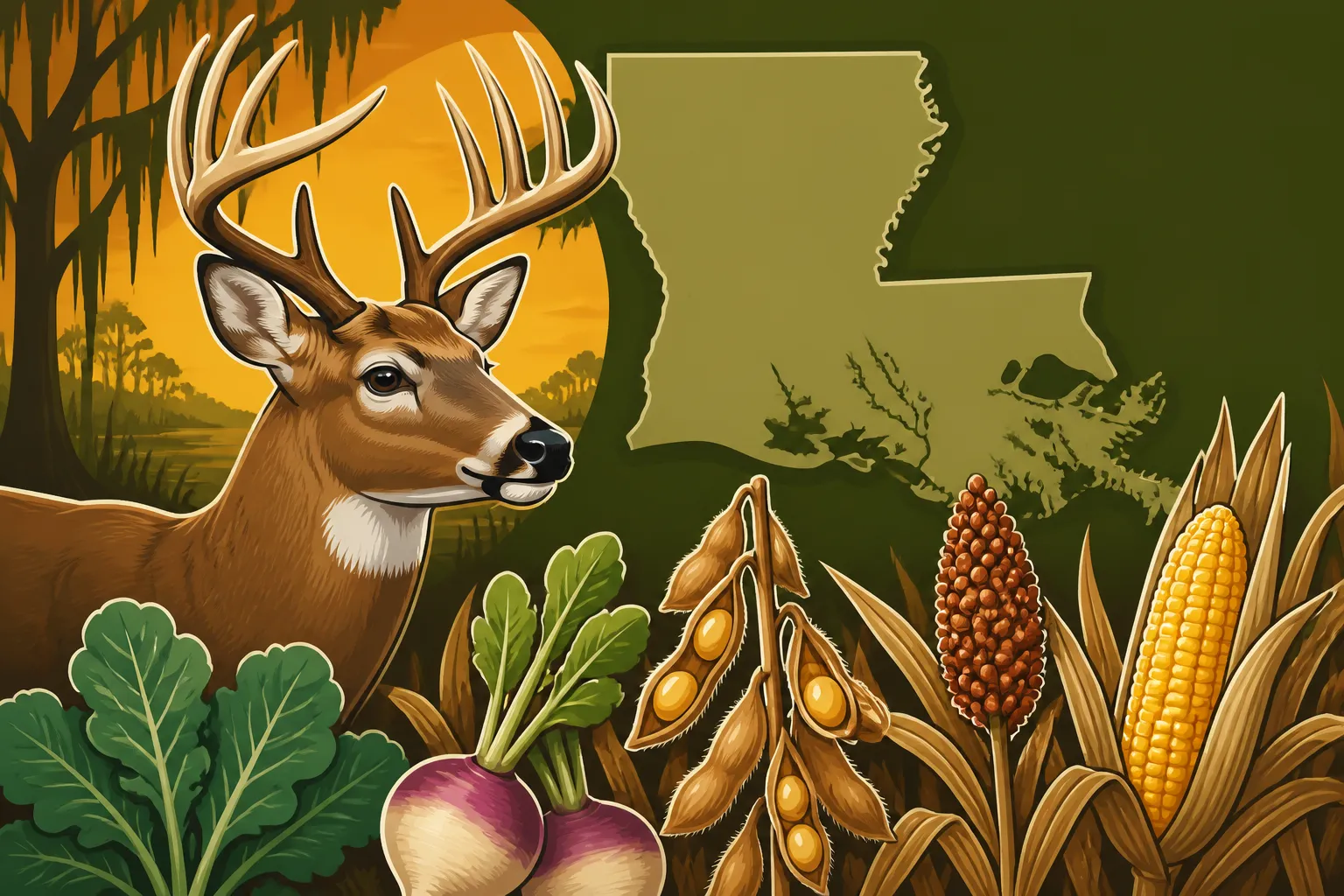
- Brassicas (Rape, Turnips, Radishes): These can be incredibly effective, especially after a hard frost sweetens their leaves. Deer will often ignore them until the temperatures drop, but once they start, they'll often dig for the roots of turnips and radishes as well, which are packed with energy.
A well-established winter wheat field is often the single most productive spot to hunt late-season deer, particularly during daylight hours. Deer will become very patterned on these resources. Our guide on Hunting a Green Field Planted for Deer offers detailed advice on how to approach these types of setups.
Leftover Crops and Post-Harvest Gleaning
Even if you're not hunting over a dedicated food plot, commercial agricultural fields can be incredible late-season attractants. Farmers leave behind a surprising amount of forage after harvest, and deer are quick to capitalize on these easy calories.
- Cornfields: After the corn has been harvested, there will always be shattered ears and individual kernels left on the ground. This highly energetic food source is a deer magnet. Deer will methodically work these fields, particularly during the coldest parts of the season, to glean every last bit.
- Soybean Fields: While not as calorie-dense as corn, leftover soybeans can still be found after harvest. Deer will browse on any remaining green vegetation and pick up fallen beans.
- Rice Fields: In the coastal and central rice-growing regions, leftover rice grains and the green shoots of volunteer rice can be a significant draw for deer, especially in fields that aren't immediately flooded for waterfowl.
- Peanut Fields: If you're lucky enough to hunt near peanut fields, these are a goldmine after harvest. Deer will dig for leftover peanuts, which are extremely high in protein and fat.
Hunting these fields often means setting up on field edges, pinch points, or travel corridors leading to and from bedding areas. Be aware that deer will often enter these fields after dark, especially if they're experiencing heavy pressure. However, during cold snaps, their need for calories can overcome their wariness, leading to more daytime activity. Using tools like GoHunt can help you pinpoint agricultural areas and identify potential travel routes. If you're looking at Hunting the Tensas Parish River Bottoms, for instance, you'll find plenty of agricultural influence there. For hunters in other regions, understanding the unique food sources in Hunting the Florida Parishes Bottomland is also beneficial.
Strategizing Your Hunt Around Late-Season Food
Finding late-season deer is less about luck and more about understanding their needs and adapting your approach. It requires a shift from early-season rut tactics to a focused, food-centric strategy.
Scouting for Scarcity
Late-season scouting is a completely different ballgame. Instead of looking for scrapes and rubs, you're searching for specific food sources and the fresh sign around them. This is where you truly earn your venison.
- Focus on the freshest sign: Fresh tracks in frost-covered ground, newly nipped browse, and fresh droppings around specific food sources are your best indicators. Deer often use the same handful of areas repeatedly.
- Identify bottlenecks: Look for funnels and pinch points that deer use to travel between bedding areas and the most desirable food sources. These can be old logging roads, narrow strips of timber between fields, or even subtle changes in elevation that make travel easier.
- Utilize aerial maps: Before you even step foot in the woods, use aerial photography (like those found on mapping apps from brands such as GoHunt) to identify potential food plots, agricultural fields, and areas of dense evergreen cover that might hold browse. Map out potential travel routes. Our guide on Scouting Louisiana Public Land Before Season emphasizes the importance of these digital tools, and they're even more critical in the late season.
- E-scouting is paramount: Before you commit to walking miles, spend time looking at satellite imagery. Identify the darkest green patches in agricultural areas that might indicate a late-planted food plot or a section of winter wheat. Look for areas where dense cover meets these food sources. The less time you spend stomping through the woods, the less pressure you put on the deer.
Remember, deer are often concentrated in these areas of scarcity. Finding one late-season hot spot can be far more productive than trying to cover a vast amount of ground.
Adapting Stand Placement and Timing
Once you've identified the late-season food sources, your stand placement and timing become critical. This isn't the time for high-risk gambles; it's about making smart, calculated moves.
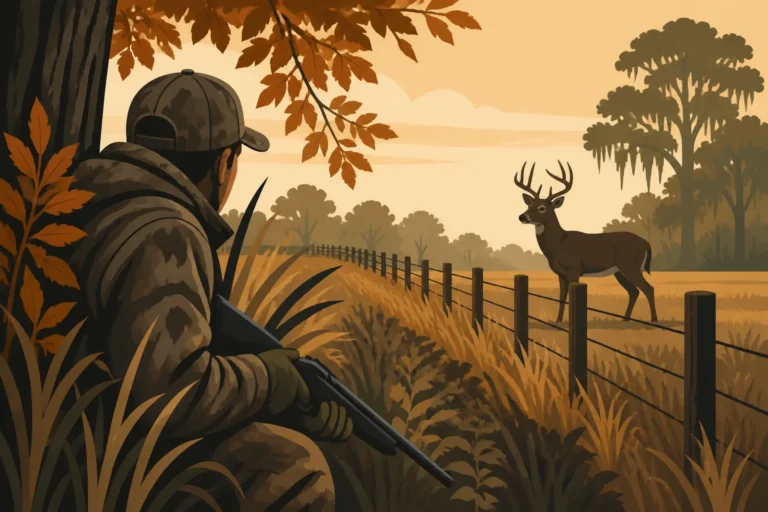
- Hunt the fringes: Deer are often wary of entering wide-open food plots or fields during daylight, especially if they've been pressured. Position your stand on the edge of the woods, where deer feel safer before stepping out. Look for small pockets of cover or brush lines that extend into the field.
- Focus on bedding-to-feed routes: Identify the thickest, nastiest cover where deer are bedding, and then locate the most direct and secure routes they use to access their preferred food. Set your stand up along these routes, often closer to the bedding area to catch them earlier in the evening or later in the morning.
- Consider morning vs. evening hunts: On cold days, deer might feed heavily in the morning to fuel up after a frigid night. On warmer days, or if they've been pressured, evenings might be more productive as they wait for dusk. Be flexible with your schedule. If you're struggling to locate deer, our article on Sitting a Field Edge in Late Season can give you specific tactics for stand placement.
- Don't overlook midday movement: Because deer are constantly trying to recover from the rut and build up reserves for winter, they might be moving and feeding at odd hours, especially between 10 AM and 2 PM. Don't be afraid to sit through midday, particularly if you're on a prime food source. The less pressure these deer get during these hours, the more likely they are to use them.
By meticulously scouting for food and adjusting your stand placement and timing, you can significantly increase your odds of encountering a late-season Louisiana whitetail. It’s a challenging time, but for those who adapt, it can be incredibly rewarding. Plus, filling that freezer after a long season with some venison is always a great feeling. For those thinking about the future, knowing that these late-season food sources support a healthy herd helps ensure good Louisiana Deer Antler Growth Timeline for the years to come.
Disclaimer
Hunting is an inherently dangerous activity. Always prioritize safety, understand and adhere to all Louisiana Department of Wildlife and Fisheries (LDWF) regulations, and obtain proper licenses and permits. The information provided in this guide is for educational and entertainment purposes only and should not be taken as legal advice. Always scout your specific hunting area thoroughly and be aware of your surroundings.