Deer Drives With Three or Four Hunters
It’s a common scenario in Louisiana: you’ve got a small group of hunting buddies, maybe three or four of you, and you're staring at a piece of woods that just looks like it holds deer. But those crafty whitetails aren't budging from their thick cover. Trying to cover ground alone is often fruitless, and waiting on a stand can be a test of endless patience. This guide is all about how to leverage that small team effectively with smart, safe deer drives, turning those impenetrable thickets into productive hunting grounds.
Strategic Planning for Your Small Deer Drive
When you only have a few hunters, every move counts. You can't just line up and push. A small deer drive in Louisiana, whether it's on a private lease or a piece of public ground, requires precision, careful thought, and a good understanding of deer behavior. It's not about making noise and hoping for the best; it's about channeling deer toward specific, well-covered escape routes.
Scouting the Terrain and Deer Sign
Before you ever set foot on the property with your firearms, a significant amount of your success hinges on thorough scouting. You need to identify where the deer are bedding, where they're feeding, and the natural travel corridors they use. This isn't just about finding tracks; it's about understanding the lay of the land, the thickest cover, and any natural funnels or pinch points. Are there recently cut timber areas? Are there old logging roads or creek bottoms that act as highways for deer? Knowing these details allows you to predict their likely escape routes when pressure is applied.
Take the time to walk the area, even in the off-season. Look for rub lines, scrape lines, and well-worn trails. These tell you not just that deer are there, but how they move through the habitat. A powerful tool for this kind of reconnaissance is a good mapping application like GoHunt. You can overlay property lines, topographic maps, and even satellite imagery to get a bird's-eye view of potential drive paths and escape routes without physically tromping through every inch of the woods. This is especially vital when Scouting Louisiana Public Land Before Season If you're hunting dense areas like the Atchafalaya Basin or other river bottomlands, understanding the subtle contours of the land will be your greatest asset.
Understanding Wind and Escape Routes
Deer in Louisiana are incredibly sensitive to wind, and they'll almost always try to use it to their advantage when pressured. When planning a small drive, you must consider the prevailing wind direction. Standers should be positioned downwind of where you expect the deer to emerge, or at least cross-wind, to prevent deer from scenting them. The drivers, too, need to be mindful of the wind so they don't blow their cover too early. Deer have an uncanny ability to circle back behind drivers if they catch scent, effectively negating the drive.
Beyond the wind, think about the deer's natural tendencies when pressured. They often try to skirt the edges of the perceived danger, using the thickest cover available. They'll also head for water, dense swamps, or private land boundaries if those offer perceived safety. Your goal is to identify these primary escape routes and position your standers to intercept them. This might mean setting up along a creek bank, a slight ridge, or a field edge. Remember, deer want to feel secure, so they'll often avoid open areas unless forced. This understanding is key to making a productive drive.
Identifying Bottlenecks and Pinch Points
With only three or four hunters, you can't cover vast stretches of woods. You need to be smart about where you focus your efforts. This means identifying bottlenecks, funnels, and pinch points in the terrain. These are natural constrictions that concentrate deer movement, making it easier for a small number of standers to intercept them. Examples include narrow strips of timber between two clearings, a thin bank of woods alongside a river or bayou, or a saddle between two ridges.
A good example might be hunting a relatively isolated patch of hardwoods surrounded by agriculture, where deer are likely bedding. When pushed, they’ll almost always try to use the narrowest part of that cover to get to the next block of woods or a larger bedding area. By placing one or two standers at these natural choke points, you dramatically increase your odds. For more specific guidance on reading terrain, consider reading about Reading Aerial Photos for Central Louisiana Deer. Utilizing a mapping tool like GoHunt can help you visualize these landscape features, highlighting depressions, drainage ditches, and changes in elevation that can funnel deer.
Assigning Roles and Positions for Maximum Impact
With a limited number of hunters, clearly defined roles are absolutely critical. There's no room for confusion or improvisation mid-drive. Everyone needs to understand their objective and how it contributes to the overall success.
The Standers: Placement and Patience
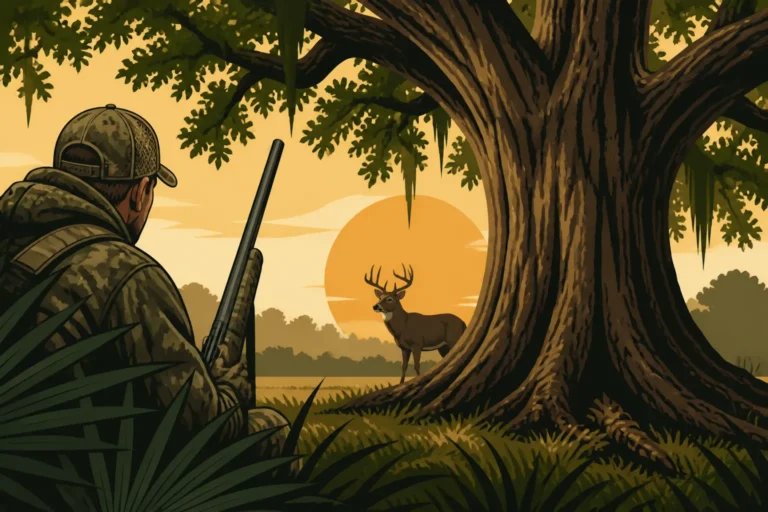
Typically, with three or four hunters, you'll want one or two standers, depending on the terrain and the number of drivers. These are the hunters who will be positioned to shoot. Their role requires immense patience and discipline. They must get into position quietly and well before the drive starts, ensuring minimal disturbance. Standers should position themselves where they have a clear line of sight down anticipated escape routes, but also have good cover to break up their silhouette. Think about areas where deer might hesitate, offering a better shot opportunity, such as a creek crossing or a dense thicket edge.
Remember that deer, when pushed, might not crash through the woods. They could slip out quietly, especially if they sense human presence but aren't yet full-blown spooked. A stander needs to be ready for this subtle movement. Elevated positions, like a treestand, can give a stander a significant advantage in seeing deer approach through thick cover. However, a well-brushed-in Using a Ground Blind on Louisiana Public Land, particularly in areas with limited trees or where visibility is paramount, can also be highly effective. The stander’s job is to remain absolutely motionless, scanning their assigned zone, and being ready for a quick, ethical shot.
The Drivers: Pace and Pressure
The drivers are the active component of the drive, responsible for moving the deer. With a small group, you'll likely have one or two drivers. Their role isn't about running and yelling, but rather about creating a consistent, manageable amount of pressure that pushes deer in the desired direction. A slow, steady pace is usually more effective than a fast, chaotic one. Think of it less as a chase and more as a gentle nudge. Deer are smart, and a frantic drive often causes them to double back or slip out undetected through the flanks.
Drivers should walk parallel to each other, maintaining visual contact if possible, or using pre-determined landmarks to stay on course. They should scan for deer moving ahead of them and call out any sightings to the standers (more on communication shortly). The drivers might occasionally stop and listen, or make some soft noises (like stick clacking) to keep the deer moving. Their path should be designed to push deer towards the standers and away from undesirable escape routes, such as thick cover that you can't cover or areas with less visibility. In swampy areas, understanding Wind and Thermals in Swamp Bottomland, even for drivers, is essential to avoid pushing deer against the wind into an unexpected quarter.
Communication is Key
Effective communication among your small hunting party is paramount for both safety and success. Before the drive begins, everyone needs to be clear on the plan: who is standing where, who is driving, the intended path of the drivers, and the expected escape routes of the deer. Establish clear boundaries for the drive area and identify any safety zones where shooting is prohibited.
During the drive, a simple system of communication is best. Handheld radios are excellent for this, but even a few pre-arranged calls can work in a pinch. Drivers might use a soft whistle or light tap on a tree to signal they are moving or have spotted something. Standers should also be able to communicate if they see deer moving in an unexpected direction or if a deer breaks through their line. Keep communication concise and clear, avoiding unnecessary chatter that could spook deer. Before you start, remind everyone of the rules for shooting – specifically, identifying your target and knowing what's beyond it, especially crucial during a Deer Drives on Louisiana Public Land.
Executing the Drive Safely and Effectively
Now that you've planned and assigned roles, it's time to put the plan into action. This phase focuses on the mechanics of the drive, with safety always being the top priority.
Safety First: Hunter Orange and Communication
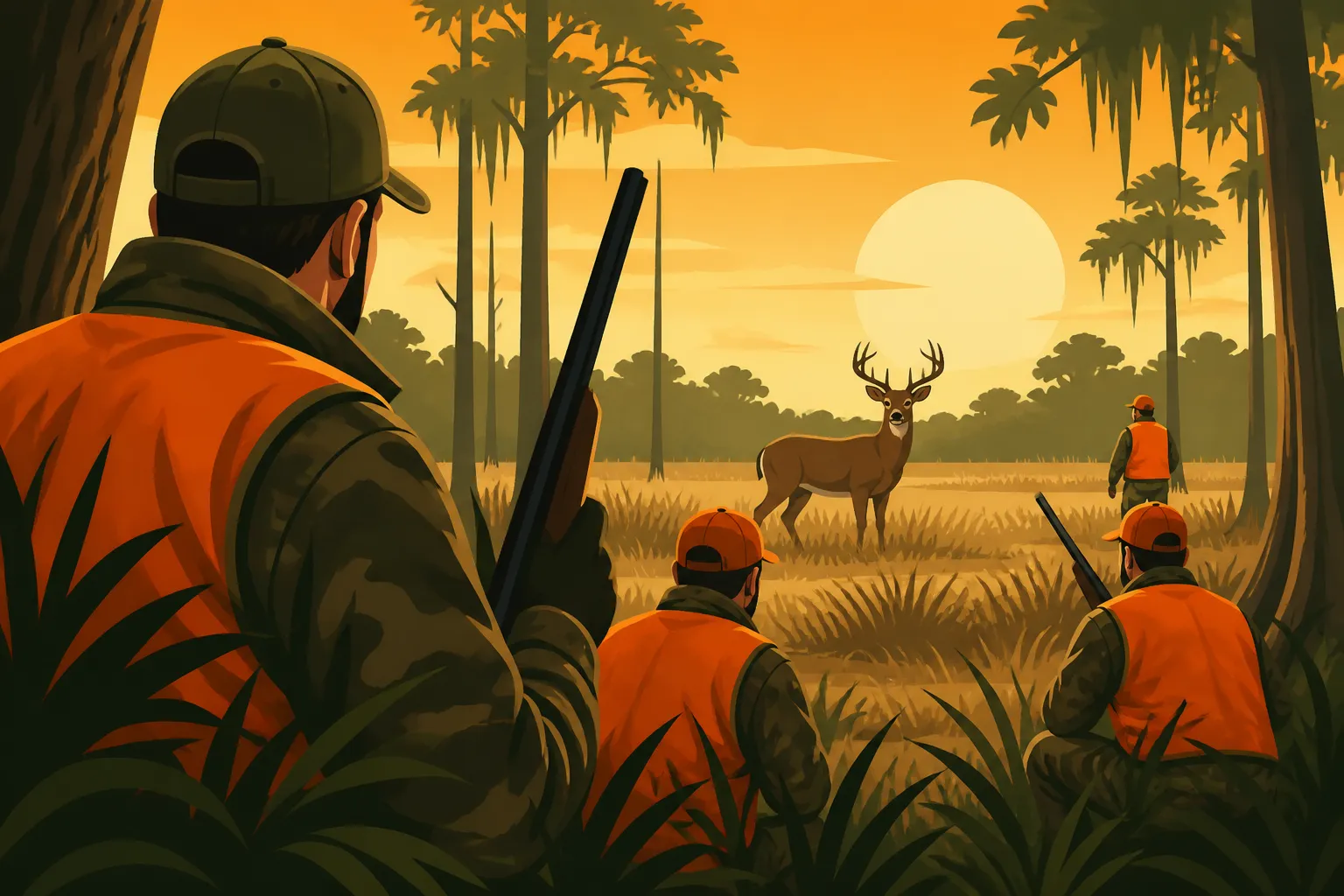
In Louisiana, hunter orange is generally required during daylight hours of gun season for deer. Even if it's not strictly mandated for your specific hunt (e.g., private land archery), it's highly recommended for anyone participating in a deer drive, especially with firearms. Standers should wear a minimum of a blaze orange hat and vest, and drivers should be similarly adorned. This makes everyone highly visible to each other, reducing the risk of accidents in the heat of the moment. Always remember that identifying your target and what lies beyond is the cardinal rule of firearm safety. Never take a shot at movement or sound.
Before the drive starts, reconfirm the boundaries and safe zones. If you have standers at a particular point, the drivers should know exactly where those standers are and ensure they don't push too close, or shoot in their direction. Likewise, standers should know the line of the drive and avoid shooting back towards the drivers. Using a mapping app like GoHunt can help draw out these safe shooting lanes and boundaries directly on the map, visible to all participants on their phones.
Setting the Pace and Angle
As mentioned earlier, the pace of the drive is critical. It should be slow and deliberate. Drivers should walk slowly enough to thoroughly cover their assigned strip of woods, pausing occasionally to listen and scan. This measured approach allows deer to feel pressured but not panicked, guiding them along preferred travel corridors towards the standers. A frantic rush will often scatter deer unpredictably, making them harder to intercept.
The angle of the drive is also important. Drivers shouldn't just walk in a straight line. They should angle their push slightly, perhaps curving inward to concentrate the deer more effectively, or angling to account for the terrain or specific bedding areas. For instance, if deer are bedded along a small ridge, drivers might walk parallel to the ridge, pushing deer off it and into a funnel below. The goal is to gently herd the deer, not just chase them blindly.
Reading Deer Movement Mid-Drive
Experienced deer drivers learn to "read" the woods during a drive. This means listening for subtle sounds – a twig snap, a rustle in the leaves, the faint sound of hooves hitting the ground. These sounds can tell you if deer are moving, how many, and in what general direction. Sometimes, a driver might hear deer slipping out the side, requiring them to adjust their angle slightly to put more pressure on that escape route.
Standers also need to be adept at reading deer. When a deer approaches, it might not come bounding out. It could sneak, stopping and listening, trying to assess the threat. A stander needs to hold still, wait for a clear shot, and be patient. Don't rush the shot. Even if a deer is moving quickly, you generally have more time than you think. Take a deep breath, acquire the target, and make a clean, ethical shot. During the rut, bucks might be moving differently, and knowing Hunting the Rut in the Early-Start Areas, even during a drive, can inform how deer react.
| Role | Primary Objective | Key Qualities | Ideal Placement | Typical Gear |
|---|---|---|---|---|
| Standers | Intercept deer pushed by drivers | Patience, keen observation, quiet movement, marksmanship | Downwind of escape routes, bottlenecks, thick cover edges | Hunter orange, binoculars, rangefinder, firearm/bow, communication device |
| Drivers | Apply pressure to move deer | Steady pace, good woodsmanship, awareness of stander positions | Upwind of bedding areas, pushing towards standers | Hunter orange, communication device, maybe a walking stick for subtle noise |
Post-Drive Strategy and Considerations
The drive isn't over when the shooting stops (or when no shots are fired). There are still crucial steps to take to ensure success and learn for future hunts.
Tracking and Recovery
If a shot is taken, the immediate priority shifts to tracking and recovery. Even if a deer goes down in sight, approach cautiously. If it runs, mark the spot where it was hit and its last-seen direction. Gather your hunting party, discuss the shot, and begin the track systematically. In Louisiana's dense cover and often warm temperatures, quick and efficient tracking is vital. Deer can vanish quickly in the palmettos or cypress knees.
Look for blood, hair, bone, and disturbed earth. Take your time, marking the trail with flagging tape if needed. Don't push too fast, especially if the blood trail is sparse, as this can push an injured deer further. If you lose the trail, spread out and grid search. If you’re tracking after dark, you might need special equipment. For deep dives into what to do when tracking gets tough, refer to Tracking a Deer Through Louisiana Leaf Litter. In challenging terrain, like the deep mud of a basin, finding your animal swiftly is paramount, so consider the resources on Reading Louisiana Mud for Fresh Deer Movement.
Evaluating Drive Success and Adjusting
After every drive, successful or not, take a moment to debrief with your hunting party. What went well? What could have been done differently? Did deer escape in an unexpected direction? Was the pace too fast or too slow? Were the standers in the right spots? This debriefing is a critical learning opportunity that will make your next drive even more effective.
Perhaps you realize that deer consistently blew out the side of the drive because a stander was positioned incorrectly. Or maybe the drivers needed to apply more pressure in a particular thicket. Keep notes, either mentally or physically, of what you observe. This iterative process of planning, executing, and evaluating will refine your small group deer drive strategy over time. Consider how the time of year, current Hunting Pressure on Louisiana Public Land, or even a warm spell demanding a Warm-Weather Sitting Strategy in Louisiana, might influence deer behavior and your next drive's effectiveness.
Adapting to Different Conditions
Louisiana's hunting conditions can vary wildly, from crisp cold fronts to sweltering warm spells. Your drive strategy might need to adapt. In colder weather, deer might be more willing to move and hold tighter to cover, making drives potentially more effective. In warm weather, deer might be sluggish and less inclined to run, or they might quickly move to water. Your pace and the pressure applied by drivers might need to be adjusted accordingly.
Similarly, different types of cover require different approaches. A drive through an open pine plantation will be very different from one through a dense cypress-tupelo swamp. In areas with high visibility, standers might need to be further out; in thick brush, closer. The beauty of a small, agile hunting party is its ability to adapt. You don't have a massive logistical operation, so you can make quick changes on the fly based on what you're seeing and learning.
Disclaimer
Hunting is an inherently dangerous activity. Always prioritize safety, understand and follow all Louisiana hunting regulations, and ensure you have proper hunter education and experience before attempting any hunting method, including deer drives. This guide is for informational purposes only and does not substitute for hands-on training or adherence to local laws.