Layout Blind Hunting Coastal Rice Fields
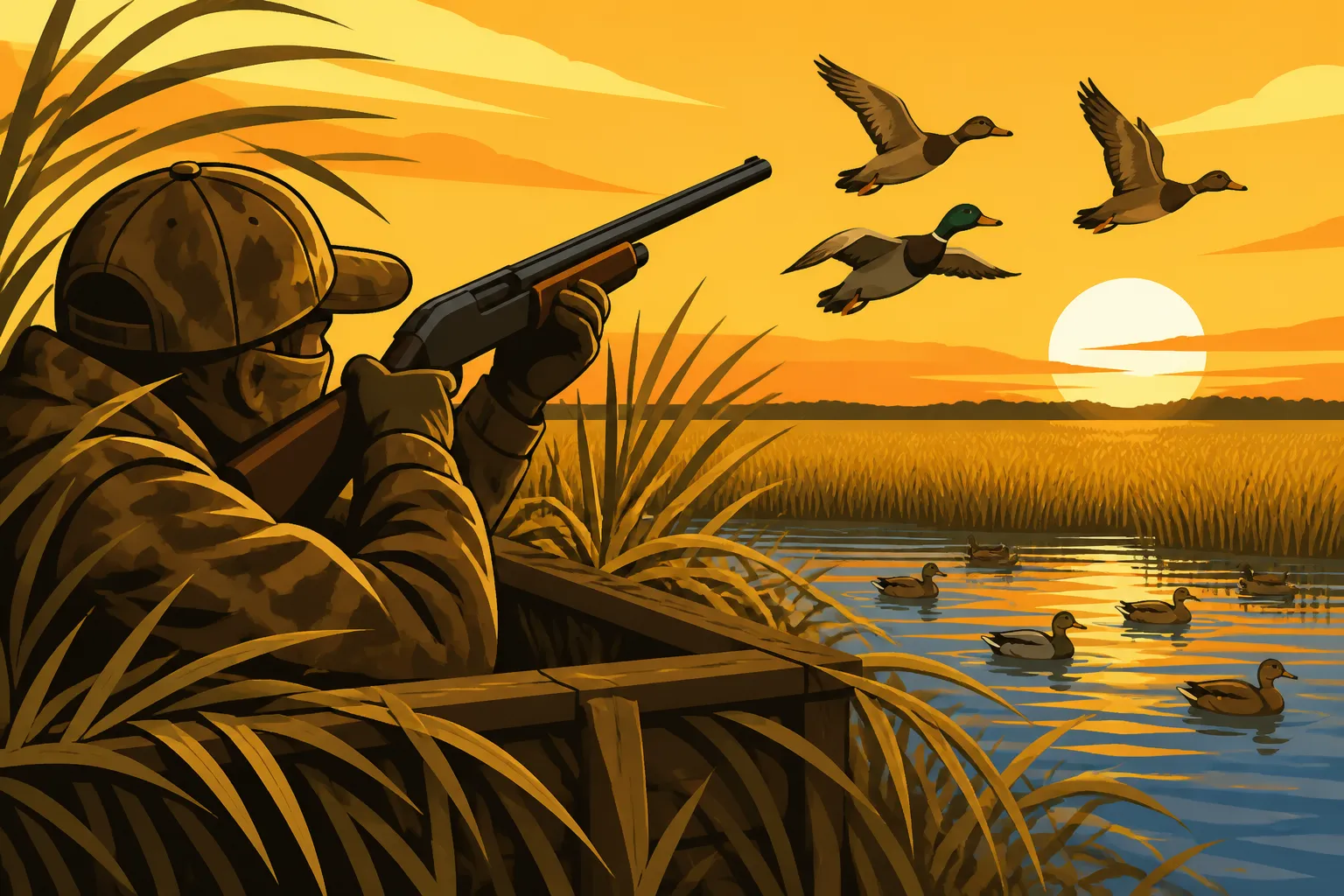
Hunting ducks in Louisiana's vast coastal rice fields can be incredibly rewarding, but it's also notorious for presenting some of the toughest waterfowl challenges out there. Birds get educated quickly in these wide-open spaces, making traditional hunting methods often fall flat. This guide will dive deep into the world of layout blind hunting, showing you exactly why it's become a cornerstone tactic for success and how to master it to put more ducks and geese in your strap.
The Coastal Rice Field Challenge for Waterfowl Hunters
Louisiana's coastal rice fields are a magnet for wintering waterfowl, but their very nature creates unique hurdles for hunters. Unlike timber or marsh ponds, these fields offer little in the way of natural cover, forcing hunters to get creative – or get busted.
Wide-Open Spaces and Wary Birds
Imagine a thousand acres of stubble, flat as a pancake, stretching to the horizon. That's the typical scene in places like Cameron Parish or Vermilion Parish after the rice harvest. Ducks and geese, especially after a few weeks of hunting pressure, develop an uncanny ability to spot anything out of place. They've seen it all: poorly hidden boats, hunters standing in plain sight, and blinds that stick out like sore thumbs. These birds spend their days feeding in these fields, constantly scanning the skies and ground for predators. Their survival instincts are finely tuned, and even the slightest glint of sunlight off an exposed face or a sharp edge in the landscape can send a flock veering off course.
The sheer scale of these fields also means birds have endless options. If they don't like what they see at your spread, they can simply land a quarter-mile away, completely out of range, and still access prime feeding grounds. This relentless pressure makes it incredibly difficult to consistently fool mature birds, leading to frustrating days of watching ducks cup their wings only to flare at the last second. It's enough to make even seasoned hunters question their entire strategy, wondering how anyone manages to punch their limit in such a challenging environment.
Limited Natural Cover Options
Unlike the bayous and sloughs of the Atchafalaya Basin Swamp Deer or the flooded timber where you can lean against a cypress, natural cover in a rice field is virtually non-existent. You might find a few scattered clumps of weeds or a levee bank, but these are rarely sufficient to conceal multiple hunters and their gear effectively. Relying solely on these sparse natural elements often means compromising your setup, placing you in less-than-ideal positions just to achieve some semblance of cover.
This lack of cover forces hunters into a precarious balancing act: you need to be in the birds' flight path and near their preferred feeding spots, but without any topographical advantages to hide you. Building elaborate pit blinds can be effective, but they're permanent, require significant effort, and restrict your mobility. What happens when the birds shift their pattern to another part of the field, or the wind changes drastically? You're stuck. The need for mobile, adaptable concealment that virtually disappears into the field is paramount, and without it, you're constantly fighting an uphill battle against the ducks' superior eyesight and the unforgiving openness of the landscape. This is where the innovation of purpose-built concealment really shines.
The Unmatched Advantage of Layout Blinds
When you're dealing with the challenges of wide-open rice fields and intensely wary waterfowl, you need a hunting solution that virtually erases you from the landscape. That's precisely where layout blinds come into their own, offering a level of concealment and versatility unmatched by other methods.
Blending Seamlessly with the Environment
The core genius of a layout blind lies in its ability to mimic the natural undulations and low-lying features of a harvested rice field. Unlike a box blind or even a carefully brushed-in A-frame blind that presents a distinct profile, a layout blind is designed to be almost flat to the ground. When properly brushed, it becomes virtually invisible. Think about it: a duck flying overhead sees a vast expanse of stubble and dirt. A layout blind, covered in the same stubble, becomes just another small bump in the field, indistinguishable from the natural debris. This low profile is the ultimate answer to wary birds that are constantly looking down for anything out of place.
The design specifically addresses the high vantage point of incoming birds. From above, human forms, sharp angles, and unnatural colors are easily detected. A good layout blind, camouflaged correctly with local vegetation, breaks up the human outline completely. This allows hunters to position themselves precisely in hot zones, such as along a preferred flight line or right in the middle of a feeding area, without sacrificing the element of surprise. It’s like magic – one moment you’re there, the next you’re gone, allowing those cupped-wing, feet-down approaches that every duck hunter dreams of.
Portability and Adaptability for Shifting Bird Patterns
Another massive advantage of layout blinds is their incredible portability. Traditional pit blinds or permanent structures, while effective in certain situations, lock you into a single location. But what happens when the birds decide they prefer the far corner of a thousand-acre field, or a strong north wind pushes them to a different flight path? You're out of luck. Layout blinds, however, can be folded up and moved with relative ease. This means you can react quickly to changing conditions, shifting bird patterns, and even a last-minute scout that reveals a new hot spot.
Imagine you've scouted a field and found a concentrated area of feeding activity. You set up your layout blinds, but after the first flight, you notice birds consistently landing fifty yards to your left. With layout blinds, you can quickly adjust your position, pick up your decoys, and relocate to where the birds truly want to be. This adaptability is crucial in rice field hunting, where conditions and bird behavior can change by the hour. It gives you the flexibility to chase the birds, rather than waiting for them to eventually come to you. This dynamic approach significantly increases your chances of success, making every hunt feel more strategic and responsive to the ducks' movements. If you’re serious about Hunting the Rut in the Early-Start Areas for deer, you know how important mobility is, and it's no different for ducks.
Selecting the Ideal Layout Blind for Louisiana
Choosing the right layout blind isn't a one-size-fits-all decision, especially when you're dealing with the diverse conditions of Louisiana's coastal rice fields. You'll want something durable, comfortable, and designed for superior concealment.
Key Features and Considerations
When you're shopping for a layout blind, think about the practicalities of a Louisiana hunt. First, comfort is huge. You're going to be lying in this thing for hours, sometimes in damp, muddy conditions. Look for models with good padding, a comfortable headrest, and ample interior space to stretch out a bit. Some blinds, like those from Avery Outdoors or Final Approach, are known for their comfort features, which can make a long, cold morning much more bearable. A comfortable hunter is a patient hunter.
Next, consider the materials and durability. Louisiana's climate is tough – humidity, mud, potential for light rain, and constant exposure to the elements mean your blind needs to be built to last. Look for heavy-duty, waterproof fabrics like 600D or 900D polyester. Reinforced stitching and sturdy aluminum frames are also indicators of quality. Think about how easily it cleans up too; mud is inevitable, so a blind that sheds dirt and dries quickly is a bonus. Finally, ease of brushing is critical. Does the blind have plenty of stubble straps or pockets for you to easily weave in local vegetation? The more natural material you can add, the better your concealment will be. Look for a blind that makes this process intuitive and quick, so you're not fumbling with it in the dark.
Low-Profile vs. Sit-Up Blinds
The choice between a low-profile and a sit-up blind often comes down to personal preference and the specific hunting situation. Low-profile blinds are designed to be as flat to the ground as possible, offering maximum concealment. They typically require you to lie almost completely flat, springing up only when it's time to shoot. This design is exceptional for fooling super wary birds in extremely open areas where any vertical profile is a dead giveaway. They literally disappear into the landscape, making them perfect for those late-season birds that have seen every trick in the book.
On the other hand, sit-up blinds offer a bit more comfort and a slightly less restrictive shooting position. While still low to the ground, they allow you to recline at more of an angle or even sit upright, making it easier to watch birds, drink coffee, or fiddle with calls without constantly lifting your head. The trade-off is a slightly higher profile, which can be an issue with incredibly wary birds in wide-open, barren fields. However, if you're hunting a field with slightly taller stubble, a deeper ditch, or you just prioritize comfort, a sit-up model might be a better fit. Brands like Tanglefree offer excellent options in both categories. Many hunters will have a mix of both types in their spread, or adjust based on how educated the birds are on any given day.
Here's a quick comparison of common layout blind types:
| Feature | Low-Profile Layout Blind | Sit-Up Layout Blind |
|---|---|---|
| Concealment | Excellent, virtually invisible when brushed | Very Good, slightly higher profile |
| Comfort | Good, but requires lying mostly flat | Better, allows more upright posture, less restrictive |
| Visibility | Limited until shooting position is assumed | Better for scanning, observing bird behavior |
| Portability | Excellent, folds compactly | Good, can be slightly bulkier |
| Best Use | Highly pressured birds, extremely open fields, minimal cover | Less pressured birds, fields with some stubble/ditch cover, longer hunts |
| Example Brands | Avery Finisher, Final Approach Eliminator | Tanglefree Flight Series, Final Approach S.U.B. |
Strategic Decoy Spreads for Layout Blind Success
Decoy spreads are the unsung heroes of successful waterfowl hunting, and when you're tucked into a layout blind in a vast rice field, getting them right is even more critical. Your decoys aren't just attracting birds; they're also serving as a confidence builder and a focal point for incoming flocks.
Creating Realistic and Inviting Spreads
The goal of your decoy spread in a rice field is to create the illusion of a safe, inviting feeding or resting area. This means realism is paramount. Use a mix of puddle duck decoys (mallards, pintails, gadwall, teal) if those are your primary targets, or a healthy dose of goose decoys (specks, snows) if they're abundant. Motion decoys are absolutely essential in these open environments. Spinning-wing decoys, jerk strings, and even simple feeder butt decoys that wobble in the wind add life to your spread, mimicking actively feeding birds and creating a visual beacon. A single spinning-wing mojo can make a world of difference, but a few of them strategically placed will draw birds' eyes from miles away.
Consider the wind direction carefully. Ducks almost always land into the wind. Your spread should be positioned so that birds approach the decoys and then turn to land, bringing them directly over your layout blinds. A typical setup involves placing a concentration of feeder decoys upwind, with a landing zone (the "kill hole") directly in front of your blinds. Spread out your decoys to look natural, avoiding perfect symmetry. Real birds don't land in perfect lines. Think about small family groups, pairs, and singles. Use variety in species and posture to give the impression of a thriving flock.
Incorporating Geese and Confidence Decoys
Even if you're primarily targeting ducks, don't underestimate the power of goose decoys as "confidence decoys." Geese are typically larger and often perceived as less vulnerable than ducks. If ducks see a group of geese comfortably feeding, it signals that the area is safe. In Louisiana's coastal fields, this often means specklebelly (white-fronted) geese or even snow geese. A few full-body or shell goose decoys strategically placed slightly upwind or to the sides of your duck spread can significantly boost its pulling power.
Furthermore, consider other confidence boosters like a few full-body heron decoys or even a lone crane. These non-game birds often inhabit rice fields and their presence suggests a peaceful, undisturbed environment. Just like Hunting Small Private Tracts in Louisiana requires attention to local details, so does setting up your decoys. The more natural and varied your spread appears, the more likely those wary ducks and geese are to commit. Remember, it's not just about attracting them; it's about convincing them that your little slice of the rice field is the safest spot to drop in for a meal or a rest.
Achieving Perfect Concealment in Open Fields
Having the right layout blind is only half the battle; the real magic happens when you make it truly disappear into the landscape. This takes meticulous attention to detail and a keen understanding of what birds see from above.
Brushing and Blending Techniques
This is arguably the most critical step in layout blind hunting. You can have the fanciest blind on the market, but if it's not brushed in properly, it's just an expensive lump in the field. The key is to use local, natural vegetation that matches your surroundings perfectly. In a rice field, this means rice stubble, dead grasses, and perhaps some dirt clods. Before you even set up your blind, take a few minutes to gather ample amounts of this material. Don't be shy; you always need more than you think.
When brushing, layer the material onto your blind's stubble straps or pockets, paying close attention to breaking up the hard lines and edges of the blind. The goal is to make it look like a natural part of the field. Stuff grass and stubble into every nook and cranny. Pay extra attention to the head and foot ends, as these are often the most exposed. Some hunters even spread a thin layer of mud or loose dirt over the fabric of their blind to dull any unnatural sheen. If your blind has a flag port, make sure the flap for it is also brushed. Walk away from your spread 20-30 yards and look back from different angles. If you can spot your blind easily, so can the ducks. Adjust and add more material until it vanishes. It's a continuous process; as the hunt progresses, you might need to adjust or add more material if the wind shifts or you dislodge some cover.
Using the Terrain to Your Advantage
Even in seemingly flat rice fields, there are subtle terrain features you can exploit to enhance your concealment. Look for irrigation ditches, levee banks, or slight depressions in the field. These natural contours can provide a few crucial inches of extra cover, allowing your layout blind to sink even further into the landscape. Positioning your blind along the edge of a shallow ditch, with the ditch acting as a natural backrest and further obscuring your profile, can be incredibly effective. Even a slight rise in a field can create a "dead spot" where your blind is less visible from certain angles.
If you're hunting in a field with row crops, like corn or soybeans that were recently harvested, position your blinds so they run with the rows, not across them. This helps your blind blend in with the linear patterns of the field. Mapping tools, like those offered by GoHunt, can be incredibly useful for identifying these subtle topographical changes and planning your setup before you even step foot in the field. You can zoom in on satellite imagery to find those perfect low spots or the edges of a barely perceptible swale. Remember, every little bit of natural cover you can leverage contributes to a more effective and invisible setup, making it that much harder for educated birds to spot you. This fieldcraft is as important as the decoys themselves, ensuring those ducks commit to your spread with confidence.
Hunting Ethics and Safety When Hunting with Layout Blinds
While layout blinds offer incredible advantages, their very nature requires extra vigilance regarding safety and ethical hunting practices. When you're lying low to the ground and blending in, communication and awareness become even more critical.
Communication and Situational Awareness
The primary safety concern with layout blinds is the inherent difficulty in seeing other hunters, especially in low light or dense fog. This makes clear communication among your hunting party absolutely non-negotiable. Before anyone gets in their blind, establish who will call the shot, and everyone must understand and acknowledge this. Use clear, concise verbal commands like "Take 'em!" or "Heads up!" to signal when birds are coming in and when it's safe to rise and shoot. Never assume everyone sees the same thing or is ready at the same time.
Beyond your immediate party, situational awareness of your surroundings is vital. Are there other hunting parties in the area? Is there a public road or residential area nearby that could be in your shot zone? Always be aware of your muzzle direction, especially when rising from the blind. It's easy to get disoriented when popping up quickly. A good practice is to always point your muzzle downfield, away from other hunters, until you're fully upright and have acquired your target. This diligence mirrors the care you’d take when Choosing Legal Primitive Firearms Gear or tracking a deer through thick cover; safety is paramount. Make sure everyone knows the safe zones of fire and sticks to them.
Ethical Shot Selection and Retrieve Protocols
From a layout blind, particularly when birds are cupping in close, it can be tempting to shoot birds at the first opportunity. However, ethical hunting dictates that we only take clean, kill shots. Avoid "sky-busting" or taking shots at birds that are too high or too far out. Not only does this spook incoming flocks for everyone, but it also increases the risk of wounding birds that are never recovered. Wait until the birds are within effective range and have committed to your spread, offering a clear shot. Your goal should be quick, humane kills.
Retrieving downed birds from a layout blind setup in a rice field also requires careful planning. If you're hunting with a dog, ensure your dog is trained to stay calm in the blind until released and knows to retrieve on command. For hunters without dogs, establish a clear protocol: who gets up, who stays down, and how to safely retrieve the bird without flushing other incoming ducks. If you've shot a bird that falls into thick mud or a ditch, communicating its location to the designated retriever is crucial. Never rush a retrieve if there are other birds working. It's always better to wait for a lull in the action to ensure safety and avoid ruining the rest of your hunt. This attention to detail ensures not only a successful hunt but also an ethical one, respecting both the game and your fellow hunters.
Disclaimer
Hunting is an inherently dangerous activity. This guide is for informational purposes only and does not substitute for proper training, adherence to all local, state, and federal regulations, or personal responsibility. Always prioritize safety, wear appropriate blaze orange or pink when required, and ensure you have all necessary licenses and permits. Wildlife populations, regulations, and access can change rapidly, so always consult the latest Louisiana Department of Wildlife and Fisheries (LDWF) regulations before heading afield.