Hunting With Dogs Where Louisiana Allows It
For many of us who grew up in Louisiana, the bay of a good deer dog or the frantic tail-wagging of a retriever is as much a part of the hunting experience as the sunrise itself. However, navigating the ever-changing landscape of regulations for hunting with dogs can feel like trying to run through quicksand – confusing, frustrating, and often leaving you feeling stuck. This guide is here to untangle those rules, explore the diverse opportunities available, and help you understand exactly where and how you can share the thrill of the hunt with your four-legged partners in the Sportsman's Paradise.
Understanding Louisiana's Dog Hunting Regulations
Louisiana has a rich tradition of hunting with dogs, but this tradition comes with a patchwork of rules and regulations that vary significantly across different game species, property types, and even specific Wildlife Management Areas (WMAs). It’s not a simple "yes" or "no" answer, and misunderstanding these rules can lead to fines, loss of privileges, or worse, conflict with other hunters or landowners. The key is diligence and knowing where to look for the most current information, which often means consulting the Louisiana Department of Wildlife and Fisheries (LDWF) official regulations pamphlet or using reliable apps like GoHunt that integrate up-to-date state rules.
General Statewide Rules and Restrictions
Across Louisiana, some fundamental principles govern hunting with dogs, regardless of the game. First and foremost, all hunting dogs must have some form of identification. This typically means a collar with the owner's name, address, and telephone number. This isn't just a suggestion; it's a legal requirement, and it’s critical for retrieving a lost dog, especially on sprawling public lands. Another general rule revolves around harassment. You can't use dogs to intentionally harass wildlife outside of legal hunting seasons or methods. For instance, using dogs to chase deer during closed season is absolutely prohibited. It’s also important to remember that all hunters, including those hunting with dogs, must possess the appropriate Louisiana Hunting Licenses and What They Cost, including any necessary stamps or permits for specific species.
Furthermore, there are often restrictions on how dogs can be transported or contained, especially in vehicles on public roads or within certain sensitive habitats. The idea is to prevent dogs from running uncontrolled and potentially disturbing wildlife or private property. Always double-check the latest LDWF regulations, as these can be updated annually. Understanding these basic tenets before you even consider what species to pursue with your canine companion is the first step toward a safe and legal hunt.
Public vs. Private Land Distinctions
The biggest differentiator for dog hunting opportunities lies in whether you're on public or private land. On private land, landowners generally have more leeway in allowing or prohibiting dog hunting, provided they adhere to statewide regulations. If you have permission to hunt a private tract, you might find more flexibility regarding the use of dogs, especially for deer or hogs, than on public property. However, it's paramount to have explicit permission from the landowner for any hunting activity, and that includes clarifying their stance on dog usage. Many private leases and clubs have specific bylaws governing dog use to avoid conflicts with neighboring properties or to manage their deer herd differently.
Public lands, on the other hand, are much more restrictive. Wildlife Management Areas (WMAs) and National Forests, like Kisatchie National Forest, have their own specific rule sets that often supersede or add to general statewide regulations. Generally, deer hunting with dogs is highly restricted on most WMAs, and where it is allowed, it's usually for very specific, limited seasons or areas. For hog hunting, the rules can be a bit more lenient, but still require careful review. Waterfowl and small game hunting with retrievers or squirrel dogs is typically more widely permitted on public lands, but even then, there might be areas or times where restrictions apply. Always check the specific WMA's regulations before heading out, as what's legal on one might be strictly forbidden on another.
Specific WMA Regulations for Dog Hunting
Louisiana's Wildlife Management Areas are invaluable resources for public land hunters, but each WMA operates under its own unique set of regulations, often influenced by habitat type, game populations, and surrounding private land uses. When it comes to hunting with dogs, these WMA-specific rules are non-negotiable and often dictate not just if, but how you can use your dogs. For example, many WMAs, especially those managed primarily for still-hunting deer, will explicitly prohibit deer hunting with dogs. This is to ensure a quality hunting experience for all users and to manage the deer herd effectively.
However, certain WMAs do have designated seasons for deer dog hunting, particularly in the piney hills of North Louisiana, where the tradition is deeply ingrained. For small game like rabbits and squirrels, you'll often find that dogs are allowed, but even then, there might be restrictions on the number of dogs per hunter or specific areas where they can be used. Retrievers for waterfowl are generally accepted on WMAs with duck hunting opportunities, but again, always consult the WMA's specific rules. A useful resource for checking these detailed regulations is the official LDWF website or their WMA map tool, which can often be integrated with mapping apps to help you plan your hunt. This attention to detail is crucial to avoid violations and ensures a smooth hunting experience for you and your dogs on public grounds.
Let's look at a general overview of dog hunting allowances by game type and land:
| Game Species | Private Land General Rule | Public Land (WMAs/NFs) General Rule | Specific Considerations |
|---|---|---|---|
| White-tailed Deer | Permitted by landowner's discretion, often for drives. | Highly Restricted, specific designated areas/seasons only. | Must follow Louisiana's Ten Deer Hunting Areas Explained regulations. |
| Feral Hogs | Permitted year-round, effective for control. | Generally allowed, but check WMA rules for specific limits. | Excellent for Hunting Louisiana's Year-Round Feral Hogs. |
| Squirrels | Permitted by landowner's discretion. | Widely allowed in appropriate habitats. | Common in Squirrel and Small Game Hunting in Louisiana. |
| Rabbits | Permitted by landowner's discretion. | Widely allowed. | Beagles are popular for Rabbit Hunting Thick Louisiana Brush. |
| Waterfowl | Permitted by landowner's discretion. | Widely allowed, essential for retrieval. | Essential in Waterfowl Hunting the Louisiana Coastal Marsh. |
| Turkey | Generally Prohibited (dogs allowed for tracking wounded game). | Generally Prohibited. | Dogs are not used for actively hunting turkeys in Louisiana. |
| Bear | Prohibited (dogs allowed for tracking wounded game). | Prohibited. | Dogs are not used for actively hunting bears in Louisiana. |
Deer Hunting with Dogs in Louisiana
For generations, the sound of a deer dog pack running a hot trail has been synonymous with deer hunting in many parts of Louisiana. It's a method steeped in tradition, camaraderie, and a unique set of challenges and rewards. While its popularity and legality have seen shifts over time, especially with the increase in still-hunting leases and public land management objectives, deer hunting with dogs remains a cherished part of the state's hunting heritage in specific regions.
Historical Context and Current Legal Status
Historically, deer hunting with dogs was widespread across Louisiana, particularly in the vast pine forests and bottomland hardwoods. These hunts were community events, often involving large groups of hunters, multiple dog packs, and strategic placements of standers. The effectiveness of dogs in pushing deer out of thick cover made it a popular method, especially before modern food plot management and high-fence operations became common. However, as land use changed, private leases became more prevalent, and still-hunting gained traction, conflicts arose. Deer dogs could easily cross property lines, disrupting still-hunters and leading to disputes. Concerns about deer management and the desire for more controlled hunting experiences also played a role in the gradual restriction of dog hunting.
Today, the use of dogs for deer hunting is still legal in Louisiana, but it's significantly more limited than in the past. It's primarily concentrated in specific parishes and designated areas, often in the northern and central piney woods. You won't find it allowed statewide or on most WMAs. Where it is permitted, seasons are usually specific and often shorter than archery or still-hunting firearms seasons. These regulations are designed to minimize conflict and ensure sustainable deer management. Hunters must consult the LDWF regulations carefully to identify the specific deer areas and parishes where dog hunting is allowed and the precise dates. These rules are part of the broader Louisiana's Ten Deer Hunting Areas Explained framework, which categorizes how and when deer can be harvested across the state.
Designated Deer Dog Areas and Seasons
The Louisiana Department of Wildlife and Fisheries (LDWF) explicitly outlines which parishes or portions of parishes allow deer hunting with dogs. These are typically areas where the tradition is deeply entrenched, and the habitat is conducive to this method. For example, some parishes in the Florida Parishes region or parts of the central piney hills might have specific dog hunting seasons. These seasons are usually shorter, often occurring after the initial still-hunting firearms season, allowing for different hunting groups to utilize the land. It's not uncommon to see these dog seasons limited to certain weekdays or specific timeframes.
Before planning any deer dog hunt, it is absolutely essential to pore over the current year's hunting regulations pamphlet. This document will list the specific parishes, exact boundaries, and precise dates where dog hunting for deer is legal. You can't rely on past years' information or word-of-mouth, as these rules can change annually based on biological data, public input, and management objectives. Using digital resources like the LDWF website or apps that provide updated regulations can be incredibly helpful. Platforms like GoHunt often incorporate these specific parish and season details, making it easier for hunters to quickly ascertain where and when they can pursue deer with their dogs. Missing these details could result in serious legal trouble, which no one wants when trying to enjoy the outdoors.
Strategies for Successful Dog Drives
Successfully hunting deer with dogs requires significant coordination, knowledge of the terrain, and well-trained dogs. A typical dog drive involves a team of "drivers" who release dogs to push deer out of thickets, swamps, or blocks of woods, and "standers" who position themselves along escape routes, logging roads, or property lines to intercept the deer. Communication among the group is paramount, often facilitated by two-way radios or cell phones, especially in large tracts of land. Drivers need to understand wind direction, dog behavior, and deer travel patterns to effectively push game toward the standers.
Standers, on the other hand, must be strategically placed, often on elevated positions like makeshift platforms or even in trucks on forest roads (where legal and safe). Safety is the number one priority, meaning clear fields of fire, knowing where other hunters are located, and positively identifying your target before shooting. Understanding the natural contours of the land – sloughs, ridges, clear-cuts, and creek bottoms – is critical for both drivers and standers. Deer often follow the path of least resistance or utilize natural funnels when pressured. Learning to read these movements comes with experience and knowledge of the specific hunting area. A skilled dog driver can often anticipate these escape routes and direct the dogs accordingly, making for a much more efficient and successful hunt.
Managing Dog Packs and Hunter Safety
Managing a pack of deer dogs is an art and a science. It involves extensive training, understanding individual dog personalities, and having reliable tracking equipment. GPS collars, like those from Garmin, have revolutionized dog hunting, allowing hunters to track their dogs' movements in real-time, retrieve lost dogs, and understand how a drive is unfolding. This technology has significantly reduced the problem of lost dogs and helped mitigate trespass issues by allowing hunters to call off dogs before they cross property lines.
Safety, both for hunters and dogs, is paramount during a deer drive. Blaze orange clothing is mandatory for hunters during gun season, and wearing it prominently is critical for visibility. Standers must always be aware of their surroundings, particularly the location of other hunters and dogs. It’s also crucial to teach dogs to be disciplined, returning to the handler when called, which can be challenging in the heat of a chase. Beyond hunter safety, caring for the dogs themselves is vital. This includes ensuring they are well-conditioned, hydrated, and protected from hazards like snakes, alligators, or even other aggressive dogs. Having a first-aid kit for dogs is always a smart move. Responsible hunters understand that their dogs are not just tools but cherished partners, and their well-being is a top priority, making Running Dogs on Louisiana Feral Hogs a good companion piece for safety tips.
Hog Hunting with Dogs in Louisiana
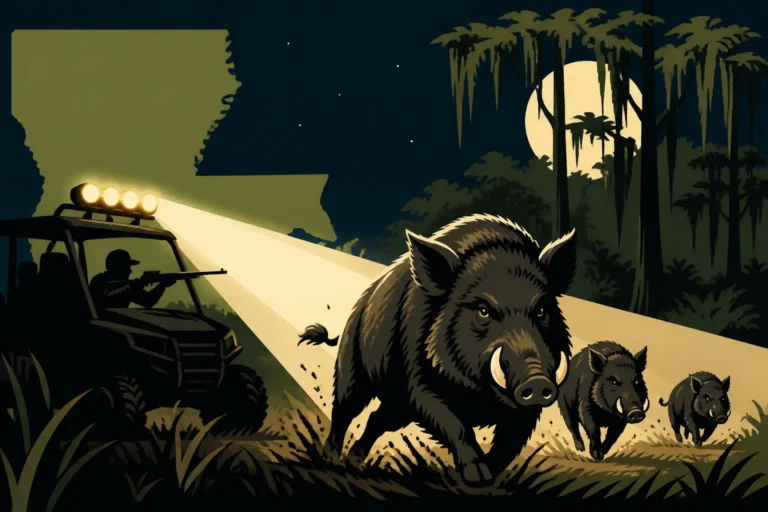
If there's one area where hunting with dogs is not only widely accepted but often encouraged, it's feral hog hunting in Louisiana. These destructive animals are a year-round problem, causing extensive damage to crops, timber, and native wildlife habitats. As such, the Louisiana Department of Wildlife and Fisheries places very few restrictions on hog hunting, especially on private land, recognizing dogs as one of the most effective tools for control. It's a high-octane, hands-on method that can be incredibly thrilling and vital for land management.
The Effectiveness of Bay Dogs and Catch Dogs
Hog hunting with dogs typically involves two types of specialized canines: bay dogs and catch dogs. Bay dogs, often curs or mixes with strong baying instincts, are released to locate feral hogs. Their job is to track a hog, corner it, and "bay" it – essentially barking loudly and keeping the hog at bay without directly engaging, allowing the hunters to approach. These dogs are typically agile, quick, and possess a good nose, but they aren't meant to fight the hog directly.
Once the bay dogs have a hog cornered, the hunters or "catch dogs" come in. Catch dogs, usually larger, more muscular breeds like American Bulldogs, Pit Bulls, or Catahoulas, are armored with protective vests and collars, and their role is to grab and hold the hog, typically by the ear or neck. This allows the hunter to move in swiftly and dispatch the hog, often with a knife or a short-range firearm. The combination of bay dogs finding and holding the hog at a distance, and catch dogs securing it for the hunter, makes for an incredibly efficient and exciting hunt. This method is often preferred for targeting specific groups of hogs or when working in very thick cover where shooting a moving hog can be difficult or dangerous.
Legalities and Year-Round Opportunities
One of the most attractive aspects of hog hunting with dogs in Louisiana is its broad legality and year-round nature. On private land, feral hogs can be hunted with dogs 24/7, 365 days a year, with very few restrictions, aside from respecting property boundaries and local ordinances. This makes it an excellent option for landowners dealing with persistent hog problems and for hunters seeking year-round outdoor adventure. The sheer numbers of hogs in Louisiana, as evidenced by their widespread agricultural damage, means there's almost always an opportunity to put dogs on a track.
On public lands, the rules are slightly more nuanced but generally still quite liberal compared to deer hunting. Many WMAs allow hog hunting with dogs during specific periods, often coinciding with small game seasons or having dedicated hog seasons. However, hunters must always check the individual WMA regulations, as some may have restrictions on caliber, weapon type, or specific dates. For instance, some WMAs might only allow hog dogging during daylight hours or might have rules about using certain types of lights at night. Regardless, the intent of the state is clear: control the feral hog population. This means that dog hunting, an effective method, is largely supported and accommodated, offering ample Hunting Louisiana's Year-Round Feral Hogs options.
Equipment and Safety for Hog Doggers
Hog hunting with dogs is arguably one of the most physically demanding and potentially dangerous forms of hunting in Louisiana. Both dogs and hunters face risks, so proper equipment and a strong emphasis on safety are critical. For the dogs, protective vests made of durable materials like Kevlar or Cordura are essential. These vests help guard against cuts and punctures from a hog's tusks, which can be devastating. Heavy-duty tracking collars with GPS capabilities are also non-negotiable for keeping tabs on your dogs in dense cover and for quick retrieval.
For hunters, appropriate attire, including sturdy boots, briar-proof pants, and blaze orange during appropriate seasons, is a must. A reliable knife for dispatching hogs, and potentially a handgun or short-barreled shotgun for quick follow-up shots in close quarters, are common tools. First-aid kits for both humans and dogs should always be on hand, including items for treating cuts, punctures, and snakebites. Communication devices like two-way radios are vital for group hunts. Beyond physical gear, mental preparedness is crucial. Hog hunting with dogs is fast-paced and can be unpredictable. Being able to react quickly, think clearly under pressure, and prioritize the safety of yourself, your fellow hunters, and your dogs is paramount.
Post-Hunt Logistics and Handling Hogs
Once a hog is dispatched, the work isn't over. Proper post-hunt logistics are important for ethical harvesting and meat processing. Feral hogs are often considered excellent table fare, but like any wild game, proper field dressing is essential, especially in Louisiana's warm climate. Immediately bleeding out the animal and eviscerating it helps cool the carcass and prevents spoilage. Many hunters carry a gambrel and rope to hang the hog for easier field dressing.
Transporting a hog out of thick swamps or dense woods can be a significant physical challenge, often requiring multiple people, game carts, or ATVs. Once transported, decisions about processing must be made. Some hunters process their hogs entirely themselves, while others take them to local wild game processors. It's important to remember that due to the potential for diseases in feral hogs, handlers should take precautions like wearing gloves during field dressing and cooking meat thoroughly. The efforts put into the post-hunt process ensure that the animal is respected and the meat is utilized effectively.
Small Game and Upland Bird Hunting with Dogs
While deer and hog dogging grab a lot of attention, perhaps the most widespread and universally accepted forms of hunting with dogs in Louisiana involve small game and upland birds. These pursuits are often less intense, more family-friendly, and connect hunters to a classic, timeless outdoor experience. From the quick chase of a squirrel to the flush of a covey of quail, dogs elevate these hunts from a casual outing to an unforgettable adventure.
Squirrel Hunting with Feists and Curs
Squirrel hunting with dogs is a deeply ingrained tradition in Louisiana, particularly in the bottomland hardwoods and pine-hardwood mixed forests. The primary breeds used are Feists and Curs, known for their keen noses, relentless pursuit, and "treeing" ability. A good squirrel dog will locate a squirrel on the ground, chase it up a tree, and then "bark treed," indicating to the hunter exactly where the squirrel is located. This takes the guesswork out of locating the elusive bushy-tails and makes the hunt incredibly efficient and engaging.
The beauty of squirrel dogging is its simplicity and accessibility. It's a fantastic way to introduce new hunters, especially youth, to the sport. The dogs provide constant action, and the chase itself is often as exciting as the shot. Hunters typically follow their dogs, listening for the tell-tale bark that signals a treed squirrel. The dogs help pinpoint squirrels that might otherwise be invisible in dense foliage. Effective squirrel dogging relies on dogs that are vocal, have good stamina, and possess the intelligence to work a tree thoroughly. Many families pass down bloodlines of exceptional squirrel dogs, each one a valued member of the hunting team. This method is a staple of Squirrel and Small Game Hunting in Louisiana, offering a truly interactive hunting experience.
Rabbit Hunting with Beagles
The melodic chorus of a beagle pack running a rabbit trail is one of the most heartwarming sounds in the Louisiana woods. Rabbit hunting with beagles is another classic small game pursuit that emphasizes dog work. Beagles, with their incredible noses and relentless pursuit, are perfectly suited for pushing rabbits out of thick brush, briar patches, and overgrown fields. The dogs don't catch the rabbits themselves; rather, they push them in circles, allowing hunters to position themselves along known rabbit runs to intercept the game.
This form of hunting is highly social, often involving groups of hunters following the baying of their hounds. It teaches patience, listening skills, and an understanding of rabbit behavior. Good rabbit dogs will stay on a trail, even if it's cold, and continue to work until the rabbit is either harvested or escapes. The dense cover often found in Louisiana's thickets provides ideal habitat for rabbits, making the bayou state a prime location for this traditional sport. It’s also a great way to enjoy the outdoors during the cooler months, providing plenty of action and a chance to put some delicious wild game on the dinner table.
Bird Dogs for Quail and Woodcock
While Louisiana isn't known for vast prairies teeming with quail like some other states, pockets of good upland bird habitat still exist, especially in the piney woods and agricultural areas. For these hunts, pointers and setters are the undisputed stars. These bird dogs are trained to range out, locate birds, and then "point" – freezing rigidly with their nose directed at the hidden game, indicating its exact location. This allows the hunter to approach, flush the bird, and take a clean shot.
Woodcock hunting, though less common, also benefits greatly from a good bird dog. These migratory birds frequent damp, brushy cover, and without a dog, finding them can be incredibly challenging. A pointing dog helps hunters efficiently cover ground and pinpoint these camouflaged birds before they flush. Hunting with bird dogs is a refined art, requiring a deep understanding of dog training, bird behavior, and shooting skills. A well-trained bird dog is a testament to dedication and forms an unbreakable bond with its handler, enhancing every aspect of the hunt.
Waterfowl Hunting with Dogs
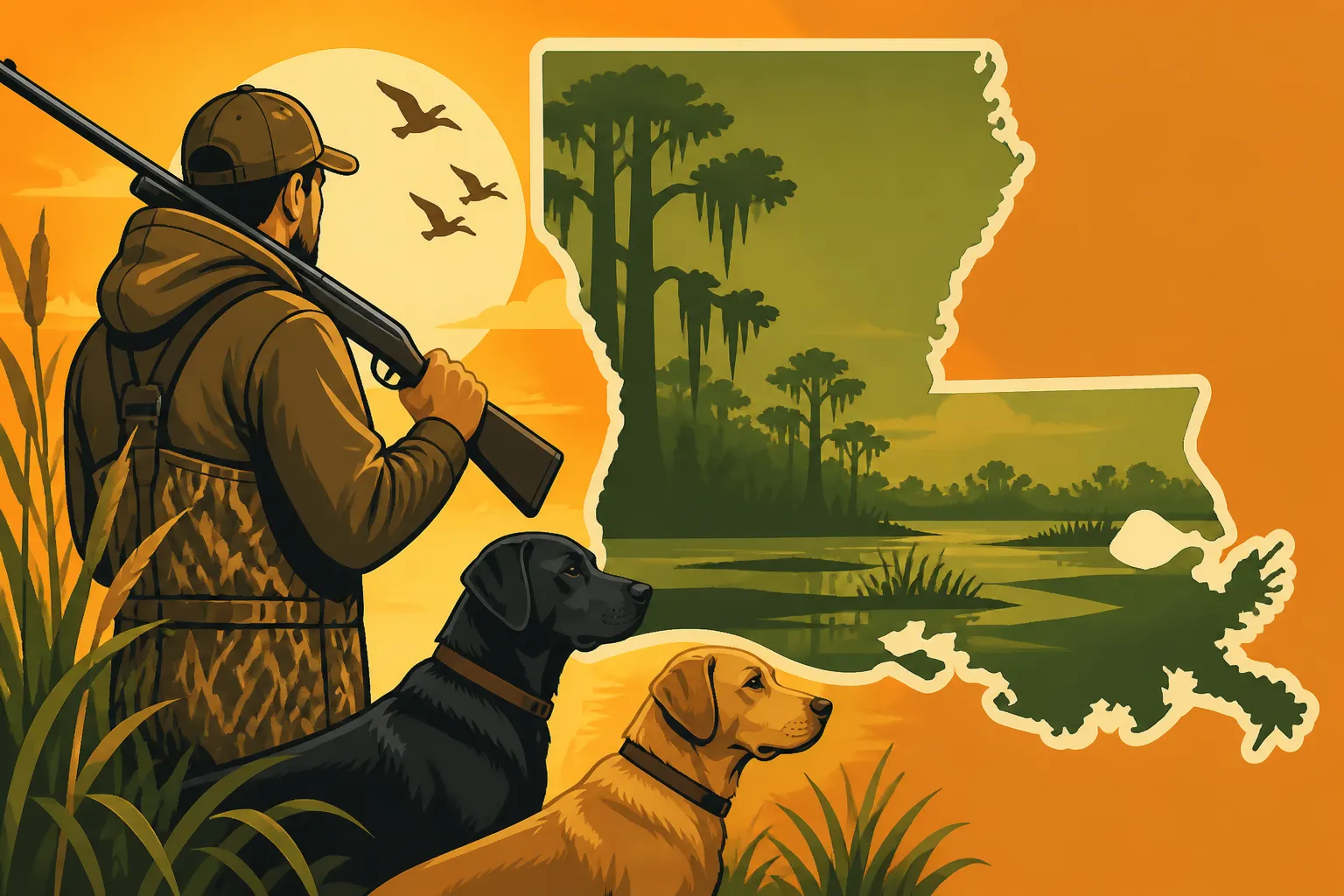
For many duck and goose hunters in Louisiana, a good retriever isn't just an asset; it's an absolute necessity. The vast coastal marshes, flooded timber, and rice fields of the state provide prime waterfowl habitat, but also challenging conditions for retrieving downed birds. A dog not only saves countless birds that would otherwise be lost but also adds an immeasurable layer of enjoyment and efficiency to the hunt.
The Indispensable Retriever
Imagine a cold, drizzly morning in the Louisiana marsh, the air thick with the scent of sulfur and marsh grass. A flock of gadwall pitches into your decoys, you make a clean shot, and the bird splashes down 50 yards out in thick, grasping mud or open water. Without a retriever, getting that bird can be a monumental, cold, and often dangerous task. This is where the retriever earns its keep. Breeds like Labrador Retrievers, Chesapeake Bay Retrievers, and Golden Retrievers are specifically bred for this purpose: to mark fallen birds, navigate challenging terrain and water, and bring the bird safely back to hand.
Their keen eyesight, powerful noses, and innate desire to retrieve make them indispensable. Not only do they save birds, preventing waste, but they also keep hunters dry and safe, eliminating the need to wade into icy water or mucky bottoms. A well-trained retriever is a silent partner, patiently waiting by your side in the blind until commanded, then executing its task with focus and precision. They are truly the unsung heroes of many successful duck and goose hunts in Louisiana.
Training for Marsh and Timber Hunts
Training a retriever for Louisiana's diverse waterfowl hunting environments requires specific focus. For marsh hunts, dogs need to be comfortable with long swims, navigating through dense marsh grass, and dealing with potential hazards like alligators or venomous snakes. Training often involves building stamina, teaching them to work through thick cover, and developing a strong "blind retrieve" ability, where they follow hand signals to a downed bird they didn't see fall. Exposure to different types of water and mud is essential to ensure they are confident in any marsh scenario.
Flooded timber hunts, common in areas like the Tensas River Basin, present different challenges. Dogs must be able to maneuver through submerged trees, navigate strong currents, and retrieve from dense undergrowth. Training in timber often focuses on teaching them to be quiet in the blind, avoid spooking birds, and work through obstacles without getting tangled. Both environments demand obedience, marking ability, and a strong drive to retrieve. Dedicated training programs and consistent practice are key to developing a retriever capable of excelling in the varied and often demanding waterfowl hunting conditions found across Louisiana.
Waterfowl Zones and Retriever Usage
Louisiana is divided into several Louisiana Waterfowl Zones and Seasons, each with its own specific season dates and regulations. While the zones primarily dictate when and what you can hunt, they also indirectly influence retriever usage by determining when hunters will be in the field. Generally, if duck or goose hunting is open in a specific zone, the use of a retriever is assumed and permitted. Public hunting opportunities for waterfowl, such as those on WMAs like Sabine National Wildlife Refuge or in the vast coastal marsh of Cameron Parish, welcome retrievers as a standard part of the hunt.
There are rarely specific restrictions on dog use within waterfowl seasons, other than general animal welfare and safety considerations. However, remember that many public lands that allow waterfowl hunting are still subject to overall WMA rules. For instance, while you can bring your retriever for ducks, you wouldn't typically be able to use it to chase a deer during a still-hunt only deer season on the same WMA. The focus for retrievers is solely on the legal retrieval of legally harvested migratory waterfowl. Always ensure your dog is under control, causes no disturbance to other hunters, and is handled ethically throughout the hunt.
Important Considerations and Ethics When Hunting with Dogs
Hunting with dogs is a privilege, not a right, and it comes with significant responsibilities. Beyond understanding the myriad regulations, ethical behavior, dedicated training, and a focus on animal welfare are paramount. The perception of dog hunting by the non-hunting public, and even by other hunters, often hinges on the actions of those who participate.
Training and Responsible Dog Ownership
The foundation of successful and ethical dog hunting lies in rigorous training and responsible ownership. A well-trained hunting dog is a joy to behold and a testament to its owner's dedication. This training goes beyond just hunting specific game; it encompasses basic obedience, socialization, and recall. A dog that comes when called, sits quietly, and respects boundaries is not only a better hunting partner but also a better citizen. This includes training dogs to handle specific situations, such as avoiding livestock, staying off private property without permission, and interacting politely with other people and dogs.
Responsible ownership also means year-round care. This includes proper nutrition, regular veterinary check-ups, necessary vaccinations, and protection from parasites. Hunting dogs work hard, and their health and well-being should be a top priority. A healthy, well-conditioned dog is less prone to injury and more capable in the field. Hunters who invest in their dogs' training and care not only enhance their own hunting experience but also contribute positively to the image of hunting with dogs.
Public Perception and Hunter Relations
Hunting with dogs, particularly deer dogging, can sometimes be a contentious issue. Concerns often arise regarding dogs crossing property lines, disturbing non-hunters, or even posing a nuisance to livestock. While modern technology like GPS collars has greatly mitigated some of these issues, public perception is still shaped by the actions of individual hunters. It's crucial for dog hunters to be ambassadors for the sport. This means being respectful of private property, promptly retrieving any dogs that cross boundaries, and being courteous to other land users.
Open communication with neighboring landowners and other hunters can go a long way in fostering good relations. Explaining your hunting methods, demonstrating control over your dogs, and being willing to address concerns can help bridge potential divides. Hunters often seek out Finding Ground Others Walk Past by building positive relationships. The future of dog hunting in Louisiana depends not just on the legality, but on the continued demonstration of responsible, ethical practices by those who choose to participate.
Health and Safety of Your Hunting Dogs
The safety of your dogs in the field should always be at the forefront of your mind. Louisiana's environment presents numerous hazards, from venomous snakes and alligators in the swampy lowlands to sharp briars and barbed wire fences in the uplands. Heatstroke is a very real danger, especially during early seasons or on warm days, so ensuring dogs have access to water and rest is critical. Other common injuries include cuts, scrapes, pad injuries, and muscle strains.
Always carry a well-stocked first-aid kit specifically for your dogs, including items for cleaning wounds, bandaging, and addressing minor injuries. Knowing basic canine first aid can be a lifesaver. Furthermore, consider investing in protective gear beyond just vests, such as snake-proof collars or booties for rough terrain. Regular veterinary check-ups are also crucial to ensure your dogs are in peak physical condition and up-to-date on all necessary vaccinations. Your hunting dogs are more than just tools; they are loyal companions, and their safety and health are paramount, enabling you to continue enjoying Louisiana's unique Louisiana Deer Camp Traditions.
Disclaimer
The information provided in this guide is for general informational purposes only and is not intended as legal advice. Hunting regulations in Louisiana are subject to change by the Louisiana Department of Wildlife and Fisheries (LDWF) and can vary significantly by parish, WMA, and specific hunting season. It is the responsibility of every hunter to consult the most current official LDWF hunting regulations pamphlet and any specific WMA rules before participating in any hunting activity. Failure to do so may result in penalties, fines, or loss of hunting privileges.