Dog-Drive Hog Guide Services
Let's be real, Louisiana's got a hog problem. These intelligent, fast-reproducing animals can devastate crops, ruin habitat, and make life miserable for landowners. While still-hunting or trapping certainly has its place, there's nothing quite like the raw, exhilarating experience of a dog-drive hog hunt to truly make a dent in their numbers and provide an unforgettable adventure. This guide is all about helping you understand what it takes to join one of these exciting hunts with a professional guide service.
The Appeal of Dog-Drive Hog Hunting in Louisiana
There's a reason why hunting hogs with dogs has such a deep tradition in the South, and especially here in Louisiana. It's not just a hunt; it's a spectacle, a challenge, and often, one of the most effective ways to deal with our burgeoning feral hog population. If you've ever found yourself frustrated by wary hogs that vanish into thickets at the first sign of a human, you'll quickly understand the unique appeal of a well-orchestrated dog drive.
Why Dogs Are So Effective for Feral Hogs
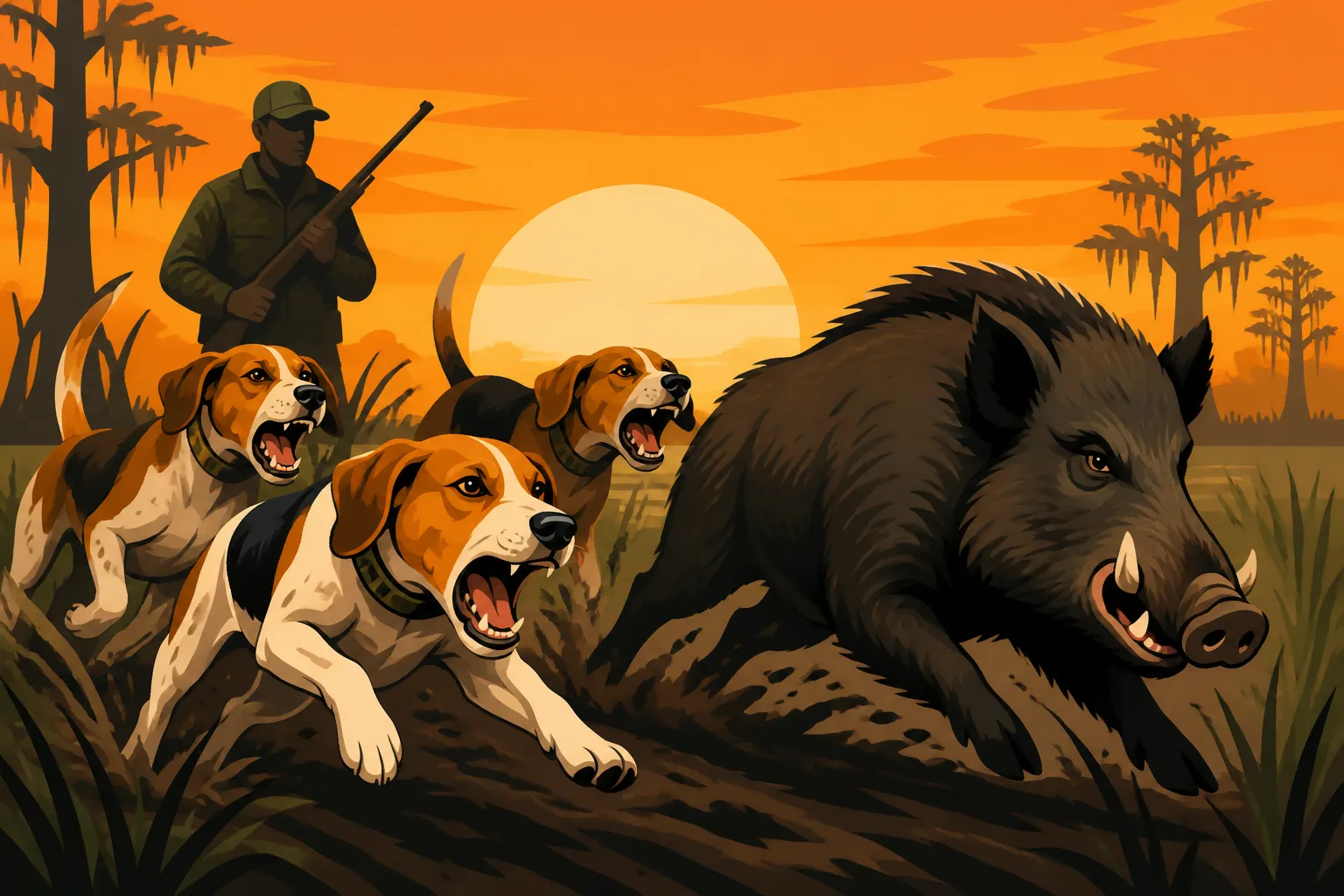
Feral hogs are, to put it mildly, a nuisance. They're also incredibly smart, resilient, and possess an uncanny ability to disappear into the densest cover imaginable. Their sense of smell is legendary, and their hearing is sharp, making traditional stand-hunting or stalking a real test of patience and skill. This is where a good pack of dogs truly shines. Dogs don't rely on sight alone; they follow scent trails that would be invisible to us, penetrating brush so thick a human would struggle to crawl through it. They're bred and trained to find those elusive hogs, to push them out of their hiding spots, and to either chase them down for a shot or, more commonly in a dog drive, "bay" them up.
When dogs bay a hog, they surround it, barking and nipping, keeping the hog's attention focused on them while it attempts to defend itself. This creates an opportunity for hunters to move in and dispatch the hog quickly and safely. Without dogs, getting a hog out of a palmetto thicket or a dense bottomland swamp can feel like an impossible task. They are simply built for evasion, and a disciplined pack of dogs overrides that advantage completely. It’s a primal pursuit, leveraging the ancient instincts of both man and canine to solve a very modern problem.
The Thrill and Tradition of the Chase
For many, dog-drive hog hunting isn't just about pest control; it's an adrenaline-fueled tradition. Picture this: you're waiting on a pre-scouted escape route, the air is thick with anticipation, and then, off in the distance, you hear it—the growing chorus of hound music. It starts as a faint bay, then intensifies into a full-throated symphony as the dogs get closer to a hog. The sounds are electric, sending shivers down your spine, letting you know the chase is on. You can almost feel the ground vibrating as the dogs and their quarry move through the woods, a chaotic, thrilling ballet of pursuit.
This isn't a quiet, contemplative sit in a deer stand; this is dynamic, high-energy hunting. It's about being immersed in the moment, reacting to the sounds, and being ready when the action inevitably breaks your way. It’s a hunt that connects you to generations of hunters who have used similar methods to track and harvest game. The camaraderie among the hunters, the skill of the dog handlers, and the raw power of the animals involved create an experience that’s truly unique in the hunting world. It's loud, it's messy, and it's incredibly rewarding when it all comes together.
Understanding the Unique Challenges and Rewards
While exhilarating, dog-drive hog hunting isn't for the faint of heart. The terrain in Louisiana, from our dense piney woods to the thick cypress swamps and marsh edges, presents its own set of challenges. You might find yourself scrambling through briar patches, wading through muddy sloughs, or pushing through nearly impenetrable undergrowth to get to a bayed hog. Physical fitness is a definite plus, as you'll often be on the move, sometimes at a brisk pace, across uneven and difficult ground. It's not just about covering distance; it's about doing so quietly and quickly, without alarming other animals or getting tangled up.
The rewards, however, are immense. Beyond the sheer excitement of the chase, there's the satisfaction of effectively managing a destructive species. Every hog harvested is a win for local agriculture and native wildlife. And let's not forget the table fare – wild hog meat, when properly handled, is delicious and versatile. Plus, you’re creating memories with friends and guides that will last a lifetime. It’s a truly immersive experience that offers a deeper connection to the wild landscape than many other hunting methods. You’re not just an observer; you’re an active participant in a fast-paced, ancient dance between predator and prey.
What to Expect from a Guided Dog-Drive Hog Hunt
Booking a guided dog-drive hog hunt means you're enlisting the expertise of professionals who live and breathe this specific type of hunting. They've invested in trained dogs, specialized equipment, and extensive scouting to maximize your chances of success. When you step into a guided experience, you're tapping into a well-oiled machine designed to deliver results and an unforgettable time.
Typical Hunt Structure and Gear
A typical guided dog-drive hog hunt usually starts early in the morning. You’ll meet your guide and the dog handlers at a designated spot, often a crossroads or a remote camp, where you'll get a briefing on the day's plan, safety protocols, and the specific property you’ll be hunting. Guides will have already done their homework, Scouting Louisiana Public Land Before Season or private land, looking for fresh hog sign and understanding hog movement patterns. The handlers will then release their dogs, often equipped with GPS collars, to track and locate the hogs. You, as the hunter, might be positioned on a known escape route or move with the handlers on foot, depending on the terrain and the guide's strategy. Communication is key, often utilizing two-way radios to coordinate movements as the dogs work.
Once the dogs bay a hog, the real excitement begins. You'll move in, sometimes quickly and through dense cover, to get to the bay. This can be a high-adrenaline moment, requiring calm decision-making and precise shot placement. The guide will direct you, ensuring safety for both hunters and dogs. As for gear, expect to wear durable, thick brush pants or chaps to protect against thorns and briars. Snake boots are highly recommended in Louisiana's varied terrain. A good fixed-blade knife and a dependable handgun or shotgun are common choices for dispatching bayed hogs, but always confirm firearm preferences with your guide beforehand.
The Role of the Dogs and Handlers
The dogs are, without a doubt, the stars of the show in a dog-drive hog hunt. Guides often employ a combination of "bay dogs" and sometimes "catch dogs." Bay dogs, typically cur breeds, Walkers, or Redbones, are trained to find, chase, and corner the hog, barking relentlessly to hold it in place. Their job is to keep the hog occupied until the hunters arrive. They are tenacious and fearless, but also smart enough to avoid getting seriously injured by a hog's tusks. Catch dogs, often larger, more powerful breeds like pit bulls or Catahoula leopard dogs, are sometimes used to physically hold a hog if it tries to break bay or if a quick, secure dispatch is needed. They wear protective vests to minimize injury.
The dog handlers are the conductors of this symphony. They are experts at reading their dogs' behavior, interpreting their barks, and understanding the nuances of how a hog will react. They use GPS tracking devices to monitor the dogs' positions in real-time, guiding the hunters to the action. Their ability to manage the pack, understand the terrain, and ensure the safety of both dogs and hunters is paramount. It’s a skill refined over years, often passed down through generations. When you book a guided hunt, you're not just paying for access; you're paying for this invaluable expertise and the specialized, highly trained animal athletes that make the hunt possible.
Safety Considerations and Ethical Hunting
Safety is paramount on any hunt, but especially so on a dog-drive hog hunt where the action can be fast-paced and close-quarters. Your guide will emphasize clear communication, ensuring everyone knows where others are located, especially when moving in on a bayed hog. One of the most critical aspects is safe shot placement. Hogs are tough animals, and a wounded hog can be dangerous, especially with dogs in close proximity. Guides will instruct you on how to deliver a quick, humane shot while minimizing risk to the dogs, who are often right up against the hog.
Ethical hunting is also a core component. While feral hogs are an invasive species, the goal is always a clean, efficient harvest. Responsible guides ensure that no undue stress or suffering is inflicted on the animal. This includes proper post-harvest care, like Field Dressing a Deer in Warm Weather (which is also applicable to hogs), to ensure the meat is cooled quickly and preserved, respecting the animal's life. Guides will also have strict rules about what constitutes a safe shot and will often be right there with you to assist and direct during the final moments of the hunt. This commitment to safety and ethics ensures that the thrill of the hunt is balanced with responsibility and respect.
Finding and Vetting Dog-Drive Hog Guide Services
With the growing popularity of hog hunting, especially guided dog-drive hunts, finding the right outfitter can feel a bit overwhelming. You want to ensure you're booking with someone reputable, experienced, and who aligns with your hunting style and expectations. This isn't just about finding a guide; it's about finding the right guide for your adventure.
Key Questions to Ask Potential Guides
Before you commit to a booking, it's crucial to have a thorough conversation with any potential guide service. Think of it as an interview to ensure they meet your needs and standards. Start by asking about their experience: How long have they been running guided dog-drive hog hunts? What kind of terrain do they typically hunt (swamp, piney woods, agricultural fields)? What's their success rate like? No one can guarantee a kill, but consistent opportunities are a good sign. Inquire about the hunt structure: Is it primarily walk-in, or do they use vehicles? What's the average group size? This helps you gauge the intimacy and pace of the hunt.
Crucially, discuss what's included in the price. Does it cover just the hunt, or does it include meals, lodging, and initial game processing? What about firearms – do they provide loaners, or are you expected to bring your own? What kind of dogs do they use, and how many are typically in a pack? Don't forget to ask about safety protocols, especially regarding dogs and shot placement, and their policy on recovering wounded animals. This is where a list like Questions to Ask Before Booking a Louisiana Hunt can be incredibly helpful, ensuring you cover all your bases before making a decision. Transparency from a guide is a strong indicator of their professionalism.
Understanding Pricing and Inclusions
The cost of a guided dog-drive hog hunt can vary significantly, depending on the guide's reputation, the length of the hunt, and what's included. You might find anything from a single-day hunt with just the guide and dogs, to multi-day packages that include lodging, meals, and more extensive game care. Day rates are common and generally cover the guide's time, the dogs, and access to the hunting property. Some outfitters might offer a "per hog" fee, which can be enticing but less common for dog drives where the goal is usually to harvest multiple animals.
Be clear on what is not included. Often, your hunting license and any required tags will be your responsibility. Tips for your guide and dog handlers are customary and always appreciated for a job well done. Specialized gear, such as briar-proof pants or specific firearms, are typically things you'll need to provide. Don't be shy about asking for a detailed breakdown of costs. A good guide will be upfront about their pricing structure. Websites like BookYourHunt can sometimes offer a starting point for comparing general hunting package costs, but always follow up directly with the outfitter for specific dog-drive hog hunt details, as these specialized hunts may not always be broadly advertised on every platform. It's an investment, so ensure you know exactly what you're paying for.
Checking References and Reputation
Once you’ve narrowed down your options, it’s time to do some homework. Ask potential guides for references from past clients, and make sure to call them. Ask about their overall experience, the guide’s professionalism, the quality of the dogs, and whether the hunt met their expectations. Pay attention to how the guide handled challenges, like inclement weather or difficult hogs. Online reviews on platforms like Google, Facebook, or hunting forums can also provide valuable insights. Look for consistent feedback, both positive and negative, to get a balanced picture.
While not always specific to hog drives, general outdoor and hunting community platforms, or even sites like GoHunt, might have user reviews or forum discussions about Louisiana outfitters that can give you a feel for their general reputation. Be wary of guides who are reluctant to provide references or whose online presence seems sparse or overly promotional without substantive reviews. A reputable guide will have satisfied clients who are more than happy to share their positive experiences. Your goal is to ensure the guide has a proven track record of safe, ethical, and successful hunts, not just marketing hype.
Preparing for Your Louisiana Dog-Drive Hog Adventure
A successful dog-drive hog hunt isn't just about showing up; it's about being prepared. Louisiana's climate and terrain, combined with the active nature of this hunting style, demand specific considerations for your physical condition, gear, and understanding of local regulations.
Physical Demands and Recommended Attire
Let's not sugarcoat it: a dog-drive hog hunt is physically demanding. This is not a "sit and wait" scenario. You will be walking, often quickly, through thick cover, across uneven terrain, and potentially in warm, humid conditions. You might be navigating muddy areas or crossing small creeks. Being in reasonably good physical shape will significantly enhance your enjoyment and effectiveness on the hunt. Start a walking regimen, incorporating some trail walking or even light jogging, a few weeks before your trip.
For attire, durability and protection are key. Forget your quiet, lightweight deer hunting clothes. You'll want thick, briar-proof pants or chaps to protect your legs from thorns, brush, and potential snake encounters. Look for snake boots or sturdy, waterproof hiking boots with good ankle support. Long-sleeved shirts, preferably made of a breathable, rip-resistant material, will protect your arms. A vest with plenty of pockets for essentials like water, a knife, and a small first-aid kit is also a good idea. Given Louisiana's heat and humidity, choose clothing that wicks moisture away and can dry quickly. You'll likely be shedding layers as the hunt progresses and the day warms up.
Essential Gear and Equipment
Beyond your clothing, a few other items are non-negotiable for a dog-drive hog hunt. First, a reliable, sharp fixed-blade knife is crucial for field dressing your hog and for any other utility needs in the field. A powerful flashlight or headlamp is also smart, especially if the hunt extends into low light conditions or if tracking a hog requires extra time. Hydration is vital; carry plenty of water or a hydration pack. Bug spray, particularly one effective against mosquitoes and ticks, will be your best friend. In the dense cover of Louisiana, these pests can be relentless.
Your guide will likely use GPS tracking for their dogs, but having your own reliable GPS device or a smartphone app like onX loaded with offline maps can be helpful for personal navigation and understanding your position relative to the dogs and other hunters. A small, lightweight first-aid kit for minor scrapes and cuts is always a good idea. Finally, ensure your chosen firearm—whether it's a handgun, shotgun, or lever-action rifle—is zeroed, clean, and you are proficient with it, especially for close-range shots. Discuss caliber and ammunition preferences with your guide beforehand.
Louisiana Regulations for Hog Hunting
One of the great things about hunting feral hogs in Louisiana is the general lack of restrictive regulations. Because they are considered an invasive, detrimental species, the Louisiana Department of Wildlife and Fisheries (LDWF) encourages their control. On private land, feral hogs can generally be hunted year-round, day or night, often with no bag limits, using various methods. This makes them an accessible target for hunters looking for an extended season.
However, it is absolutely critical to always check the most current LDWF regulations before your hunt. While the rules are often very liberal for hogs, specific properties, especially Wildlife Management Areas (WMAs) or National Forests, may have their own unique restrictions regarding hunting seasons, methods, or specific permits. For instance, Louisiana Feral Hog Regulations might specify rules around night hunting with lights or the use of certain firearms on public lands versus private lands. Your guide will be well-versed in the local rules for their hunting grounds, but it's always good for you to be informed. Ignorance of the law is never an excuse, so a quick check of the LDWF website or app before your trip is a wise move.
Post-Hunt Logistics and Meat Care
The hunt doesn't end when the hog is on the ground. Especially in Louisiana's often warm and humid climate, proper post-hunt logistics and immediate meat care are essential to ensure your hard-earned harvest is high-quality table fare. A good guide service will assist you through this crucial stage.
Field Dressing and Initial Processing
Once a hog is down, the clock starts ticking, particularly in warmer weather. Rapid field dressing is key to cooling the meat quickly and preventing spoilage. Your guide will likely lead this process, but it's important for you to understand the steps. This involves removing the entrails as soon as possible, which helps to dissipate body heat and lighten the animal for transport. Be mindful of hygiene during this step, especially with wild game. Many hunters carry disposable gloves and sanitizing wipes for this reason.
Some guides might offer to do a basic quartering in the field, further breaking down the animal to facilitate easier cooling and transport. If you're hunting in remote areas, this can be incredibly helpful. The goal is to get the meat cooled down to a safe temperature (below 40°F) as quickly as possible. This might mean hanging the carcass, placing it on ice, or getting it to a walk-in cooler. Proper and immediate care after the shot directly impacts the taste and safety of your wild hog meat.
Transporting and Butchering Your Harvest
After field dressing, the next challenge is getting your hog out of the woods. Guides typically have vehicles, ATVs, or even boats (if hunting a swamp or marsh edge) equipped to handle game recovery. Depending on the size of the hog and the terrain, this can still be a significant effort. Once retrieved, the guide will help you arrange transport for the carcass or meat to a processing facility. Many areas in Louisiana have local processors accustomed to handling wild game, including feral hogs. They can skin, butcher, and package your meat to your specifications.
If you plan to butcher the hog yourself, ensure you have a clean, cool space ready. The guide can often provide advice on local resources or best practices for handling the meat until you can get it to your home or a processor. Discuss these arrangements with your guide before the hunt so you have a clear plan. Having a cooler packed with ice ready at the meeting point is always a smart move, especially if you have a drive ahead of you.
Enjoying Your Wild Hog Meat
Wild hog meat is incredibly versatile and delicious, often leaner than domestic pork but packed with flavor. Once processed, you'll have a variety of cuts perfect for grilling, roasting, stewing, or grinding into sausage. Many hunters enjoy slow-cooking wild hog to ensure tenderness, especially for tougher cuts. Be sure to cook wild pork to an internal temperature of at least 145°F (for whole cuts, followed by a three-minute rest) or 160°F (for ground meat) to eliminate any potential pathogens, just as you would with domestic pork.
From a pulled pork sandwich to a hearty stew or even savory sausages, wild hog provides a fantastic culinary reward for your hunting efforts. Don't be afraid to experiment with different recipes and seasonings. Your guide might even share some local favorites! The taste of wild game is a direct connection to your hunting adventure, and enjoying it with friends and family is often the most rewarding part of the entire experience. It's truly a farm-to-table (or rather, woods-to-table) experience that few other meals can replicate.
Here's a quick look at how dog-drive hog hunting stacks up against other popular hog hunting methods:
| Feature | Dog-Drive Hog Hunting | Still-Hunting / Stalking | Trapping | Night Hunting with Lights |
|---|---|---|---|---|
| Effectiveness | Highly effective for clearing specific areas. | Requires extreme stealth and patience; variable success. | Excellent for consistent removal; can catch multiple hogs. | Highly effective, especially with thermal or night vision. |
| Effort Level | High physical exertion, fast-paced. | Moderate, involves slow walking and careful observation. | Moderate, setting up and checking traps regularly. | Moderate, but involves late hours and specialized gear. |
| Gear Required | Dogs, GPS collars, radios, protective vests, thick attire, sidearm/shotgun. | Quiet clothing, good optics, rifle/bow, scent control. | Traps, bait, transportation for live hogs. | Night vision/thermal, powerful lights, appropriate firearms. |
| Excitement | High adrenaline, loud, active chase. | Quiet, strategic, rewarding for patient hunters. | Less direct "hunting" excitement, more management. | Intense, stealthy, unique challenge. |
| Best For | Dense cover, quick removal, thrilling experience. | Wary hogs, open terrain, quiet pursuit. | Large populations, ongoing management, crop protection. | Reducing nocturnal damage, large tracts of land. |
| Guided Options | Common, specialized guides. | Less common as dedicated guided hunt. | Often part of a land management service. | Growing in popularity for guided services. |
| Social Aspect | Highly social, collaborative with guides and handlers. | Solitary or small group. | Often solitary. | Can be social, but requires quiet teamwork. |
Disclaimer
This article is for general informational purposes only and does not constitute professional advice. Laws, prices and regulations vary by location and change over time. Consult a qualified professional for guidance on your specific situation.