Reading Louisiana Outfitter Reviews Critically
Booking a hunting trip in Louisiana, whether it's for big deer in the piney woods, ducks in the coastal marsh, or even the chance at a black bear, is an exciting prospect. But the excitement can quickly turn into anxiety when you start looking at outfitters and trying to figure out who's legitimate and who's just blowing smoke. It’s a challenge common to many, poring over online reviews and trying to separate the genuine experiences from the fluff or even outright fabrication. This guide will walk you through how to critically read Louisiana outfitter reviews so you can make an informed decision and avoid disappointment.
The Tricky Terrain of Online Outfitter Reviews
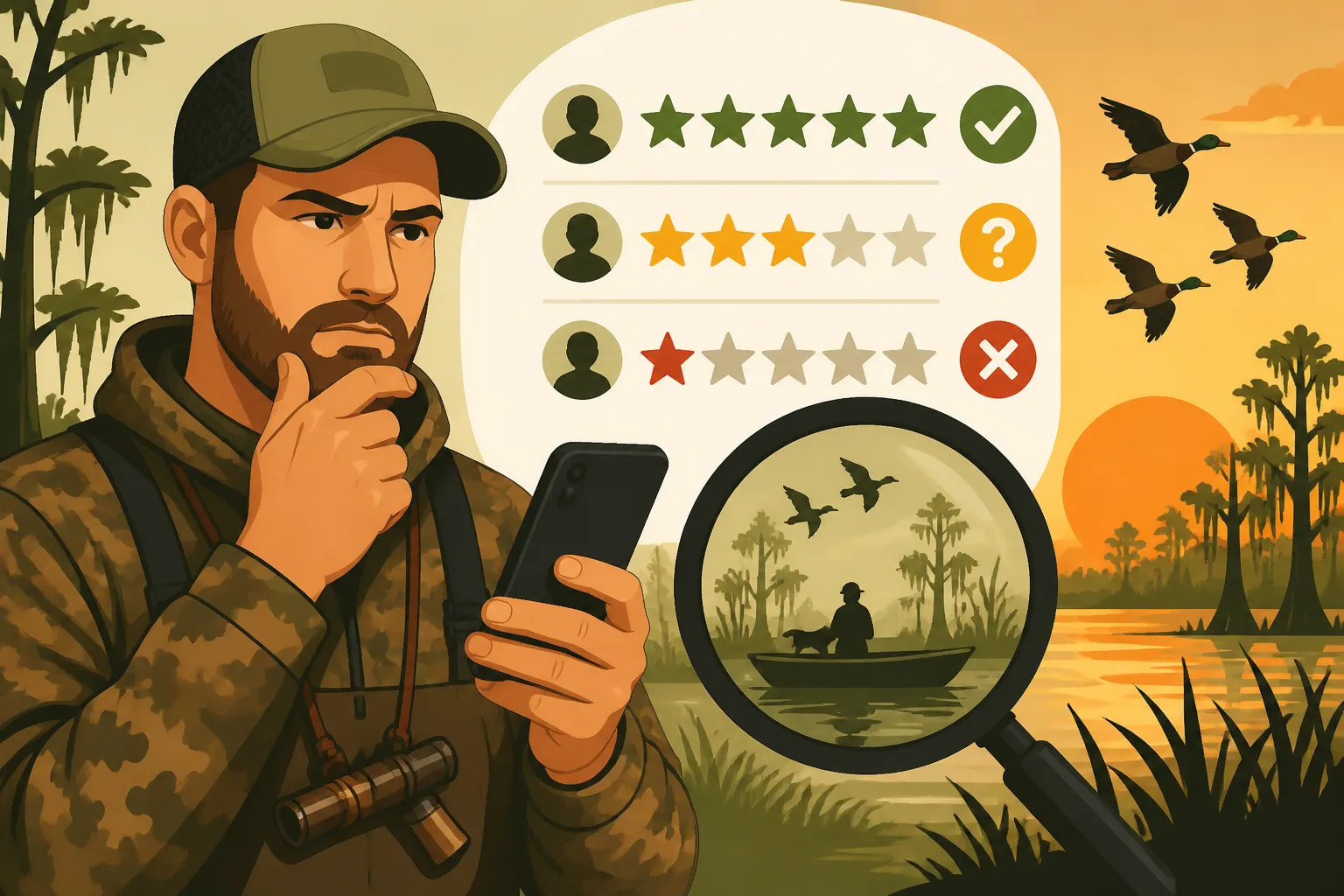
Let's face it, when you're dreaming of that perfect Louisiana hunt, a string of five-star reviews can feel like a green light. You want to believe every glowing word. The problem is, the internet is a wild place, and not all reviews are created equal. It's easy to get swept up in the hype, or conversely, scared off by a single overly negative comment, without really understanding the full picture.
Why Reviews Are So Appealing Yet Problematic
Reviews offer a quick glance into what others have experienced, providing a sense of community wisdom. They're often the first thing we check before making any significant purchase, and a hunting trip is certainly a significant investment of time and money. The appeal lies in this perceived transparency – real people sharing their real stories. However, this transparency can be deceiving. Think about it: who is most likely to leave a review? It's usually someone who had an absolutely incredible, once-in-a-lifetime experience, or someone who had an absolutely miserable, frustrating one. The vast middle ground of "pretty good, but with a few snags" often goes unrepresented.
Then there's the issue of bias. An overjoyed hunter, fresh off harvesting a trophy buck, might overlook minor inconveniences that another hunter would find unacceptable. Conversely, a hunter who missed an easy shot might blame the guide or the outfitter for their own shortcomings, leaving a scathing review born of personal frustration rather than objective observation. Furthermore, in today's digital age, it's not unheard of for outfitters, or even competitors, to generate fake reviews, either boosting their own image or trying to tarnish another's. This makes the task of Vetting a Louisiana Outfitter Before You Book even more critical.
Understanding Different Review Platforms and Their Quirks
Reviews can pop up in all sorts of places: the outfitter's own website, Google, Facebook, specialized hunting forums, or dedicated booking platforms. Each platform has its own ecosystem and potential biases. For example, reviews directly on an outfitter's site are often cherry-picked and might not show the full range of feedback. They're designed to sell, so don't expect to see any negative comments there.
General review sites like Google and Facebook are better, as they allow anyone to post, but even then, you have to consider the source. Is it a real profile? Does the person have a history of leaving many reviews, or just one for this specific outfitter? Platforms like BookYourHunt often aggregate reviews specifically for hunting trips, which can be helpful because they focus on relevant aspects of the experience. However, even with these specialized platforms, the underlying issues of bias and potential fabrication can exist, so a critical eye is always necessary. Don't take a high star rating at face value without digging into the actual comments.
Dissecting the Details: What to Look For in a Review
Now that we understand the landscape, let's talk about how to really dig into a review and extract valuable information. It's not about the star count; it's about the narrative. What are people actually saying, and what are they not saying? This is where your detective skills come into play.
The Power of Specificity: "Great" vs. "The Guide Knew Exactly Where the Deer Were Bedding"
A review that simply says "Great hunt!" or "Awesome guide!" isn't very useful, even if it has five stars. What made it great? What made the guide awesome? Did they see a lot of game? Was the lodge comfortable? Was the food delicious? You need details. Look for reviews that paint a picture. For instance, a review that states, "Our guide, Mark, had us set up on a beautiful cypress flat early, and by 8 AM, we'd already had two groups of wood ducks decoy beautifully. His dog, Bella, made quick work of the retrieves," gives you a much clearer idea of what you can expect. This kind of specificity shows a genuine experience and provides actionable insights into the outfitter's operations, the guide's skills, and even the quality of their gear or animals.
Conversely, vague praise might indicate a less authentic review or one written by someone who wasn't deeply invested in the details. Focus on reviews that mention specific names (guides, staff), specific locations (types of terrain, waterways), or specific events (how a shot was handled, the quality of the meal, the comfort of the beds, or specific animal encounters). This level of detail is hard to fake convincingly.
Consistency, Patterns, and the Types of Feedback
Don't just read one or two reviews. Read as many as you can, looking for recurring themes and patterns. Do multiple hunters mention the same guide by name and praise their tracking skills? Do several reviews complain about the food quality, or mention that the lodging was rustic? These patterns are far more reliable indicators than isolated comments. If every other review praises the delicious camp cooking, but one hunter complains, it might be an outlier based on personal preference. If five out of ten reviews mention that the boats for duck hunting were old and prone to issues, that’s a pattern you need to pay attention to, especially if you plan on Hunting the Vermilion Parish Marsh or other water-intensive areas.
Also, consider the different aspects of the hunt that reviews might cover. A good outfitter experience involves more than just seeing game. Think about:
- The Guide: Knowledge, personality, safety practices, effort.
- The Lodge/Accommodations: Cleanliness, comfort, amenities, atmosphere.
- The Food: Quality, quantity, variety.
- Game Opportunities: Number of encounters, shot opportunities, ethical practices.
- Honesty/Transparency: Were promises kept? Was communication clear?
- Overall Experience: The vibe, camaraderie, memorable moments.
A balanced set of reviews will touch on many of these points. If every review only talks about "big bucks" and nothing else, it might be a red flag that other aspects of the experience are lacking.
The Critical Importance of Timeliness
Hunting seasons change, guides move on, and outfitter operations can evolve. A glowing review from five years ago might not accurately reflect the current experience. Always prioritize recent reviews. An outfitter who was once top-notch might have new management, inexperienced guides, or changes in their hunting grounds that affect the quality of the hunt.
Look for reviews from the most recent hunting season, if possible. This is particularly relevant in Louisiana where game populations and regulations can shift. For instance, Louisiana's Chronic Wasting Disease Zones have recently led to new rules regarding carcass movement and mandatory testing in certain areas. An older review wouldn't account for these changes, which could significantly impact your trip logistics. An outfitter's ability to adapt and communicate these changes is a sign of a well-run operation.
Beyond the Stars: Verifying and Cross-Referencing
A review is a starting point, not the final word. The best way to use reviews critically is to use them as clues that lead you to further investigation. This means looking beyond the platform where you first found the review and actively seeking out more information.
Leveraging Multiple Platforms and Sources
Don't just rely on one website for your outfitter research. If you find an outfitter on a booking platform like GoHunt, take their name and search for them on other social media platforms like Facebook, Instagram, and YouTube. Look for dedicated hunting forums specific to Louisiana or specific game animals like deer or ducks. These forums often have threads where hunters discuss their experiences, good and bad, in a less curated environment. You might find raw, unfiltered feedback here that you wouldn't see on a commercial booking site.
Pay attention to photos and videos shared by hunters. Do they align with the descriptions in the reviews? Are the harvests consistent with what you'd expect from a particular region or species? Sometimes, a picture truly is worth a thousand words, revealing the quality of a camp, the guide's demeanor, or the type of terrain you'll be hunting. Louisiana Deer Hunting Area by Area can give you a baseline of what to expect from different parts of the state.
Direct Communication and Asking for References
After you've done your online sleuthing, the next crucial step is to talk to the outfitter directly. Ask specific questions based on what you've read in the reviews, both positive and negative. If several reviews mention a particular guide, ask about their availability. If there were complaints about food, ask about their current menu or catering arrangements. This direct line of communication is also a good opportunity to evaluate the outfitter's professionalism and responsiveness. A good outfitter will be transparent and willing to address your concerns.
Even better, ask the outfitter for references – specifically, recent clients you can call. This is where the rubber meets the road. A reputable outfitter will happily provide contact information for past hunters. When you call these references, ask detailed questions:
- What was the most challenging part of the trip?
- Were there any surprises?
- How did the outfitter handle unexpected issues (weather, game movement, etc.)?
- Would you book with them again?
- What advice would you give a first-time client?
These conversations can provide invaluable insights that no online review can fully capture. It's a key part of the Questions to Ask Before Booking a Louisiana Hunt process.
Realistic Expectations and Matching Review Claims
One of the biggest pitfalls when reading reviews is setting unrealistic expectations. Just because one hunter bagged a monster buck doesn't mean you will, even with the same outfitter. Always temper review claims with a dose of reality about hunting, especially in a state like Louisiana. Consider factors like:
- Deer Density: Some areas simply have higher deer populations than others. Deer Density by Louisiana Area can give you an idea.
- Success Rates: Understand that hunting is hunting, not shopping. Weather, moon phase, hunting pressure, and pure luck all play a role. Don't expect 100% success.
- Trophy Quality: If an outfitter consistently advertises "trophy hunts," research the typical trophy quality for that specific region in Louisiana. Is it truly a trophy area, or are they just using marketing buzzwords?
- Ethical Practices: Look for clues in reviews about ethical hunting practices. Are guides pushing for quick, questionable shots? Is game handled respectfully after the harvest?
Matching a review's claim against these realistic benchmarks can help you discern genuine opportunities from exaggerated promises. If a review suggests an unrealistically high success rate for a challenging hunt like Hunting the Atchafalaya Basin, it's worth a closer look.
Red Flags and Warning Signs in Outfitter Feedback
While looking for the good, it's equally important to spot the bad. Certain patterns or omissions in reviews can serve as critical warning signs that an outfitter might not be everything they claim to be. Knowing these red flags can save you from a costly and disappointing experience.
Vague Reviews or a Lack of Detail
As mentioned earlier, overly positive or negative reviews that lack any specific details are highly suspect. If all the reviews are short, generic, and sound like they could have been written by the same person, proceed with extreme caution. This goes for glowing five-star reviews as much as for one-star rants. A legitimate hunter usually has something concrete to say about their experience, whether it’s a specific memory, a particular challenge, or a standout aspect of the service.
Consider a review that just says, "Best duck hunt ever!" compared to one that describes the specific duck blind setup, the guide's calling ability, or the number of different duck species encountered. The latter gives you verifiable information, while the former could be fluff. This also applies to a complete absence of reviews – a relatively new outfitter might not have many, but a long-established one with very few reviews, or only reviews that are several years old, should raise an eyebrow.
Inconsistent Information Across Platforms
This is a big one. If an outfitter’s website boasts "guaranteed success" but then reviews on third-party sites or forums tell a different story of low success rates, that's a major red flag. Similarly, if the outfitter's official photos show luxurious lodges and pristine equipment, but client photos in reviews reveal dilapidated cabins and worn-out boats, you have a discrepancy.
Look for inconsistencies in pricing mentioned (though remember prices change), services offered, or even the names of guides. While details can evolve, major contradictions suggest a lack of transparency or even intentional misrepresentation. Before booking, ensure the outfitter's current offerings align with what you're seeing in recent, credible reviews. Checking multiple sources, including BookYourHunt or GoHunt, and then cross-referencing with general web searches can help expose these discrepancies. Remember, Red Flags When Booking in Louisiana extend beyond just reviews; they include misleading marketing.
A Flood of Identical-Sounding Reviews
This is a classic sign of artificial review generation. If you see many reviews posted around the same time, using very similar phrasing, or all from profiles that have only reviewed this one outfitter, it's likely they're not authentic. Review platforms have gotten smarter at detecting these patterns, but some still slip through.
Human language varies. Even if multiple people have a fantastic experience, they'll articulate it in different ways, highlighting different aspects. A consistent, robotic tone across many reviews should immediately trigger your skepticism. This often goes hand-in-hand with a lack of specific details, making the whole review section feel manufactured.
No Response to Negative Feedback or Overly Defensive Replies
How an outfitter handles negative feedback can be just as telling as the feedback itself. A good, professional outfitter will often respond to negative reviews, offering an apology, an explanation, or a solution. This shows they care about their reputation and their clients' experiences. It can even turn a negative into a positive, showing their commitment to customer service.
However, if an outfitter ignores all negative reviews, or if their responses are overly defensive, aggressive, or blame the client entirely, that's a significant red flag. It suggests a lack of accountability and a potential unwillingness to address legitimate issues. We all have bad days, and sometimes things go wrong outside an outfitter's control. But how they react to those situations, and how they engage with critical feedback, speaks volumes about their character and business practices. For example, if a hunter complains about a lack of ducks during Waterfowl Hunting the Louisiana Coastal Marsh, an outfitter could acknowledge the variable nature of hunting and explain their efforts to adapt, rather than simply dismissing the complaint.
By applying these critical reading skills, you'll be much better equipped to navigate the sea of online reviews and choose a Louisiana outfitter that truly aligns with your hunting goals and expectations. Your hard-earned money and valuable hunting time deserve that due diligence.
Disclaimer
This article is for general informational purposes only and does not constitute professional advice. Laws, prices and regulations vary by location and change over time. Consult a qualified professional for guidance on your specific situation.