Louisiana Fox and Bobcat Trapping Season
For many in Louisiana, the rhythm of the seasons isn't just about calendar pages turning; it's about the deep woods and the wild calls. If you've ever felt the itch to connect with nature on a primal level, perhaps through the challenging and rewarding pursuit of furbearers like fox and bobcat, you know it's not a casual endeavor. It requires deep knowledge, respect for the animals, and a keen understanding of the rules. This guide is dedicated to shedding light on Louisiana's fox and bobcat trapping seasons, regulations, and the practical know-how you’ll need to navigate this unique aspect of our state's rich outdoor heritage.
Navigating Louisiana's Fox and Bobcat Trapping Seasons and Regulations
Diving into trapping without a solid grasp of the rules is like trying to navigate a bayou in the dark without a paddle – it's a recipe for trouble. Louisiana, like every state, has specific guidelines designed to ensure sustainable populations and ethical practices. For fox and bobcat, these seasons generally open in early November and run through late February or early March, providing a substantial window for trappers to pursue these cunning furbearers.
Understanding Key Dates and Zones
The beauty of trapping fox and bobcat in Louisiana is the relatively consistent season dates across much of the state's private lands. Typically, you'll find the season kicking off around the first week of November and extending well into the waning days of winter, often closing in late February or early March. This long season offers ample opportunity for trappers, from those just starting out to seasoned veterans, to get out into the woods and marshes.
However, it's absolutely critical to remember that these general dates apply primarily to private lands. If you're considering setting traps on public hunting grounds, such as Wildlife Management Areas (WMAs), the rules can and often do change significantly. Many WMAs have their own specific furbearer seasons, which might be shorter, have different opening and closing dates, or even restrict certain trapping methods. Always, and I mean always, check the current year's Louisiana Department of Wildlife and Fisheries (LDWF) regulations pamphlet or their website for the most up-to-date information for your specific area. Missing a detail could mean a hefty fine or worse.
The feeling of anticipation before opening day is palpable for many trappers. You've spent weeks, maybe even months, scouting, identifying prime locations, and envisioning the perfect set. Don't let all that hard work go to waste by overlooking a simple date change. A quick check of the LDWF website can save you a lot of headache and ensure your season starts on the right foot, making the most of the productive cool-weather period.
Essential Licenses and Permitting
Just like any other hunting or fishing activity in Louisiana, trapping requires proper licensing. You can't just decide to throw out a few traps and hope for the best; the LDWF has a clear structure in place. For residents, you'll typically need a basic Louisiana Resident Trapping License. Non-residents will need a Nonresident Trapping License, which usually comes at a higher cost. If you're new to trapping, the apprentice license program can be a fantastic way to learn the ropes under the guidance of an experienced trapper. It allows you to participate without having completed hunter education, provided you're with a licensed mentor.
Beyond the initial purchase, it's your responsibility to ensure these licenses are valid and easily accessible while you're afield. Many trappers now carry digital copies on their phones, which is generally accepted, but having a physical copy as backup is never a bad idea, especially in remote areas where cell service is spotty. Tools like GoHunt can be incredibly helpful here, not just for planning your trips, but for keeping all your necessary documents organized and readily available, ensuring you're always in compliance.
Understanding the specific costs and requirements for these licenses is paramount. For a comprehensive breakdown, you'll want to review the information on Louisiana Trapping License Requirements. Without the correct licensure, any furbearer you take could be considered illegal harvest, leading to severe penalties. It's not just about avoiding fines; it's about demonstrating respect for the resource and the laws that govern its management. Being a responsible trapper means being a fully licensed trapper, period.
Legal Traps, Checking Requirements, and Carcass Management
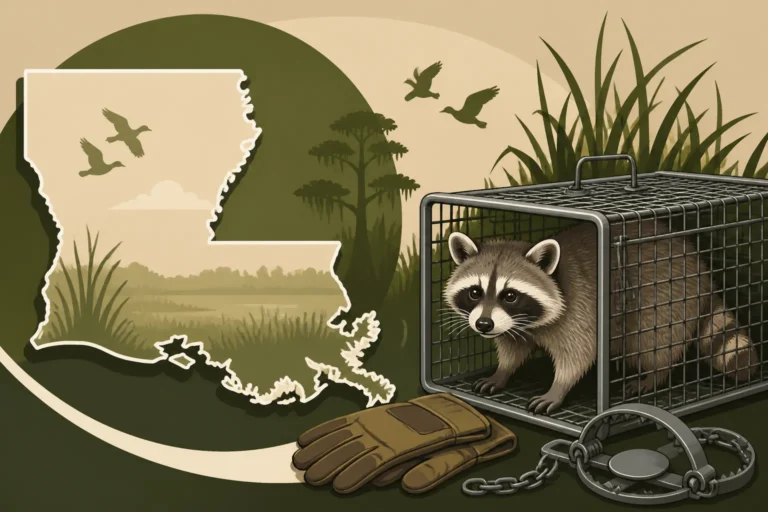
Louisiana law specifies which types of traps are legal and how they must be used. Generally, you can use foothold traps, body-grip traps (like Conibear-style traps), and snares. However, there are crucial nuances. Foothold traps, whether coil spring or long spring, usually have maximum jaw spread limitations to prevent the capture of larger, non-target animals like deer. Body-grip traps, often used for smaller furbearers or in cubby sets, also have size restrictions, typically limiting their spread to around 10 inches unless submerged or used in specific situations to minimize non-target takes. Snares are legal but often have regulations regarding loop size, break-away devices, and placement to ensure humane capture and minimize risk to other wildlife.
One of the most critical aspects of ethical trapping, and a legal requirement, is the frequency of trap checks. In Louisiana, all traps, snares, and sets must be checked at least once every 24 hours. This rule is in place for the welfare of the captured animal and to prevent spoilage of the fur. Imagine the frustration of finding a prime bobcat only to realize it's been in the trap too long and the fur is damaged. Regular checks are a commitment, demanding daily visits to your trapline, rain or shine.
Beyond the catch itself, responsible carcass management is key. All traps must be tagged with the trapper's LDWF customer ID number or full name and address. Once an animal is harvested, you are obligated to utilize it; simply leaving an animal to waste is illegal and unethical. This means skinning and preparing the fur for sale or personal use, or utilizing the meat if the species is edible. Proper skinning and handling are essential for maximizing the value of the fur and ensuring the animal is not wasted.
Decoding Fox and Bobcat Behavior for Successful Trapping
Trapping these clever furbearers isn't just about setting a trap; it's about understanding their world. Both foxes and bobcats are intelligent predators, and success often hinges on your ability to think like them, anticipate their movements, and understand their habits.
Habitat Preferences and Key Indicators
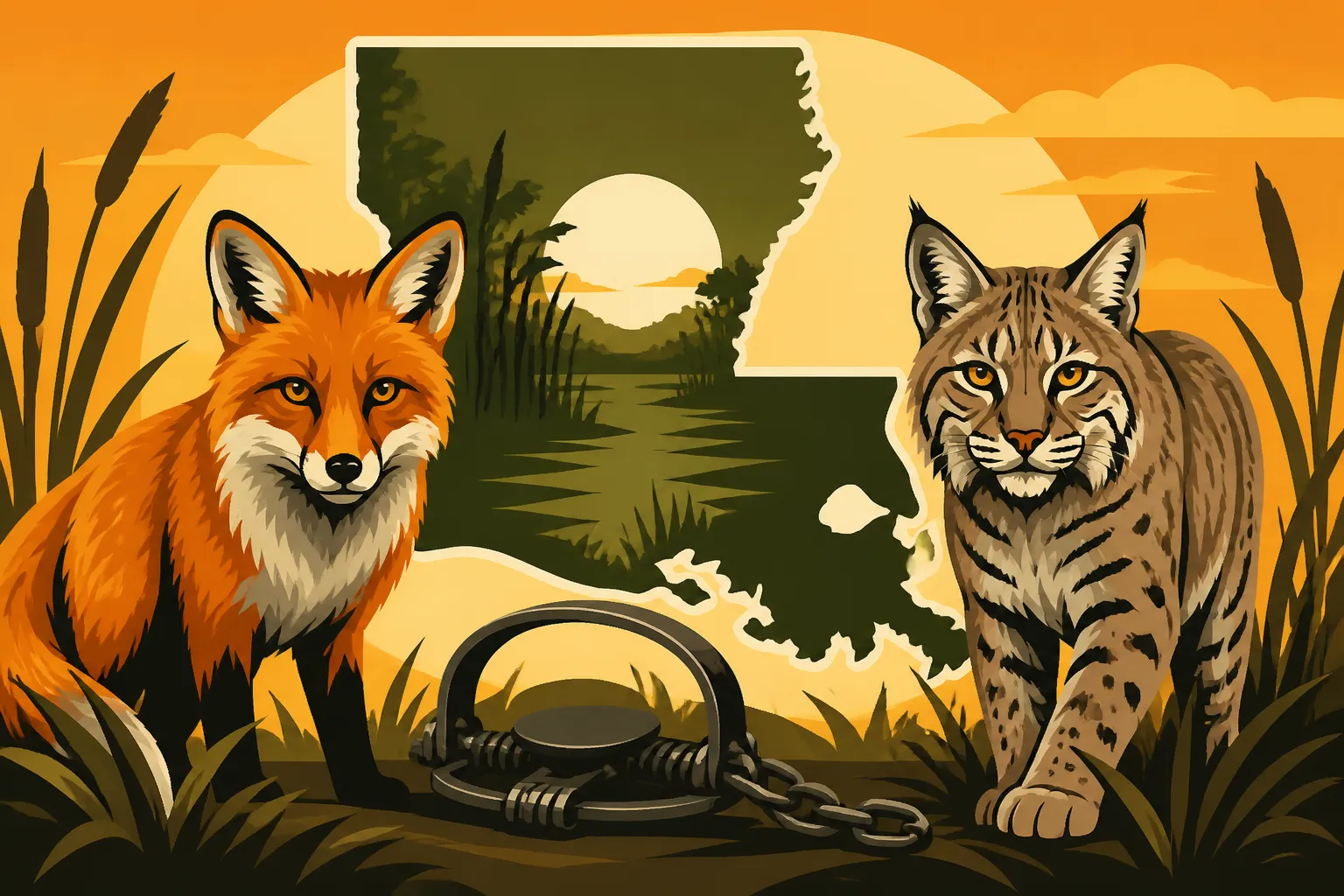
Foxes in Louisiana tend to gravitate towards different habitats depending on the species. The Gray Fox, often called the "tree fox" for its ability to climb, prefers dense, mixed hardwood and pine forests, thickets, and swamp edges. You'll find them in the deep cover of the Pearl River WMA Bottomland Deer Ground or the vast stretches of the Kisatchie National Forest Hunting. The Red Fox, while less common in some parts of Louisiana, tends to favor more open country, agricultural lands, and woodland edges, often where they can prey on small rodents in fields adjacent to cover.
Bobcats, on the other hand, are true masters of stealth and prefer extremely dense cover. Think thick pine plantations, overgrown clear-cuts, swampy bottoms, and rocky ravines (though rocky terrain is less prevalent in much of Louisiana, except perhaps in some of the northern "piney hills" regions). They love areas with abundant undergrowth where they can ambush prey and remain hidden. Look for signs like their distinctive tracks – often rounder with no claw marks showing, unlike a dog – scat, and potential rub marks on trees, especially around their established travel routes.
Before you even think about setting a trap, extensive scouting is your best friend. This isn't just a pre-season activity; it's an ongoing process. Use tools that allow you to analyze aerial photos, looking for pinch points, transition zones between different habitat types, and natural funnels. GoHunt, with its detailed mapping layers, can be instrumental in identifying these key areas from your armchair, helping you pinpoint where to focus your boots-on-the-ground scouting efforts. Understanding how to interpret these visual clues can dramatically increase your chances of finding productive trap locations.
Dietary Habits and Scent Attraction
Both foxes and bobcats are carnivorous predators, though their diets can vary. Foxes are more opportunistic and omnivorous than bobcats, readily consuming small mammals like mice, rabbits, and squirrels, as well as birds, insects, and even fruits or berries, especially the Gray Fox. This diverse diet means they respond well to a variety of baits and lures that mimic their natural food sources. Think musky gland lures, curiosity scents, and baits with a strong odor like tainted meat.
Bobcats, conversely, are more strictly carnivorous, with a primary diet consisting of rabbits, rodents, and birds, and occasionally even fawns or other small deer. They are ambush predators, and their lures often play on their predatory instincts or their territorial nature. Highly attractive gland lures, beaver castor, and loud "cat calls" (vocalization lures) can be very effective. Visual attractants, such as feathers or strips of Mylar suspended near the set, can also pique their curiosity and draw them in, especially if they catch the light.
When choosing lures and baits, consider the time of year and local food sources. A strong skunk essence might work wonders in the early season, while a more subtle gland lure could be better when animals are more trap-shy later on. The goal is to present an irresistible olfactory message that convinces the animal to investigate, leading them precisely to your carefully placed trap. The subtle art of scent control is also crucial; anything that smells like human presence can immediately deter a wary furbearer.
Understanding Their Movements and Activity Patterns
Foxes and bobcats are largely nocturnal, meaning their peak activity is typically between dusk and dawn. However, it's not uncommon to see them moving during the early morning or late evening hours, particularly when daylight savings time shifts or during periods of low human activity. This crepuscular movement (twilight hours) is often when they are traveling between their daytime bedding areas and their nighttime hunting grounds.
Identifying their travel corridors is essential for successful trap placement. Look for natural funnels such as narrow strips of timber between fields, overgrown logging roads, drainages, fence lines, and the edges of dense thickets. Bobcats, especially, will often stick to cover, using dense vegetation as a highway to avoid open areas. By placing your traps strategically along these established travel ways, you increase the likelihood of an encounter.
Weather also plays a significant role in their activity patterns. A sudden cold front can increase their need to hunt, making them more active. Conversely, heavy rain or strong winds might keep them hunkered down. Learning to read the weather and understand how it impacts furbearer movement can help you optimize your trap checks and even dictate which days are best for refreshing a set. Just as deer hunters understand how a cold snap can impact movement, trappers need to grasp these subtle environmental cues. Utilizing detailed mapping tools that show terrain features can help you anticipate where these animals will travel regardless of conditions, allowing you to focus on Finding Ground Others Walk Past.
Proven Trapping Sets and Ethical Practices for Furbearers
Setting a trap is more than just digging a hole; it's crafting an invitation. You're creating a scenario that naturally appeals to the animal's instincts, drawing them to a specific spot. Doing so effectively and ethically is the hallmark of a skilled trapper.
Effective Trap Set Strategies for Foxes
When targeting foxes, the Dirt Hole Set is arguably the most classic and widely effective. This set mimics a spot where a small animal has buried food, a natural curiosity trigger for foxes. To construct it, you dig a hole (about 6-8 inches deep and 3 inches wide) at a 45-degree angle, placing a small amount of bait (like a piece of tainted meat or commercial paste bait) at the bottom. The trap is then bedded level with the ground, a few inches in front of the hole, and covered meticulously with finely sifted dirt, leaving no unnatural lumps or disturbances. A small amount of gland or curiosity lure can be placed on a stick or clump of grass above the hole to complete the illusion. The goal is for the fox to approach the hole, step on the trap, and investigate.
Another effective option is the Flat Set. This set is less visually intrusive than a dirt hole and can be particularly good for trap-shy animals or in areas with high human activity. Instead of a hole, you use a natural attractor like a clump of grass, a log, or a stone. The bait and lure are placed directly on or under this object. The trap is bedded subtly a few inches in front of the attractor, again covered to blend seamlessly with the surroundings. Foxes will often investigate these natural anomalies, especially if a strong scent is emanating from them.
The Post Set can also be quite productive, especially for male foxes. This set leverages their natural behavior of marking territory. You use a prominent object like a fence post, a small tree, or a bush as a "post." A urine or gland lure is applied to the post, and the trap is bedded at its base. The fox approaches to investigate the scent, lifts its leg to mark, and steps into the trap. The key to all these sets is meticulous blending with the environment and ensuring all human scent is minimized.
Optimizing Bobcat Trap Placements
Bobcats often require a slightly different approach, playing more on their predatory and territorial instincts. The Cubby Set is a fantastic choice, especially in areas with natural cover. You can use an existing hollow log, a rock overhang, or even construct a small cubby out of sticks and leaves. The bait (often a piece of rabbit or beaver meat) and lure are placed deep inside the cubby, and the trap is bedded at the entrance. The cubby offers a sense of security and encourages the bobcat to enter, placing its paws directly on the trap.
Blind Sets are also highly effective for bobcats, particularly in areas where you’ve identified a natural choke point or a narrow travel corridor they are forced to use. This could be a gap in a fence, a narrow path through thick brush, or a drainage ditch. The trap is simply bedded directly in the travel path, without any visible bait or lure. The success of a blind set relies entirely on your ability to predict the animal's exact travel route, making careful scouting paramount.
Lures and visual attractants are often more crucial for bobcats than for foxes. A small piece of rabbit fur, some feathers, or a shiny piece of tin can be suspended above a set to catch their eye, drawing them in from a distance. Combined with a strong bobcat gland lure or a "cat call" vocalization, these visual cues can be irresistible. Always place bobcat sets near dense cover where they feel safe and confident approaching, such as the edge of a cypress stand or a palmetto thicket.
Prioritizing Ethical Trapping and Non-Target Avoidance
Ethical trapping isn't just a suggestion; it's a foundational principle that dictates responsible interaction with wildlife. A major part of this is minimizing non-target catches – ensuring you're trapping what you intend to trap, and not incidentally catching other animals like deer, domestic pets, or protected species. One way to do this is by carefully considering your set locations. Avoid placing traps directly on active deer trails or near residential areas where pets might roam. Using setback poles or fences to direct animals into the trap can also help.
Trap size is another critical consideration. While you want a trap strong enough to hold a bobcat, you don't necessarily want a foothold that could severely injure a deer. Louisiana's regulations on trap jaw spread are designed to help with this. Furthermore, many trappers choose to use "dog-proof" traps for species like raccoons, which are designed to be difficult for canids (including domestic dogs) to trigger. While not typically used for fox or bobcat, understanding the concept of selective trapping is vital.
Lastly, the prompt checking of traps (every 24 hours in Louisiana) is not just a legal requirement but an ethical one. It minimizes the time an animal spends in a trap, reducing stress and potential injury. When an animal is caught, humane dispatch methods are crucial. Trappers are responsible for knowing and employing quick, clean dispatch techniques. Being knowledgeable about Louisiana Wildlife Violation Penalties reinforces the importance of ethical, legal, and humane practices in the field. Embracing these ethical guidelines ensures that trapping remains a respected and sustainable outdoor pursuit for generations to come.
| Trapping Target | Preferred Habitat | Primary Diet | Typical Lures | Ideal Trap Sets |
|---|---|---|---|---|
| Gray Fox | Dense mixed woods, thickets, swamp edges | Small mammals, birds, insects, fruit | Musky gland, curiosity, sweet | Dirt Hole, Flat Set, Cubby |
| Red Fox | Open country, agricultural fields, woodland edges | Small mammals, birds, insects | Skunk essence, canine gland, urine | Dirt Hole, Flat Set, Post Set |
| Bobcat | Very dense cover, thick pine, overgrown clear-cuts, swamp bottoms | Rabbits, rodents, birds, small deer | Bobcat gland, beaver castor, "cat calls" | Cubby, Blind Set, Post Set (territorial) |
Disclaimer
Always consult the current Louisiana Department of Wildlife and Fisheries (LDWF) regulations for the most up-to-date and specific trapping season dates, license requirements, and legal methods before heading afield. Regulations can change annually.