Do You Need Written Permission in Louisiana?
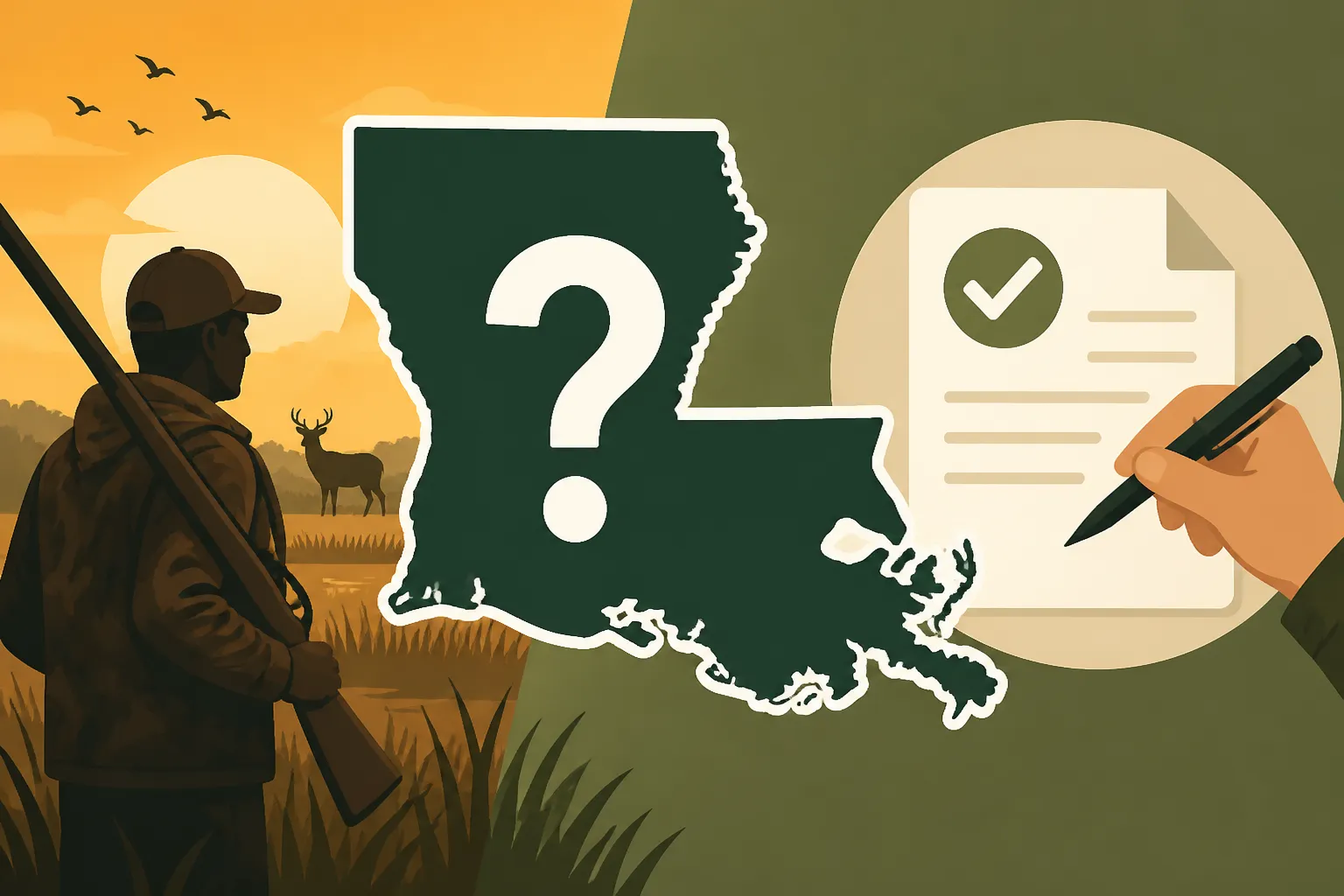
It’s a tale as old as time in Louisiana hunting circles: you’re out in the woods, doing everything right, and suddenly a landowner or their representative appears, questioning your presence. You thought you had permission, maybe a casual "yeah, go on ahead" from the property owner a few weeks back. But without anything in writing, that friendly wave can quickly turn into a heated argument, or worse, a legal headache. This guide is all about navigating the murky waters of permission in the Pelican State, clarifying when verbal permission is enough, and why, more often than not, getting it in writing is your best bet for peace of mind and protection.
Understanding Louisiana's Trespass Law for Hunters
Louisiana has specific laws regarding trespassing, and as hunters, we're particularly exposed to these nuances. It's not always as simple as "if there's no fence, you can hunt it." In our state, private property is just that – private – and access for hunting always requires permission from the landowner or their authorized agent.
The General Rule: Permission is Key, Written or Verbal
Legally, in Louisiana, both verbal and written permission from a landowner can grant you access to hunt their property. If you knock on old Mr. Boudreaux's door, and he tells you, "Sure, son, you can hunt my back forty for deer," that's generally considered valid permission. You're not breaking the law by being there, at least in the eyes of the person who owns the land. This is the traditional way many of us grew up securing hunting spots, relying on relationships and handshake agreements.
However, the key here is proof. If Mr. Boudreaux's nephew shows up and claims you're trespassing, or if Mr. Boudreaux himself has a sudden change of heart, proving you had verbal permission can be incredibly difficult. It becomes a "he said, she said" situation, and you, as the hunter on private land, often bear the burden of proving your legal presence. This is where things can get sticky, especially if you're hunting a tract that changes hands or has multiple owners or leaseholders. It’s tough when a trusted relationship suddenly becomes ambiguous, and nobody wants to be caught in that uncomfortable spot.
When Written Permission Becomes Essential
While verbal permission can be legally sufficient, there are specific situations where written permission isn't just a good idea, it's practically a necessity for your own protection and clarity. Think of it as your insurance policy against misunderstandings.
First, if the land is "posted" according to Louisiana law (which we'll dive into next), verbal permission still allows you to hunt, but written permission offers undeniable proof that you have indeed been granted access despite the clear signage. Imagine a warden patrolling posted land; showing them a signed document streamlines the interaction. Second, if you're hunting land managed by a timber company, a large lease group, or a club, verbal permission from one individual might not be valid across the entire entity. These organizations almost universally require formal, written agreements or leases for anyone to hunt. Third, if there’s any history of disputes over property lines, access, or past hunting incidents, written permission can prevent you from getting entangled in someone else's drama. It clearly defines the terms, dates, and areas where you are permitted to be. Finally, if you're a nonresident or someone unfamiliar with local landowners, a written agreement provides a much stronger foundation for your hunt than a casual conversation. This is especially true if you are Booking a Louisiana Hunt as a Nonresident and want to ensure your trip goes smoothly without legal hiccups.
"Posted" Land and Its Implications
Louisiana law is very clear about what constitutes "posted" land and the heightened penalties for trespassing on it without proper authorization. It's a system designed to give landowners a clear way to communicate their desire for privacy and control over their property.
What Constitutes "Posted" Land in Louisiana
For land to be legally "posted" in Louisiana, it must be marked in a specific way that makes it obvious to any reasonable person that entry is forbidden. This isn't just about a couple of flimsy signs nailed to a tree. The law typically requires:
- Signs: Clearly legible "No Trespassing" signs or similar language must be posted at intervals of no less than one hundred feet, along all property lines that adjoin public roads or highways. If the property doesn't border a public road, signs need to be placed at all corners and access points.
- Purple Paint: An increasingly common and legally recognized method is marking trees or posts with a distinct purple paint. These purple paint marks must be readily visible to any person approaching the property, usually at eye level, and no more than one hundred feet apart. It's a subtle but highly effective way to mark property boundaries, especially in dense woods where signs might be harder to maintain.
Many hunters use modern mapping tools like onX Hunt or GoHunt to visualize property lines, ownership, and sometimes even see where land is officially marked as posted. These tools are invaluable for Finding Louisiana Property Lines and ensuring you don't inadvertently step onto restricted areas. Even with these tools, always respect physical postings.
The Legal Ramifications of Hunting Posted Land
Hunting on land that is legally posted, without valid permission (be it written or verbal), carries more severe consequences than simply trespassing on unposted private land. It escalates from a general trespass to a "criminal trespass" offense, which means harsher penalties. This could include significant fines, potential jail time, and even forfeiture of your hunting license and gear.
The intent of the law is to protect landowners who have gone to the trouble of clearly marking their property. If you're caught on posted land without permission, the burden of proof shifts heavily onto you to demonstrate that you had authority to be there. This is precisely why, if you are granted permission to hunt posted land, having that permission in writing becomes paramount. It serves as your irrefutable defense. Without it, you are putting yourself in a very vulnerable legal position, essentially relying on a verbal agreement against clear physical markings and a law designed to protect the landowner.
Protecting Yourself: Why Written Permission is Always Best Practice
Let's face it, hunting should be enjoyable and stress-free. The last thing you want is a legal dispute overshadowing your time outdoors. This is where written permission truly shines – it's not just about legal compliance, but about your peace of mind.
Avoiding Misunderstandings and Disputes
Verbal agreements, while often made in good faith, are inherently prone to misunderstanding. Did the landowner mean any deer season, or just archery? Was it okay to bring a friend, or was the permission only for you? Did they specify a certain area of their property, or was it a blanket "hunt anywhere"? When emotions run high, or memories fade, these ambiguities can lead to awkward confrontations or even accusations of wrongdoing.
A written permission form, on the other hand, leaves little to interpretation. It's a tangible document that clearly outlines the scope of your access: the specific dates, the species you can hunt, the precise areas you are allowed to be in, and any specific conditions the landowner might have (e.g., no driving ATVs off designated trails, specific parking instructions, or even Reading Aerial Photos for Central Louisiana Deer to show agreed-upon hunting zones). This clarity benefits both you and the landowner, ensuring everyone is on the same page from the start. It's especially useful if you're trying to Getting Private Land Permission in Louisiana from a new contact; a formal approach often builds trust.
The "Burden of Proof" and Hunter Protection
In any legal situation involving trespass, the person accused often carries the "burden of proof" – meaning they must demonstrate their innocence. If you're found hunting on private land, especially posted private land, without written permission, you are at a significant disadvantage. It's your word against the landowner's, or against the clear evidence of "No Trespassing" signs.
A signed, dated document shifts that burden considerably. It provides irrefutable evidence that you have the landowner's consent. This not only protects you from fines and legal repercussions but also from the hassle and stress of having to defend yourself in court. Law enforcement officers, upon seeing valid written permission, can quickly verify your right to be there and avoid unnecessary escalation. This allows them to focus on genuine trespassers, and it allows you to get back to your hunt. It’s peace of mind that a simple piece of paper can provide, letting you enjoy your time outdoors without constantly looking over your shoulder.
Getting Permission: Practical Steps and What to Include in Writing
Securing hunting access on private land is a skill that many seasoned Louisiana hunters value deeply. It's about building relationships and being respectful, whether you're asking for permission for the first time or renewing an agreement.
Approaching Landowners for Access
First impressions matter. When approaching a landowner, always do so respectfully and during reasonable hours. Don't show up in full camo, dragging your rifle, asking to hunt right then and there. A clean appearance and a polite demeanor go a long way. Start by introducing yourself and stating your purpose clearly: you're looking for an opportunity to hunt, and you're curious if they might consider allowing access to their land.
Be prepared to explain why you want to hunt their property – perhaps you've seen good deer sign, or you know they have a problem with Feral Hogs Across Louisiana and you could help. Offer to help them out in return, whether it's mending a fence, clearing some brush, or sharing some of your harvest. Many landowners appreciate responsible hunters who demonstrate respect for their property and show an interest in its well-being. Always offer to share your contact information and ask if there are any specific rules or areas they prefer you avoid. Building a rapport is crucial, and that often means more than just showing up on opening day. Remember, it's about a relationship, not just a transaction.
Crafting a Simple Written Permission Form
You don't need a lawyer to draft a perfectly functional written permission form. A simple, clear document can provide all the necessary protections. Here's what I recommend including in your written permission:
- Landowner Information: Full name, address, and contact number.
- Hunter Information: Your full name, address, and contact number.
- Property Description: A clear description of the land you're permitted to hunt. This could be a physical address, a parcel number, a specific section of their property (e.g., "the woods behind the red barn"), or even a map clearly marking the boundaries. Tools like
onX Huntcan help you generate precise maps to attach. - Dates of Permission: Specify the start and end dates. Is it for a single day, a season, or the entire year? Be explicit.
- Species Permitted: Clearly state what you are allowed to hunt (e.g., "white-tailed deer," "feral hogs," "squirrels," or "all legal game species").
- Methods Permitted: Specify legal methods (e.g., "archery only," "primitive firearms," "modern firearms"). For example, if you're restricted to Crossbow Rules During Louisiana Archery Season, make sure that's noted.
- Any Special Conditions: This is where the landowner can include their specific requests, such as "no vehicle access beyond the main gate," "must close all gates," "no littering," or "report all harvest."
- Signatures and Date: Both the landowner and the hunter must sign and date the document. This signifies mutual agreement.
Here's a basic template you can adapt:
| Item | Detail to Include | Example |
|---|---|---|
| Document Title | Clear heading | Written Hunting Permission |
| Date Issued | When the permission was granted | October 26, 2024 |
| Landowner Name | Full legal name | John B. Smith |
| Landowner Address | Current mailing address | 123 Main Street, Anytown, LA 70000 |
| Landowner Phone | Best contact number | (555) 123-4567 |
| Hunter Name | Your full legal name | Jane A. Doe |
| Hunter Address | Your current mailing address | 456 Oak Avenue, Someville, LA 70001 |
| Hunter Phone | Your best contact number | (555) 987-6543 |
| Property Location | Clear description of land | North 80 acres of parcel ID 123-456-789 at 789 Farm Road, Anytown, LA (map attached) |
| Permission Period | Start and end dates | October 1, 2024, through January 31, 2025 |
| Species Allowed | Specific game species | White-tailed deer (buck or doe per LDWF regulations), feral hogs |
| Methods Allowed | Legal hunting methods | Archery (bow, crossbow), Primitive Firearms |
| Conditions/Notes | Any specific rules or restrictions | No motorized vehicles off main logging roads. Gates must remain closed. Hunter must report all harvested deer to landowner. No overnight camping. No cutting of trees. Park only at designated area near old shed. |
| Signatures | Both parties, dated | Landowner: _________________ (Date) Hunter: _________________ (Date) |
Always carry a copy of this document with you when you're hunting, along with your valid Louisiana Hunting Licenses and What They Cost. It’s a small effort that offers huge protection and peace of mind.
Disclaimer: This article is for general informational purposes only and does not constitute professional advice. Laws, prices and regulations vary by location and change over time. Consult a qualified professional for guidance on your specific situation.