LaSalle Parish Public Hunting Ground
Trying to find good public hunting ground in LaSalle Parish can feel like a real treasure hunt, can't it? It's easy to get frustrated flipping through maps and regulations, wondering if there’s truly a decent spot left that isn't overrun or impossible to access. This guide is here to cut through that confusion, helping you pinpoint and effectively hunt the public lands available to you in LaSalle Parish and its immediate vicinity, ensuring you make the most of your time afield.
Understanding LaSalle Parish's Public Land Landscape
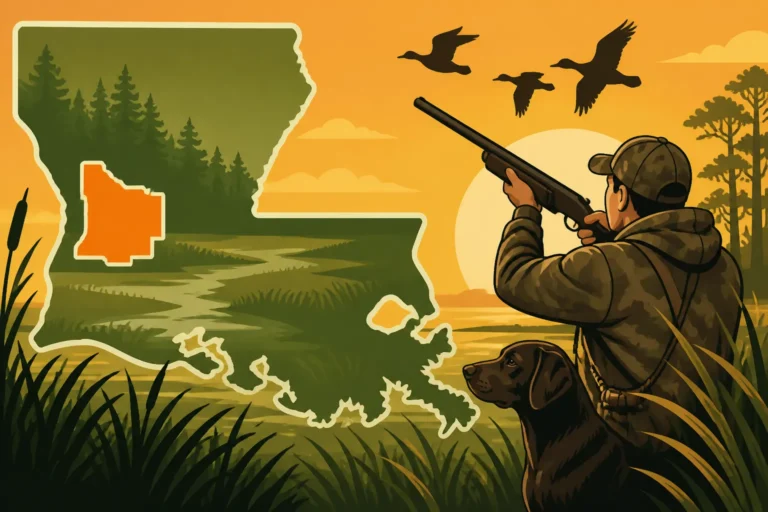
LaSalle Parish, nestled in the central part of Louisiana, presents a unique blend of pine uplands, mixed hardwood bottoms, and agricultural fields. This diversity means a variety of habitat for game, but it also means a fragmented public land picture. Unlike some of our larger, more contiguous public land blocks in other parts of the state, LaSalle often requires a bit more digging and understanding of what's available and how to access it. You're not always looking for massive tracts; sometimes it's about finding those smaller, overlooked pockets that hold consistent game.
The Fragmented Nature of Central Louisiana Public Land
It's a common complaint, and a valid one: central Louisiana's public hunting land isn't always as expansive or as easy to delineate as, say, the sprawling Atchafalaya Basin. In LaSalle Parish, you're looking at a mix of state-managed Wildlife Management Areas (WMAs) and portions of Kisatchie National Forest. These lands are often interspersed with private holdings, timber company lands, and smaller agricultural operations. This fragmentation means that identifying legal access points and understanding boundary lines is absolutely crucial. You can't just assume a large block of timber is public land; you need to verify it with reliable mapping tools. Many hunters get discouraged when they see what appears to be a solid green block on a basic map, only to find it's riddled with private inholdings and lease signs on the ground. This is where your scouting and map-reading skills truly come into play.
Primary Game Species to Pursue
Despite the challenges, LaSalle Parish public lands offer good opportunities for several game species. White-tailed deer are, of course, a top draw, thriving in the mixed pine-hardwood forests. You'll find good numbers of deer, though trophy potential might vary depending on specific habitat and hunting pressure. Wild turkeys also inhabit the area, particularly in the more mature timber stands with open understories. Squirrel hunting in Louisiana bottomland hardwoods is a classic pursuit, and you'll find plenty of bushytails in the acorn-rich areas. Feral hogs are a year-round presence, often providing opportunistic hunting. Small game like rabbits can also be found in thicker cover, especially along field edges or regenerating clear-cuts. Understanding the local habitat variations will help you prioritize which species to target in a given area.
Key Public Hunting Areas in and Around LaSalle Parish
While LaSalle Parish might not boast a massive, single public hunting entity, it does offer access to significant state and federal lands that provide excellent opportunities. Knowing where these areas are and what they offer is the first step toward a successful hunt.
Kisatchie National Forest: Catahoula Ranger District
The most prominent public hunting ground directly impacting LaSalle Parish hunters is without a doubt Kisatchie National Forest, particularly the Catahoula Ranger District. This vast federal land offers thousands of acres for public recreation, including hunting. The terrain here is typical central Louisiana: rolling pine hills, creek drains, and mixed hardwood bottoms. This diverse habitat makes it excellent for deer and turkey, but it also means understanding how deer use the terrain. Finding Sign in Big Kisatchie Timber is essential, as mature pine forests can sometimes appear barren to the untrained eye, but deer are definitely there. Access can be found off numerous forest roads, some paved and some gravel, crisscrossing the area. It's critical to understand that not all of Kisatchie is open to hunting year-round, and specific regulations regarding motorized vehicle use, camping, and stand placement apply. You'll want to verify these specifics with the Kisatchie National Forest regulations in conjunction with LDWF rules.
Dewey W. Wills Wildlife Management Area
While not entirely in LaSalle Parish, Dewey W. Wills WMA is a significant WMA that borders and is very accessible to LaSalle Parish residents, particularly its northern and eastern sections. Located in Catahoula and LaSalle Parishes, this WMA encompasses over 60,000 acres of prime bottomland hardwoods, cypress-tupelo swamps, and high ground that transitions into pine forests. It's a fantastic area, but also one that sees significant hunting pressure. Deer hunting is a major draw, especially in the bottomland areas where deer find sanctuary and plentiful forage. Waterfowl hunting can also be exceptional in the WMA's numerous sloughs, lakes, and seasonally flooded areas, though specific rules and access might apply. Hunting Tensas Parish River Bottoms tactics can often apply to parts of Dewey W. Wills, given the similar habitat. Access is primarily by boat on the many waterways, but there are road access points as well. Understanding the WMA's check-in procedures and specific area rules, which can vary by unit, is paramount.
Saline WMA
Another important WMA, Saline WMA is situated primarily in Catahoula and Concordia Parishes, but its proximity to LaSalle makes it a vital option. It's a classic example of central Louisiana bottomland hardwoods, covering over 60,000 acres along the Saline Bayou and Larto Lake. This WMA is renowned for its deer hunting, with bucks growing to impressive sizes in the rich river-bottom soils. Turkey populations are also present. The area is characterized by sloughs, backwater lakes, and dense timber, making boat access a significant factor for reaching some of the best hunting grounds. Just like Dewey W. Wills, Saline WMA can experience heavy pressure, especially on opening weekends. Scouting beforehand, using tools like Reading Aerial Photos for Central Louisiana Deer, can help you find overlooked spots by identifying harder-to-reach areas or subtle changes in elevation that funnel deer. Always check the current WMA regulations carefully, as they often have specific dates for different methods and game species.
Here's a quick overview of these areas:
| Public Land Area | Primary Location (Parishes) | Primary Habitat | Key Game Species | Typical Access | Notes |
|---|---|---|---|---|---|
| Kisatchie National Forest (Catahoula Ranger District) | LaSalle, Grant, Rapides, Winn | Pine uplands, mixed hardwoods | Deer, Turkey, Squirrel | Forest roads, hiking | Federal land, dispersed hunting, check specific district rules. |
| Dewey W. Wills WMA | Catahoula, LaSalle | Bottomland hardwoods, swamp | Deer, Turkey, Waterfowl | Boat, limited road access | State WMA, specific check-in rules, can be crowded. |
| Saline WMA | Catahoula, Concordia | Bottomland hardwoods, swamp | Deer, Turkey, Hogs | Boat, limited road access | State WMA, focus on river bottoms, good for mature bucks. |
Strategies for Hunting Public Land in LaSalle Parish
Hunting public land successfully in Louisiana, especially in areas like LaSalle Parish, requires a different approach than hunting private leases. It’s often about smart scouting, understanding pressure, and being willing to work a little harder to get away from the crowds.
Effective Scouting and Locating Undisturbed Areas
The key to success on public land is scouting. And I'm not just talking about a quick drive-by. You need to put in the legwork, both digitally and on the ground. Before you ever set foot in the woods, use mapping applications like onX Hunt. These tools are invaluable for identifying property lines, public vs. private land, and potential access points. You can spot natural funnels, pinch points, and cover that might hold deer. Look for areas that are a mile or more from common access roads – most hunters won't walk that far, especially in dense Louisiana timber or swampy areas.
Once you have a few promising spots on your digital map, it’s time for boots on the ground. Visit these areas in the off-season. Look for old logging roads, creek crossings, and subtle elevation changes. These features can create natural travel corridors for deer. Pay attention to bedding areas, rub lines, and scrape lines. Even if they're old, they tell you where deer have been active in the past. Remember, Scouting Louisiana Public Land Before Season isn't just a suggestion; it's a necessity for consistent success. You're looking for the path of least resistance for deer, and often, the path of most resistance for other hunters.
Utilizing Mapping Technology and Public Resources
Modern technology has revolutionized public land hunting. Gone are the days of relying solely on paper maps (though a good paper map is still wise as a backup!). Applications like onX Hunt provide detailed satellite imagery, topo maps, and crucially, land ownership data right on your phone. This allows you to quickly differentiate public from private land, find legal access points, and even track your movements to avoid trespassing. You can drop pins on promising sign, note bedding areas, and mark your stand locations.
The Louisiana Department of Wildlife and Fisheries (LDWF) website and their mapping tools are also indispensable. They provide updated WMA regulations, boundary maps, and often identify parking areas and specific zones within WMAs. Don't forget to check for any special draw hunts or permit requirements for certain areas. Sometimes, a quick call to the local LDWF office can provide invaluable insights into current conditions, recent timber operations, or game sightings. You can also use services like GoHunt for broader hunting research, although for specific Louisiana public land details, LDWF and onX Hunt will be your most frequent companions.
Tactics for Pressured Deer and Turkey
Deer and turkeys on public land are often well-educated. They know what hunting pressure feels like, and they adapt quickly. This means your tactics need to adapt too.
For deer, focus on subtle approaches. Rather than driving directly to a popular spot, consider parking further away and walking in quietly. Hunt during the week when pressure is lower, or target mid-day when other hunters might be taking a break. Deer will often bed in the thickest, nastiest cover they can find – don't be afraid to get into those areas, especially during the rut. If you're Hunting a Ridge-Top Saddle for Rutting Bucks in Kisatchie, consider how the wind and thermals will affect deer movement, especially at dawn and dusk. Setting up a stand in a less-than-obvious location, perhaps deeper in the woods away from main trails, can pay off. Using a ground blind on Louisiana public land can be a great option for stealth, allowing you to get set up quietly before daylight without disturbing game.
For turkeys, public land birds are notoriously wary. They often roost over water or in dense cover, and they've heard every call in the book. Early morning roost hunts can be effective, but you need to be in position well before daylight, and very quietly. Calling a Louisiana Gobbler Off the Roost requires patience and subtle calling, letting the bird come to you rather than trying to force the issue. Run-and-gun tactics can also work, especially later in the morning when birds are on the ground and moving, allowing you to cover ground and try to intercept a bird that's looking for hens. Always be mindful of other hunters, especially when calling aggressively.
Navigating Regulations and Resources
Understanding the rules and knowing where to find help is just as important as knowing where to hunt. Louisiana's hunting regulations can be complex, especially on different types of public land.
Key Regulations and Requirements Specific to Public Land
When hunting on any public land in Louisiana, you're not just subject to state-wide hunting regulations; you also have to adhere to specific rules for that particular WMA, National Forest, or other public tract. For example, Kisatchie National Forest has rules regarding camping, motorized vehicle use on certain roads, and sometimes even restrictions on where you can place a permanent stand. WMAs have their own unique sets of rules that often dictate legal hunting methods, specific season dates that might differ from private land, check-in/check-out procedures, and even restrictions on the type of stands or blinds you can use. Treestand Rules on Louisiana Public Land are non-negotiable, and you need to know them to avoid violations. Always carry your valid Louisiana hunting license and any required tags or permits. On WMAs, you usually need a Wild Louisiana Stamp or a WMA Access Permit in addition to your basic hunting license.
A significant concern across Louisiana now is Chronic Wasting Disease (CWD). If you're hunting in a CWD Management Zone (currently focused in certain northeast parishes, but subject to change), there will be mandatory testing and carcass movement restrictions. Always check the latest LDWF regulations regarding CWD before heading out.
LDWF Website and Local Offices
The Louisiana Department of Wildlife and Fisheries (LDWF) website is your absolute go-to resource. It contains the annual hunting and fishing regulations pamphlet, which is updated every year and should be read cover-to-cover. This pamphlet outlines season dates, bag limits, legal methods, and all WMA-specific regulations. They also offer interactive maps that can help you locate specific WMAs and their boundaries. Using the LDWF Map Tool is a powerful way to visualize hunting opportunities.
Don't hesitate to reach out to the local LDWF office that covers LaSalle Parish or the specific WMA you plan to hunt. Game wardens and biologists are excellent resources for clarifying regulations, understanding current conditions, and even getting tips on less-pressured areas or good entry points. They are there to help ensure safe and legal hunting for everyone.
Respecting Boundaries and Ethical Hunting Practices
Hunting public land comes with the responsibility of respecting all boundaries, both legal and ethical. Always be certain of property lines, especially when hunting near the edges of WMAs or National Forest land that abuts private property. Use your onX Hunt app or other reliable GPS units to confirm you are on public land. Finding Louisiana Property Lines is crucial to avoid accidental trespass, which can lead to serious legal trouble and damage the reputation of all hunters.
Ethical hunting practices are paramount. This includes proper shot placement, blood trailing after dark in Louisiana if necessary, and respecting other hunters. Public land means shared resources. Be mindful of how your actions impact other hunters' experiences. This means being quiet, avoiding sky-busting waterfowl, not setting up too close to another hunter's setup, and always treating the land with respect by packing out everything you pack in. Leaving trash or cutting live trees for blinds reflects poorly on all of us. Ultimately, public land is a privilege, and we all have a role to play in preserving it for future generations.
Disclaimer
This article is for general informational purposes only and does not constitute professional advice. Laws, prices and regulations vary by location and change over time. Consult a qualified professional for guidance on your specific situation.