Louisiana Beaver Population and Damage
If you're a landowner, farmer, or even a public land hunter in Louisiana, chances are you've had a run-in with beavers. These industrious rodents, while fascinating, can become a serious problem, creating widespread flooding, felling valuable timber, and wreaking havoc on infrastructure. This guide is here to shed some light on Louisiana's beaver population, the specific types of damage they inflict, and practical strategies for managing them effectively, so you can reclaim your land or hunting grounds.
Understanding Louisiana's Beaver Population
Louisiana's bayous, swamps, and bottomland hardwoods provide an almost perfect environment for beavers to thrive. Their presence is deeply ingrained in the natural history of the state, and understanding their population dynamics is the first step toward effective management.
The Resilient Nature of Beavers
Beavers are often called "nature's engineers" for a good reason. They possess an incredible ability to alter their environment, primarily through dam building. This resilience is a key factor in their success across Louisiana. They favor slow-moving waterways, small creeks, ditches, and the fringes of larger swamps where there's an abundant supply of woody vegetation like willow, sweetgum, and cypress saplings. These natural preferences mean that vast stretches of Louisiana's landscape are prime beaver habitat. Their ability to reproduce quickly and establish new colonies in suitable areas means that once they move in, they can multiply rapidly, and their numbers can recover even after significant control efforts. The dense, overgrown nature of many of our waterways, especially in areas like the Atchafalaya Basin Swamp Deer, often provides ideal cover and building materials, contributing to their robust populations.
Estimating Beaver Numbers in the Bayous and Bottomlands
Accurately counting beavers in Louisiana is a monumental challenge. Unlike deer or turkeys, which can be seen in fields or heard gobbling, beavers are largely nocturnal and spend much of their lives submerged or inside their lodges. Instead of direct observation, wildlife managers and trappers often rely on signs of their activity. This includes fresh cuttings along shorelines, the presence of dams (which are hard to miss!), and their distinctive dome-shaped lodges.
However, even with these indicators, pinpointing an exact number is tricky. A small area might look like it only has a few beavers, but a single family unit can cause extensive damage. The interconnectedness of Louisiana's waterways also means that new beavers can easily move into an area once a previous colony has been removed. It’s a constant ebb and flow, making population estimates more about identifying areas of high activity rather than precise counts. Tools like those found on GoHunt can sometimes help visualize terrain and water features, which might indirectly indicate potential beaver hotbeds, though direct beaver activity mapping remains difficult.
The Damage Beavers Inflict on Louisiana Landscapes
The saying "busy as a beaver" is well-earned, but their industriousness often comes at a significant cost to human interests and, paradoxically, to the health of certain ecosystems. The damage is far-reaching and can quickly escalate from a minor nuisance to a major problem.
Flooding and Water Management Headaches
Perhaps the most recognized and frustrating form of beaver damage is the flooding caused by their dams. A seemingly small dam across a ditch or culvert can quickly back up water, submerging fields, roads, and valuable timberland. This isn't just an inconvenience; it can have severe economic consequences. Farmers can lose entire crops, timber companies face damaged or drowned trees, and private landowners might find access roads impassable or even washed out.
Imagine a low-lying agricultural field near a small creek. Beavers build a dam overnight, and within days, acres of soybeans or sugarcane are under several feet of water, leading to total crop loss. Or consider a logging road that becomes impassable, cutting off access to timber and costing thousands in delays. In areas bordering swamps, these dams can raise water levels for miles, impacting not only human infrastructure but also changing the natural water flow critical for wetland health. The constant battle against beaver dams is a significant part of water management for many in our state.
Timber Destruction and Habitat Alteration
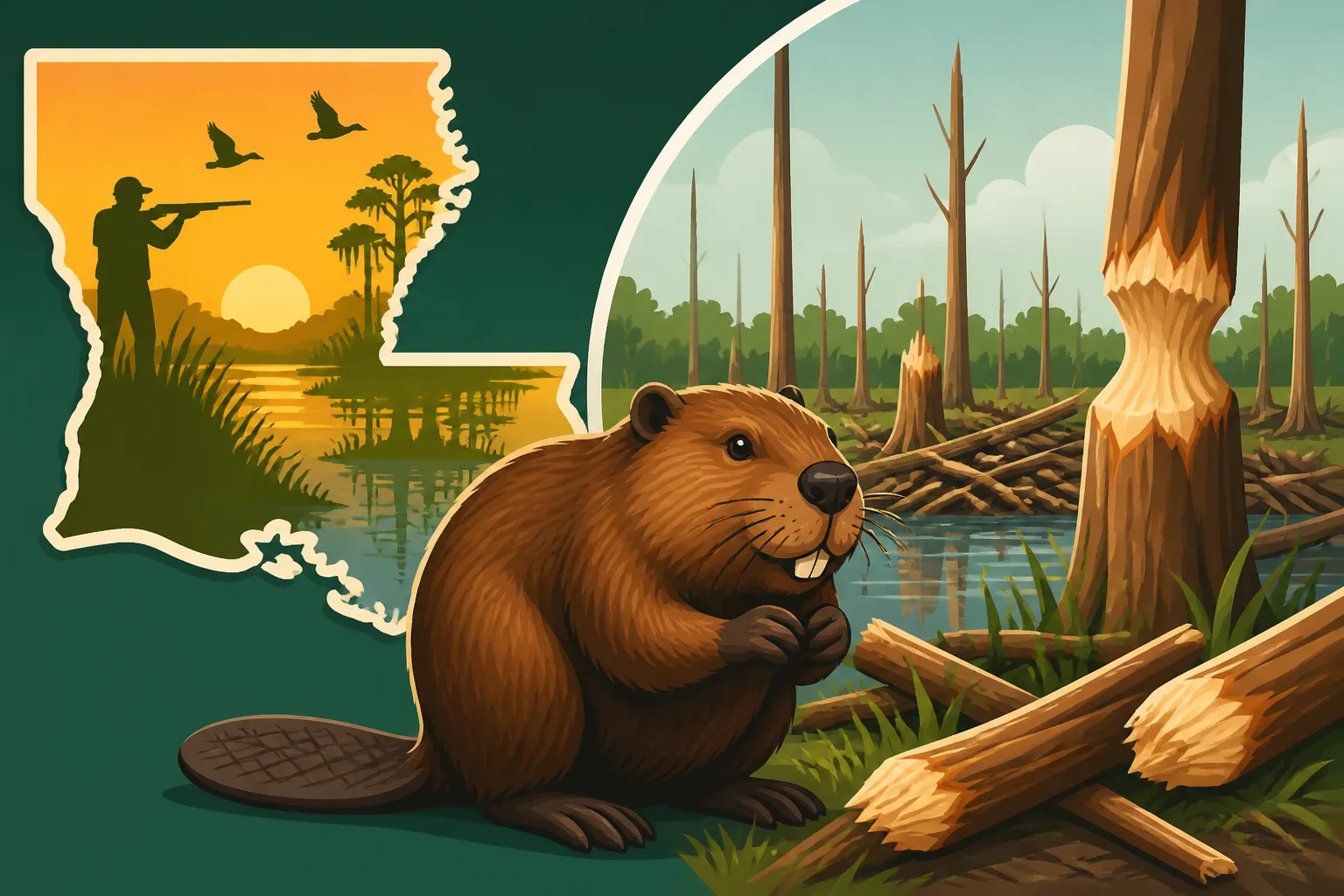
Beavers don't just use trees for dams; they also consume the inner bark (cambium layer) of certain trees as a food source, especially in winter. This means they're constantly felling trees, not just small saplings but often surprisingly large hardwoods. You'll see the tell-tale hourglass shape at the base of trees they've been working on, or entire groves of young sweetgums and willows gnawed down.
This timber destruction alters the habitat significantly. Valuable stands of oak, cypress, or other hardwoods can be girdled or completely felled, destroying future timber revenue and removing important mast-producing trees for wildlife like deer and squirrels. Where once there was diverse forest, beaver activity can create open water or dense thickets of undesirable pioneer species, changing deer movement patterns and reducing food sources. Understanding how these changes occur can be critical when you're Scouting Louisiana Public Land Before Season or planning Treestand Setups in Kisatchie National Forest.
Erosion, Infrastructure Damage, and Disease Concerns
Beyond obvious flooding and timber loss, beavers contribute to a host of other problems. Their constant digging and burrowing for lodges and tunnels can seriously undermine levees, pond banks, and roadbeds, leading to erosion and structural failures. Blocked culverts are a perennial issue, causing roads to wash out during heavy rains, creating costly repairs for parishes and private landowners alike.
| Type of Damage | Impact | Potential Cost/Effort |
|---|---|---|
| Flooding | Submerges crops, timber, roads; creates stagnant water; alters water flow. | High (crop loss, road repair, timber value, ongoing maintenance) |
| Timber Destruction | Fells valuable trees, girdles others for food/building; alters forest composition. | High (lost timber revenue, habitat degradation, replanting) |
| Erosion/Burrowing | Undermines levees, pond banks, roadbeds; creates dangerous sinkholes. | Medium-High (repair costs, safety hazards) |
| Culvert Blockage | Causes road washouts, drainage failures. | High (emergency repairs, infrastructure replacement) |
| Habitat Shift | Replaces diverse forest with open water or mono-species thickets; impacts wildlife. | Long-term (ecological changes, reduced hunting opportunity) |
While less common, stagnant water created by beaver dams can also become breeding grounds for mosquitoes and potentially contribute to certain waterborne pathogens, though direct human health risks are generally low. Still, the overall impact on local ecosystems and human-built environments is substantial.
Strategies for Managing Beaver Damage
Dealing with beavers is usually not a one-time fix; it's an ongoing management challenge. However, a combination of methods can help mitigate their impact and protect your property.
Active Trapping and Removal Programs
For immediate and effective control, active trapping and removal are generally the most successful strategies. This involves setting various types of traps, such as conibear traps (specifically designed for quick, humane dispatch), foothold traps, or snares, in areas of active beaver trails, dam crossings, or lodge entrances. Due to the challenges of beaver relocation and their high reproductive rate, removal is often the most practical solution.
Trapping requires skill and knowledge of beaver behavior and local regulations. You need to know where to place traps for maximum effectiveness and safety, especially if you have pets or livestock in the area. Many landowners choose to hire professional nuisance animal trappers who have the equipment and expertise to handle the job safely and efficiently. Even after a successful removal, constant vigilance is necessary as new beavers often move into prime habitat from adjacent waterways. Think of it like managing Hunting Louisiana's Year-Round Feral Hogs; it's a battle that demands consistent effort.
Deterrents and Exclusion Techniques
While trapping removes existing beavers, deterrents and exclusion methods aim to prevent them from causing damage or establishing new colonies in the first place. One popular option for managing water levels without removing the beavers entirely is a "beaver deceiver" or flow device. These systems involve installing a culvert or pipe through the dam, protected by a cage, which allows water to flow through at a managed rate, preventing excessive flooding while allowing the beavers to maintain their dam. They are not a universal solution, but can be highly effective in specific scenarios.
For protecting individual trees or small groves, wrapping the bases of trees with wire mesh or hardware cloth can prevent beavers from felling them. This is often practical for valuable ornamentals or specific mast-producing trees crucial for deer, but it becomes impractical for large timber stands. These methods require significant initial investment in materials and labor, but they can be a long-term solution for targeted areas. Before embarking on such projects, it's wise to consult resources or even community forums that might be hosted on platforms like GoHunt, where landowners share their experiences with these techniques.
Understanding Hunting and Nuisance Control Regulations
The good news for those frustrated by beaver damage is that in Louisiana, beavers are often classified as nuisance animals. This typically means that on private land, with landowner permission, they can be controlled or removed year-round without specific season restrictions, often even at night. This contrasts with regulated game species and provides much-needed flexibility for property owners facing significant damage. Always verify the most current regulations with the Louisiana Department of Wildlife and Fisheries (LDWF) or local authorities, as rules can change.
While recreational hunting isn't usually the primary method for large-scale beaver control, shooting them (where legal and safe) can be part of an integrated management plan. However, their nocturnal habits and aquatic lifestyle make them challenging targets for hunters. Trapping remains the most efficient method. For individuals new to trapping or pest control, understanding Louisiana Hunter Education Requirements is always a good foundation, even if specific beaver regulations fall under nuisance animal statutes. Remember that even with nuisance animals, ethical and safe practices are paramount.
Disclaimer
This article is for general informational purposes only and does not constitute professional advice. Laws, prices and regulations vary by location and change over time. Consult a qualified professional for guidance on your specific situation.