Which Fourteen Parishes Sit in a CWD Zone
It’s an undeniable truth for any deer hunter in Louisiana that navigating the ever-evolving regulations can feel like trying to untangle a mess of fishing line after a busy morning on the water. One of the biggest challenges, and frankly, a source of a lot of head-scratching, revolves around Chronic Wasting Disease (CWD) and the specific zones established to manage its spread. This guide is here to cut through the confusion, clearly identifying the fourteen parishes that currently sit within a CWD zone and explaining exactly what that means for you, your hunting plans, and your harvest.
Understanding Louisiana's CWD Zones
When CWD first surfaced in Louisiana, it sent ripples of concern throughout the hunting community. It's a serious neurological disease affecting deer, elk, and moose, and unfortunately, there's no vaccine or cure. The Louisiana Department of Wildlife and Fisheries (LDWF) had to act swiftly to implement measures aimed at containing it. For us hunters, this means a new set of rules and a need for greater awareness, especially concerning where we hunt and how we handle our deer. The goal is to protect our deer herd and ensure the future of hunting in our state.
The Genesis of CWD in Louisiana
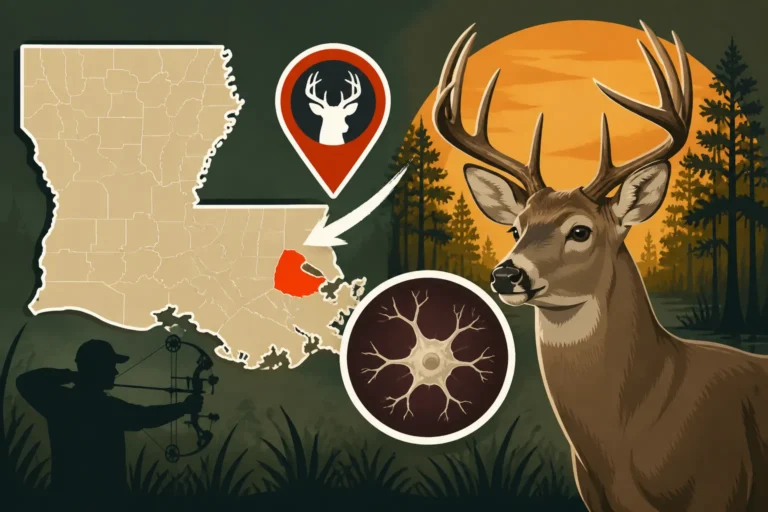
The appearance of CWD in Louisiana wasn't just a sudden event; it was something wildlife officials had been preparing for, knowing it was a matter of when, not if. The disease officially arrived in our state in January 2022 when a positive test was confirmed in a buck harvested in Tensas Parish. This single case became a watershed moment, triggering an immediate and comprehensive response from the LDWF. For years, we’d watched neighboring states grapple with CWD, and the hope was it would bypass Louisiana, but the reality is it’s a highly contagious disease among cervids. If you're curious about the specifics, you can dive deeper into how CWD Reached Tensas Parish.
Following that initial discovery, further surveillance and testing identified additional cases, primarily concentrated in the northeastern part of the state. This cluster of positive cases, particularly in areas like Tensas Parish, quickly established the core of what would become Louisiana’s CWD management efforts. The LDWF’s immediate focus shifted to understanding the prevalence and geographical spread to implement targeted management strategies. This is a battle for the long haul, and every hunter plays a crucial role in its success.
The Enhanced Mitigation Zone vs. Buffer Zone
To manage CWD effectively, the LDWF didn't just draw a single line on a map. Instead, they established a two-tiered system of CWD zones: the Enhanced Mitigation Zone (EMZ) and the CWD Buffer Zone. This approach allows for varying levels of restrictions based on the proximity to confirmed positive cases, aiming to balance disease management with minimizing unnecessary burdens on hunters. Understanding the distinction between these zones is absolutely critical because the rules change depending on which one you're in.
The Enhanced Mitigation Zone (EMZ) is where the CWD positive cases have been directly identified. This zone has the most stringent regulations, designed to drastically limit the potential for disease transmission. Think of it as ground zero, where the immediate threat is highest, and therefore, the rules are strictest. Then, surrounding this EMZ, there's the CWD Buffer Zone. This area acts as a protective perimeter, where regulations are slightly less restrictive but still designed to prevent the outward spread of the disease. It’s a precautionary measure, acknowledging that deer movements don't stop at arbitrary lines on a map. These zones are fluid and can change as new CWD cases are confirmed or as surveillance data indicates a reduced risk in certain areas. You can find more detail on the specific baiting rules within The CWD Buffer Zone Baiting Rules and The Enhanced Mitigation Zone Baiting Ban.
The Fourteen Parishes in Detail
So, let's get down to the nitty-gritty: which parishes are we talking about here? It’s not just a small corner of the state; these zones encompass a significant chunk of prime hunting ground. Knowing if your favorite hunting spot falls within one of these CWD zones is your first step in ensuring compliance and responsible hunting.
Listing the Affected Parishes
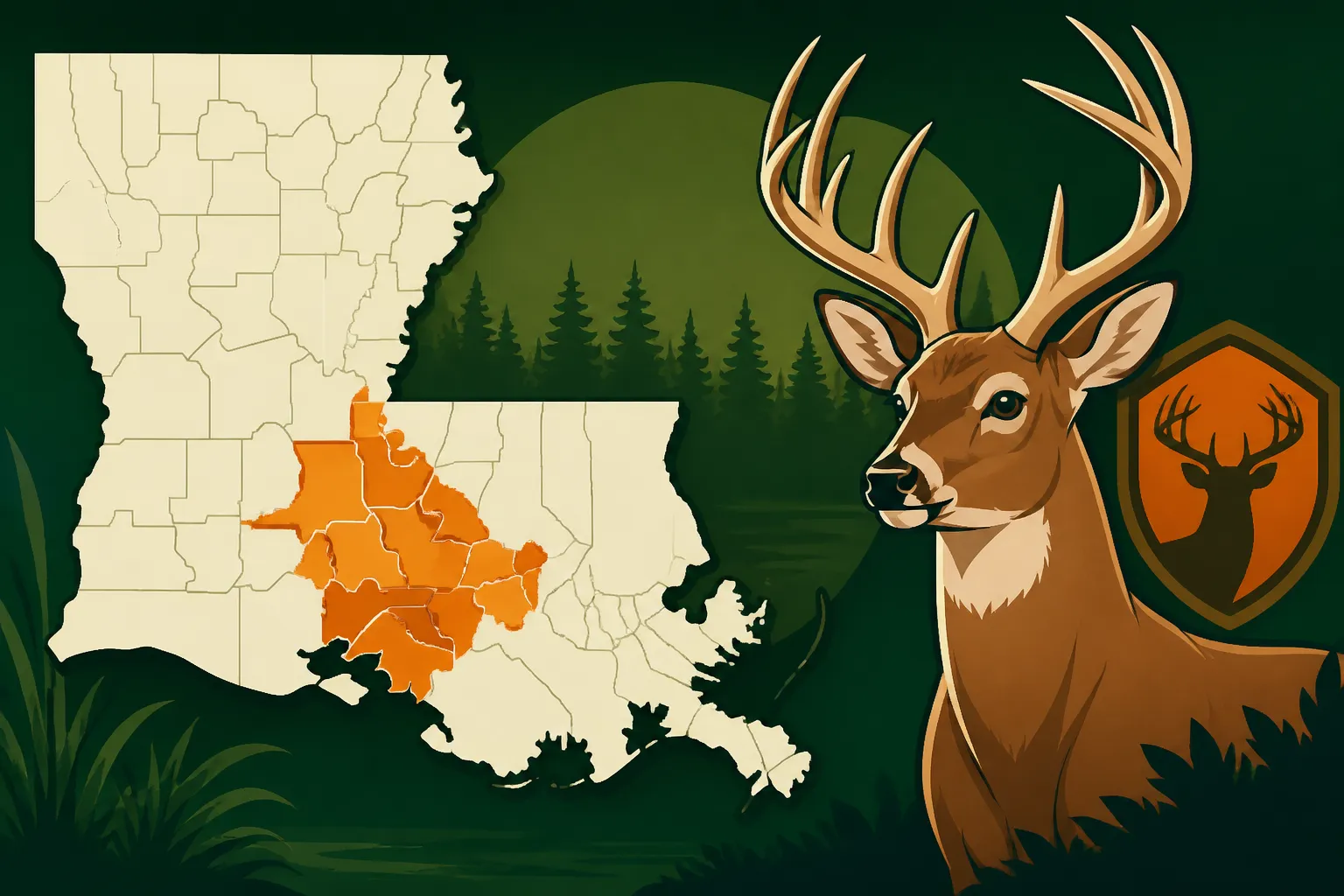
As of the most recent updates from the Louisiana Department of Wildlife and Fisheries, the following fourteen parishes are currently identified as being either partially or entirely within a CWD zone. This list covers both the Enhanced Mitigation Zone and the CWD Buffer Zone, reflecting the collective effort to manage the disease across these areas.
Here's a breakdown of the parishes, which might just include your hunting grounds:
| Parish Name | CWD Zone Status (as of Current Date) | Primary CWD Zone Type | Notes for Hunters |
|---|---|---|---|
| Tensas Parish | Entirely within CWD Zone | Enhanced Mitigation | Ground zero for initial CWD cases, strictest rules apply. |
| Franklin Parish | Partially within CWD Zone | Enhanced Mitigation | Specific areas, particularly bordering Tensas, have EMZ rules. |
| Madison Parish | Partially within CWD Zone | Enhanced Mitigation | Areas near the Mississippi River and Tensas Basin have EMZ rules. |
| Richland Parish | Partially within CWD Zone | CWD Buffer Zone | Primarily in the buffer zone, but still under enhanced surveillance. |
| Catahoula Parish | Partially within CWD Zone | CWD Buffer Zone | Western parts are in the buffer zone; check specific boundaries. |
| Concordia Parish | Partially within CWD Zone | CWD Buffer Zone | Portions, especially near the Mississippi River, are in the buffer zone. |
| East Carroll Parish | Partially within CWD Zone | CWD Buffer Zone | Northern parts of the state are under buffer zone rules. |
| West Carroll Parish | Partially within CWD Zone | CWD Buffer Zone | Similar to East Carroll, specific areas are in the buffer zone. |
| Caldwell Parish | Partially within CWD Zone | CWD Buffer Zone | Check the LDWF map for exact boundaries, particularly eastern sections. |
| LaSalle Parish | Partially within CWD Zone | CWD Buffer Zone | Portions that border Catahoula and Caldwell are in the buffer zone. |
| Morehouse Parish | Partially within CWD Zone | CWD Buffer Zone | Parts of the southern parish may fall into the buffer zone. |
| Ouachita Parish | Partially within CWD Zone | CWD Buffer Zone | A specific area within Ouachita had a confirmed case, expanding the buffer zone. |
| Avoyelles Parish | Partially within CWD Zone | CWD Buffer Zone | Eastern edges bordering the Mississippi River may be impacted. |
| West Feliciana Parish | Partially within CWD Zone | CWD Buffer Zone | Recently added due to new cases, check LDWF for the most current maps and boundaries. |
Note: This table reflects information as of the writing and CWD zone boundaries are subject to change. Always refer to the official LDWF website or the GoHunt app for the most current and precise zone maps before hunting.
Geographic Implications and Hunter Impact
The geographic spread of these CWD zones means that hunters across a significant swath of northeastern and now, more recently, parts of eastern Louisiana need to be acutely aware of the regulations. For example, if you typically hunt the rich bottomlands of the Tensas River Basin, you are almost certainly operating within the Enhanced Mitigation Zone. This means immediate changes to how you might plan your hunt, from baiting to carcass transport. Similarly, those hunting further west in parishes like Catahoula or Caldwell, which might be in the Buffer Zone, will face different, though still important, restrictions.
This isn’t just about inconveniencing hunters; it's about protecting the long-term health of our deer herd and ensuring hunting remains a viable tradition. The impact on hunters can be substantial, especially for those who routinely cross parish lines. Imagine harvesting a buck in Franklin Parish, a parish that can fall within the EMZ, and needing to transport it to a processing facility outside the zone. You can't just throw the whole deer in the truck anymore. It’s imperative to consult resources like the LDWF website or reliable hunting apps, such as GoHunt, that provide real-time boundary updates and rules. Ignorance of the law is never an excuse, especially when it comes to wildlife management zones that are literally about disease containment.
Rules and Regulations within CWD Zones
Hunting in a CWD zone isn't just a matter of identifying the parish; it's about understanding and strictly adhering to the revised rulebook. These regulations are designed to minimize the risk of CWD spreading further within Louisiana, and they are non-negotiable for hunters operating in these areas. It’s a collective responsibility, and every individual hunter's actions contribute to the larger effort of disease management.
Mandatory Testing and Carcass Movement Restrictions
One of the most critical regulations for hunters in a CWD zone involves post-harvest procedures. If you harvest a deer within the Enhanced Mitigation Zone, mandatory CWD testing is required for all cervids. This isn't optional; it's a crucial part of the LDWF's surveillance efforts to track the disease. You'll need to submit the deer's head to an authorized CWD sampling station within a specific timeframe. The LDWF has established several convenient CWD sampling locations throughout the affected parishes to make this process as straightforward as possible. This is a big change for many, but it's vital for understanding the disease's presence.
Beyond testing, there are stringent rules regarding carcass movement. You simply cannot move a whole deer carcass out of an Enhanced Mitigation Zone or, in some cases, even out of the larger CWD Buffer Zone. This is perhaps the most significant operational change for hunters. The reason is simple: CWD prions (the infectious agents) are concentrated in specific tissues like the brain, spinal cord, and lymph nodes. Moving an intact carcass risks unknowingly transporting these prions to new areas. This means you’ll need to process your deer at a sampling station, taxidermist, or within the CWD zone itself, removing only deboned meat, clean antlers, hides, and taxidermied skulls. If you're wondering about the specifics, make sure to read up on Louisiana Carcass Movement Restrictions.
Baiting and Feeding Bans
Another major shift in hunting strategy within CWD zones involves baiting and feeding. In both the Enhanced Mitigation Zone and the CWD Buffer Zone, there are outright bans on baiting and feeding deer. This means no corn piles, no mineral blocks, no attractant feed, and no protein pellets. The reason behind this ban is rooted in how CWD spreads. When deer congregate around a common food source, they increase direct nose-to-nose contact and leave behind saliva, urine, and feces—all potential vectors for CWD prions. Removing bait sites minimizes these congregations, reducing the chances of disease transmission between animals.
This can be a tough adjustment for many hunters who have traditionally relied on supplemental feeding or baiting to attract deer. It forces a return to more traditional scouting and hunting methods, focusing on natural food sources, travel corridors, and bedding areas. It also means you need to be extra vigilant, as these rules are strictly enforced. Before heading out, always double-check the specific regulations for the area you plan to hunt. Using tools like the GoHunt app can provide geo-located information, telling you whether you're in a zone where baiting is prohibited.
Navigating Your Hunt in a CWD Zone
Hunting within a CWD zone doesn't mean your season is over; it simply means you need to adjust your approach. It requires a greater degree of planning, attention to detail, and adherence to specific protocols. Think of it as another layer of challenge and responsibility that comes with being a Louisiana hunter in the modern era.
Pre-Hunt Planning and Information Gathering
Before you even step foot in the woods of a CWD zone parish, your pre-hunt planning needs to be more thorough than ever. Start by consulting the official LDWF website for the most current CWD zone maps. These maps are constantly updated, and what was outside the zone last year might be in it this season. Don't rely on outdated information. Apps like GoHunt are incredibly valuable here, as they often integrate these regulatory boundaries directly onto their mapping layers, allowing you to see your precise location relative to CWD zones in real-time.
It's also a good idea to identify LDWF-approved CWD sampling stations before you hunt. Know their operating hours, locations, and any specific requirements for submitting a sample. This planning will save you a lot of headache and potential legal trouble if you're fortunate enough to harvest a deer. Consider how the baiting bans will affect your stand placement and scouting efforts. You might need to change your approach from sitting over a feeder to meticulously scouting for natural browse, mast crops, or active scrape lines Along a Logging Road. Understanding Louisiana's Ten Deer Hunting Areas Explained can provide broader context for deer behavior in specific regions that might overlap with CWD zones.
Post-Harvest Procedures and Best Practices
Once you've successfully harvested a deer in a CWD zone, the real work—and adherence to regulations—begins. Your immediate actions are critical. First, if you're in the Enhanced Mitigation Zone, remember that mandatory testing requirement. Get the head to a sampling station promptly. The LDWF often provides guidance on how to properly collect and package the head for submission.
Secondly, you need to think about carcass processing. Unless you're lucky enough to have a processor or taxidermist right there in the zone, you'll be doing some field quartering. This means deboning the meat and leaving the spine, brain, and other prohibited materials within the CWD zone. Having the right tools for field processing—a sharp knife, game bags, and perhaps a small saw—will be essential. This is a good time to review best practices for Field Dressing a Deer in Warm Weather, which is a common occurrence during Louisiana's early deer seasons. Always wear gloves when handling deer, especially when dealing with brain or spinal tissue, as a general precaution, though there's currently no evidence of CWD transmitting to humans. Finally, keep detailed records of your harvest location, date, and any CWD test submission information. This level of detail is just good practice for any hunter, but it becomes essential when dealing with CWD.
Disclaimer
Please remember that hunting regulations, including those pertaining to CWD zones, are subject to change. Always consult the official Louisiana Department of Wildlife and Fisheries (LDWF) website or the current Louisiana Hunting Regulations pamphlet for the most up-to-date and accurate information before planning your hunt. This guide is for informational purposes only and should not be considered legal advice.