Setting Up a Dove Field Before Opening Day
The excitement for dove season in Louisiana is absolutely contagious, but let's be honest, nothing deflates that energy faster than showing up to a poorly prepared field on opening day. You’ve got high hopes, your gear is ready, and then you realize the birds are nowhere to be found, or they're flying miles away. It's frustrating when all that effort seems wasted. This guide is all about taking the guesswork out of attracting doves, walking you through everything from crop selection to the crucial last-minute tweaks, ensuring your field is a magnet for those fast-flying birds come opening day.
The Importance of Early Planning and Legalities for Dove Fields
You know that old saying about failing to plan? Well, it applies tenfold to setting up a successful dove field here in Louisiana. It’s not just about throwing some seed on the ground and hoping for the best. There are critical planning steps and legal hoops you need to jump through long before you even think about loading up your shotgun. Ignoring these can lead to a really disappointing season, or worse, legal trouble with the Louisiana Department of Wildlife and Fisheries (LDWF). Trust me, you don’t want to be that hunter explaining why your beautiful field is suddenly a no-go.
Navigating Legal Regulations for Dove Fields
The rules for dove hunting, particularly regarding baiting, can feel like a minefield. It's not uncommon for hunters, even seasoned ones, to accidentally cross the line. The federal migratory bird regulations, enforced by the U.S. Fish and Wildlife Service, along with state laws, are very clear about what constitutes a legal dove field and what doesn't. Essentially, you can't scatter grain or bait where doves can feed on it. The key distinction often lies in "normal agricultural practices." This means planting crops and manipulating them (like mowing or disking) in a way consistent with what a farmer would do to harvest or improve the land, even if the primary purpose is hunting.
It’s crucial to understand that simply spreading corn or milo directly onto a field as a supplement is illegal. However, planting these crops and then manipulating them, such as by mowing strips or discing areas, is perfectly acceptable as long as it's part of a normal agricultural operation. For example, a field of sunflowers grown for seed and then mowed down is legal, but broadcasting a truckload of sunflower seeds onto a barren patch of ground is not. The LDWF has some excellent resources online, and a quick call to your local wildlife agent can clear up any specific questions you might have about your unique setup. Don't forget, you'll also need your Louisiana Migratory Bird Certification in addition to your regular hunting license.
Choosing the Right Location and Crop
Picking the right spot is half the battle. Doves are creatures of habit, and they prefer open areas near roosting trees, water sources, and grit. When you're looking at potential spots for your dove field, consider its proximity to these natural elements. An isolated field far from any tree line or pond might struggle to attract and hold birds, no matter how good your food plot is. Look for areas that offer a good mix of open ground and scattered perching spots like power lines, dead trees, or fence rows. Think about natural flight paths – where do doves travel from their roost to water or other feeding areas? Your field should ideally intersect or be very close to these routes.
As for crops, doves are primarily seed eaters, and they have definite favorites. Brown top millet, proso millet, sunflowers, sesame, and grain sorghum (milo) are all excellent choices for attracting mourning doves. Each has its pros and cons in terms of planting time, cost, and bird preference. For instance, sunflowers are a classic, but they can be more expensive and require specific timing. Milo is a great choice because it holds up well, and the seeds are a strong attractant. Consider a mix of crops that mature at different times to provide a longer feeding window throughout the season. Sometimes, simply having a really healthy, diverse stand of a specific crop can be a major draw, especially if other fields in your area are less appealing. Think about what a site like GoHunt might recommend based on regional success stories.
Understanding Dove Field Habitat and Food Sources
Beyond simply planting, truly understanding what makes a dove field irresistible goes a long way. Doves aren't just looking for food; they're looking for a complete package: food, water, grit, and safe places to rest and preen. When you meticulously craft your field to offer all these elements, you create an entire ecosystem that encourages doves to stick around, not just pass through. It’s about building a home for them, not just a restaurant.
Prime Food Sources for Doves
Doves are opportunistic foragers, but they definitely have preferred menu items. As mentioned, small, readily available seeds are their top picks. Brown top millet is a fantastic choice because it matures quickly, usually within 60-70 days, making it ideal for planting in late spring or early summer for an early September season opener. Sunflowers are another top-tier choice, especially the black oil variety. They offer highly palatable seeds, and the tall stalks provide excellent perching opportunities. However, they need a longer growing season, typically 90-120 days, so planting in April or May is crucial.
Grain sorghum (milo) is often overlooked but is a real workhorse for dove fields. It's drought-tolerant and produces an abundance of seeds that doves absolutely love. Moreover, milo plants are sturdy, providing natural cover and perching for the birds as they feed. Other good options include sesame, buckwheat, and various small grains. Some hunters even plant strips of wheat or corn, then mow or cut it down to expose the seeds just before the season. The key is to select a crop or a blend that will produce ripe, fallen seeds around the time dove season opens. Rotating your crops can also help keep your soil healthy and discourage weed buildup, which can choke out your desired dove forage. This is a lot like Hunting a Green Field Planted for Deer, where understanding forage preferences is paramount.
The Role of Water and Grit
Food is important, but doves need water and grit to survive and thrive. A dove without access to water within a reasonable flight distance will not linger in your field, no matter how much milo you’ve planted. Doves typically drink twice a day, usually in the morning and late afternoon, and they prefer open, bare edges around shallow water sources where they can easily land, drink, and take off again while keeping an eye out for predators.
If you have a pond or a creek nearby, fantastic! If not, you might need to create a temporary water source. A small, shallow depression lined with a tarp, or even just a continuously filled stock tank, can make a huge difference. Ensure the edges are clear of tall vegetation so doves have a clear approach and escape route.
Grit is another often-forgotten necessity. Doves, like all birds, don't have teeth. They rely on small stones and coarse sand (grit) in their gizzards to help grind down the seeds they consume. Without adequate grit, their digestion suffers. Look for bare, sandy spots in or around your field. If your soil is heavy clay, consider spreading a small pile of coarse sand or fine gravel in a prominent, open area. This small addition can make your field significantly more attractive, creating a complete habit that encourages birds to stay rather than just visit briefly. It’s a bit like creating specific landing zones for Pass-Shooting Doves Over a Water Hole – you're giving them exactly what they need in one location.
Practical Steps for Field Preparation
Once you’ve got your location and crop choices locked down, it’s time to get your hands dirty. Preparing the field itself is where all that planning turns into tangible habitat. This phase requires timing, attention to detail, and sometimes a little sweat equity, but the payoff is a field that's not just productive, but downright irresistible to doves.
Timing Your Planting and Mowing
The timing of your planting is absolutely critical to ensure your chosen crop is mature and dropping seeds by opening day. For most of Louisiana, with a typical early September dove opener, you're looking at planting millets in late June or early July, while sunflowers often need to go in the ground by late April or May. Always check the specific maturity dates for the seed varieties you choose and count backward from your anticipated hunt dates. Planting too early can result in all the seeds being consumed or spoiling before the season, and planting too late means the crop won't be ready.
Mowing is your most powerful tool for manipulating the field and making seeds accessible. Doves prefer to feed on bare ground, so mowing strips or sections of your crop just a week or two before opening day is incredibly effective. Don't mow the entire field at once! Start with a few strips or a section, maybe 25-50% of the field, and then progressively mow more as the season progresses. This provides a continuous food source and keeps birds coming back. When you mow, try to leave some standing strips as cover for hunters and perching spots for birds. GoHunt's guides often emphasize strategic mowing to maximize dove retention throughout the season.
| Crop Type | Ideal Planting Window (Louisiana) | Maturity (Days) | Benefits for Doves | Notes |
|---|---|---|---|---|
| Brown Top Millet | Late May – Early July | 60-70 | Fast maturity, small seeds, highly attractive | Can be prone to weed competition; good for staggered planting |
| Grain Sorghum (Milo) | Late April – Early June | 90-120 | Drought-tolerant, abundant seeds, provides cover | Slower maturity, needs good soil moisture at planting |
| Black Oil Sunflower | April – May | 90-120 | Large, nutritious seeds, excellent perching | Higher cost, requires longer growing season |
| Sesame | May – June | 90-100 | Good alternative, drought-tolerant, small seeds | Less common, but very attractive to doves |
| Buckwheat | Late July – Early August | 30-45 | Very fast maturity, good for late-season plots | Lower yield, best as a supplement or late addition |
Creating Flight Paths and Shooting Lanes
Think like a dove. They don't just randomly drop into a field; they have preferred approach and exit routes. You can heavily influence these by strategic mowing and clearing. Mowing wide lanes into your field, leading to open areas, can serve as clear "runways" for doves. These lanes also double as excellent shooting lanes for hunters, giving you clearer shots and making retrieving birds easier. Consider the prevailing winds on opening day and how birds might use them. Doves often fly into the wind when landing and take off against it, so position your lanes accordingly.
Beyond the field itself, look at the surrounding vegetation. Are there tall trees or brush hindering dove movement? Clearing out some undergrowth or creating small clearings in adjacent wooded areas can create natural funnels or openings that doves will utilize. Remember to always secure Getting Private Land Permission in Louisiana if you plan any work beyond your property lines. Overhanging branches or dense canopy directly above your prime shooting areas can also impede flight and obstruct shots, so trimming these back if permissible and safe can significantly improve your hunting experience.
Utilizing Decoys and Blinds
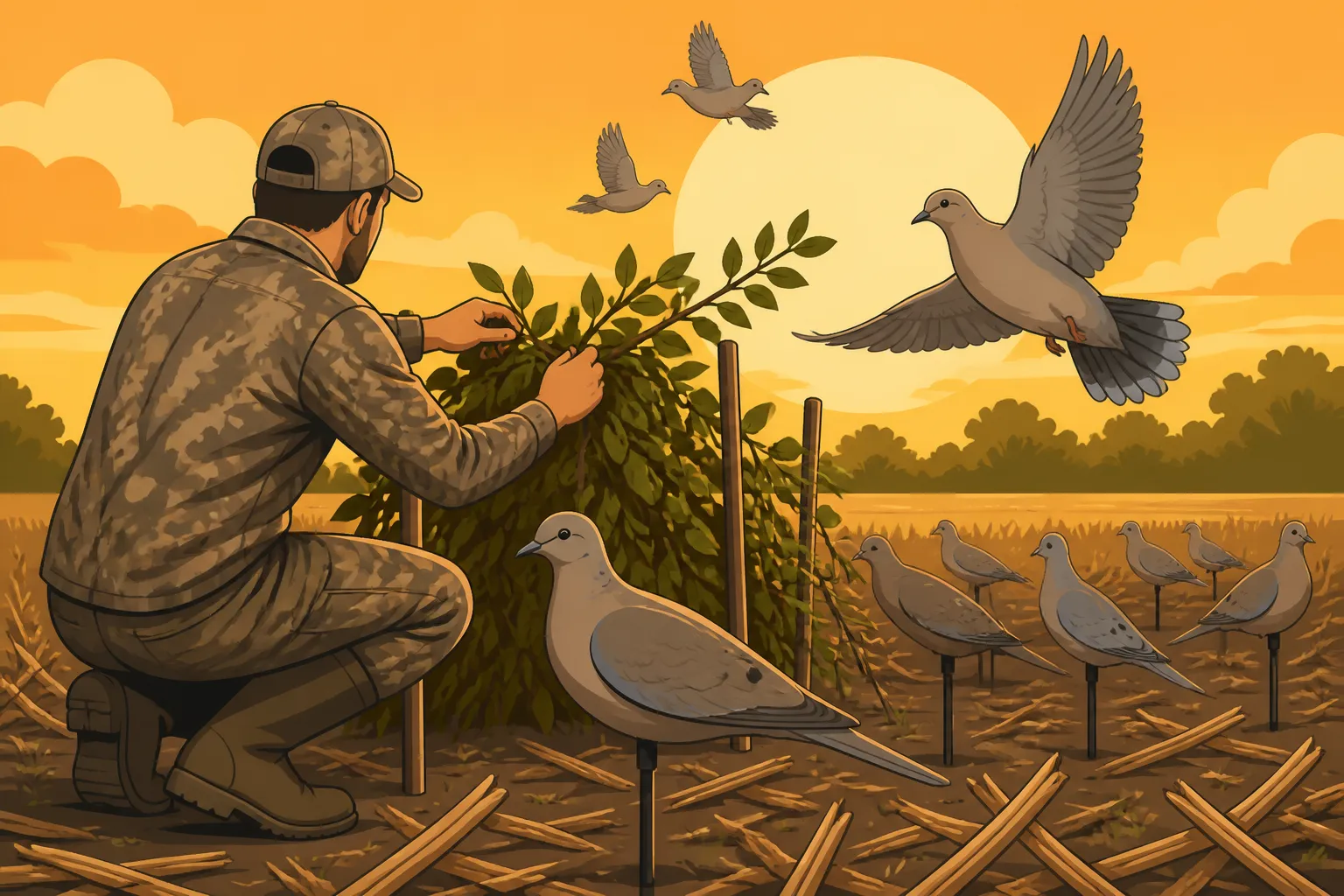
While not directly part of field setup, planning for decoys and blinds before opening day is crucial. Doves are wary birds, and good concealment is key to success. Natural blinds, like clumps of standing crops, brush piles, or small hedgerows, are excellent. If you're hunting a wide-open field, you'll need to plan for artificial blinds. Pop-up blinds or even simple burlap fastened to stakes can provide the necessary cover. Position these blinds along the edges of your mowed strips or near perching trees.
Decoys, especially motion decoys like Mojo Doves, can dramatically increase your success rate. Place your decoys strategically within the mowed strips, simulating birds feeding on the ground. Motion decoys, placed higher on a pole or along a fence line, draw attention from greater distances, giving passing doves a visual cue to investigate your field. Think about the sun's position – you want the decoys to be visible and enticing without glaring into hunters' eyes. The better you plan your setup, the more realistic and inviting your spread will be, which means more birds committed to your field.
Scouting and Final Touches Before Opening Day
You’ve put in the work, you’ve planned meticulously, and your field looks great. But the job isn't done until you've done your final reconnaissance. The last week before opening day is critical for confirming dove activity and making any last-minute adjustments. This isn't just about admiring your handiwork; it's about making sure the birds are actually using it, and that your hunting setup is perfected.
Pre-Season Scouting for Dove Movement
About a week or two before opening day, it's time to become a dove detective. Spend your mornings and evenings watching the field, ideally from a hidden vantage point. Observe dove flight patterns: where are they coming from, where are they landing, and where are they exiting? Are they hitting the mowed strips you created? Are they using the water source? This scouting is invaluable. You might discover that most of the birds are landing on one particular edge of the field, or using a specific tree as a staging area. That information tells you exactly where to place your blinds and decoys for optimal success.
Pay close attention to flock sizes and frequency. Are you seeing consistent groups, or just a few stragglers? If dove numbers are lower than expected, it might indicate that local birds are using another, more attractive field nearby. Sometimes, slight adjustments, like mowing another strip or moving a small brush pile, can make a significant difference. Using tools like GoHunt's mapping features or simply Reading Aerial Photos for Central Louisiana Deer can help you identify potential roosting areas or additional feeding spots in the wider landscape that might influence your birds' movements. This local knowledge is gold. You wouldn't go Scouting Louisiana Public Land Before Season without careful observation, and a private dove field is no different.
The Final Week Checklist
With opening day just around the corner, run through a final checklist to ensure everything is perfect.
- Field Condition: Confirm your mowed strips are clear and exposing plenty of seeds. If rain has washed seeds away or if a new flush of weeds has appeared, consider light disking or mowing another small section.
- Water Source: Is your water source clean and accessible? Refill any temporary water containers and ensure the banks are clear for easy bird access.
- Grit Stations: Check any grit piles to ensure they haven't been washed out or covered. Refresh if necessary.
- Blinds and Cover: Set up your blinds early enough for birds to get accustomed to them, but not so early that they become weathered or obvious. Make sure they offer full concealment from all angles that birds might approach. Check sight lines from inside your blind to ensure clear shooting lanes.
- Decoy Placement: Arrange your decoys, including motion decoys, to simulate a natural feeding or resting flock. Ensure they're visible and strategically placed to draw in passing birds. Test your motion decoys to make sure batteries are charged and they're functioning correctly.
- Hunter Placement: If you're hunting with a group, plan out everyone's positions in advance to maximize coverage, ensure safe shooting lanes, and avoid "sky busting." Discuss shooting zones and safety protocols.
- Permits and Licenses: Double-check that everyone hunting has their valid Louisiana Hunting Licenses and What They Cost and all necessary endorsements, like the federal duck stamp and Louisiana Migratory Bird Certification.
- Shells and Supplies: Lay out your gear, make sure you have enough shells (doves eat them up quickly!), water, snacks, and any other essentials.
By diligently following these steps, you’re not just hoping for a good dove hunt; you’re actively creating the conditions for success. It's an investment in time and effort, but there's nothing more satisfying than watching doves pour into a field you've meticulously prepared, knowing that your hard work paid off for opening day and beyond. It’s also important to understand the Louisiana Dove Season Bag Limit to ensure compliance with regulations. Whether you're hunting on Hunting Small Private Tracts in Louisiana or a larger lease, being prepared is key.
Disclaimer
The information provided in this guide is for general informational purposes only and does not constitute legal advice. Hunting regulations, including those concerning baiting and migratory birds, are complex and subject to change. Always consult the most current regulations published by the Louisiana Department of Wildlife and Fisheries (LDWF) and the U.S. Fish and Wildlife Service, or contact a local wildlife enforcement agent, before engaging in any hunting activities. It is the hunter's responsibility to know and follow all applicable laws. Remember, safety first, and always prioritize ethical and legal hunting practices.