Squirrel Hunting Louisiana Hickory Groves
For anyone who's ever spent a chilly Louisiana morning tucked away in a grove of trees, hoping for a glimpse of a bushy-tailed critter, you know the frustration when the woods seem silent. Squirrel hunting, while seemingly straightforward, can be incredibly challenging, especially when you're targeting those wily bushytails in dense hickory groves. This guide is here to walk you through everything you need to know to successfully hunt squirrels in Louisiana's abundant hickory stands, from understanding their habits to mastering the techniques that put them in your game bag.
Understanding Louisiana's Squirrel Species and Their Habitat Preferences
Louisiana's diverse ecosystems support a thriving population of squirrels, but not all squirrels are created equal, nor do they all favor the same kind of tree. If you're heading out with a specific goal of hunting hickory groves, it's crucial to understand which species you're likely to encounter and why those groves are so appealing to them.
Gray Squirrels: The Nimble Bushytails of the Bottomlands
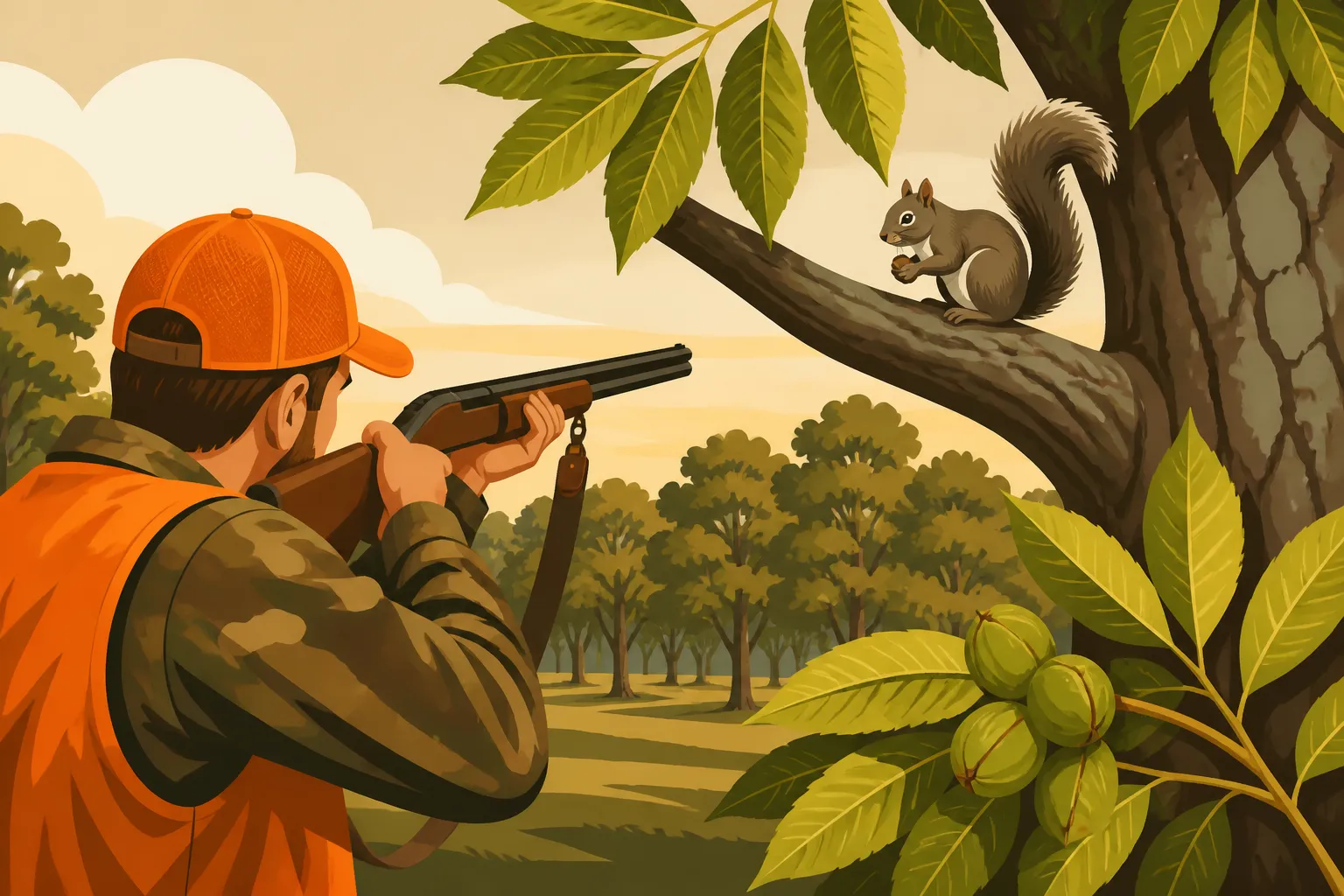
The Eastern gray squirrel is likely the most common squirrel you'll encounter across Louisiana. These smaller, incredibly agile squirrels are known for their frantic energy and ability to seemingly vanish into thin air. You'll find them almost everywhere, but they absolutely thrive in bottomland hardwoods, particularly where there's a good mix of oak and hickory. They love to den in tree cavities and construct leaf nests high in the canopy. When hickory nuts start falling, especially in the early season, gray squirrels become incredibly active, focused almost entirely on gathering and burying these high-energy morsels. Their keen eyesight and quick movements make them a challenging, yet rewarding, target. They're masters of using tree trunks and limbs to obscure themselves, often spiraling around a tree to stay hidden from a hunter's view.
Fox Squirrels: Larger, Slower, and Often in the Uplands
While not as numerous as their gray squirrel cousins, fox squirrels are still a significant presence in Louisiana, particularly in the more open, upland pine and mixed pine-hardwood forests. They're noticeably larger than gray squirrels, often exhibiting a more reddish or yellowish-gray coat, sometimes with black markings on their heads or feet. They move a bit slower, too, often preferring to walk along the ground or move deliberately along large branches rather than making the frantic leaps of a gray squirrel. In the context of hickory groves, you'll still find them, especially if those groves are interspersed within a larger pine forest. They appreciate the larger nuts and the more open understory that allows them to forage comfortably. While they might not provide the same dizzying chase as a gray squirrel, their size makes them a prized game animal, and their slightly less frenetic pace can sometimes make for an easier shot. Understanding the differences between these two species, as highlighted in "Gray Versus Fox Squirrels in Louisiana," can significantly improve your scouting and hunting strategies.
The Crucial Role of Hickory Groves
Why are hickory groves so important for squirrel hunting in Louisiana? It all boils down to food. Hickory nuts are an absolute superfood for squirrels. They are incredibly rich in fats and protein, providing the energy squirrels need to survive the cooler months and fuel their constant activity. As the season progresses from early fall into winter, other food sources might become scarce, but hickory nuts remain a vital part of their diet.
Hickory trees, such as shagbark, pignut, and mockernut, are prevalent across many parts of Louisiana, particularly in the northern and central parishes within hardwood bottoms and mixed forests. When these nuts ripen and begin to fall, sometimes as early as late summer or early fall, it creates a concentrated feeding zone that draws squirrels from a wide area. A good hickory grove will not only have mature trees producing nuts but also sufficient canopy cover for squirrels to feel secure and easy access to den trees. Scouting these areas for active feeding signs is paramount to success.
Prime Time and Scouting for Success in Hickory Groves
Hitting the woods blindly is a recipe for disappointment. Squirrel hunting, especially in productive hickory groves, requires careful timing and thorough scouting. You need to be where the squirrels are, when they're most active, and have a good understanding of their behavior.
Timing Your Hunt: The Early Season Advantage
The opening days of squirrel season in Louisiana, often coinciding with the cooler days of October, are arguably the best time to target hickory groves. This is when the hickory nuts are at their peak freshness and abundance, and squirrels are in a frenzied state of harvesting and caching. They're less wary because they haven't been pressured by hunters for months. During this period, you'll find them on the ground more frequently, gathering nuts, and their chatter will be almost constant. As detailed in "Louisiana Squirrel Season Opening Day," getting out early can significantly increase your odds.
As the season progresses, squirrels become more selective and often shift their feeding patterns. They might move to different mast crops like acorns if hickories become depleted. However, a productive hickory grove can continue to draw squirrels throughout the fall and even into early winter, especially on warmer days or after a fresh drop of nuts. Pay attention to weather patterns; a sudden cold snap might send them to their dens, but a mild, sunny morning after a few cold days can spark intense feeding activity.
Reading the Ground: Finding Fresh Sign and Feeding Zones
Before you even think about setting up a stand or still-hunting, you need to scout. This means walking through potential hickory groves and looking for undeniable proof of squirrel activity.
- Cut Nuts: This is your primary indicator. Squirrels will cut the nuts from the tree, dropping pieces of the outer husk and shell. Look for fresh cuttings on logs, stumps, or even directly under active trees. These small, scattered fragments, often with a distinct "chewed" appearance, tell you squirrels are currently feeding in that spot. The fresher the cuts, the more recent the activity.
- Middens: Sometimes squirrels create "middens," which are small piles of shell fragments from where they've sat and eaten. These are gold mines, indicating a preferred feeding spot.
- Tracks: While harder to spot in leaf litter, tiny squirrel tracks in soft dirt or mud can also confirm presence.
- Visual Cues: Don't forget to look up! If you see a lot of broken twigs or partially eaten nuts clinging to branches, it's a good sign. Sometimes you'll even spot squirrels actively cutting nuts from the canopy.
Using tools like the GoHunt app can be incredibly helpful for identifying potential hickory stands on public land or for verifying property lines on private ground. Their mapping layers often highlight different timber types, allowing you to pinpoint promising areas even before you step foot in the woods. By knowing how to find these prime feeding areas, you'll greatly improve your chances, as discussed in "Scouting Louisiana Public Land Before Season."
Leveraging Technology for Scouting and Access
In today's hunting world, technology isn't just for deer hunters. Apps like GoHunt offer invaluable aerial imagery and land ownership maps that can guide your scouting efforts for squirrels. Imagine finding a remote hickory bottomland on a WMA that other hunters might overlook simply by studying the satellite view. These tools allow you to identify dense stands of hardwoods, potential travel corridors, and even locate specific clusters of hickory trees that might not be obvious from the ground.
You can also use these apps to mark waypoints for promising cuts, middens, or even specific trees you've identified as "hot." This level of detailed scouting helps you formulate a precise plan, rather than wandering aimlessly. It also helps with navigation, ensuring you know where you are at all times, especially in dense bottomland where it's easy to get turned around. This pre-season reconnaissance is critical for understanding the landscape and predicting squirrel movements, leading to more successful hunts.
Effective Hunting Strategies for Louisiana Hickory Groves
Once you've identified a promising hickory grove, the real fun begins: putting those hunting strategies into action. There are several proven methods for hunting squirrels, each with its own advantages and challenges, and the best approach often depends on the specific conditions and your personal style.
Still-Hunting: The Art of Slow Movement and Observation
Still-hunting is perhaps the most challenging, yet most rewarding, method for hunting squirrels in hickory groves. It involves moving incredibly slowly through the woods, pausing frequently to observe, listen, and scan the trees. The key is to blend in with your surroundings and move with the stealth of a predator.
Start by entering your chosen grove well before sunrise or at first light. The early morning hours are often when squirrels are most active after their night in the den. Take a few steps, then freeze for several minutes, scanning the trees from top to bottom. Use binoculars to peer into dense canopy cover or examine suspicious bumps on a limb. Listen for the tell-tale "bark" of a squirrel, the rustling of leaves as they forage, or the distinct sound of shell fragments hitting the ground as they cut nuts.
When you spot a squirrel, move slowly and deliberately to get into a good shooting position. Often, they'll circle the tree to stay hidden. Use this to your advantage by having a hunting partner move around the opposite side, or by patiently waiting for them to expose themselves. If you're alone, try to anticipate their movement and quietly maneuver for a clear shot. Remember, in the dense cover of a hickory grove, shots can be quick and opportunities fleeting. Staying focused and ready is paramount. This method truly hones your woodsman skills and offers a deeply immersive experience.
Sit-and-Wait: Patience Pays Off Near Active Trees
Sometimes, the best strategy is to let the squirrels come to you. The sit-and-wait method is particularly effective in a heavily active hickory grove. Identify a spot where you've found abundant fresh cut nuts or heard consistent activity. Find a comfortable position, ideally with good cover, that allows you to observe multiple promising trees. A small folding stool or even a strategically placed log can make a world of difference for comfort during an extended wait.
Once settled, remain as still and quiet as possible. Let the woods "settle down" around you. After a short period, squirrels that may have been spooked by your entry will often resume their activity. Listen for chewing, scratching, or the dropping of nuts. Scan the canopy and tree trunks for movement. This method is excellent for hunters who prefer a less strenuous approach or those with mobility challenges. It also allows you to deeply observe squirrel behavior and learn their patterns. If you're hunting on public land, consider "Using a Ground Blind on Louisiana Public Land" for added concealment, especially if your spot has limited natural cover.
Small Game Dogs: A Traditional and Effective Approach
For many, squirrel hunting isn't complete without a good squirrel dog. This traditional method is incredibly effective, especially in dense hickory groves where visibility can be limited. Breeds like feists and curs are bred for this exact purpose, possessing an incredible nose and an unwavering drive to find and tree squirrels.
A well-trained squirrel dog will range through the woods, locate a squirrel, and then "tree" it, barking excitedly at the base of the tree where the squirrel is hiding. This allows the hunter to move in, locate the treed squirrel, and take a shot. The dog's persistent barking often keeps the squirrel focused on the dog, making it easier for the hunter to get into position. This method is highly interactive and often yields more squirrels than still-hunting or sitting, particularly if you have a dog with a strong prey drive and good training. Always ensure your dog is collared and up-to-date on vaccinations, and be mindful of other hunters if you're on public land.
Gear and Safety Considerations for a Successful Squirrel Hunt
Hunting squirrels in Louisiana's hickory groves requires specific gear and, as with any outdoor activity involving firearms, a steadfast commitment to safety. Being well-prepared not only increases your success but ensures a responsible and enjoyable experience.
Essential Firearms and Ammunition Choices
When it comes to firearms for squirrel hunting, simplicity and accuracy are key.
- 22 Caliber Rifle: The .22 long rifle is the quintessential squirrel gun. Its low recoil, quiet report, and pinpoint accuracy make it ideal for headshots, which are often necessary to preserve meat. A good quality .22 with a scope (even a low-magnification one) can greatly improve your precision. Standard velocity or sub-sonic ammunition is often preferred for quieter shooting, but high-velocity rounds can deliver more energy.
- Small Gauge Shotgun (e.g., .410, 20 Gauge): If you find yourself in extremely dense cover where pinpoint rifle shots are difficult, or if you prefer a moving target, a .410 or 20 gauge shotgun loaded with small shot (like 6 or 7 ½) can be very effective. The spread of the shot pattern offers a larger margin for error, but be mindful of potential meat damage. The .410 is a classic for squirrels, offering a light recoil and sufficient power for close-range shots.
- Air Rifles: High-powered air rifles, particularly those in .22 caliber, are also gaining popularity for squirrel hunting. They are incredibly quiet, making them ideal for areas where noise might be a concern, or for not disturbing other game. Ensure your air rifle is powerful enough for a humane harvest and practice extensively to master its trajectory.
Regardless of your choice, practice regularly to ensure you're proficient with your firearm. The goal is a quick, humane kill.
| Firearm Type | Pros | Cons | Ideal Scenario |
|---|---|---|---|
| .22 Rifle | Accurate, quiet, minimal meat damage | Requires precise aim, less forgiving | Still-hunting, longer shots, headshots |
| .410 Shotgun | Wider pattern, easier for moving targets | More meat damage, shorter effective range | Dense cover, quick shots, dog hunting |
| 20 Gauge Shotgun | Good balance of power and pattern spread | Can cause significant meat damage | Versatile, good for varying conditions |
| Air Rifle | Very quiet, accurate, good for sensitive areas | Requires high power for humane kills | Stealthy hunting, noise-sensitive locations |
Clothing, Calls, and Other Useful Gear
Beyond your firearm, a few key pieces of gear will make your hunt more enjoyable and successful.
- Camouflage Clothing: Lightweight camo, appropriate for the Louisiana climate, will help you blend in. Even though squirrels primarily rely on movement and sound, breaking up your outline is always beneficial.
- Hunting Vest/Bag: A comfortable vest with plenty of pockets or a dedicated game bag is essential for carrying your squirrels, extra ammo, snacks, and water.
- Binoculars: Even a small pair of binoculars can make a huge difference in spotting squirrels high in the canopy or distinguishing them from knots and leaves.
- Squirrel Call: While not always necessary, a good squirrel call can sometimes draw a curious squirrel out of hiding or pinpoint its location if it's barking. There are various types, from bark calls to distress calls.
- Insect Repellent: Louisiana woods, especially in the early season, are notorious for mosquitoes, ticks, and chiggers. Don't leave home without a reliable repellent.
- Navigational Tools: Whether it's a dedicated GPS unit or a smartphone app like GoHunt, having a way to navigate is crucial, especially in dense woods where it's easy to get disoriented.
Remember that Louisiana Blaze Requirement During Gun Season applies to deer hunting, but it's still a smart safety practice to wear some blaze orange, especially if deer season overlaps or if other hunters are in the area.
Safety First: Navigating the Woods Responsibly
Hunting, especially with firearms, always demands a paramount focus on safety.
- Hunter Education: Ensure you've completed your Louisiana Hunter Education Requirements. Even experienced hunters can benefit from a refresher.
- Firearm Safety: Always treat every firearm as if it's loaded. Keep the muzzle pointed in a safe direction. Keep your finger off the trigger until you're ready to shoot. Be absolutely certain of your target and what is beyond it.
- Identify Your Target: Never shoot at movement or sound alone. Be 100% positive it's a legal squirrel before you pull the trigger. In dense woods, squirrels can blend in incredibly well.
- Be Aware of Your Surroundings: Be conscious of other hunters, especially on public land. Make sure you know where your hunting partners are at all times.
- Weather and Hydration: Louisiana weather can be unpredictable. Dress in layers, stay hydrated, and be prepared for sudden changes.
- First Aid Kit: Always carry a basic first aid kit for minor cuts, scrapes, or insect bites.
By understanding the nuances of squirrel behavior in hickory groves, employing effective hunting strategies, and always prioritizing safety, you'll be well on your way to filling your game bag and enjoying the rich tradition of squirrel hunting in Louisiana. Remember that practice makes perfect, and every trip into the woods is an opportunity to learn more about these fascinating creatures and the wild places they call home. Also, be sure to check the Louisiana Squirrel Daily Bag Limit and other regulations before you head out.
Disclaimer
Hunting is an inherently risky activity. This guide provides general information and recommendations. Always consult the latest regulations from the Louisiana Department of Wildlife and Fisheries (LDWF) before hunting. Ensure you have all required licenses and permits, understand specific Wildlife Management Area (WMA) rules if applicable, and prioritize safety above all else. The author and publisher are not responsible for any incidents or injuries that may occur.