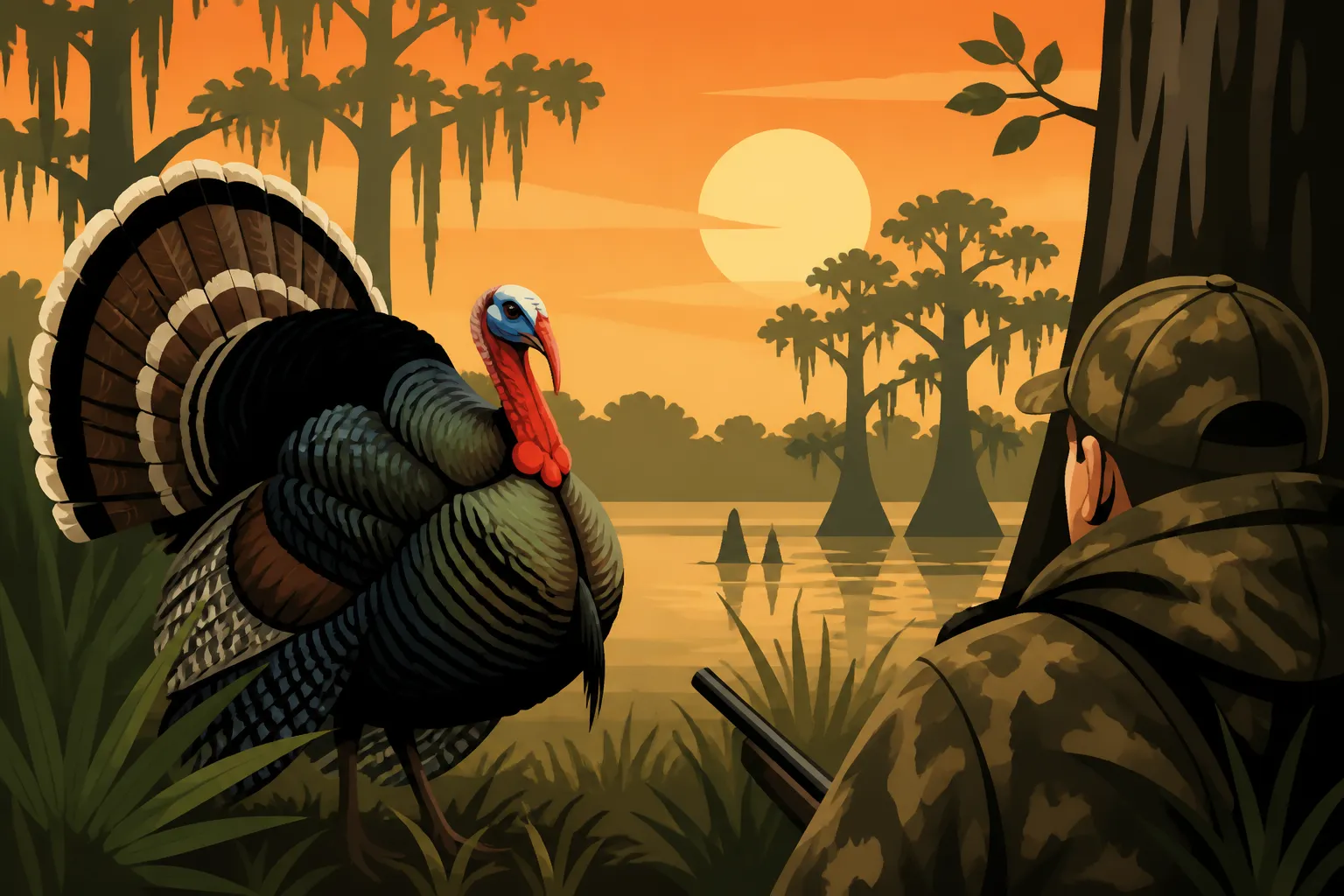
When Louisiana Gobblers Go Quiet in Late April
You've been up since before dawn, hiked miles into your favorite hunting spot, set up, and perhaps heard a booming gobbler or two on the roost. But as the sun climbs higher in the late April sky, everything suddenly goes silent. If you're a spring turkey hunter in Louisiana, you've likely experienced this disheartening quiet. This guide will delve into why Louisiana gobblers often clam up in late April and equip you with the knowledge and tactics to find success even when the woods are hushed.
Understanding the Late-Season Silence
The shift from early spring's boisterous gobbling to the sometimes deafening quiet of late April isn't just a random occurrence; it's a predictable part of the wild turkey's annual cycle and a direct response to various pressures. Understanding these underlying reasons is the first step to adapting your hunting strategy.
Post-Breeding Phase and Henned-Up Toms
Early in the season, when Louisiana's spring turkey season opens, gobblers are incredibly vocal. Their primary mission is to attract hens for breeding, and loud, frequent gobbling is their siren song. They're competing with other toms, and volume often wins. However, as April progresses and we move towards the later stages of the season in areas like Turkey Area A, B, and C, most hens have been bred and are beginning to settle onto their nests. This changes the dynamics significantly.
Once hens are nesting, a gobbler's urgency to broadcast his presence diminishes. He might still have a few unbred hens to find, but the intense competition and constant need to gobble for attention lessen. Many toms will become "hen-tied" or "henned-up," meaning they are spending their days with a few remaining receptive hens, or simply following those that are nesting. A tom that has a real hen by his side has little motivation to gobble to an unseen, potentially fake hen (you!) off in the distance. He’s already got what he needs, or he’s tending to his flock, moving with them, and only gobbling when absolutely necessary to confirm his dominance or location.
Hunting Pressure Effects
Louisiana's turkey season, especially on popular public lands, sees a significant influx of hunters. The first few weeks can be a flurry of activity, and gobblers, like all wild game, are incredibly adaptable and learn quickly from pressure. By late April, these birds have heard countless calls, seen numerous decoys, and likely experienced several close calls with hunters. This sustained pressure makes them much warier.
A gobbler that was strutting and drumming in a wide-open field on opening weekend might now be hugging the densest cover, only stepping out into the open sparingly. They become more elusive, moving through thick creek bottoms, dense palmetto patches, or along the edges of standing timber where they feel safest. Their vocalizations become less frequent and much quieter, almost as if they're whispering. They might only gobble once or twice an hour, or even less, making them incredibly difficult to locate by sound alone. This isn't just an anecdotal observation; it's a well-documented behavioral change in heavily hunted turkey populations.
Environmental Factors Affecting Late-Season Gobbling
Beyond the biological imperatives and hunting pressure, the changing Louisiana environment itself plays a crucial role in silencing gobblers in late April. The shifts in weather and habitat can drastically alter a turkey's daily routine and vocalization habits.
Rising Temperatures and Humidity
Late April in Louisiana often heralds the true arrival of spring and a quick transition towards summer. Temperatures can regularly climb into the high 70s and 80s, especially in the afternoon. Along with these rising temperatures comes an increase in humidity. Turkeys, particularly gobblers, are just like us; they don't enjoy being overly active or vocal in oppressive heat and sticky air.
When the mercury rises, turkeys tend to conserve energy. They'll often seek shaded areas, especially near water sources like creeks or sloughs, and their movements become slower and more deliberate. The intense, energy-sapping gobbling that defines early season just isn't sustainable or even desirable when they're trying to stay cool. You might find that any gobbling activity is strictly limited to the first hour or so after fly-down, before the heat truly sets in, or perhaps a sporadic burst right before fly-up in the evening. Midday becomes a prime time for a quiet siesta, making it tough to locate birds unless you've thoroughly scouted their preferred loafing areas.
Dense Foliage Development
The transformation of the Louisiana woods from stark winter branches to a lush, green canopy is dramatic in spring. By late April, the undergrowth has exploded, and trees have fully leafed out. This dense foliage development significantly impacts sound travel and turkey behavior. The thick leaves absorb sound, meaning a gobble that would carry a mile in March might only travel half that distance or less in late April. This makes locating distant birds by sound alone much harder.
Furthermore, the dense cover provides turkeys with a greater sense of security. They don't need to gobble as loudly or as frequently to attract hens because visual barriers prevent long-distance sight. They can move through the woods with less exposure, utilizing the new growth for camouflage and concealment. This means a gobbler might be much closer than you think, but you simply can't hear him, and he feels no urgent need to announce his presence to the entire parish. Hunters need to adjust their expectations for hearing birds and instead rely more on visual scouting and reading signs.
Adjusting Your Tactics for Silent Gobblers
When gobblers go quiet, your traditional calling and waiting strategies might not cut it. It’s time to switch gears and become more proactive, relying on different senses and a willingness to cover ground.
The "Run-and-Gun" Approach
Instead of setting up and waiting for a distant gobbler to announce himself, the "run-and-gun" approach becomes invaluable. This tactic involves moving actively through suitable turkey habitat, pausing frequently to call softly, listen intently, and then moving again. Think of it as systematically probing the woods for a response rather than waiting for an invitation. You might take ten or twenty steps, stop, let out a few soft hen yelps or clucks, and then wait for several minutes, listening for the fainter gobble or even the subtle sounds of a drumming tom or approaching footsteps.
This strategy is particularly effective on large tracts of public land, such as those within Kisatchie National Forest or certain Wildlife Management Areas (WMAs). You're trying to cover ground quickly and efficiently, hitting potential hot spots like ridge tops, field edges, or creek bottoms. Using a mapping application like GoHunt can help you pre-plan your route, marking potential roosting areas, strut zones, and travel corridors you identified during scouting. The goal isn't to make birds gobble aggressively, but to elicit just enough of a response to pinpoint their general location. Be ready to move fast and set up quickly when you do get a response. You can learn more about this approach in our guide to Run-and-Gun Turkey Tactics on Public Land.
Soft Calling and Decoy Strategies
Loud, aggressive calling that might have worked in early March can often spook wary, late-season gobblers. By late April, subtlety is your friend. Instead of piercing yelps and cutts, focus on soft clucks, purrs, and quiet tree yelps. These mimic the sounds of a contented hen, potentially piquing a gobbler's curiosity without triggering his alarm bells. A single purr or a soft cluck can sometimes be enough to draw in a close, silent tom who's curious about a hen just out of sight.
Decoy placement also becomes critical. Instead of a full-strut tom decoy that might challenge an dominant bird, consider a single hen decoy or even a jake decoy positioned to look submissive. A lone hen decoy can entice a tom who's lost his hens, while a jake decoy can sometimes bring in a more aggressive, silent tom looking to assert dominance. When setting up, always consider the path a gobbler will take. Place your decoy so the bird offers you a clean shot when he comes into range, perhaps by positioning it slightly off to the side, forcing him to pass your shooting lane. You can find more specific advice on Decoy Placement for Pressured Louisiana Birds.
Focusing on Food and Water
When turkeys aren't actively breeding or gobbling, their focus shifts to the essentials: food, water, and security. By late April, the natural food sources have changed significantly. Look for areas with fresh green growth, insects, and residual acorns if it was a heavy mast year. Turkeys will spend considerable time "bugging" in fields or open woods, foraging for insects, which are a critical protein source.
Water sources are also magnets, especially as temperatures rise. Creek bottoms, pond edges, or even areas with recent rainfall that create puddles can draw birds throughout the day. Instead of listening for a gobble, scout for fresh tracks in the mud, droppings, and dust bowls – areas where turkeys scratch out shallow depressions to clean their feathers and get rid of parasites. These signs indicate where birds are spending their time. Setting up an ambush point near these feeding or watering areas, especially during the quiet midday hours, can be highly effective. Understanding where Louisiana gobblers roost is also key, as they'll often move from the roost to food or water.
Leveraging Technology and Scouting
In the late season, relying solely on auditory cues is a recipe for frustration. Modern tools and diligent scouting become indispensable for locating those tight-lipped Louisiana gobblers.
Pre-Season and In-Season Scouting
The homework you do before the season, and continue doing during the season, pays dividends when birds go quiet. Before you even step foot in the woods, consider using a mapping application like GoHunt to mark potential roost sites, known strutting zones, and travel corridors. Aerial photos reveal elevation changes, timber cuts, and water features that turkeys frequently use. During the season, walk these areas. Look for visual evidence of turkey activity: droppings, shed feathers, distinct "V" shaped tracks, and most importantly, dust bowls.
Dust bowls are clear indicators that turkeys are using an area to clean themselves, and often, fresh ones mean birds are currently in the vicinity. Pay attention to how the birds are moving through the landscape. Are they favoring a particular ridge line or crossing a specific creek at a certain point? These patterns can be crucial for setting up an ambush point. A deep dive into Scouting Louisiana Public Land Before Season can provide comprehensive strategies for effective scouting.
Reading Sign, Not Just Listening
When gobblers aren't gobbling, they still leave a story on the forest floor. You need to become a detective, keenly observing every detail. Fresh tracks, especially those of a mature gobbler with distinct j-shaped droppings, tell you a bird is in the area. Look for wingtip drags in sandy spots or soft earth, indicating a strutting gobbler. Scratch marks in leaf litter or pine straw show where birds have been feeding.
Pay attention to roost trees – large, mature trees (often pines or oaks) where turkeys spend the night. Underneath these trees, you'll find significant droppings and often feathers. While locating birds on the roost by sound can be tough in late April, finding active roost trees through visual sign confirms their presence. Once you find these subtle clues, you can set up well before dawn, hoping to intercept a quiet gobbler as he flies down, or even move in for a silent hunt after fly-down. Understanding how to approach a Setting Up Against a Big Oak near a potential roost can be a game-changer.
Here's a quick look at how late-season turkey hunting compares to the early rush:
| Feature | Early Season (March-Early April) | Late Season (Late April-May) |
|---|---|---|
| Gobbling Activity | High, especially from roost and mid-morning | Low, sporadic, often quieter, fewer shock gobbles |
| Hen Behavior | Actively seeking mates, often responsive to calls | Nesting, henned-up, less responsive to calls |
| Hunter Pressure | Intense at opener, then tapers, birds are less wary | Consistent, birds are very wary and educated |
| Foliage | Sparse to moderate, sound carries well | Dense, sound muffled, good cover for turkeys |
| Weather | Cooler, more stable, crisp mornings | Warmer, humid, often hot afternoons, higher chance of pop-up storms |
| Preferred Tactics | Aggressive calling, locate by sound, static setups | Soft calling, run-and-gun, scouting for sign, ambush, focusing on food/water |
| Success Strategy | Locating birds by sound and bringing them in | Locating birds by sign and ambushing, patience |
Disclaimer
Hunting involves inherent risks, and conditions can change rapidly. Always consult the latest Louisiana Department of Wildlife and Fisheries (LDWF) regulations and local public land rules before heading afield. Safety should always be your top priority.