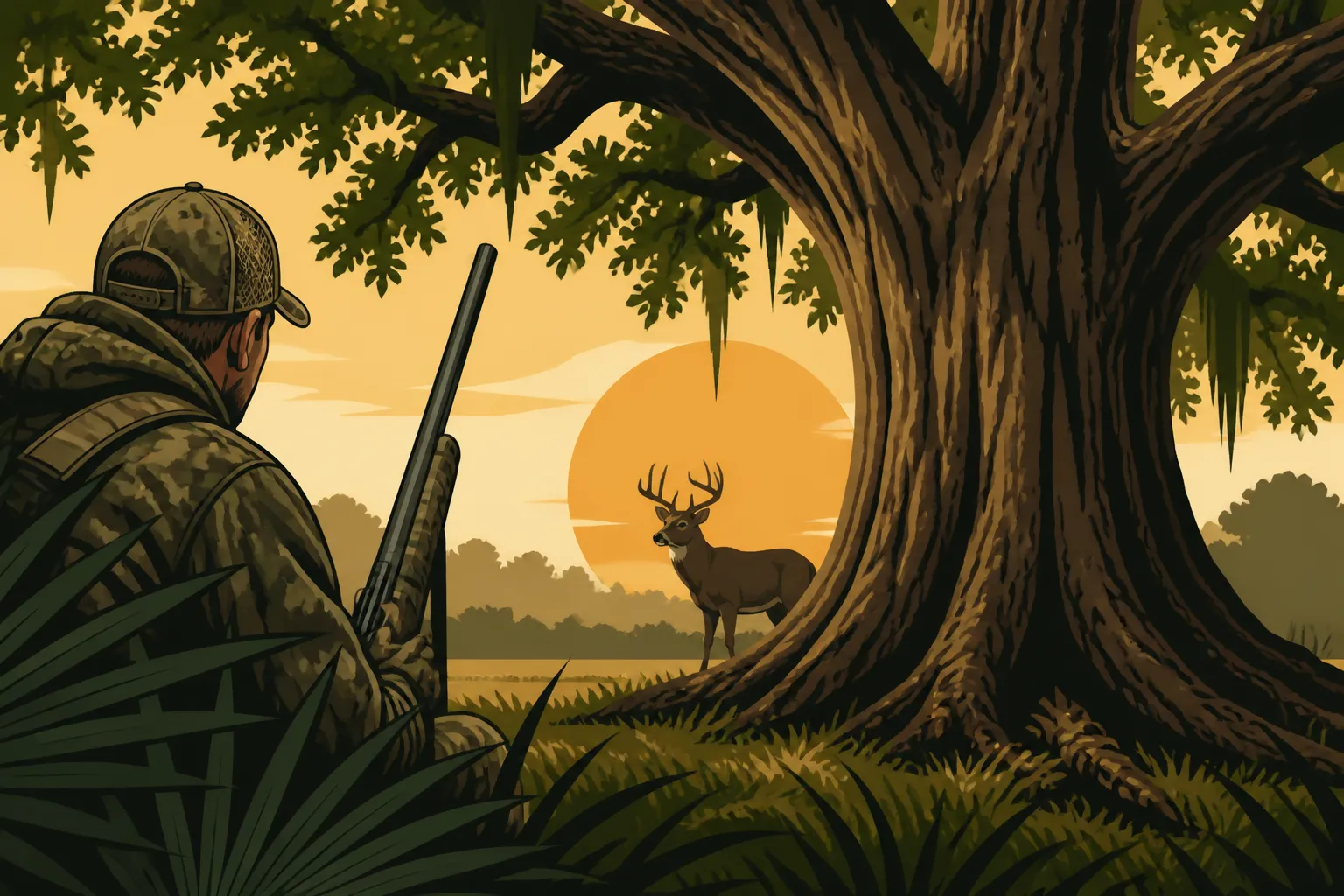
Setting Up Against a Big Oak
It’s a classic scene, isn’t it? You’re walking through the Louisiana woods, whether it’s a sprawling WMA or a cozy private tract, and there it is—a magnificent, ancient oak, standing tall and proud. Your hunter’s instinct screams, "Deer!" and you immediately imagine a big buck nosing around for acorns right at its base. But here's the kicker: simply plopping down under or near that majestic tree isn't always a recipe for success. There’s a whole lot more to understanding and effectively hunting these natural deer magnets than meets the eye, and this guide is going to walk you through exactly how to capitalize on those towering giants.
The Irresistible Pull of a Louisiana Oak
For deer in Louisiana, a big oak isn't just a tree; it's a lifeline. Especially during the early to mid-season, when the acorn crop is falling, these trees become the equivalent of a five-star buffet. Understanding why deer are so drawn to them is the first step in figuring out how to hunt them effectively.
Acorns: The Deer's Favorite Food Source
Walk into any hardware store in Louisiana during the fall, and you'll see bags of corn and deer pellets. But ask any seasoned hunter, and they’ll tell you that while supplemental feeding has its place, nothing beats natural forage, and acorns are at the top of that list. Deer will often abandon planted food plots or corn feeders when a good acorn crop is hitting the ground. The high fat and carbohydrate content in acorns provide a critical energy boost as deer enter the rut and prepare for winter. However, not all acorns are created equal.
Different species of oak drop their acorns at different times and possess varying levels of palatability for deer. White oaks, like live oaks or swamp chestnut oaks, often drop their acorns earlier in the season and are generally preferred by deer because they have lower tannin content, making them less bitter. Red oaks, on the other hand, typically drop later and are often sought after once the white oak crop is gone, or if white oaks had a poor production year. A productive year for one type of oak might mean lean pickings for another, so keen observation is key.
Cover, Security, and Travel Corridors
Beyond the food, big oaks offer excellent cover and a sense of security for deer. Their large canopies provide shade from the sun and shelter from the rain, making them natural bedding or loafing areas. Often, these mature trees are situated along subtle terrain features like ridge lines, creek bottoms, or the edges of swamps, which naturally serve as travel corridors. A buck cruising for does during the rut might not stop for every acorn, but he’ll certainly use the cover of a large oak stand as he moves from one bedding area to another, or from a thicket to an open field. Pay close attention to how these large trees integrate with the surrounding habitat, as they can reveal much about deer movement patterns.
Beyond the Dropped Acorn: Comprehensive Oak Scouting
It's tempting to just spot an oak dropping acorns and hang a stand, but truly successful hunting around these trees requires a deeper dive into scouting. You need to verify that it's an active and strategic food source for deer, not just a random tree with a few nuts.
Identifying Oak Species and Their Drop Times
Knowing your oaks is crucial. Are you looking at a white oak, a red oak, or perhaps a water oak? Each has a distinct leaf shape, bark pattern, and most importantly, acorn drop schedule. A quick glance at the leaves and bark can tell you a lot. Many hunters mistakenly hunt a red oak in early September, wondering why deer aren't showing up, when that particular tree won't drop until late October or November.
Let's look at some common Louisiana oak types and their general characteristics:
| Oak Species | Acorn Drop Time (General) | Deer Preference | Key Characteristics |
|---|---|---|---|
| White Oak | Early to Mid-Season | High | Round lobed leaves, lighter bark, less bitter acorn |
| Live Oak | Early to Mid-Season | High | Small, leathery leaves, often evergreen, abundant |
| Swamp Chestnut Oak | Mid-Season | Very High | Large, chestnut-like leaves, sweet acorn |
| Pin Oak | Late Season | Moderate | Deeply lobed leaves, often holds leaves into winter |
| Water Oak | Mid to Late Season | Moderate | Small, variable leaves (often paddle-shaped) |
| Willow Oak | Mid to Late Season | Moderate | Narrow, willow-like leaves |
| Southern Red Oak | Late Season | Moderate | Irregularly lobed, often reddish leaves |
This table provides a general guide. Factors like drought, rainfall, and regional variations can shift these timings. The key is to be present and observe what’s actually happening on the ground. You might find some useful tools on a platform like GoHunt that can assist with identifying tree species and understanding habitat, even before you step foot in the woods.
Assessing Mast Production and Freshness of Sign
Just because an oak is dropping acorns doesn't mean it's the right oak to hunt. You need to check for fresh sign. Are the acorns still intact, or are they shelled and chewed? Are there fresh deer droppings? Are there tracks indicating active feeding?
A keen eye will also notice if squirrels, hogs, or other wildlife are heavily utilizing the acorns. While other animals feeding on the same mast is normal, excessive competition might mean deer are moving elsewhere. Use binoculars to look up into the canopy for unfallen acorns and for signs of insect damage, which can sometimes reduce the crop. Don't be afraid to dig around in the leaf litter. Fresh, shiny acorns are a good indicator that the drop is recent and active. If you're seeing only old, rotten acorns, the prime feeding window for that particular tree may have passed.
Analyzing Deer Sign Around the Oak
Look beyond the immediate acorn drop zone. Are there fresh rubs on smaller trees nearby, indicating a buck has been marking his territory? Are there scrapes along a logging road or trail leading to the oak? Deer don't just appear under a tree; they typically approach from bedding areas, using established travel routes. If you find a promising oak, spend time examining the surrounding area for:
- Tracks: Look for well-worn trails leading to and from the oak. Are they fresh? Are there multiple sizes, indicating different deer? Learning to read Louisiana mud for fresh deer movement is an invaluable skill.
- Rubs and Scrapes: Especially as the rut approaches, bucks will be actively rubbing and scraping. A cluster of rubs around an oak can indicate a staging area or a spot where bucks are waiting for does.
- Droppings and Beds: Fresh deer droppings are a clear indicator of recent activity. Finding beds nearby could mean deer are bedding close and only moving short distances to feed.
- Browsing: Check for evidence of deer browsing on saplings or other vegetation around the oak. This can indicate their broader feeding habits in the area.
This detailed scouting will tell you if the oak is currently "hot" or just a historical landmark.
Strategic Stand Placement Near the Oak
Once you've identified a promising oak, the next critical step is to place your stand or blind strategically. This isn't just about getting a good shot; it's about remaining undetected from the moment you step foot in the woods until you climb back down.
The Undeniable Power of Wind Direction
In Louisiana, understanding and respecting the wind is paramount, especially when hunting around a food source like an oak. Deer have an incredible sense of smell, and a slight shift in wind can blow your cover instantly. Before setting up, use a wind checker to understand the current direction and, if possible, research the prevailing winds for your hunt area during that time of year. Many hunters use an app like GoHunt to track wind conditions and even predict thermal shifts, which can be a game-changer in varied terrain.
Always try to set up downwind of where you expect deer to approach. This often means sacrificing the "perfect" shooting lane for the "perfect" scent control. Remember that wind can swirl, especially in rolling terrain or dense swamp bottomland. Sometimes, it's better to set up 50-75 yards off the oak, along a known travel route, to maintain a consistent wind advantage, rather than directly over the feeding area where swirling winds are more likely.
Mastering Entry and Exit Routes
This is where many hunts go sideways before they even begin. Your approach and departure need to be as silent and concealed as possible. Think like a deer: where would you walk if you didn't want to be seen or heard?
- Approach: Use natural terrain features like creek beds, ditches, dense brush lines, or the edge of a field to hide your movement. Avoid walking directly through known bedding areas or across open ground. Try to approach from a direction that doesn't blow your scent into the area you intend to hunt.
- Exit: Just as important as your entry, your exit should be planned to minimize disturbance. If you spook deer on your way out, they'll be warier the next time you hunt that spot. Often, the best exit route is the same as your entry, ensuring you're not pushing deer towards their bedding grounds or alerting them to your presence. In some cases, waiting until after dark might be necessary to ensure a clean exit.
Consider how you get to your stand without sounding like an elephant. Trimming branches for access earlier in the season is a great tactic. If you’re hunting public land, be mindful of rules regarding cutting vegetation.
Clearing Shooting Lanes and Maintaining Concealment
Once you're in the tree, you need clear lines of sight to make an ethical shot, but you also need to remain hidden. It's a delicate balance.
- Trim Sparingly: Before the season, or during the off-season, trim only what is absolutely necessary for shooting lanes. Over-trimming can make you too exposed and also alert deer to your stand location. A good rule of thumb is to clear lanes that allow you to cover the most likely approach and feeding areas, while still providing enough cover to break up your silhouette.
- Utilize Natural Cover: Position your stand behind a cluster of smaller limbs or a section of dense foliage on the oak itself. The bigger the oak, the more potential cover it offers. Think about how the sun will hit you throughout the day and whether it will silhouette you.
- Practice from Your Stand: Before the season, consider hanging your stand and practicing shooting from it (safely, of course). This helps you identify any unexpected blind spots or branches that might impede a shot. When you're hanging a stand on a Kisatchie ridge, for example, the varied terrain can create unique shot angles you might not consider from the ground.
Choosing Your Weapon: Stand Types for Oak Hunts
The type of stand you use can greatly influence your success. Each has its pros and cons, especially when dealing with the unique characteristics of big Louisiana oaks.
Hang-On Stands: Versatility and Precision
Hang-on stands are a favorite for many, offering incredible versatility. You can place them precisely where you need them for wind advantage, shooting lanes, and concealment. They're also relatively lightweight, making them ideal for mobile hunting.
- Pros: Highly adaptable, can be placed on irregular trees or those with many branches, excellent for precision placement, good for leaving multiple sets.
- Cons: Requires additional climbing sticks or a climbing system (like a rope-style ascender), takes more time and effort to set up initially, can be noisy during setup if not practiced.
- Best Use: For those specific oaks where a climbing stand won't work due to branching or trunk size. Also great for leaving "pre-set" locations to swap between depending on wind shifts or deer movement. This allows you to have multiple options, especially when hunting specific trees that become active only during certain periods of the acorn drop.
Climbing Stands: Quiet Efficiency on Straight Trunks
For a truly straight, limbless section of an oak trunk, a climbing stand is hard to beat. They allow for quick, relatively quiet setups and takedowns, perfect for run-and-gun tactics or adapting to unexpected wind changes.
- Pros: Self-contained, no need for extra sticks, generally quicker to set up and take down once you're proficient, quiet movement if used correctly.
- Cons: Only works on trees with relatively straight, limbless trunks, can be heavy to pack in, more challenging to adjust position once up.
- Best Use: Ideal for large, straight-trunked oaks found in more open timber or mature stands where branching begins higher up. If you're planning on moving around a lot, or want the flexibility to hunt different oaks throughout the season, a good climbing stand is an excellent investment.
Ground Blinds: Adaptability for Challenging Situations
Sometimes, a big oak doesn't offer a good climbing option, or the hunting pressure in the area necessitates a different approach. This is where ground blinds shine. They offer excellent concealment, scent control (especially when brushed in), and are fantastic for hunting with youth or those with mobility challenges.
- Pros: Excellent concealment, good for scent control (especially with scent-reducing spray and proper brushing), accommodates multiple hunters, great for youth hunts, less physically demanding to set up.
- Cons: Limited visibility compared to elevated stands, can be difficult to get clear shots in dense cover, requires brushing in for optimal concealment, can be perceived by deer if not set up well in advance.
- Best Use: When hunting public land where treestand options are limited, for less ideal oak trees, or in areas with high hunting pressure. Setting up a ground blind on Louisiana public land requires careful attention to detail for concealment and scent management. They also offer a comfortable option for all-day sits, something many hunters value during colder weather or the peak of the rut.
Hunting Strategies for Oaks Throughout the Season
The strategy you employ when hunting a big oak will likely change as the season progresses. What works in early archery season might be ineffective during the peak of the firearms rut.
Early Season: Capitalizing on the First Acorn Drop
When Louisiana's archery season opens, often in early October, hunters are keenly focused on food sources. This is prime time for white oaks and other early-dropping species.
- Focus on Fresh Sign: Prioritize oaks with fresh droppings, tracks, and visibly consumed acorns. Deer will be hitting these hard and predictably.
- Afternoon Hunts: Often, deer will bed nearby and move to these prime food sources in the late afternoon and evening. Position yourself for an afternoon sit, paying close attention to your entry and exit routes to avoid spooking deer as they move in.
- Quiet Approach: Leaves can be dry and crunchy in early fall. Move slowly and deliberately to your stand, trying to avoid making excessive noise. Remember, deer are less pressured early in the season, but they are still extremely wary.
Mid-Season: Adapting to Changing Food Sources
As the early acorn crop fades, or if it was a poor year, deer will shift their feeding patterns. This is when red oaks become more important, or deer might transition to other food sources.
- Hunt Secondary Drops: If white oaks are done, look for oaks that drop later, like some red oak varieties. Scout new areas if your primary spots go cold.
- Scout for Alternative Foods: Don't put all your eggs in the oak basket. Deer may shift to browse, planted food plots, or even agricultural fields if natural mast is scarce. Hunting after a poor acorn year means expanding your focus.
- Transition Areas: Deer might still use the security cover of large oak stands as they travel between different food sources. Focus your efforts on funnels, pinch points, and trail intersections within the oak timber.
Rut Activity: Oaks as Staging and Cruising Zones
When the Louisiana rut peaks, often in November and December, bucks are less focused on feeding and more on finding does. However, oaks still play a vital role.
- Doe Magnets: Does still need to eat, so they will visit productive oak stands. Bucks will follow the does. If you know a particular oak is a consistent draw for does, it becomes a prime location to intercept a cruising buck.
- Rub and Scrape Lines: Look for fresh rub lines and scrape activity around the oak. Bucks will often create these signposts as they move through an area, scent-checking for does. Grunt calls in mature Louisiana timber can sometimes draw in a curious buck investigating a scrape line.
- All-Day Sits: During the rut, bucks can move at any time of day. Consider longer sits, especially if you're in an area known for good rutting activity. A comfortable treestand setup is key for these extended periods.
Pitfalls and Common Mistakes to Avoid
Even with the best intentions, it's easy to make mistakes that can ruin a promising hunt around a big oak.
The "Empty" Oak Syndrome
This is perhaps the most common mistake: assuming any large oak is a good oak to hunt. Many hunters get excited by the sheer size of a tree and neglect to verify if it's actually producing acorns or if deer are actively using it. A magnificent oak that isn't dropping acorns or showing fresh deer sign is just a pretty tree – not a productive hunting spot. Always confirm current activity through diligent scouting. Don't be afraid to put up trail cameras to monitor activity on potential trees; just be sure to follow all trail camera rules on Louisiana public land.
The Cardinal Sin: Ignoring Wind Direction
As mentioned before, this is the quickest way to educate deer and blow a spot. Even a slight breeze in the wrong direction can carry your scent directly to an approaching deer. Many hunters get locked into a particular stand location and try to "make it work" even when the wind isn't favorable. This rarely ends well. If the wind isn't right for your chosen oak stand, have an alternative plan, or simply don't hunt that spot that day. It's better to wait for the right conditions than to burn out a good area.
Blatant Entry and Exit Strategies
Crashing through the woods, making noise, and leaving a scent trail straight to your stand is a surefire way to educate every deer in the vicinity. Deer are incredibly adept at detecting human presence. They learn quickly when and where pressure occurs. Hunting pressure on Louisiana public land means you have to be even more meticulous about your routes.
Before you even step into the woods, visualize your entire path to and from the stand. Consider using topography to your advantage, such as low-lying areas, creek banks, or dense cover. Always move slowly and quietly, even in the dark. If you're hunting an oak near a field edge, think about your entry routes through standing soybeans or along fencerows.
The Peril of Overhunting a Hot Spot
When you find that magical oak, it's natural to want to hunt it every chance you get. However, consistent pressure can quickly turn a hot spot cold. Deer are smart; they'll quickly adjust their patterns if they detect repeated human presence.
- Rotate Stands: If you have multiple productive oaks, rotate between them to reduce pressure on any single spot.
- Rest the Area: Give a hot spot a few days, or even a week, of rest after a hunt, especially if you've had success or detected deer.
- Vary Your Schedule: Don't always hunt the same oak at the same time of day. Keep the deer guessing.
By being patient and strategic, you can extend the productivity of a fantastic oak stand throughout the entire season. Remember, the true art of hunting isn't just about finding the right spot, but knowing when and how to hunt it effectively.
Disclaimer
Hunting involves inherent risks, and conditions in the wild can change rapidly. Always prioritize safety, wear appropriate blaze orange when required, inform someone of your hunting plans, and adhere to all Louisiana Department of Wildlife and Fisheries regulations. This guide provides general advice and should not replace proper hunter education or personal experience.