When Self-Guided Public Land Makes More Sense
There's a common dilemma many hunters face: do you invest in a guided trip, hoping for a higher chance of success and a smoother experience, or do you tackle the challenge of public land on your own? For many Louisianans, the answer often leans towards the latter, driven by budget, a desire for true self-reliance, and the sheer joy of figuring things out in the wild. This guide will help you understand when chasing game across our beautiful public lands, all on your own terms, makes the most sense for your hunting journey.
Understanding Your Budget and Financial Realities
Let's be honest, hunting can be an expensive endeavor. Between licenses, gear, fuel, and time off work, the costs add up quickly. A guided hunt, while offering incredible experiences, can push that budget into the stratosphere. For many, choosing a self-guided public land adventure isn't just a preference; it's a financial necessity that allows them to hunt more often and invest in other aspects of their passion.
The Cost Savings of Going Solo
One of the most immediate and impactful reasons to consider self-guided public land hunting is the significant cost savings. When you book a guided trip, you're not just paying for the guide's expertise; you're often covering overhead like lodge accommodations, meals, scouting time, and vehicle use. These costs can quickly escalate, turning a single hunt into an investment of several thousand dollars. While services like BookYourHunt can certainly show you the range of guided options available, browsing those prices often reinforces the appeal of public land.
Think about it: a typical guided deer hunt in Louisiana, depending on the outfitter and what's included, might run you a hefty sum for just a few days. Factor in tips for your guide and staff, and suddenly, that dream hunt becomes a major financial commitment. On the other hand, a self-guided trip requires only your license, tags, fuel, and whatever food and lodging you arrange yourself (which, for many, means a tent or staying with family nearby). This massive difference in outlay means you can hunt more frequently or save that money for other important things in life. It really boils down to making your hunting dollars stretch further.
Prioritizing Your Gear Investment Over Guide Fees
By opting out of guide fees, you free up a substantial chunk of change that can be reinvested directly into your own hunting setup. Instead of paying someone else for their equipment and knowledge, you can enhance your personal arsenal. Imagine upgrading your binoculars to a pair that truly cuts through the dense Louisiana foliage, or finally getting that lightweight, comfortable climbing stand you've been eyeing for easier mobility on public land. Maybe it's a new, more accurate bow, or a reliable primitive firearm for those special seasons.
This investment in quality gear isn't just about comfort; it's about improving your long-term success and enjoyment. Better optics help you spot game earlier, a quiet, comfortable stand lets you stay on station longer, and reliable clothing makes those all-day sits bearable in any weather. This equipment becomes an asset that serves you for years, continually paying dividends on every hunt, far beyond the single experience a guided trip offers. It empowers you to become a more effective and adaptable hunter, ready for whatever Louisiana's diverse terrain throws your way.
Seeking the Pure Public Land Experience
Beyond the financial considerations, there's a profound satisfaction that comes from truly earning your hunt. Public land, self-guided hunting offers an unparalleled sense of accomplishment, freedom, and connection to the wild that can sometimes be overshadowed in a structured guided environment.
The Challenge and Reward of Self-Reliance
There's nothing quite like the feeling of putting together a successful hunt purely through your own efforts. From poring over maps and aerial photos at home, to boots-on-the-ground scouting, to finally slipping into a stand you hung yourself – every step is an investment of personal sweat and strategy. When that deer walks into your shooting lane, or that gobbler responds to a call you perfectly executed, the victory is entirely yours. It’s a primal satisfaction that speaks to the very core of why many of us hunt.
Consider the immense pride in successfully navigating the thick bottomland hardwoods of a WMA, figuring out how deer are moving through a particular cypress slough, and then closing the deal. You didn't rely on a guide's pre-scouted spot or their intimate knowledge of the area; you acquired that knowledge yourself. This journey of discovery, the inevitable mistakes, and the eventual successes, forge a deeper connection to the land and a greater appreciation for the animal you pursue. It’s a testament to your own woodsmanship and perseverance.
Flexibility and Freedom in Your Hunt Strategy
Guided hunts, by their nature, often come with a rigid schedule and pre-determined plans. You're typically hunting where the guide knows best, on their timeline, often targeting a specific animal. While this can be incredibly effective, it doesn't always allow for spontaneity or the freedom to explore. On the other hand, a self-guided hunt on public land is a canvas for your own vision. You want to chase squirrels in the morning, then switch to still-hunting for hogs in the afternoon? Go for it. You scouted a new area on Scouting Louisiana Public Land Before Season and want to check it out on a whim? No problem.
This flexibility extends to your hunting style. If you feel like rattling and grunting today, or prefer a quiet still-hunt through a piney ridge, you have that choice. You can stay out as long as you want, move your stand five times in a day, or pack up and drive to a completely different WMA if conditions aren't right. There's no one telling you where to go, when to be there, or what to hunt. It's truly your hunt, on your schedule, allowing for a dynamic experience that adapts to conditions and your personal desires. This autonomy is a huge draw for many seasoned hunters.
Building Skills and Knowledge for the Long Term
A self-guided public land hunter is a lifelong student of the outdoors. Every trip, every setback, and every success contributes to a growing reservoir of knowledge and skills that no amount of guided hunting can replicate. It’s about developing true woodsmanship.
Mastering Louisiana's Unique Terrain and Game
Hunting Louisiana's public lands forces you to become intimately familiar with our state's diverse and often challenging ecosystems. Whether you're navigating the sprawling swamps of the Atchafalaya Basin, deciphering sign in the piney hills of Kisatchie National Forest, or understanding the ebb and flow of tides in the coastal marsh, you're learning hands-on. You'll quickly discover the nuances of Wind and Thermals in Swamp Bottomland or the subtle differences in deer movement patterns across the various Louisiana Deer Hunting Area by Area.
This isn't theoretical knowledge from a brochure; it's experiential learning. You'll learn to read aerial photos effectively, interpret faint tracks in the mud, identify food sources at different times of the year, and understand how weather fronts impact game movement. Tools like GoHunt can be invaluable for mapping and scouting, but it's your time in the field, correlating what you see on the screen with the reality of the landscape, that builds true mastery. This deep understanding of our unique environment and its inhabitants is a skill set that will serve you for decades, making you a more effective and confident hunter wherever you go.
The Value of Trial and Error
Let's face it: not every self-guided hunt is a roaring success. There will be days when you walk for miles and see nothing, set up in the wrong spot, or misjudge a wind shift. These moments of "failure" are not defeats; they are invaluable lessons. They teach you resilience, problem-solving, and patience. Each empty game bag or missed opportunity provides critical feedback, pushing you to analyze, adapt, and refine your approach for the next time.
A guided hunt, by aiming for maximum success, sometimes removes this critical learning curve. While it's great to fill a tag, the lessons learned from overcoming adversity on your own can be far more profound. You learn to interpret Reading Aerial Photos for Central Louisiana Deer with a more critical eye, or understand why that particular funnel between two sloughs wasn't as productive as you thought. This continuous cycle of planning, executing, evaluating, and adjusting is what truly transforms you from a casual participant into a skilled outdoors person. It fosters a deeper appreciation for the effort required to consistently find and harvest game.
When Specific Game or Seasons Favor DIY
While guided hunts certainly have their place, especially for specific trophy animals or challenging conditions, many of Louisiana's hunting opportunities are perfectly suited for the self-guided enthusiast. In fact, for some species and seasons, going solo on public land might even be the most logical and rewarding choice.
Abundant Small Game and Hog Opportunities
Louisiana is a paradise for small game hunters, and these pursuits are almost universally self-guided affairs. Chasing squirrels through our bottomland hardwoods or flushing rabbits from thickets doesn't typically require a professional guide; it requires a good dog (if you choose to use one), comfortable boots, and an understanding of the game's habitat. The joy of a successful squirrel hunt or a full rabbit bag is entirely a product of your own effort and knowledge of local terrain. Squirrel and Small Game Hunting in Louisiana is a quintessential self-guided experience.
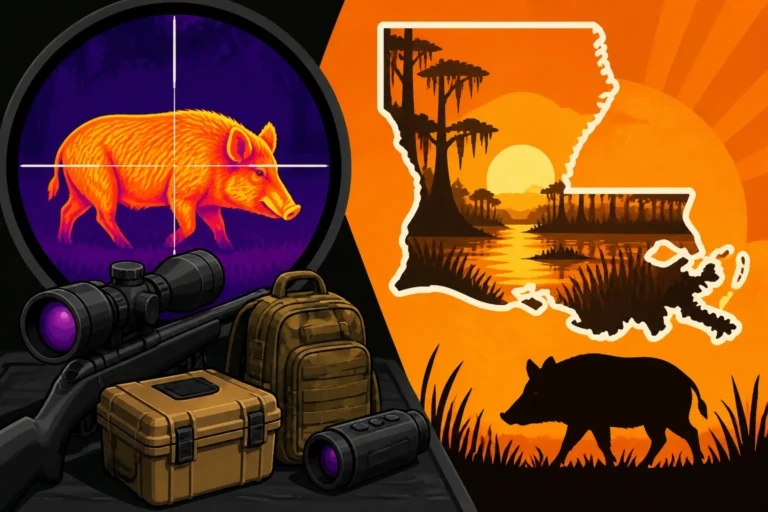
Feral hogs are another prime example where self-guided public land hunting shines. These animals are prolific across much of Louisiana, and many WMAs have year-round seasons with generous harvest limits. While there are hog hunting outfitters, often focused on night hunting or dog drives, the average hunter can find immense success simply by scouting good public land spots, understanding hog behavior, and being persistent. There's little need to pay a premium when you can legally pursue Hunting Louisiana's Year-Round Feral Hogs with your own two feet, a rifle, and a bit of determination. The barrier to entry is low, and the rewards are plentiful, both in terms of meat for the freezer and exciting hunting action.
Extended Archery and Primitive Weapon Seasons
Louisiana offers exceptionally long archery and primitive firearms seasons, providing ample time and opportunity for dedicated self-guided hunters. Our Bowhunting Louisiana's Long Archery Season can stretch for months in some deer areas, giving archers countless weekends to scout, hang stands, and refine their approach without the pressure of a short, expensive guided window. Similarly, Primitive Firearms Deer Hunting in Louisiana allows for the use of specific, traditional equipment, often attracting hunters who relish the challenge and slower pace of these methods. These seasons are designed for the patient, persistent individual who wants to truly immerse themselves in the hunt.
During these extended seasons, a self-guided approach gives you the flexibility to adapt to changing weather patterns, monitor specific food sources, and even shift your target area if needed. You're not tied to a single booking but can hunt as many days as your schedule and ambition allow. It's an opportunity to thoroughly learn a piece of public land, understand its nuances, and truly become part of the rhythm of the woods. For those who embrace the slower, more deliberate pace of archery or primitive firearms, the self-guided public land route often offers the most fulfilling and economical path to success.
Final Considerations for the Self-Guided Hunter
Deciding to go self-guided on public land is a commitment, but it’s a deeply rewarding one that builds character and skill. There are some practical elements you’ll want to keep in mind to maximize your chances of success and ensure a safe, enjoyable experience.
Planning Your Expedition
Effective planning is the backbone of any successful self-guided hunt. This starts long before the season opens. You'll want to dive deep into maps, use online resources like the LDWF mapping tool, and if you can, physically scout your chosen areas. Pay attention to access points, potential bedding areas, food sources, and travel corridors. Remember, other hunters will also be out there, so consider Hunting Pressure on Louisiana Public Land and actively seek out areas that might be overlooked.
| Feature | Guided Hunt | Self-Guided Public Land Hunt |
|---|---|---|
| Cost | High (guide fees, lodge, meals, tips) | Low (license, fuel, food, basic gear) |
| Flexibility | Limited (set schedule, specific locations) | High (hunt when, where, and how you want) |
| Skill Dev. | Less direct pressure to learn | Intense hands-on learning, trial & error |
| Effort | Guide handles most logistics | All planning and execution is on you |
| Knowledge | Relies on guide's expertise | Builds your personal knowledge of area |
| Success Rate | Often higher initially | Varies, but improves with experience |
| Satisfaction | Good experience, but less self-reliance | Deep personal accomplishment |
It's also crucial to understand the regulations specific to your chosen Wildlife Management Area (WMA) or National Forest land. Rules about ATVs, camping, stands, and even specific weapon restrictions can vary greatly. Always check the latest regulations well in advance. For example, knowing the rules around Using a Ground Blind on Louisiana Public Land is essential if that's part of your strategy. Don't forget to purchase your Louisiana Hunting Licenses and What They Cost and any necessary tags well before you hit the woods.
Safety and Preparedness
When you're out there on your own, safety becomes paramount. Always let someone know where you're going and when you expect to return. Carry a fully charged cell phone, but don't rely on it for navigation; a physical map and compass are indispensable, especially in areas with spotty service. A GPS unit or a reliable hunting app on your phone (like GoHunt's mapping features) can be incredibly helpful for Finding Ground Others Walk Past but always have a backup.
Pack a first-aid kit, extra water, and emergency supplies. Be prepared for unexpected weather changes, which can happen rapidly in Louisiana. If you're heading into swampy areas, understand the risks of water crossings and potential encounters with wildlife. Being self-reliant means being prepared for anything, so thinking through potential scenarios and having solutions in place will give you peace of mind and allow you to focus on the hunt.
Disclaimer
This article is for general informational purposes only and does not constitute professional advice. Laws, prices and regulations vary by location and change over time. Consult a qualified professional for guidance on your specific situation.