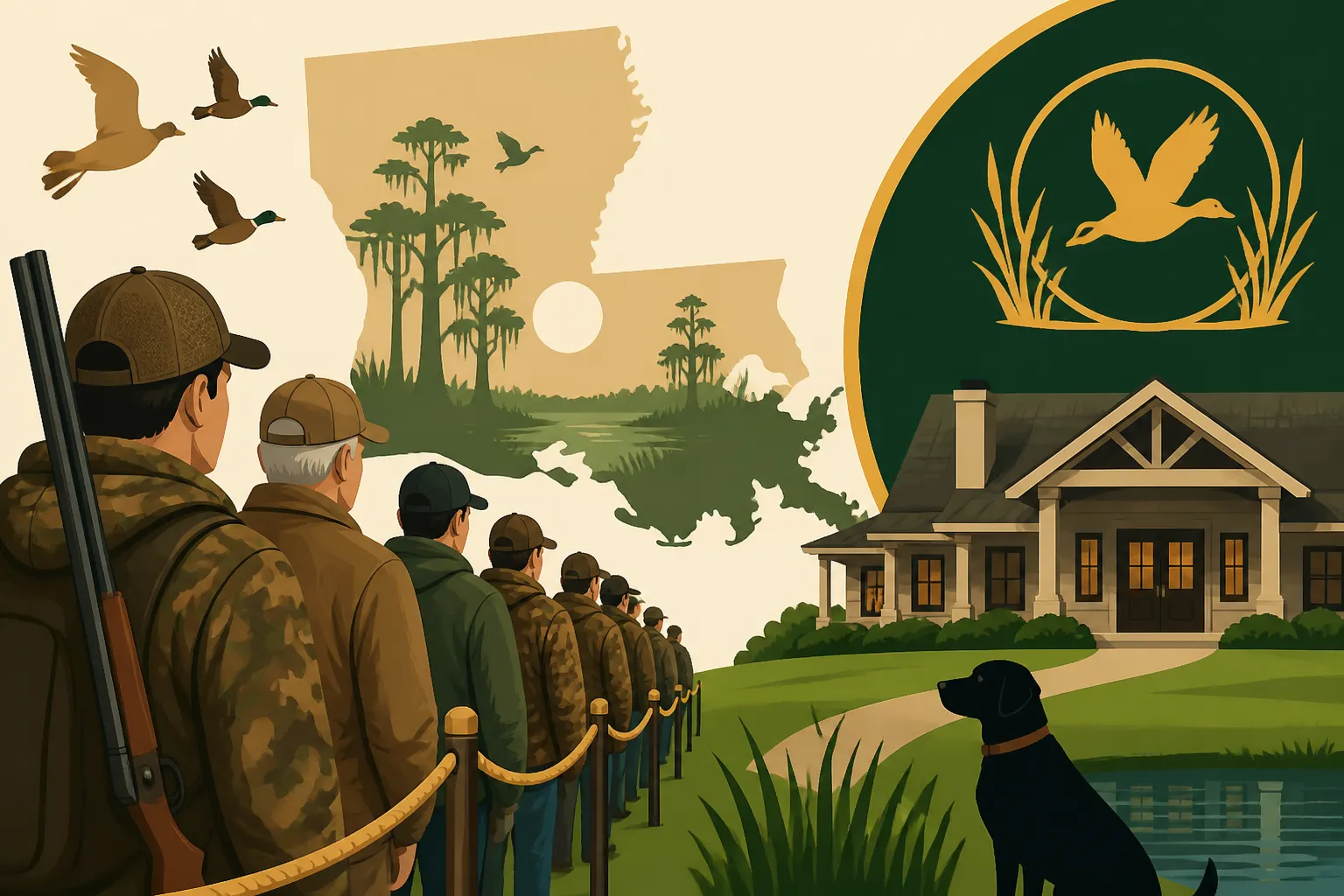
Waiting Lists for Established Louisiana Clubs
It's a common frustration for serious hunters in Louisiana: you hear about these fantastic, well-managed hunting clubs with prime acreage, healthy deer herds, and excellent camaraderie, only to find out they have a waiting list longer than a cypress knee. Getting into an established Louisiana hunting club can feel like trying to catch a trophy buck in a hurricane – nearly impossible without the right approach. This guide is here to shed some light on why these lists exist, what it takes to eventually get in, and how you can still enjoy fantastic hunting in the meantime.
Why Established Clubs Have Such Long Waiting Lists
The demand for quality hunting ground in Louisiana, especially private, managed land, far outstrips the supply. When you factor in the rising costs of land ownership, habitat management, and liability, joining a club becomes an incredibly attractive option for many. But what makes these established clubs so desirable that people are willing to wait years, sometimes even a decade, for a spot? It boils down to a few key factors that create an almost cult-like following.
The Value of Stable, Managed Habitat
One of the biggest draws to an established club is the sheer quality of the habitat. These aren't just random patches of woods; many have been meticulously managed for decades. Think about clubs that have invested in extensive food plot programs, timber stand improvements, and year-round supplemental feeding (where legal and appropriate for their deer management goals). This isn't just about putting out corn; it’s about creating an ecosystem that consistently produces bigger, healthier deer and thriving populations of other game. When you're constantly scouting public land or dealing with year-to-year changes on a less stable lease, the consistency and quality of a well-managed club are a dream come true. You know what you're getting, and you know the hard work of previous members has paid off.
Consider a club nestled in the fertile river bottoms of the Tensas River Basin or one with vast tracts in the Florida Parishes – areas known for their potential to grow impressive whitetails. These clubs aren't just hunting spots; they're essentially wildlife sanctuaries operated by a collective of dedicated hunters. They often have detailed harvest records, known buck movement patterns, and an understanding of the local deer herd that can only come from years of observation and management. This kind of stability and historical data is invaluable, and it’s why hunters crave access to such places. For an overview of how some of these regions differ, check out How Louisiana's Ten Deer Areas Differ.
The Draw of Predictable Access and Amenities
Another huge factor is predictable access and the amenities that come with it. On public land, you're always competing with other hunters, constantly scouting for a spot where you won't be bumping into someone else. In a private club, your stand locations are often designated, and you know exactly where you can hunt without encroaching on another member's space. This drastically reduces hunting pressure and increases your chances of success.
Beyond just the hunting ground, many established clubs offer incredible amenities. We're talking about well-maintained camps with electricity, running water, cooking facilities, and even processing stations. Some have dedicated skinning sheds, walk-in coolers, and bunkhouses that make for a comfortable, enjoyable experience, rain or shine. Think about the joy of being able to stay at camp for a long weekend, cook up a feast, and share hunting stories around a fire without having to pack everything in and out each day. This kind of infrastructure is a massive investment and a huge perk, making the annual dues (and the wait) feel worthwhile. It's not just about the kill; it's about the entire experience of Louisiana Deer Camp Traditions.
Understanding the Club Membership Process
So, you're convinced you want to get into one of these mythical clubs. But how do you actually do it? It's not as simple as filling out an application and paying a fee. The process is often opaque, built on word-of-mouth, and relies heavily on social connections.
Networking and Personal Connections
The truth is, very few established Louisiana hunting clubs advertise open memberships. Spots usually become available when a long-standing member moves, retires from hunting, or unfortunately, passes away. When a vacancy does open up, the first people considered are almost always friends or family of current members. This "good ol' boy" network, while sometimes frustrating for outsiders, serves a purpose: clubs want to bring in people they know, trust, and who will fit into the club's culture. They want to ensure new members share their hunting ethics, contribute positively to the community, and are willing to pull their weight in terms of workdays and camp upkeep.
This means your first step, long before any official "application," is to network. Talk to everyone you know who hunts in Louisiana. Let them know you're looking for a club opening. Attend local hunting events, visit sporting goods stores, and join online hunting forums. You never know who might have a cousin, an uncle, or a buddy in a club that might have an opening down the line. Don't be shy; express your genuine interest and your commitment to being a respectful, contributing member. Consider exploring resources like BookYourHunt for alternative hunting experiences in the meantime, which might also lead to connections with local hunters.
The Waiting List: How it Works and What to Expect
Once you've made a connection, you might get your name on a waiting list. Don't expect a formal online portal or a customer service representative giving you an estimated wait time. These lists are often informal, sometimes just a mental note by the club president or a handwritten ledger. The length of the wait can vary wildly. Some clubs might have a handful of people waiting for years, while others might have a deep list that stretches for a decade or more.
During this waiting period, it's crucial to stay engaged without being bothersome. A polite, occasional check-in (perhaps once a year) is acceptable. Offer to help with workdays if the opportunity arises – even if you're not a member yet, showing your willingness to contribute can go a long way. This demonstrates your commitment and shows you’re not just looking for a place to hunt, but a community to join. Understand that the club is looking for a good fit, someone who embodies the spirit of Louisiana Deer Camp Traditions and will be a long-term asset.
Table: Navigating Established Louisiana Hunting Clubs
| Feature | Established Club (High Demand) | Smaller Syndicate/Lease (More Openings) | Public Land (Always Open) |
|---|---|---|---|
| Membership Access | Very difficult, long waiting lists, relies on networking | Moderate, may find openings through contacts or online searches | Always accessible with proper license |
| Habitat Quality | Often superb, highly managed for decades | Varies widely, depends on lease management | Varies, can be heavily pressured |
| Amenities | Excellent (camp, processing, utilities), shared costs | Basic to moderate (RV spots, maybe a shed), shared costs | None, entirely self-sufficient |
| Hunting Pressure | Low, controlled by membership limits | Moderate to low, depends on group size and rules | High, especially during opening seasons |
| Cost | High annual dues, but shared investment in prime land | Moderate annual costs, shared lease payment | License fees only (can be combined with travel/gear costs) |
| Social Aspect | Strong community, workdays, camp life | Varies with group dynamic | Minimal, mostly solitary |
| Time Investment | Significant (workdays, contributing to club operations) | Moderate (some setup, shared responsibilities) | High (scouting, stand setup, packing in/out) |
| Flexibility | Rules-bound, less flexibility for individual preferences | More flexible if group is small | Complete flexibility, but comes with less certainty |
Strategies to Navigate or Bypass Waiting Lists
While waiting can be a test of patience, it doesn't mean your hunting life has to be on hold. There are proactive steps you can take to either improve your chances of getting into a prime club or find fulfilling hunting opportunities elsewhere.
Actively Seek Out Openings and Build a Reputation
Beyond the informal network, some clubs might, on rare occasion, post an opening, or a broker might know of a lease that needs members. This is where diligent searching comes in. Keep an eye on local classifieds, hunting forums specific to Louisiana, and even real estate listings that might mention hunting leases. Services like GoHunt or others that focus on land access and mapping can help you scout potential areas or even identify smaller private tracts that might be available for lease if you gather a few friends.
More importantly, build a reputation as a responsible, ethical hunter. If you hunt public land, leave no trace. If you're invited to hunt on private property (even if it's not a club), be an exemplary guest. Help with chores, clean up, and respect the land and landowner. Word travels fast in the Louisiana hunting community, and a positive reputation can open doors you never expected. People are far more likely to recommend someone they know to be reliable and respectful. Your actions speak volumes about the kind of club member you would be.
Consider Smaller Syndicate Leases or Forming Your Own
If the idea of a decades-long waiting list is just too much, don't despair! There are many fantastic hunting opportunities outside of the highly established, traditional clubs. One excellent alternative is to join a smaller syndicate lease. These are often groups of 3-10 hunters who pool their resources to lease a tract of private land. While they might not have the elaborate camp setups of the older clubs, they offer private access, a shared hunting experience, and usually more flexibility in management decisions.
The barrier to entry for these smaller leases is typically much lower. Openings might be advertised more readily, or you could even initiate one yourself if you can gather a few like-minded friends. This route allows you to create your own hunting "club" with rules and management strategies that align with your group's goals. It might require more upfront work in finding the land and setting up basic amenities, but it offers immediate access and a chance to build your own legacy. For more insights on this, read Small Syndicate Leases Versus Big Clubs.
What to Look for While You Wait (or If You Can't Wait)
Being on a waiting list doesn't mean you're in limbo. It's a perfect time to hone your skills, scout new areas, and explore different hunting experiences. Think of it as your hunting gap year, but one that could last for quite a while.
Leveraging Public Land Opportunities
While you're waiting for that dream club spot, don't overlook Louisiana's abundant public hunting lands. Wildlife Management Areas (WMAs) and National Forests like Kisatchie offer diverse hunting opportunities for deer, hogs, small game, and even turkey. Yes, they require more effort, more scouting, and you'll encounter more pressure, but they are accessible and can provide incredible experiences. Scouting Louisiana Public Land Before Season is absolutely essential here. You might even find yourself enjoying the challenge of deciphering buck movement in heavily pressured areas.
Tools like the LDWF app or dedicated mapping platforms like GoHunt can be incredibly valuable for public land hunting. They help you identify property boundaries, analyze terrain, and find those overlooked pockets that other hunters might walk past. It’s a fantastic way to develop your woodsmanship, learn how to read sign, and become a more adaptable hunter. You'll gain a deeper understanding of game behavior and habitat, which will only make you a better club member when your time eventually comes. For specific tactics, consider articles like Finding Ground Others Walk Past.
Exploring Guided Hunts and Day Leases
Another excellent way to get in some quality hunting while on a waiting list is to book guided hunts or seek out day leases. Guided hunts, while an investment, provide access to prime private land and the expertise of a professional guide. This can be a fantastic way to target specific game, like a trophy buck or a gobbling turkey, without the long-term commitment of a club. Websites like BookYourHunt specialize in connecting hunters with outfitters for various species and experiences across Louisiana.
Day leases are also an option, though less common for deer in Louisiana compared to other states. These allow you to pay a fee for a single day or weekend of hunting on private land. While they don't offer the consistency of a club, they can be a great way to experience different types of terrain and management styles. These options allow you to keep your skills sharp, harvest some game, and maintain your passion for hunting without the frustration of club waiting lists. Even if you're set on a club, a successful guided hunt can boost your confidence and provide stories to share if you ever get to interview for a membership!
What Happens When a Spot Opens Up
Let's imagine you've been on that informal list for years, patiently networking and honing your skills on public land or guided hunts. One day, you get the call. A spot has opened up in that prestigious Louisiana hunting club. What happens next?
The Interview and Vetting Process
Even after waiting, don't expect a simple "welcome aboard." Most established clubs will have an informal or formal interview process. This isn't usually about your hunting prowess – they assume if you've made it this far, you're a capable hunter. Instead, it's about your personality, your willingness to contribute, and your fit within the existing group dynamic. They'll want to know about your hunting ethics, your family situation (if they have family-friendly rules), and your commitment to workdays and club maintenance.
Be prepared to discuss your expectations for a club and what you can bring to the table. Are you handy with a chainsaw? Do you enjoy working on food plots? Are you a good cook for camp meals? All of these things matter. Club members are looking for someone who will enhance the experience for everyone, not just take up a spot. It’s an evaluation of whether you’ll be a good neighbor, a good workmate, and a good friend. This is where all that networking and reputation-building really pays off.
Understanding Dues, Workdays, and Club Rules
If you pass the vetting process, congratulations! But before you fully commit, make sure you thoroughly understand the financial commitment and the expectations for members. Club dues can vary significantly, ranging from hundreds to several thousands of dollars per year, depending on the acreage, amenities, and exclusivity. Ask for a clear breakdown of what those dues cover. You can find general information about this in What Louisiana Hunting Club Dues Include.
Beyond the money, understand the "sweat equity" required. Most clubs have mandatory workdays throughout the year for tasks like maintaining roads, planting food plots, fixing stands, or camp repairs. Be honest with yourself about your ability and willingness to participate. Also, familiarize yourself with all the club's rules and regulations, which can be extensive. These cover everything from guest policies and antler restrictions to harvest reporting and vehicle usage. Adhering to these rules is paramount for maintaining harmony and the quality of the hunting experience for all members. Misunderstandings about rules are a common source of conflict in hunting clubs, so ask questions upfront to ensure you're a good fit.
Disclaimer
This article is for general informational purposes only and does not constitute professional advice. Laws, prices and regulations vary by location and change over time. Consult a qualified professional for guidance on your specific situation.