Rattling and Grunting in Louisiana
The moment you hear that subtle crunch of leaves or a branch snapping, your heart starts to pound. You’ve been sitting still for what feels like an eternity, and suddenly, you have a feeling there's a buck around, but he’s just out of sight. That’s the exact frustration many Louisiana deer hunters face when trying to coax a wary whitetail into range. This guide will dive deep into the art and science of rattling and grunting, helping you understand how to use these powerful vocalizations to bring those elusive Louisiana bucks right into your shooting lane.
Understanding Deer Communication in Louisiana
It's easy to think of deer as silent creatures, but nothing could be further from the truth. Whitetails are incredibly communicative, and understanding their language is one of the most powerful tools a hunter can wield. In Louisiana's diverse habitats, from the dense bottomland hardwoods to the piney hills, these sounds are constantly being exchanged, often without us even realizing it. Learning to interpret and mimic these calls can literally change your hunting success.
Why Deer Vocalize and What It Means
Deer vocalize for a myriad of reasons, just like many other social animals. These sounds are critical for everything from communicating danger to attracting mates. During the rut, this communication ramps up significantly, becoming an audible symphony of dominance and desire. Bucks use grunts, snort-wheezes, and even the sounds of clashing antlers to establish dominance and attract does. Does, on the other hand, use bleats and grunts to communicate with fawns and signal their readiness to breed.
Understanding the context of each call is paramount. A soft "contact" grunt might just be a deer saying, "Hey, I'm over here," while a loud, guttural "tending" grunt means a buck is actively chasing a hot doe. Knowing the difference allows you to respond appropriately and convincingly. The subtle nuances in pitch, volume, and duration can tell you a lot about the deer's emotional state and what it might do next.
The Science Behind Antler Rattling
Antler rattling, at its core, is an imitation of two bucks fighting. This isn't just a random crashing sound; it's a specific sequence of sounds that signal a dominance display or a territorial dispute. When bucks clash antlers, it sends a clear message to other deer in the vicinity: there's an interaction happening, and it might be worth investigating. Younger, more curious bucks might come in to see the fight, hoping to scavenge a doe or perhaps even join in if they feel bold. Larger, dominant bucks might approach to break up the fight, assert their presence, or challenge the victors.
The effectiveness of rattling hinges on how realistically you can recreate these sounds. It's not just about noise; it's about rhythm, intensity, and duration. Different types of fights, from light sparring to an all-out brawl, produce distinct sounds, and mastering these variations can significantly increase your chances of drawing a buck in. The science suggests that these sounds tap into a buck's instinctual drive for competition and reproduction, making them an irresistible draw, especially during the peak of the breeding season.
Essential Gear for Rattling and Grunting
You can't effectively communicate with Louisiana whitetails if you don't have the right tools. While some hunters can make do with minimal gear, having quality rattling antlers and grunt calls designed for realistic sounds will give you a significant edge. It's not about having the most expensive gear, but rather gear that you're comfortable and proficient with, allowing you to produce the most authentic sounds.
Choosing the Right Rattling Antlers
When it comes to rattling antlers, you have a few options, each with its own pros and cons. Real shed antlers are often considered the most authentic, providing a natural clacking sound. If you can find a pair that have a good weight and density, they can produce a wide range of realistic tones, from light sparring to heavy clashes. The challenge with real antlers is their bulk and sometimes cumbersome nature, especially when you're trying to stay mobile in thick Louisiana cover.
Artificial rattling devices offer convenience and often a more compact design. Brands like Rattlin' Bog or Rattling Forks provide synthetic options that are lighter, less bulky, and often engineered to produce specific sounds. Some even have a built-in handle or strap for easier use. The key is to find a set that allows you to create both sharp, crisp clacks and deep, resonant thuds, mimicking the varied sounds of real antlers colliding. Experiment with different types to see what feels most natural in your hands and produces the sounds you're aiming for. Remember, the goal is realism, not just noise.
Selecting Effective Grunt Calls
Just like rattling antlers, grunt calls come in a variety of styles, from simple tube calls to more complex adjustable models. A good grunt call should be versatile enough to produce a range of sounds: the short, choppy "contact" grunt, the longer, more guttural "tending" grunt, and even the aggressive "snort-wheeze." Many calls on the market today allow for easy adjustment of pitch and tone, which is incredibly useful for mimicking different-sized bucks or even a doe bleat.
Some popular choices include brands like Primos and Flextone, which offer calls known for their durability and realistic sounds. When selecting a call, consider how easy it is to operate quietly in the stand, especially if you need to make quick adjustments. A lanyard is often a good idea to keep it accessible. Beyond brand, practice is crucial. You might have the best call in the world, but if you can't consistently produce convincing sounds, it won't do you much good. Listen to recordings of real deer vocalizations and try to match them with your call. The more authentic your grunts sound, the more likely you are to pique a buck's interest.
Mastering Rattling Techniques for Louisiana Bucks
Rattling is an art form, and like any art, it requires practice, patience, and a deep understanding of your subject – in this case, a Louisiana whitetail. It’s not about making noise for the sake of it; it's about telling a story that makes a buck want to investigate. The dense cover of Louisiana, combined with varied deer densities, means you need to adapt your technique to the specific hunting situation.
Mimicking Buck Fights: Aggressive vs. Light Rattling
The type of rattling sequence you employ should depend heavily on the time of year and the deer you're trying to attract. Early in the season, before the peak rut, bucks might only engage in light sparring to establish dominance without serious injury. Mimicking these "tickling" sessions with softer, shorter antler clashes can appeal to younger, more curious bucks. You’re not trying to create a major disturbance, just a subtle invitation. This could be particularly effective in areas where deer density is lower, or during the early bowhunting season when bucks are still in their bachelor groups.
As the rut heats up, however, you'll want to escalate your approach. An "aggressive" rattling sequence simulates a full-blown buck fight, complete with loud crashes, grinds, and even breaking branches. This is typically used when bucks are actively chasing does and are more prone to respond to a challenge. Mix in some "tending grunts" or even a "snort-wheeze" to paint a vivid picture of a real confrontation. The sounds should be loud enough to carry through the thick timber or open fields, but not so aggressive that you scare off cautious deer. Think about the scale of the fight – a light tickle for curious onlookers, a full-blown brawl for dominant bucks.
Timing and Duration of Rattling Sequences
When you rattle is almost as important as how you rattle. Typically, the most effective time to rattle is during the pre-rut and peak rut, when bucks are most active and competitive. In many parts of Louisiana, like the Florida Parishes, this could mean late October through mid-November, though it varies by deer area. During this window, bucks are constantly searching for does and are easily drawn to the sounds of other bucks interacting. Outside of the rut, rattling is generally less effective, as bucks are more concerned with feeding and less with territorial disputes. For more details on these crucial periods, check out our guide on Hunting the Rut in the Early-Start Areas.
The duration of your rattling sequence is also critical. A typical sequence might last anywhere from 30 seconds to a minute, followed by a period of silence where you remain absolutely still, scanning intently for an approaching buck. Then, wait another 10-15 minutes before repeating the sequence. This silence allows deer to approach without detecting your movement or scent. Sometimes a buck might approach quickly, other times he might circle downwind for a closer look. Be patient and be ready, because they often come in quiet and fast. Consider where you’re hunting; in areas with dense cover, a buck might come in close but remain unseen, so being alert to every rustle is key.
Adapting Rattling to Different Habitats
Louisiana's diverse hunting landscapes demand adaptable rattling strategies. In the dense bottomland hardwoods and cypress-tupelo swamps, sound doesn't travel as far, and visibility is often limited. Here, a more aggressive, louder rattling sequence might be necessary to penetrate the thick canopy and undergrowth. You’ll want to extend the periods of silence between sequences, as a buck might take longer to navigate the dense terrain. Furthermore, consider rattling more frequently but for shorter durations, keeping the buck guessing about the exact location of the "fight." This strategy works well in places like the Atchafalaya Basin, where thick cover is the norm.
Conversely, in more open areas like the piney hills of North Louisiana or along agricultural field edges, sound travels much farther. Here, a slightly less aggressive approach might be warranted, as deer can pinpoint the source more easily. You might want to focus on longer sequences with varied intensity, mimicking a fight that's moving around. Pay close attention to the wind, as bucks will almost always try to circle downwind to scent-check the "fighters." Setting up your stand to account for this approach, perhaps using natural terrain features or even a ground blind, is crucial. For tips on maximizing your chances in varied terrain, you might find our article on Reading a Ridge for Central Louisiana Deer helpful.
Effective Grunt Calling Strategies
Grunt calls are arguably even more versatile than rattling, capable of mimicking a broader spectrum of deer communication. Mastering the nuances of grunting can be incredibly effective throughout the entire deer season, not just during the rut. The key is to understand what each grunt means and how to use it to your advantage, drawing on a buck’s curiosity or territorial instincts.
Decoding Grunt Types: Contact, Tending, and Alarm Grunts
Deer grunts aren't just one sound; they vary widely in pitch, volume, and duration, each conveying a specific message. A "contact grunt" is typically a soft, short sound, often used by deer to simply announce their presence or to maintain contact within a group. It’s like a quiet “hello” and can be effective for drawing in curious deer without alarming them. This is a great starting point, especially if you're unsure of the deer's mood or proximity.
"Tending grunts" are louder, longer, and often more guttural. These are the sounds a buck makes when he's actively pursuing a receptive doe, often just before or during breeding. Hearing a tending grunt tells other bucks that there’s a hot doe nearby and that another buck is trying to claim her. Mimicking this sound can be incredibly effective during the peak rut, challenging dominant bucks to come investigate the intrusion. It's a direct challenge to their territory and breeding rights.
Finally, an "alarm grunt" is a sharp, abrupt snort-like sound that signals danger. This is one you generally want to avoid mimicking, as it will send deer scattering. However, understanding it is important so you don't inadvertently produce it. Learning to differentiate these sounds and reproduce them accurately is a fundamental step in becoming a proficient caller.
The Art of the "Calling Sequence"
Using a grunt call isn't about blowing it randomly. It's about creating a believable narrative. A successful calling sequence often starts subtly and escalates, mirroring natural deer behavior. You might begin with a few soft "contact grunts" to establish a presence. If you get no response after a few minutes, you can increase the intensity, perhaps adding a "tending grunt" to suggest more activity.
A common and effective sequence might look like this:
- Soft Contact Grunts: 2-3 short, low grunts. Wait 5-10 minutes.
- Slightly Louder Contact Grunts: 3-4 grunts, a bit more urgency. Wait 5-10 minutes.
- Tending Grunts: 1-2 longer, more guttural grunts, possibly followed by a brief pause. Wait 10-15 minutes.
- Snort-Wheeze (Optional, advanced): If you're confident a mature buck is nearby and needs an aggressive challenge, a single snort-wheeze can work.
It's all about reading the situation and the deer's response. Sometimes, a single grunt is all it takes. Other times, you need to build the story. Always be ready with your bow or gun drawn during and immediately after a calling sequence, as bucks can appear out of nowhere. The unpredictable nature of deer means you have to stay sharp and aware, as discussed in detail in our guide on Hunting Pressure on Louisiana Public Land.
Combining Grunts with Rattling
The most potent calling strategy often involves combining grunts with rattling. This creates a much more realistic and compelling scenario: two bucks fighting, with one or both grunting during the altercation. This is a powerful signal to other bucks that a serious dispute is underway over a doe. The sound of clashing antlers coupled with guttural grunts paints a vivid picture that is hard for an inquisitive or dominant buck to ignore.
A good combined sequence might start with light rattling, followed by a few contact grunts. As the rattling intensifies to mimic a more aggressive fight, intersperse louder tending grunts or even a snort-wheeze. The goal is to make it sound like a real, dynamic interaction. Don't be afraid to add sounds like pawing the ground or breaking a small branch (using your foot) to enhance the realism. This multi-sensory approach can be especially effective in drawing out those elusive, mature bucks that have heard it all before. Always be mindful of your scent and remain as still as possible, as the combination of sounds will likely make approaching deer more cautious.
Here's a quick comparison of calling types:
| Call Type | Primary Purpose | Best Time to Use | Typical Volume | Response Expected |
|---|---|---|---|---|
| Contact Grunt | Announce presence, locate deer | All season, especially pre-rut | Low to Medium | Curiosity, non-threatening approach, reciprocal grunt |
| Tending Grunt | Buck chasing a hot doe | Peak rut | Medium to High | Challenge, aggressive approach, investigation |
| Snort-Wheeze | Aggressive challenge, dominance | Peak rut, dominant bucks | High | Direct confrontation or avoidance |
| Light Rattling | Sparring, establishing pecking order | Early season, pre-rut | Low to Medium | Curiosity, cautious approach |
| Aggressive Rattling | Full-blown buck fight | Peak rut | High | Aggression, dominance display, investigation |
When and Where to Use Calling Tactics in Louisiana
Knowing how to make the right sounds is only half the battle. The other half is knowing when and where to deploy these tactics for maximum effectiveness in the unique Louisiana landscape. Deer behavior is heavily influenced by seasonal cycles, habitat, and external factors, all of which play a role in how a buck will respond to your calls.
Peak Rut Activity by Deer Area
Louisiana is unique in having ten distinct deer areas, and the timing of the rut can vary significantly between them. For instance, areas like the Florida Parishes (parts of Area 4, 6, and 9) often see their rut peak in early to mid-November, while some of the more southern coastal parishes might experience it later, even into December or January. Understanding these localized variations is absolutely critical for success with rattling and grunting. Targeting your calling efforts during the peak breeding activity in your specific hunting area will yield the best results.
During the pre-rut, when bucks are starting to feel the urge but does aren't quite ready, lighter rattling and contact grunts can be effective in piquing curiosity. As the rut intensifies and does become receptive, aggressive rattling and tending grunts become much more potent. This is when bucks are most competitive and least cautious. If you're unsure about the precise rut timing in your specific parish or WMA, a quick check of the Louisiana Department of Wildlife and Fisheries (LDWF) resources or local scouting reports is essential. The GoHunt app can also be a valuable resource for mapping and understanding specific areas.
Factors Influencing Call Effectiveness
Several environmental and behavioral factors can dramatically influence how effective your rattling and grunting will be. Wind, for example, is a huge consideration. Bucks almost always try to approach from downwind to use their superior sense of smell to verify what they hear. This means you need to set up your stand or blind so that approaching deer don't wind you. Strong winds can also carry sound away, making it harder for deer to hear your calls, while calm conditions allow sounds to travel farther and more clearly. Our guide on Wind and Thermals in Swamp Bottomland delves deeper into managing this critical element.
Cover is another major factor. In thick Louisiana swamps or dense pine plantations, visual contact is limited, and deer might approach more cautiously, relying heavily on sound and scent. In these environments, you might need to call more aggressively to cut through the vegetation. Conversely, in open fields or sparse timber, deer can see farther, and a more subtle approach might be better to avoid spooking them. Hunting pressure also plays a significant role. Highly pressured deer, especially on public land, tend to be warier and less likely to respond to calls, so you might need to be extra patient and subtle.
Strategic Setups for Calling
Your setup is paramount when employing rattling and grunting. You need to position yourself in a way that maximizes your chances of a shot while minimizing your risk of being detected. Firstly, always hunt with the wind in your favor. If you expect a buck to circle downwind, set up where they will pass through an open shooting lane before reaching your scent cone. Elevated stands are often advantageous, as they help carry your scent above a deer's nose, giving you a better view of approaching animals.
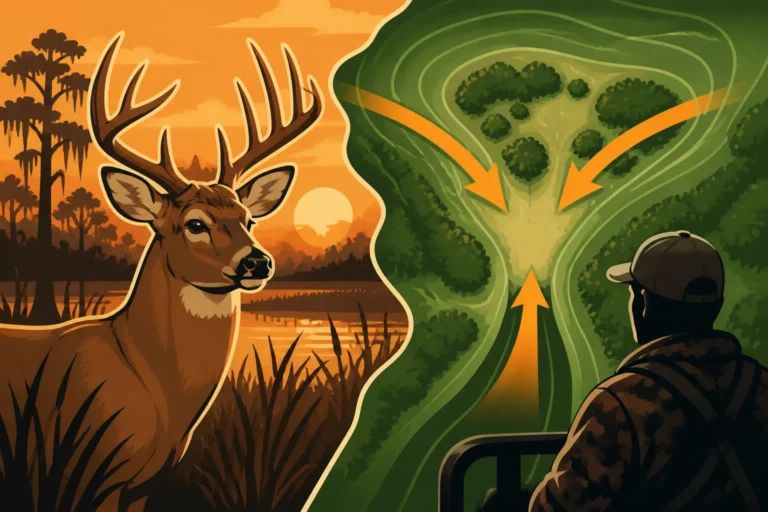
Secondly, choose locations with good visibility into likely approach routes. This could be a natural funnel between two sloughs, along a logging road, or at the edge of a food plot. Bucks will often follow these natural travel corridors. Having good cover behind you is also important to break up your silhouette. Finally, ensure you have a clear shooting lane in the direction you expect deer to come from. There's nothing more frustrating than having a buck respond perfectly only to be obstructed by a small sapling. A well-brushed-in ground blind can also be an excellent option for calling, especially on public land where stand placement might be limited.
Common Mistakes and Advanced Tips
Even experienced hunters can make mistakes when rattling and grunting. Learning from these pitfalls and incorporating advanced techniques can significantly elevate your success rate. It's about fine-tuning your approach and continually learning from every encounter, or lack thereof.
Over-Calling and Under-Calling Pitfalls
One of the most common mistakes hunters make is either over-calling or under-calling. Over-calling, especially with aggressive rattling or grunts, can quickly spook wary deer. If a buck hears a constant, unnatural barrage of sounds, it will likely become suspicious and hold up out of sight or simply leave the area. Think of it like a human conversation; you wouldn't keep yelling if you didn't get a response. Often, less is more. Sometimes, a single, well-placed grunt is all it takes to stop a cruising buck or pique his interest.
Conversely, under-calling can mean you miss opportunities. If you only call once every hour, you might miss a buck that passed through your area just after your calling sequence. The key is balance and observation. Start subtly, listen intently, and observe the deer's reaction. If you see a buck pause or flick an ear in your direction, you've got his attention. From there, you can decide whether to repeat a soft call or increase the intensity. Patience is your best friend here. Consider using mapping tools like GoHunt to understand deer movement patterns in specific areas, which can help inform your calling frequency.
Reading Deer Body Language Post-Call
A buck's body language after hearing a call will tell you everything you need to know about its interest level and what to do next. When a buck responds positively, he might:
- Stop and stare: He heard something and is trying to pinpoint the source.
- Flick his ears: Actively listening and trying to gather more information.
- Walk stiff-legged or with his head down: A sign of aggression and challenge, especially if combined with hair standing up on his neck.
- Circle downwind: He's trying to scent-check the "intruders." This is a critical moment – be ready for a shot before he winds you.
- Grunt back: He’s acknowledging your call, often challenging you.
If a buck turns and walks away, or shows signs of nervousness (tail flicking repeatedly, head held high, stomping), it's best to cease calling for a while and re-evaluate your strategy. Sometimes, a deer just isn't in the mood, or your call sounded unnatural. Learning to interpret these subtle cues is an advanced skill that comes with experience and countless hours in the stand.
Practicing and Adapting Your Calling
Just like shooting your bow or rifle, calling deer requires practice. Don't wait until opening day to pull out your calls. Practice at home, in the truck, or even silently in the stand. Listen to recordings of real deer vocalizations and try to replicate them. Pay attention to the pitch, duration, and volume. The more natural your calls sound, the more confident you'll be when that moment of truth arrives.
Furthermore, be prepared to adapt your calling strategy based on conditions and deer behavior. What works in the piney hills of Kisatchie National Forest might not work as effectively in the dense bottomlands of the Tensas River Basin. Pay attention to what other hunters are reporting, read local game reports, and always be willing to try new things. Sometimes, a subtle change in your sequence or a different intensity of rattling is all it takes to unlock success. Being adaptable is a hallmark of a truly skilled Louisiana deer hunter. Remember, every season brings new challenges and new lessons, making your journey as a hunter a continuous learning experience.
Disclaimer
Hunting is an activity that carries inherent risks. Always prioritize safety, adhere to all local, state, and federal hunting regulations, and ensure you have the proper licenses and permits before heading afield. The information provided in this guide is for informational purposes only and should not be considered a substitute for professional instruction or official regulations.