Retrieving Game From Private Land in Louisiana
We've all been there. You make a perfect shot on a magnificent Louisiana whitetail, adrenaline coursing through your veins, only to watch it disappear over a fence line or into a thicket you know is private property. That gut-wrenching feeling of dread mixes with the excitement of the hunt, leaving you in a terrible bind. How do you recover your game legally and ethically without stepping over the line and becoming a trespasser? This guide will walk you through the often-stressful process of retrieving game from private land in Louisiana, offering practical steps and insights into respecting landowner rights while doing your best to recover your harvest.
Understanding Louisiana's Trespass Laws and Hunter Responsibilities
The first step in navigating this tricky situation is to truly understand the law and your responsibilities as a hunter in Louisiana. Ignorance is rarely an excuse, especially when it comes to property rights. This isn't just about avoiding a fine; it's about maintaining the integrity of our hunting community and respecting the rights of our neighbors.
The Letter of the Law: What Constitutes Trespass
In Louisiana, stepping onto private land without explicit permission is considered trespassing. It’s pretty straightforward, but the nuances can sometimes trip people up. Many landowners will "post" their land with signs, purple paint, or fencing to clearly delineate their property lines and their intent to prohibit entry. However, even if land isn't explicitly posted with bright orange signs every 50 feet, it's still private property, and you still need permission.
The law is clear: you cannot enter private property, even to retrieve game, without the permission of the landowner or their authorized agent. This isn't just a suggestion; it's a legal requirement. Imagine the shoe on the other foot: how would you feel if someone walked onto your property, perhaps even your backyard, to retrieve a baseball or a lost pet without asking? It feels like an invasion. The same principle applies here, and the stakes are much higher when a firearm or bow is involved, even if it's already discharged. Understanding Louisiana Trespass and Permission Law is fundamental to being a responsible hunter.
Hunter's Ethical Dilemma: When a Deer Runs onto Posted Land
The moment your deer bolts onto posted land, you're faced with an immediate and agonizing ethical dilemma. On one hand, you have a strong moral obligation to recover the animal you've harvested, to ensure it doesn't go to waste. On the other, you have a legal and ethical obligation to respect private property rights. This conflict can be incredibly frustrating. You've made a clean shot, done everything right on your end, and now the recovery is in jeopardy through no fault of your own.
This isn't just about "getting your deer back"; it's about the respect for the animal and the landowner. Leaving a wounded or deceased animal unrecovered is a terrible outcome, but violating someone's property rights can lead to legal trouble, damage your reputation, and make it harder for other hunters to gain access in the future. The key is to prioritize the legal and ethical path, even when your instincts are screaming to go get that deer. Don't let the heat of the moment push you into a decision you'll regret.
Steps to Take Before Entering Private Land for Game Recovery
Preparation is always better than improvisation, especially when dealing with property boundaries. Having a plan, even for unexpected scenarios, can make all the difference in successfully and legally recovering your game.
Prior Planning Prevents Panic: Pre-Season Reconnaissance
This might sound obvious, but it's astonishing how many hunters don't truly know the property lines around their hunting area, especially public land that borders private parcels. Before hunting season even begins, take the time to scout not just your hunting spot, but also the surrounding areas. Pay close attention to fences, posted signs, and natural boundaries.
Modern technology has made this easier than ever. Apps like onX Hunt or GoHunt are invaluable tools for identifying property lines and even landowner information. You can use these mapping tools to see exactly where your lease or public land ends and private property begins. Take the time to study these maps. Identify who owns the adjacent parcels. Sometimes, a quick search online can even give you contact information for these landowners. Knowing in advance that Mr. Smith owns the tract to your east and Mrs. Jones owns the tract to your west can save you critical time when a deer crosses over. This proactive approach can turn a frantic situation into a manageable one. Think of it as part of your Scouting Louisiana Public Land Before Season routine, but for your neighboring private lands.
Making Contact: The Art of Asking for Permission
Once your game crosses onto private land, the clock starts ticking, especially in warm Louisiana weather. Your immediate priority is to contact the landowner. This is where those pre-season efforts come in handy. If you already know who owns the land and have their contact information, you're ahead of the game. If not, mapping apps can often provide the owner's name, which can then be used to find contact details.
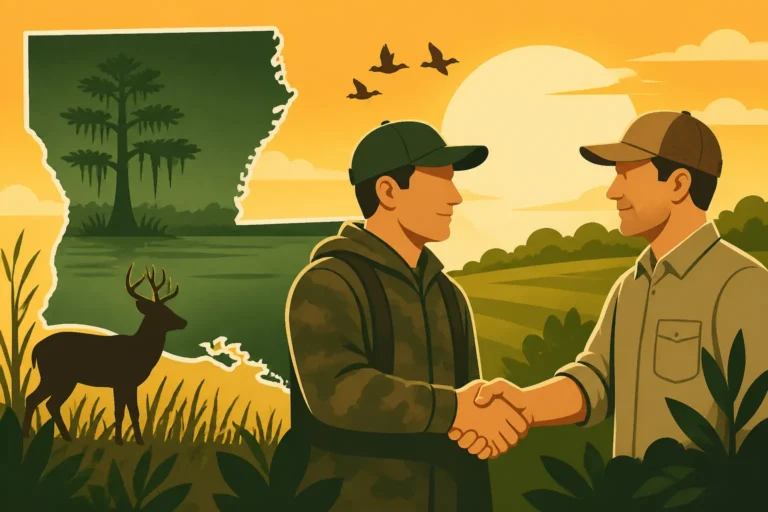
When you make contact, whether by phone or in person, your demeanor is crucial. Be polite, respectful, and upfront. Explain the situation clearly: you've harvested an animal, it's run onto their property, and you are seeking their express permission to retrieve it. Offer to show them the location on a map or even from a distance. Let them know you understand their right to deny entry, but humbly request their assistance in preventing the animal from going to waste. Offer to have them accompany you, if they prefer. This is not the time to be demanding or entitled. Remember, you are asking for a favor.
| Do's of Asking Permission | Don'ts of Asking Permission |
|---|---|
| Do be polite and respectful. | Don't be demanding or entitled. |
| Do have accurate location information ready. | Don't vague about where the game might be. |
| Do offer to have them accompany you. | Don't assume you can go alone. |
| Do explain you want to prevent waste. | Don't focus solely on "your" deer. |
| Do offer to show your license/tags if asked. | Don't argue if they say no. |
| Do respect their decision, whatever it may be. | Don't trespass if permission is denied or delayed. |
| Do offer to share some of the meat (if appropriate). | Don't show up with a truckload of hunting gear. |
What if You Can't Reach the Landowner?
This is a common and incredibly frustrating scenario. You call the number, it goes to voicemail. You drive by, and no one's home. What then? The unfortunate truth is that without express permission, you cannot enter the property. You have exhausted your legal and ethical avenues for gaining access at that moment.
While it's heartbreaking to think of a harvested animal going unrecovered, trespassing carries significant risks. You could face legal charges, substantial fines, and even lose your hunting privileges. It’s simply not worth it. In some cases, local law enforcement might be able to help you make contact or mediate, but they generally won't grant you permission to trespass. They can, however, sometimes provide landowner contact information if it's not readily available elsewhere. If all efforts fail and you cannot secure permission, you must respect the landowner's rights. It's a tough pill to swallow, but it's the responsible choice. Do You Need Written Permission in Louisiana? is a good question to consider, as some landowners might prefer it, providing clear documentation for both parties.
Navigating Game Recovery with Permission
Let's assume you've done everything right and the landowner, in their generosity, has granted you permission. This is fantastic news, but your responsibilities don't end there. In fact, new ones begin.
When Permission is Granted: Clear Communication is Key
When a landowner grants you permission to enter their property, it's not an open invitation to roam freely. Clarify the terms of your access upfront.
- Method of Entry and Exit: Will you use a specific gate, or is there a designated path?
- Timeframe: How long do you have? Is there a time limit?
- Accompaniment: Will they come with you? If not, do they want you to check in before and after?
- Equipment: Can you bring a dog for trailing? An ATV for recovery if the game is far back?
- Boundaries: Are there areas that are still off-limits?
These details prevent misunderstandings. For instance, you might be given permission to walk a specific tree line, but not to cut across an active cattle pasture. Always err on the side of caution and adhere strictly to their instructions. Treat their property with even more care than you would your own. If you happen to be Blood Trailing After Dark in Louisiana, ensure this was explicitly covered and agreed upon, as night entry can raise additional concerns for a landowner.
What Happens if You Don't Find the Game?
Sometimes, despite your best efforts and the landowner's generosity, you just can't locate the animal. Perhaps the blood trail ran out, or the animal traveled further than expected into impenetrable cover. This is another difficult situation.
First, immediately inform the landowner. Thank them profusely for their kindness and apologize for not being able to recover the game. If you moved anything on their property (a gate, a brush pile), return it to its original state. Leave no trash, no disturbed earth beyond what was absolutely necessary for tracking.
The landowner might be disappointed too, especially if they were hoping for you to remove a deer that might eventually attract scavengers. Offer to come back later to check if the carcass can be located if they wish, though often the answer will be no. Again, it’s about respecting their decision and maintaining a positive relationship. A bad experience here can sour future opportunities for yourself and others. If you're fortunate enough to recover the animal, remember your Louisiana Deer Reporting Requirements and practice good field dressing techniques, especially Field Dressing a Deer in Warm Weather.
Special Considerations and Ethical Responsibilities
Beyond the legalities, there are deeper ethical considerations that shape how we, as hunters, interact with landowners. These interactions are vital for the future of hunting access.
Technology as a Tool, Not a Crutch
Tools like onX Hunt and GoHunt are phenomenal for identifying property lines and sometimes even landowner contact information. With features like onX Layers for Louisiana Land Status, you can pinpoint exact boundaries down to the foot. This level of detail is invaluable for staying on your side of the fence and for making informed requests for access. You can even use the app to drop a pin precisely where you last saw the animal, making it easier to explain to a landowner where you need to go.
However, it's crucial to remember that these apps are tools to aid your responsible behavior, not a replacement for it. They help you find who to talk to and where exactly you need to go, but they don't grant permission. Just because you can see a property boundary on your phone doesn't mean you can cross it. The human element—polite, direct communication and respect for private property—is always the most important component. Use these tools to be prepared and precise, but never to justify unauthorized entry. Knowing Finding Louisiana Property Lines digitally is one thing; respecting them physically is another.
Respecting the Landowner's Rights
The landowner has every right to deny you access, for any reason or no reason at all. Perhaps they don't want hunters on their property, or they hunt it themselves, or they simply don't know you. Their land, their rules. Louisiana Posted Land Rules exist to protect these rights. A "no" from a landowner is not an insult; it's a statement of their boundary, which you are obligated to respect.
Sometimes, offering a small gesture of appreciation can go a long way. If you successfully recover your game, consider offering the landowner a share of the meat. If they decline, a simple "thank you" card, or an offer to help with a small chore on their property (like picking up litter along a fence line, assuming it's safe and appropriate) can build goodwill. It shows you value their land and their kindness, not just the deer that happened to cross their line. This kind of respect fosters positive relationships between hunters and landowners, which benefits everyone in the long run.
The Larger Picture: Hunter-Landowner Relations
Every interaction you have with a landowner, whether positive or negative, contributes to the broader perception of hunters in the community. One bad experience with an entitled or disrespectful hunter can lead a landowner to close their property to all hunters, making it harder for responsible individuals to gain access in the future.
By acting ethically and respectfully, even in frustrating situations, you become an ambassador for our sport. You demonstrate that hunters are responsible, considerate individuals who value property rights and the ethical recovery of game. This positive image is essential for preserving hunting access across Louisiana. It’s about building bridges, not burning them, and ensuring that our hunting heritage can continue for generations to come.
Disclaimer
This article is for general informational purposes only and does not constitute professional advice. Laws, prices and regulations vary by location and change over time. Consult a qualified professional for guidance on your specific situation.