Dog Training on Louisiana Public Land
It’s a tale as old as time for Louisiana hunters: you’ve got a spirited young retriever, a tenacious hog dog, or even just a loyal companion you want to ensure is well-behaved afield, but finding a suitable, legal spot on public land to train them feels like searching for a needle in a cypress swamp. The rules can be confusing, and the fear of accidentally trespassing or breaking a regulation is enough to keep many folks tied to their backyards. This guide aims to demystify dog training on Louisiana's public lands, offering clarity on regulations, tips for finding the right spots, and best practices to keep you and your four-legged friend on the right side of the law and good etiquette.
Navigating Louisiana's Dog Training Regulations on Public Lands
Let’s face it, trying to decipher the nuances of public land regulations for dog training can feel like trying to call a gobbler that's already shut up for the day. Each type of public land – Wildlife Management Areas (WMAs), National Forests, and National Wildlife Refuges – often has its own set of rules, and sometimes these rules even change seasonally or for specific parcels within a larger area. It's not always a straightforward "yes" or "no," which is why so many hunters find themselves scratching their heads.
Understanding LDWF WMA Rules for Dog Training
Wildlife Management Areas, or WMAs, are probably where most Louisiana hunters spend their public land time. The Louisiana Department of Wildlife and Fisheries (LDWF) manages these areas, and they publish specific regulations for each WMA annually. When it comes to dog training, WMAs can be a mixed bag. Many WMAs have specific periods outside of regular hunting seasons when dog training might be permitted, particularly for retrieving or bird dogs. However, during active hunting seasons, especially for deer or turkey, the rules often become much stricter to avoid interference with other hunters.
For example, on some WMAs, you might find that dog training for waterfowl retrieving is allowed in designated areas or during specific dates, but only for training, not for hunting. Conversely, running hounds for deer is heavily restricted or outright prohibited on most WMAs, even where still-hunting with dogs might be permitted during a specific season, such as Hunting With Dogs Where Louisiana Allows It. You'll need to pore over the WMA regulations booklet or visit the LDWF website for the specific WMA you’re interested in. Don't assume that what applies to one WMA, say Richard K. Yancey, will apply to another like Pearl River. Always check the individual WMA's regulations.
Rules on National Forests and National Wildlife Refuges
National Forests, like our beloved Kisatchie National Forest, generally offer a bit more flexibility for general dog training, especially in areas not actively being hunted. The key here is "general" dog training, like obedience or simply exercising your dog off-leash (where permitted and safe). However, using dogs for game-specific training, like scent tracking or bird pointing, might still fall under specific regulations. Often, these lands have different rules during specific hunting seasons for certain game. Always verify with the local Forest Service office if you’re unsure, as federal regulations can sometimes overlay state rules.
National Wildlife Refuges (NWRs) tend to be the most restrictive, and for good reason. Their primary purpose is wildlife conservation, which often means limiting human and pet disturbance. Most NWRs have strict leash laws, and dog training of any kind is often severely limited or prohibited altogether. If it is allowed, it's typically in very specific designated areas and only during certain times of the year, usually well outside of any migratory bird or big game seasons. Before you even think about bringing your dog to an NWR like Catahoula National Wildlife Refuge, you absolutely must check their specific visitor rules and hunting regulations. Assuming you can train there without checking could lead to a hefty fine and a very frustrating day.
Identifying Suitable Public Land for Your Training Needs
Once you've done your homework on the regulations, the next step is finding the actual spots that make sense for your particular training goals. Not all public land is created equal for every type of dog training, and what works for a retriever might be disastrous for a hog dog.
Scouting for Retriever Training Opportunities
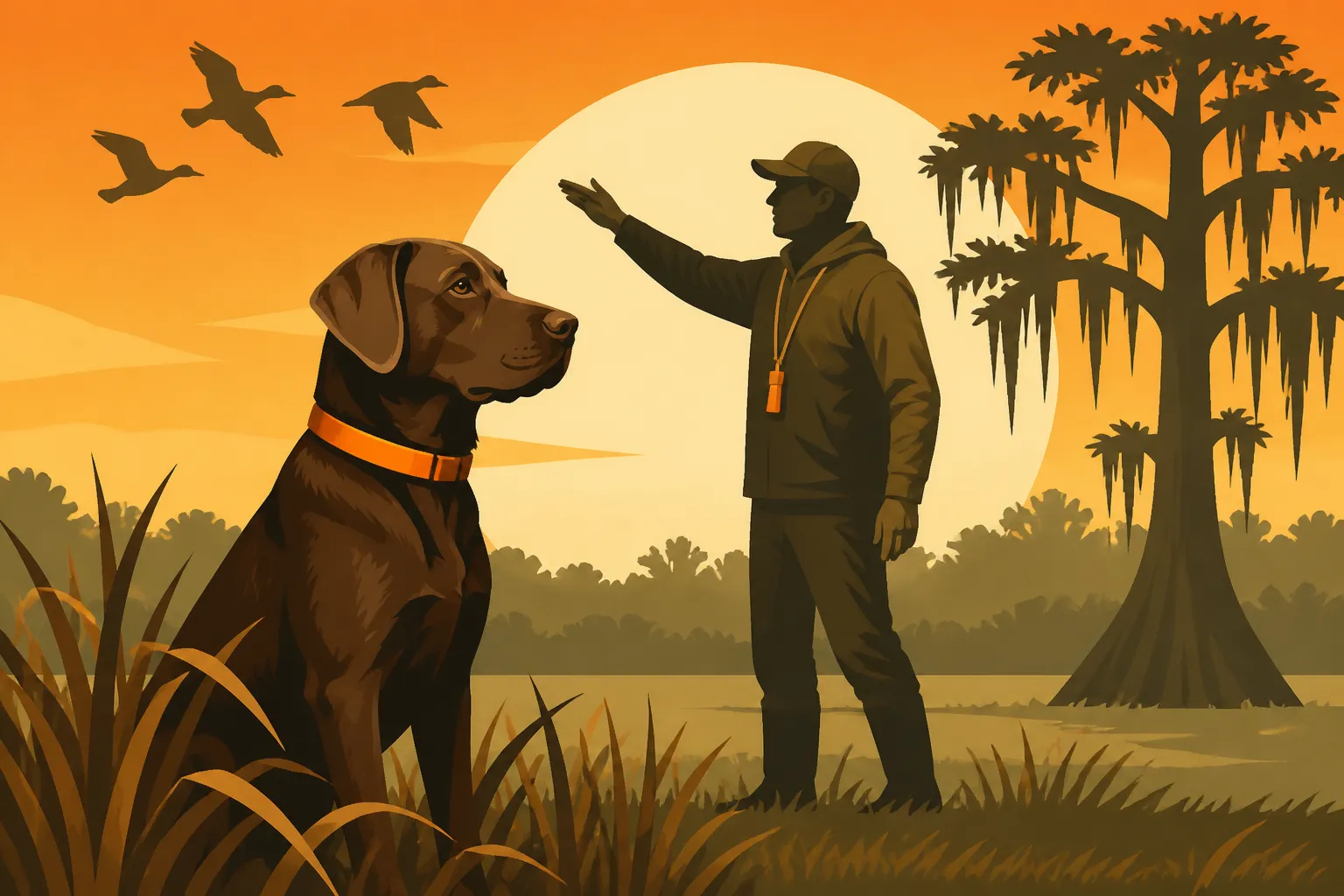
For retriever training, you’re looking for water access and open areas where you can throw dummies or bumpers. Many WMAs with bayous, canals, or ponds might offer potential, but again, check for specific "dog training" regulations. You want areas that are relatively quiet and away from active hunting pressure. Early spring or late summer, outside of waterfowl seasons, often present the best windows. You don't want to be flinging bumpers while someone is trying to call in a flock of teal or working a deer stand.
Look for less-trafficked boat launches, old logging roads that dead-end at a slough, or even designated "day-use" areas on WMAs that might have water features. Tools like onX Hunt can be incredibly helpful here. You can scout potential water sources, identify public land boundaries to avoid trespassing, and even check topography for open areas or clearings on the map before you ever set foot on the ground. Remember, quiet means less distraction for your dog and less chance of bothering other public land users. When thinking about Waterfowl Hunting the Louisiana Coastal Marsh, off-season training is crucial to get those retrieves polished.
Locating Spots for Scent Work and Hog Dog Training
For scent work, tracking, or training a hog dog, you'll need areas with more cover and varied terrain. National Forests or larger WMAs with extensive timber or thickets might be suitable. However, for hog dogs, the challenge isn't just finding the terrain, but also the specific regulations regarding dogs and feral hogs. While Hunting Louisiana's Year-Round Feral Hogs is permitted year-round on private land, public land rules often dictate specific seasons or methods for hog hunting with dogs, and these may not always align with general "dog training."
When looking for these spots, think about areas with a history of hog activity or places that offer good tracking opportunities away from primary recreational trails. Again, onX Hunt or similar mapping apps like GoHunt can help identify dense cover, old roads, and remote sections of public land. You'll want to avoid areas popular with hikers, birdwatchers, or still-hunters who might not appreciate a pack of baying hounds. The goal is to simulate hunting conditions as closely as possible without disrupting others or violating regulations. It's a delicate balance of finding seclusion and appropriate habitat.
| Public Land Type | General Dog Training Rules (Off-Season) | Game-Specific Dog Training (e.g., retrieving, scent work) | Key Considerations |
|---|---|---|---|
| Wildlife Management Areas | Often restricted, specific dates/areas | Highly regulated, WMA-specific rules | Check individual WMA regulations yearly; avoid hunting seasons |
| National Forests | Generally more flexible, leash laws apply | May be permitted outside of specific hunting seasons | Verify with Forest Service; watch for other users |
| National Wildlife Refuges | Very restrictive, often prohibited | Generally prohibited or severely limited | Check NWR-specific visitor rules; minimal dog access |
Best Practices and Etiquette for Public Land Dog Training
Even when you've found a legal spot and checked all the regulations, how you conduct yourself and your dog on public land makes a huge difference. Good etiquette isn't just about being polite; it's about preserving access for all users, including dog trainers, in the long run.
Minimizing Impact and Being a Good Neighbor
One of the biggest frustrations for all public land users is encountering others who don't respect the space or their fellow outdoorsmen. When training your dog, always strive to minimize your impact. This means picking up after your dog, packing out all trash (dummies, spent shells, water bottles), and leaving the area cleaner than you found it. If you're using training collars or electronics, ensure they're functioning properly and not causing undue stress or noise.
Be mindful of others. If you see another hunter, hiker, or birdwatcher, give them a wide berth. If your dog is off-leash, immediately call them in and leash them until you've passed. A friendly greeting and a quick explanation of what you're doing can go a long way in de-escalating any potential tension. Remember, not everyone loves dogs, and some people may even be fearful. Your goal is to be invisible, or at least unobtrusive, so others can enjoy their public land experience too. This kind of respect helps ensure that dog training remains a tolerated and legal activity on these lands.
Safety First: For Your Dog, Yourself, and Wildlife
Safety should always be your top priority. Public lands in Louisiana can be wild and unpredictable. Snakes, alligators, wild hogs, and even other hunters are all potential hazards. Ensure your dog is up-to-date on vaccinations and has proper identification tags. Consider a brightly colored vest for your dog, especially during hunting seasons, to make them visible. Carry a first-aid kit for both yourself and your dog.
Always be aware of your surroundings. If you're in an area known for American Alligators in Louisiana, keep your dog away from the water's edge. If you're near a road, ensure your dog has excellent recall and won't chase scent across traffic. For specialized training like running Feral Hogs Across Louisiana with dogs, ensure you have the proper safety gear, including protective vests for your dogs if necessary, and are familiar with the area. It’s also crucial to remember that disturbing wildlife, especially nesting birds or fawns, is generally illegal and unethical. Your training should never intentionally harass game animals, even if it’s tempting to give a young dog a "real" bird to chase. Ethical training involves simulating, not interfering.
Checking for Closures and Special Events
Public lands are dynamic. They can close unexpectedly for timber operations, prescribed burns, or even specific hunting events like quota hunts. Imagine showing up ready to train, only to find the gates locked or the area swarming with hunters on a special permit hunt. This is a common frustration for many who use public lands. Before heading out, always check the LDWF website for WMA advisories and the National Forest Service website for Kisatchie. These platforms will list any current closures, restrictions, or special events that could impact your training plans. A quick phone call to the local office can also save you a lot of wasted time and frustration. Being informed is not just about legality, but also about efficiency and safety for everyone involved. Scouting Louisiana Public Land Before Season isn't just for finding game; it's for finding available training grounds too.
Disclaimer
This article is for general informational purposes only and does not constitute professional advice. Laws, prices and regulations vary by location and change over time. Consult a qualified professional for guidance on your specific situation.