Timber Cuts and Where Deer Move After
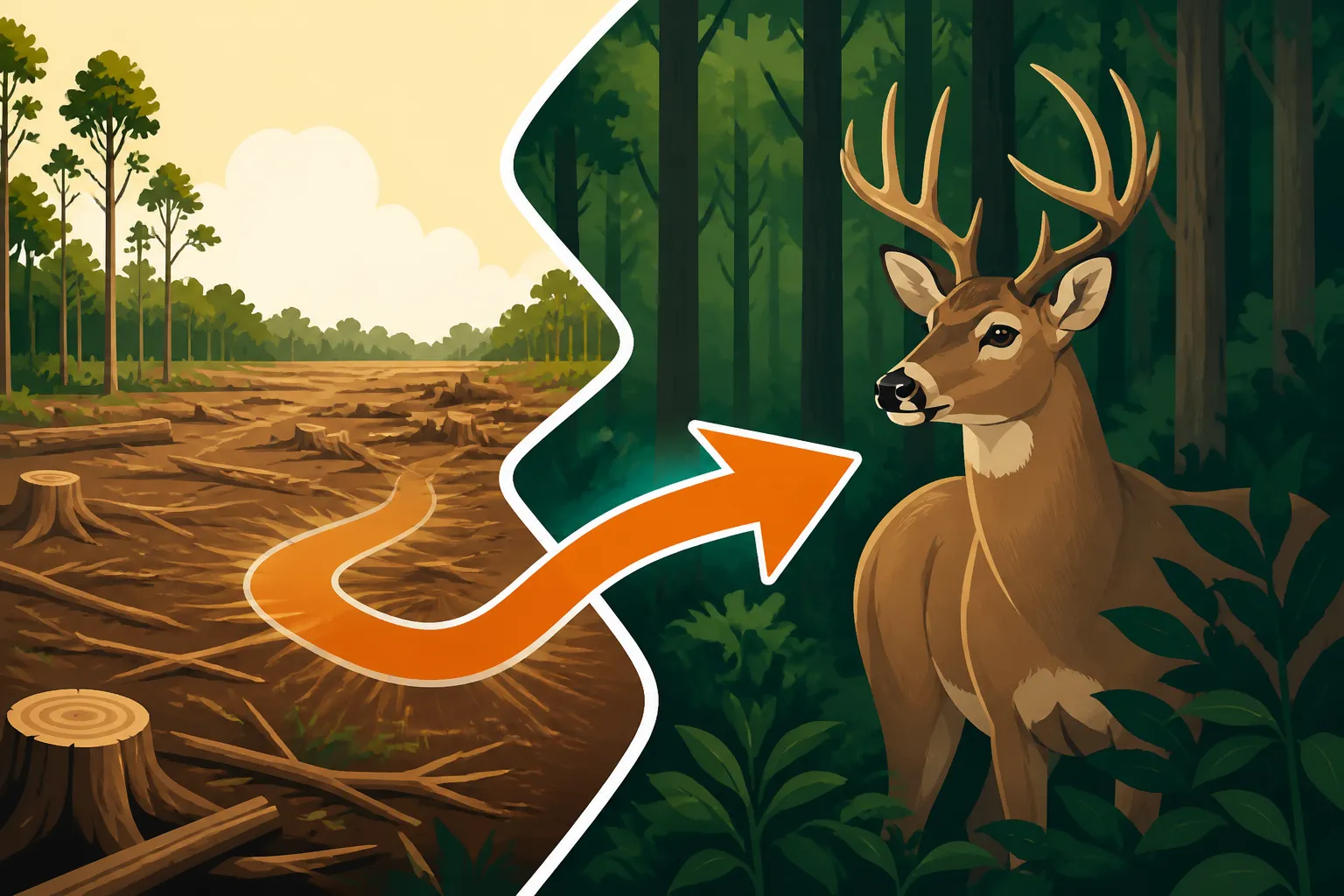
One of the most frustrating things for a Louisiana deer hunter is returning to a favorite block of woods only to find it's been clear-cut or heavily thinned. The familiar cover is gone, the travel routes you relied on are disrupted, and it can feel like your entire season is thrown into disarray. But while timber cuts certainly change the landscape, they don't mean the deer are gone forever; they've simply shifted, and understanding these shifts is key to adapting your hunting strategy and finding success in these newly altered environments.
The Dynamic Impact of Timber Operations on Deer Habitat
Timber harvesting fundamentally alters the ecosystem, and for deer, this means an immediate and often dramatic change in their daily routines. What was once a dense canopy providing consistent shade and hiding spots might now be an open, sun-drenched landscape. These changes, while initially disruptive, often lead to a resurgence of beneficial forage and new bedding opportunities, drawing deer back in.
Immediate Shifts in Food Sources and Cover
When a forest is cut, especially a clear-cut, the sunlight suddenly reaches the forest floor, stimulating a burst of new growth. This immediate impact can be a double-edged sword for deer. On one hand, mature mast-producing trees like oaks might be gone, taking away a primary food source. Deer that relied heavily on acorns or other hard mast will scatter, looking for alternative food in adjacent, uncut timber or agricultural fields. This is why you often see deer pushing into neighboring properties or less disturbed areas right after a cut.
However, the rapid growth of herbaceous plants, briars, and young saplings in the newly exposed soil provides a bounty of fresh browse within months. Think about the tender shoots of blackberry, honeysuckle, and young hardwood sprouts that quickly emerge. These are highly palatable to deer and offer a nutritional boost, particularly in the fall and winter when other food sources might be scarce. The challenge for hunters is recognizing this rapid transition from a temporary food void to an eventual food paradise, which influences Late-Season Food Sources for Louisiana Whitetails.
New Bedding Areas and Escape Cover Emergence
Beyond food, timber cuts create new bedding and escape cover. A clear-cut, even one that looks barren initially, will quickly become a tangled mess of logging debris, stumps, and dense, low-growing vegetation. This dense regrowth, often reaching chest-high within a couple of years, provides incredible thermal cover in winter and much-needed concealment from predators and hunters alike. Deer will gravitate to these thickets, especially if they are surrounded by or adjacent to existing cover and water sources.
These new bedding areas become critical sanctuary zones. Bucks, particularly, love to bed in the thickest, nastiest spots they can find, using the dense cover to their advantage. They can lie down with a keen sense of security, able to hear and smell approaching threats long before they are seen. When hunting these areas, understanding that deer might be literally bedded down in a briar patch the size of a small car is crucial. They are often far more comfortable and hidden than you might imagine, making Reading a Ridge for Central Louisiana Deer a whole new challenge.
Deciphering Different Timber Cutting Methods and Deer Response
Not all timber cuts are created equal, and the type of harvesting method employed will greatly influence how deer react and utilize the altered landscape. Understanding the common practices in Louisiana's timber industry can give you a significant advantage in predicting deer movement.
Clear-Cuts and Early Regrowth Dynamics
A clear-cut is perhaps the most dramatic transformation. Every merchantable tree is removed from an area, leaving behind a stark, open landscape dotted with stumps and logging slash. While initially unappealing, these areas are often magnets for deer within 1-3 years as the ground vegetation explodes. The first year might see deer skirting the edges, but as briars, pokeberry, and young saplings emerge, the clear-cut quickly becomes a food and cover powerhouse.
Deer in these areas often feed heavily in the early morning and late evening, browsing on the tender new growth. During the day, they will bed down deep within the densest parts of the clear-cut, or they might move to the nearest mature timber edge for a sense of security before returning to feed. The key here is patience; it takes a little time for the browse to come in, but once it does, clear-cuts can hold an incredible number of deer. Hunting a clear-cut requires a different approach, often focusing on the transition zones where the cut meets standing timber, or getting deep into the new growth using ground blinds. This is particularly relevant when Hunting a Clear-Cut Regrowth Edge.
Select Cuts, Thinning, and Their Nuances
Select cutting, or thinning, is a more subtle approach where only certain trees are removed, leaving a more open canopy but maintaining significant tree cover. This might involve removing diseased trees, less desirable species, or thinning to promote the growth of remaining trees. For deer, this creates a less abrupt change. The remaining trees still provide mast, and the increased sunlight reaching the forest floor encourages new undergrowth, often creating a park-like effect that can be easy for deer to navigate and feed in.
Thinning operations can improve deer habitat by boosting herbaceous growth and providing more diverse food options without eliminating all cover. Deer often continue to use these areas, perhaps shifting their preferred bedding locations slightly to take advantage of new thickets or brush piles created by the logging. The scattered canopy provides a mix of sunlight and shade, keeping the ground from becoming too hot or too exposed. These areas can be excellent for still-hunting or setting up stands overlooking newly opened travel corridors and browse patches.
Pine Plantations vs. Hardwood Bottoms
The type of timber being cut also plays a massive role. In north and central Louisiana, pine plantations are common, and these often get clear-cut and replanted with young pines. While young pine stands can offer some browse, they don't produce the hard mast that many deer rely on. Deer in pine-dominated areas will heavily use the early successional growth in clear-cuts, but their patterns will also be tied to any nearby hardwood drains or creek bottoms that offer acorns, pecans, or other mast.
In contrast, hardwood bottomlands, particularly in areas like the Atchafalaya Basin or along river systems, are often managed differently. Here, selective cuts might target specific timber species, but the emphasis is often on maintaining a healthy diversity of mast-producing trees. A cut in a hardwood bottom could open up areas for new growth but might also temporarily remove key food sources. Deer here will adapt by exploiting untouched mast trees or moving to adjacent agricultural fields. Understanding the dominant tree species in an area—whether it's mostly pine, mixed pine-hardwood, or pure bottomland hardwood—is critical for predicting how a cut will affect deer food and movement. Hunting Atchafalaya Basin Swamp Deer provides excellent context for hardwood considerations.
Scouting the Post-Cut Landscape: Tools and Techniques
Returning to a cutover area can feel overwhelming, like starting from scratch. But with the right tools and a keen eye, you can quickly uncover the new patterns of deer movement. Scouting is more critical than ever after a timber operation, and modern technology can be your best friend.
Leveraging Mapping Applications for Scouting
Gone are the days when you needed a paper plat book and a compass to navigate timber company land. Today, mapping applications like onX Hunt or GoHunt are indispensable for post-cut scouting. Before you even set foot in the woods, you can use these apps to:
- Identify recent cuts: Many of these apps update their satellite imagery regularly, allowing you to see where new cuts have occurred, even if they're only a few months old. Look for stark, light-colored patches on the satellite view.
- Analyze adjacent cover: Determine which parts of the cut are next to mature timber, creek bottoms, or agricultural fields. These edges are natural travel corridors.
- Pinpoint terrain features: Even in a clear-cut, subtle changes in elevation, old logging roads, or small drainages can become important deer highways. Use topographic and 3D views to identify these.
- Locate water sources: Deer always need water. If the cut is extensive, identifying ponds, sloughs, or creeks becomes crucial for understanding where deer will concentrate their activity.
By digitally scouting first, you can narrow down your physical scouting efforts to the most promising areas, saving you countless hours of walking through briars and logging debris. When you do hit the ground, you can use the app to mark fresh sign, rub lines, or new trails, building a comprehensive picture of deer movement. Reading Aerial Photos for Central Louisiana Deer details how important these digital tools are.
Identifying New Trails, Browse, and Rub Lines
Once you're on the ground, the real work begins. Deer will quickly establish new travel patterns in a cutover. Look for well-worn trails leading from residual standing timber into the dense regrowth. These paths will often be used heavily as deer transition from bedding to feeding and back again. Pay close attention to trails that parallel the edges of the cut, as these are frequently used as security routes.
Fresh browse is a huge indicator of current deer activity. Examine young saplings, briars, and herbaceous plants for clipped ends or torn leaves. The sheer amount of available food in a clear-cut can make it hard to pinpoint specific feeding areas, but consistent browsing on certain plant species (like blackberry or greenbrier) can indicate a preferred feeding zone.
Don't overlook rub lines and scrape lines, even in new growth. Young bucks will quickly establish their territory, and you'll find rubs on small saplings within the cut, or along the edges where they feel more secure. Scrapes might be less obvious in the disturbed soil, but look for pawed-out spots and overhanging branches with fresh scent. These are still critical communication hubs for deer.
Finding Bedding in Thickets and Logging Slash
Finding bedding areas in post-cut environments requires a specific approach. Deer will often bed in the thickest, densest cover available, which in a clear-cut means piles of logging slash, extremely thick regrowth, or even dense clumps of briars. Think about areas that offer maximum concealment from above and on all sides, usually with good wind access for detecting threats.
When you're walking through a cut, try to identify elevated spots or small knolls that offer a slight advantage for a bedded deer to survey its surroundings. Pay attention to patches of ground that remain relatively dry. Deer will often choose beds with an escape route in mind, usually leading into even thicker cover or downwind into a protected draw. Approaching these areas cautiously, always playing the wind, is paramount to avoid blowing deer out of their sanctuary. Table 1 outlines the different aspects of deer behavior in cutover areas.
Table 1: Deer Behavior in Common Louisiana Timber Cut Types
| Feature/Behavior | Clear-Cut (0-5 Years Post-Cut) | Select Cut/Thinning (Any Age) |
|---|---|---|
| Initial Impact | High disruption, temporary displacement. | Moderate disruption, deer adapt quickly. |
| Food Sources | Initial loss of mast, rapid emergence of herbaceous browse, briars, young saplings. | Continued access to mast, increased understory browse due to more sunlight. |
| Cover/Bedding | Dense, low-growing regrowth, logging slash piles; excellent thermal & escape cover. | Increased ground cover, brush piles, maintained tree canopy for security. |
| Travel Patterns | Heavily utilize edges, logging roads, transition zones; new trails emerge deep within growth. | Continue using established trails, but new subtle paths may form where canopy opens. |
| Visibility for Hunter | Very low within dense regrowth, good along edges. | Variable, generally better than clear-cut but still challenging in thickets. |
| Optimal Hunting Time | Early season (new browse), late season (thermal cover), rut (cruising edges). | Throughout season, especially when mast drops or during the rut for travel. |
Crafting Your Hunting Strategy for Cutover Areas
Hunting in a timber cut requires adaptability and a willingness to embrace new tactics. What worked in the mature timber beforehand might be completely ineffective now. Your strategy needs to align with how deer are using the new landscape for food, cover, and travel.
Strategic Stand Placement Near Edges and Transitions
The edges where a timber cut meets mature timber, a creek, a field, or a different type of habitat are often the most productive places to set up a stand. Deer naturally use these transition zones as travel corridors, offering a blend of security and access to food. Look for pinch points along these edges—places where deer are funneled through a narrower corridor due to terrain, dense thickets, or water.
Consider factors like wind direction and access when choosing a stand site. You'll want to be able to get into and out of your stand without alerting deer. A stand overlooking a clear-cut edge that offers a good view into the emerging browse, especially if it connects to a known bedding area in the cut, can be deadly. In thinned areas, look for openings where new browse is coming up, or where deer trails intersect. Pay attention to how the deer are using these edges during different parts of the day; they might feed out into the cut at dusk and dawn, then retreat to the timber for midday bedding. This can be critical for Hanging a Stand on a Kisatchie Ridge or any similar topography.
Still-Hunting or Driving New Thickets
Sometimes, setting a stand just won't cut it, especially in the thickest parts of a clear-cut. This is where more active hunting methods like still-hunting or carefully executed deer drives come into play. Still-hunting involves moving very slowly and deliberately through the woods, taking a few steps, then pausing for several minutes to observe and listen. In thick, noisy environments like a clear-cut, this slow approach can allow you to spot a bedded deer before it bolts, or catch a glimpse of one moving through the dense cover. Move into the wind, use binoculars to pick apart the cover, and be ready to shoot quickly.
For larger, impenetrable clear-cuts or dense thinned areas, a small deer drive with three or four hunters can be incredibly effective. Position standers along the likely escape routes or edges of the cut, while one or two drivers slowly push through the thickest cover. The goal isn't to blast through, but to gently nudge deer out of their beds and past the standers. This is a tactic often employed for Deer Drives With Three or Four Hunters, requiring careful planning and communication to ensure safety and effectiveness. Just remember, safety is always paramount, and knowing where everyone is at all times is non-negotiable.
Timing Your Hunts and Understanding Pressure
Deer in cutover areas, especially on public land, can be highly sensitive to pressure. If an area gets hunted heavily, deer will quickly become nocturnal or move to adjacent properties that offer more sanctuary. Timing your hunts to avoid peak pressure, such as the initial opening days of gun season, can make a huge difference. Consider hunting weekdays, or exploring parts of the cut that are harder to access, as these often hold unpressured deer.
Also, consider the time of year. Early in the archery season, when the new browse is super tender, clear-cuts can be fantastic. As the season progresses and cold fronts roll in, the thermal cover provided by dense regrowth becomes invaluable, drawing deer into the thickets for warmth. During the rut, bucks will often cruise the edges of clear-cuts, looking for does that are feeding in the abundant new growth. Understanding these seasonal shifts in deer needs will help you decide when and where to focus your efforts. Don't forget to account for how Hunting Pressure on Louisiana Public Land affects deer behavior.
Disclaimer
This article is for general informational purposes only and does not constitute professional advice. Laws, prices and regulations vary by location and change over time. Consult a qualified professional for guidance on your specific situation.