Louisiana Whitetail Color Phase Rarities
You've been out in the Louisiana woods for years, seen countless deer, and maybe even taken your fair share of venison home. Most of the time, what you see is that familiar, beautiful brown coat, varying shades of tan, gray, and rust depending on the season and light. But every now and then, a tale surfaces, or you catch a fleeting glimpse yourself, of something truly out of the ordinary—a deer that doesn't quite fit the mold, a whitetail whose coat defies the norm. This guide is all about those rare, unusual color phases in Louisiana whitetails, exploring what causes them and what it means for the deer and those of us who appreciate them.
Beyond the Brown: Understanding Typical Whitetail Coloration
Before we dive into the truly unique, let's ground ourselves in what's considered "normal" for our Louisiana whitetails. The vast majority of deer you encounter, from the piney hills of north Louisiana down to the river bottoms, sport a relatively consistent look. Understanding this baseline helps us truly appreciate the anomalies.
The Standard Coat: A Blend of Adaptation
A typical Louisiana whitetail's coat is a masterclass in natural camouflage. In summer, you'll usually see a reddish-brown hue, often called the "red coat," which helps them blend into the green foliage of the swamps, forests, and fields. As cooler weather approaches and the leaves turn, so does the deer's coat. They shed that summer hair and grow a thicker, often grayer or brownish-gray "blue coat" for the winter. This thicker, darker coat provides better insulation against those surprisingly chilly Louisiana mornings and helps them disappear among the bare trees and muted winter landscape. It’s not just one color; it’s a mosaic of individual hairs, each with different pigments, working together to create that overall effect. This adaptable coloration is why you can hunt the same area throughout Louisiana Deer Hunting Area by Area and notice distinct shifts in their appearance.
Beyond these broad seasonal changes, individual deer can also have subtle variations in their brown or gray tones. Some might appear a bit lighter, others a touch darker, influenced by their age, sex, diet, and even the local soil type. The hair itself is hollow, providing insulation, and the way light reflects off it plays a big part in the color we perceive. It's a complex system designed over millennia to help them survive and thrive in their diverse environments across the state. We’re talking about animals that are born camouflaged with those white spots, which then fade into the standard adult coat. It’s a functional, beautiful design.
Seasonal Shifts and Regional Variations
Louisiana's deer herd, as covered in White-Tailed Deer Across Louisiana, exhibits these standard color shifts consistently. Come August and September, as bow season starts, you’ll see many bucks still holding onto that reddish summer coat, especially early in When Louisiana's Archery Season Opens. By the time gun season rolls around in November, most deer have transitioned to their denser, grayer winter coats. This is a crucial adaptation for surviving our mild but occasionally biting winters. Think about a crisp December morning in Kisatchie National Forest; a deer with a thick, grayish coat is practically invisible among the cypress and oaks.
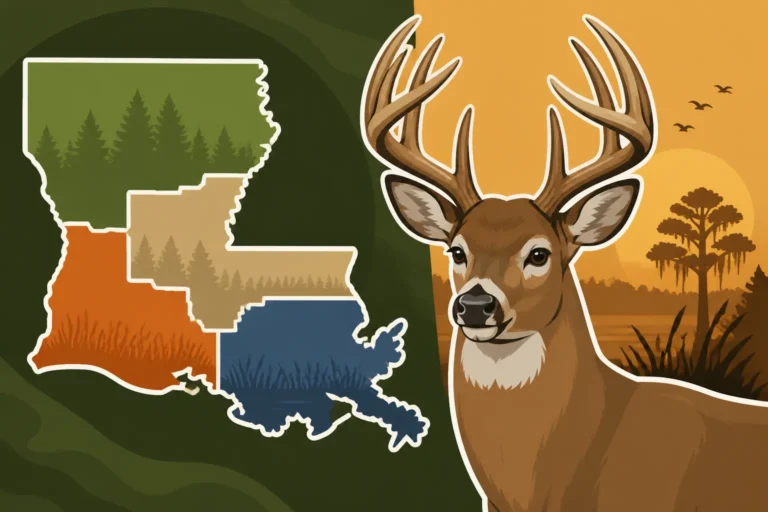
Beyond seasons, there are also some regional tendencies. Deer in more open agricultural areas, like those in the northeastern parishes, might appear slightly different in shade compared to those living in the dense, shaded bottomlands of the Atchafalaya Basin. The availability of specific nutrients in their forage, prolonged exposure to sunlight, and even the genetics prevalent in certain local populations can subtly influence the average coat color. For example, some folks swear deer from the Florida Parishes tend to be a bit redder, while those from the Tensas Basin might lean more towards a darker brown. These aren't distinct color phases, but rather the normal spectrum within the whitetail population, making a truly "rare" coloration all the more striking when it appears.
True Anomalies: Unpacking Whitetail Color Phases
Now for the really exciting stuff! While most deer blend in, a select few are born with genetic conditions that cause their coats to display truly unusual color patterns. These aren't just subtle variations; these are striking differences that make them stand out dramatically from the typical herd.
The Ghost of the Woods: Albinism
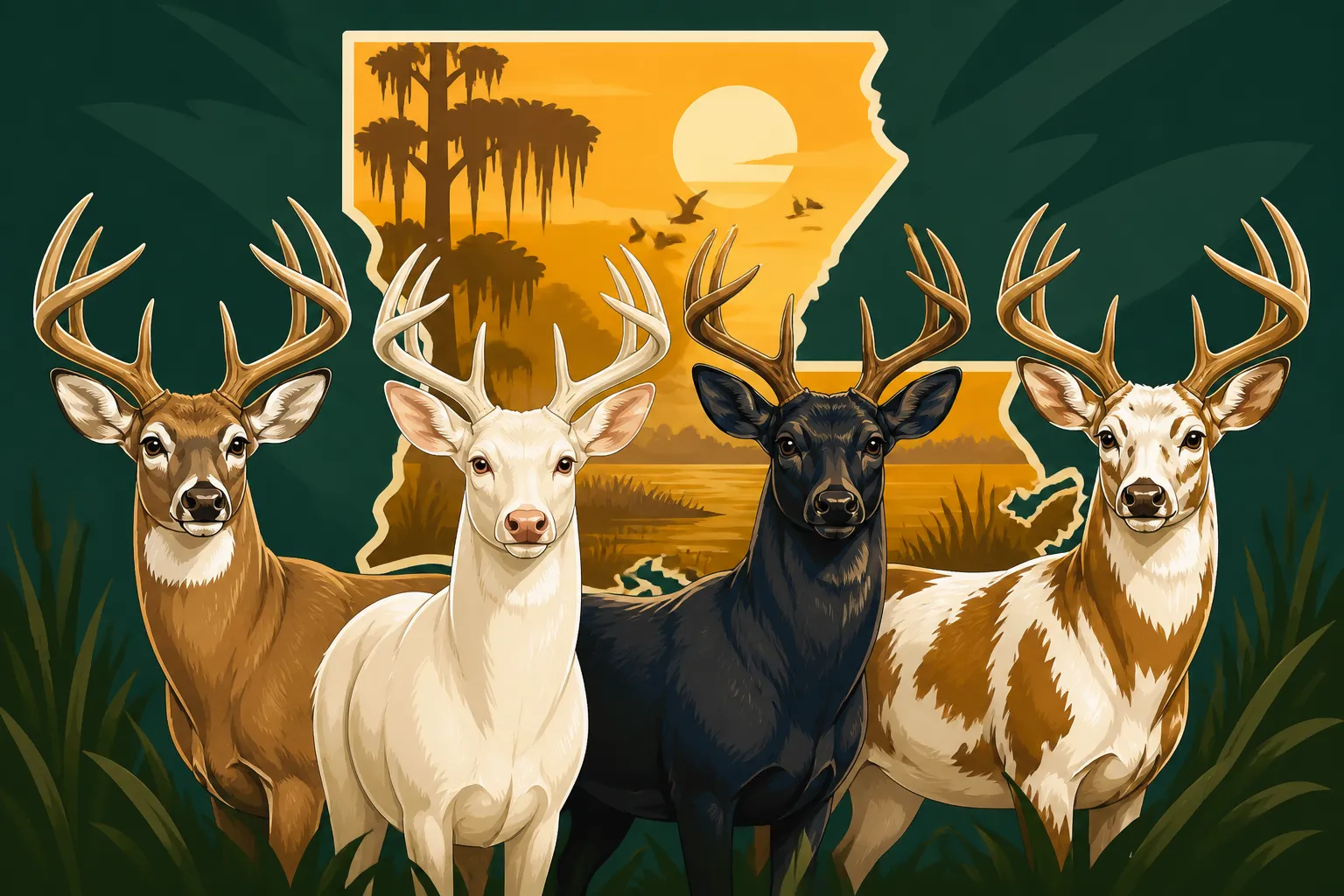
When we talk about true albinism in whitetails, we're talking about a deer that lacks all pigment. This means a pure white coat, pink eyes, and pink hooves. It's a genetic mutation that prevents the production of melanin, the pigment responsible for color in skin, hair, and eyes. Albinism is incredibly rare in the wild, not just in Louisiana, but across their entire range. Seeing an albino deer is like seeing a ghost in the woods, a truly ethereal experience.
The pink eyes are a key identifier, as they are a result of blood vessels showing through the unpigmented iris. These deer often have poor eyesight, especially in bright sunlight, which can make their lives in the wild exceptionally challenging. They stand out like a beacon to predators, lacking any natural camouflage. Because of these disadvantages, their survival rates are significantly lower than their normally colored counterparts. If you're ever lucky enough to spot one, it's an unforgettable moment that truly underscores the incredible diversity of nature, even within a single species.
The Anti-Ghost: Melanism
On the opposite end of the spectrum from albinism, we have melanism. This is a condition where a deer produces excessive amounts of melanin, resulting in an almost entirely black or very dark brown coat. While albino deer are often called "white deer," melanistic deer are often referred to as "black deer." Just like albinism, true melanism is exceedingly rare in whitetails. You might see a very dark brown deer, especially in certain areas, but a truly melanistic individual with a jet-black coat is a sight that few hunters or naturalists ever witness.
Melanistic deer are also at a disadvantage in many environments. While the dark coat might offer some camouflage in very dark, shaded swamps, it can make them stand out against lighter backgrounds, especially in snow or open fields. Their survival challenges might not be as pronounced as those of an albino deer, but they still face obstacles in blending in with their surroundings, which is a deer's primary defense mechanism. Think about trying to hide a black deer in a field of green grass or brown leaves—it's tough! These genetic quirks are fascinating glimpses into the random lottery of genes that makes each animal unique.
Piebald and Leucistic Deer: A Mosaic of White and Brown
Perhaps the most commonly reported color anomaly in whitetails, both in Louisiana and beyond, are piebald and leucistic deer. These two conditions are often confused, but they have distinct differences:
- Piebald Deer: These deer have irregular patches of white hair mixed with their normal brown coat. It's like a painting, with splotches and patterns of white appearing on different parts of their body. This condition is caused by a recessive gene. Unlike albinos, piebald deer have normal pigmentation in their eyes (brown) and hooves (black). The amount of white can vary wildly, from just a few small patches on the legs or chest to almost completely white with just a few brown spots. Along with the unique coloration, piebald deer often exhibit other physical abnormalities, such as a Roman nose, short legs, bowed legs, or even internal organ issues. These associated defects can seriously impact their health and longevity.
- Leucistic Deer: Leucism is similar to albinism in that it results in a lack of pigment, but it's a partial loss. Leucistic deer are often much lighter overall than a normal deer, sometimes appearing very pale tan or creamy white, but they retain some pigment. Crucially, their eyes are typically brown or normal colored, not pink. They might also have normal-colored hooves. The key difference from albinism is that some pigment cells are present, just not fully expressed. They generally don't suffer from the same associated health issues as piebald deer. If you see a deer that is mostly white but has dark eyes, it's likely leucistic rather than albino.
These variations, particularly piebald deer, are more common than true albinos or melanistics, but still very rare to encounter. They offer a striking contrast to the typical herd, and seeing one is a memorable experience. It’s a stark reminder that even within the familiar species we hunt, nature always has a few surprises up its sleeve.
Genetic Quirks and Their Impact on the Herd
These rare color phases aren't just pretty or interesting to look at; they're direct results of specific genetic expressions and can have significant implications for the individual deer and, by extension, the local deer population.
The Role of Genetics in Color Anomalies
At its core, all these color phase rarities boil down to genetics. For most, we're talking about recessive genes. This means a deer needs to inherit a copy of the specific gene from both parents to express the trait. If only one parent passes on the gene, the deer will likely appear normal but will be a "carrier" and can pass that recessive gene on to its offspring. This is why you can have a normal-looking doe and buck produce an albino or piebald fawn. It's just the luck of the genetic draw. This pattern explains why these traits are so rare; the odds of two carriers mating are lower, and the odds of them both passing on the recessive gene are even lower still.
Environmental factors, diet, or habitat usually don't cause these color changes. It's all locked into their DNA. Because these traits are often recessive, they can persist in a population at very low levels, surfacing only when the right combination of genes occurs. This makes studying them a challenge, as they are not easily predictable. Researchers often track bloodlines on controlled properties to understand the genetic pathways, but in the wild, it's truly a game of chance. For instance, Louisiana Whitetail Color Phase Rarities can offer a glimpse into the genetic diversity hiding within even a robust Louisiana Deer Population Estimate.
Survival Challenges for Uniquely Colored Deer
While beautiful and fascinating to us, these unusual colorations often come with significant survival disadvantages in the wild.
Here's a breakdown of common challenges:
| Color Phase | Appearance | Genetic Basis | Primary Survival Challenges |
|---|---|---|---|
| Albino | Pure white coat, pink eyes, pink hooves | Recessive, no melanin | Poor eyesight, extreme lack of camouflage, increased predation risk |
| Melanistic | Jet black or very dark brown coat | Recessive, excess melanin | Stands out in non-dark environments, potential heat absorption issues |
| Piebald | Patches of white and normal brown, dark eyes | Recessive | Lack of camouflage, often accompanied by other physical deformities |
| Leucistic | Pale white or creamy coat, dark eyes, dark hooves | Partial pigment loss | Reduced camouflage, though often less severe than albinism |
As you can see, camouflage is king in the deer world. A deer that stands out—whether brilliant white or jet black—is far more visible to predators like coyotes, bobcats, and even bears where they range in Louisiana. An albino deer, with its glaring white coat, essentially paints a target on its back. If it also has poor eyesight, its chances diminish further. Piebald deer, with their often-associated physical deformities like malformed hooves or bowed legs, might struggle to run effectively, browse efficiently, or even survive harsh conditions. While seeing a piebald deer is a rare treat, it’s a bittersweet one, knowing the animal often faces a tougher road than its brown counterparts. These challenges contribute to why you see so few of them; natural selection tends to weed out traits that hinder survival.
Ethical Considerations and Management Perspectives
Given their rarity and potential survival challenges, uniquely colored deer sometimes raise questions about management. In most areas of Louisiana, these deer are still considered part of the wild deer population and are subject to the same hunting regulations as any other whitetail. However, some areas, or individual landowners, might choose to protect these rare animals, opting not to harvest them. There's no statewide rule protecting them, but it's a personal ethical decision many hunters consider. For many, harvesting such a rare animal feels like a disservice to its unique place in nature.
From a biological standpoint, managing for these rare traits isn't typically a conservation priority because they are usually anomalies and don't represent a significant portion of the herd's genetic health. The focus of groups like the Louisiana Department of Wildlife and Fisheries (LDWF) is generally on maintaining healthy, robust overall deer populations, as detailed in reports like Louisiana Deer Population Estimate. Occasionally, in very small, localized populations, a higher incidence of these traits might indicate inbreeding or a lack of genetic diversity, which could be a concern. But for the most part, these color rarities are viewed as interesting quirks of nature rather than a management issue.
Encountering a Rare Whitetail in Louisiana
So, what are your chances of actually seeing one of these fantastically colored deer while out hunting or exploring Louisiana's natural beauty? And what should you do if you are lucky enough to witness such a sight?
Where and When You Might See One
Honestly, spotting a true color phase rarity like an albino, melanistic, or even a strongly piebald deer in Louisiana is like finding a needle in a haystack. It can happen anywhere deer live, but there are no specific "hotspots" for these genetic anomalies. They pop up randomly. Your best bet for seeing one is simply to spend more time in the woods, especially in areas with healthy deer populations. The more deer eyes you're glassing, the higher your (still very slim) chances.
They're not more active at certain times of day or specific seasons; they live and behave like any other deer, albeit often with increased caution due to their lack of camouflage. You might stumble upon one while Scouting Louisiana Public Land Before Season or while sitting patiently in your stand during the rut, perhaps observing Deer Drives With Three or Four Hunters. There have been reports of these deer in various parishes across Louisiana, from the agricultural fields of the northeast to the dense swamps of the south. They're just extremely uncommon everywhere.
The Rarity Factor in the Bayou State
To put it in perspective, the vast majority of deer harvested each year in Louisiana are the standard brown and gray phases. The number of recorded albino, melanistic, or piebald deer is incredibly low. While there isn't an official statewide registry just for color phases, hunters and landowners occasionally share photos and stories of these unique sightings. If you frequent deer camps across the state, you might hear a legend or two about "the white deer of the swamp" or "the ghost buck" that someone's grandpappy swore he saw. These stories become part of the local lore, which speaks to just how rare and impactful these sightings are.
Many hunters consider seeing one of these rare deer to be a stroke of immense luck, a testament to the wildness and unpredictable beauty of nature. It's the kind of experience that makes for a fantastic story around the campfire at a Louisiana Deer Camp Traditions. Some people even refer to these rare sightings as "trophies of the eye," meaning the memory itself is more valuable than any physical harvest.
Documenting Your Sighting and Contributing to Knowledge
If you are one of the fortunate few to spot a rare color phase whitetail in Louisiana, consider documenting it! A good photograph or video, if safely and ethically obtained, can be a fantastic way to share your experience and even contribute to a broader understanding of deer genetics. Just be mindful of the deer's well-being and don't disturb it.
You can often share your sightings with local wildlife biologists or through resources like GoHunt, which sometimes encourages members to report unusual observations. While they might not be able to do specific research on every individual deer, collecting these anecdotal reports helps paint a picture of where and how often these anomalies occur. Remember, these are wild animals, and their survival is often precarious. Appreciate the moment, respect their space, and carry that story with you. Every sighting, every detail, adds to our collective appreciation for the Louisiana Wildlife Disease Monitoring and overall health of our state's diverse game species.
Disclaimer
This article is for general informational purposes only and does not constitute professional advice. Laws, prices and regulations vary by location and change over time. Consult a qualified professional for guidance on your specific situation.