Louisiana Federal Duck Stamp Requirement
Navigating the myriad of permits and licenses required for hunting in Louisiana can feel like a swamp maze, especially when you start adding in federal regulations on top of our state's specific rules. It's easy to get confused about what's absolutely essential to have in your pocket before you even think about setting foot in a duck blind. This guide is here to untangle the specific requirements around the Federal Duck Stamp for Louisiana hunters, ensuring you're fully compliant and ready for waterfowl season.
Understanding the Federal Duck Stamp in Louisiana
For those of us who live and breathe waterfowl season, the Federal Duck Stamp is more than just another piece of paper; it’s a cornerstone of conservation that directly benefits the habitats ducks and geese rely on, right here in Louisiana and across the country. It’s a bit different from your regular state hunting license, and understanding its unique role is key.
What Exactly is a Federal Duck Stamp?
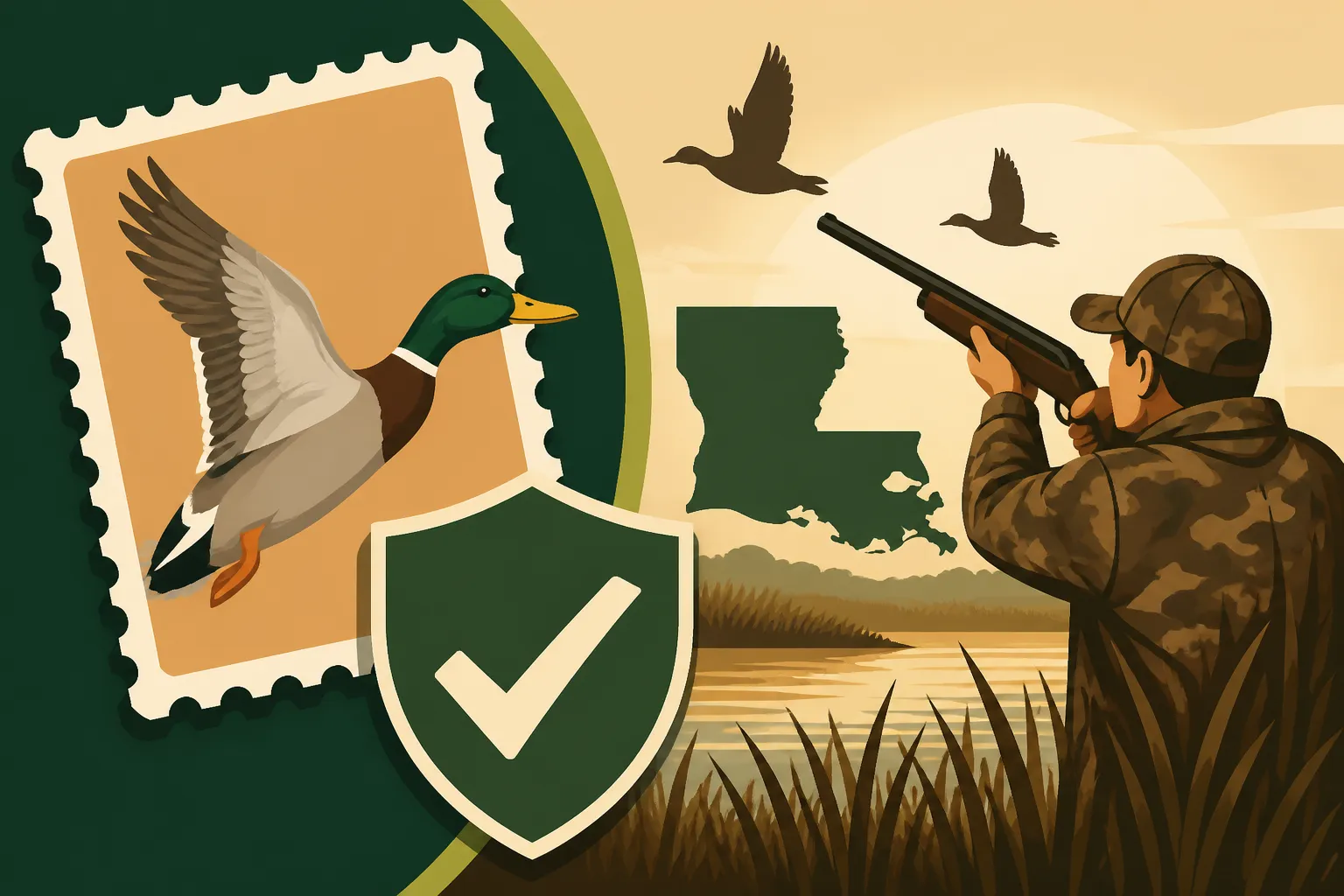
Officially known as the Migratory Bird Hunting and Conservation Stamp, the Federal Duck Stamp is an adhesive stamp issued annually by the U.S. Fish and Wildlife Service. Its primary purpose, dating back to 1934, is to generate funds for the conservation of wetland habitats and wildlife refuges. When you purchase this stamp, 98 cents of every dollar goes directly to the Migratory Bird Conservation Fund, which is then used to acquire and protect wetlands, often providing critical breeding, resting, and wintering grounds for migratory birds.
It's crucial to remember that this isn't a Louisiana state permit. It's a federal requirement that applies to waterfowl hunters nationwide. So, whether you're working flooded timber for mallards in north Louisiana or laying out in a rice field down in Cameron Parish, this federal stamp is non-negotiable. Each stamp is valid from July 1st through June 30th of the following year, regardless of when you purchase it within that timeframe, so it's an annual renewal.
Who Needs a Federal Duck Stamp?
The rule is pretty straightforward: if you're 16 years of age or older and you plan to hunt migratory waterfowl (ducks, geese, swans) in the United States, you need a Federal Duck Stamp. This applies whether you're a seasoned veteran of the Louisiana marsh or a first-timer just getting into the sport. There are a few key exceptions, though. Hunters under 16 years old are not required to possess a Federal Duck Stamp. Additionally, individuals who hunt certain other migratory birds, like coots or gallinules, typically do not need a Federal Duck Stamp if those are the only migratory birds they are hunting. However, the safest bet is always to consult the latest Louisiana hunting regulations if you're unsure about specific species or situations.
It's not just about hunting either; many wildlife enthusiasts, bird watchers, and stamp collectors purchase the stamp each year as a way to support conservation, even if they never step foot in a blind. It's a small investment with a massive return for our wetlands.
Why it's More Than Just a Permit
Beyond being a legal requirement, the Federal Duck Stamp represents a powerful, hunter-driven conservation success story. The funds generated have been instrumental in protecting millions of acres of wetlands and associated habitats across the country. Here in Louisiana, where we are such a critical part of the Mississippi Flyway, these conservation efforts directly benefit the very birds that wing their way through our state each winter.
Think about it: every time you purchase that stamp, you're directly contributing to the acquisition and preservation of places like Big Branch Marsh National Wildlife Refuge or the Lacassine National Wildlife Refuge. These aren't just abstract concepts; they are tangible, vital ecosystems that provide food, shelter, and breeding grounds for countless species, not just ducks. This direct funding mechanism, largely supported by hunters, is a testament to the community's commitment to ensuring vibrant wildlife populations and healthy ecosystems for generations to come. It’s a point of pride knowing that our passion for hunting fuels such impactful conservation work.
Purchasing and Carrying Your Federal Duck Stamp
Getting your hands on a Federal Duck Stamp is relatively easy, but understanding the nuances of how to purchase and properly carry it can prevent a potential headache (and a fine) when you’re out in the field.
Where to Buy Your Federal Duck Stamp
There are several convenient ways to acquire your annual Federal Duck Stamp. The most traditional method is visiting a U.S. Post Office. Many larger sporting goods retailers, like Academy Sports + Outdoors or even Walmart stores with a sporting goods section, also carry them. Beyond that, many local hunting and fishing shops around Louisiana understand the needs of their customers and will stock the stamps.
However, in this digital age, the most common way for hunters to purchase their stamp is electronically. You can buy an e-stamp online through the U.S. Fish and Wildlife Service’s website, or often directly through the Louisiana Department of Wildlife and Fisheries (LDWF) licensing portal when you're purchasing your other state licenses. When you buy an e-stamp, you’ll receive a receipt that serves as your temporary permit. This electronic proof of purchase is usually valid for 45 days. It's crucial during this 45-day period to keep that e-stamp receipt with you, whether printed out or saved digitally on your phone. The physical stamp will then be mailed to you, and once it arrives, you must sign it across the face in ink to validate it. After the 45-day window, only the signed physical stamp is considered valid proof of purchase. Make sure to update your digital hunting profiles, like those found on the GoHunt platform, with your new stamp details, which can help keep all your licensing information organized.
The Cost and Annual Renewal
The Federal Duck Stamp typically costs around $25. While this amount might seem small, the collective funds generated from these sales are immense, contributing millions annually to conservation efforts. Remember, this is an annual purchase. It doesn't roll over, nor does it last for multiple seasons. Every hunting season that includes migratory waterfowl, you'll need a new, current Federal Duck Stamp dated for that specific year. Setting a reminder to purchase it before opening day of duck season, often in September or October for Louisiana, is a smart move. It's one of those easy-to-forget items that can really put a damper on an otherwise perfect morning hunt if a game warden checks your paperwork.
Proper Possession While Hunting
Once you have your physical Federal Duck Stamp, there’s one critical step: you must sign it across the face in ink. An unsigned stamp is not valid. Once signed, you must have it in your possession while hunting migratory waterfowl. Most hunters simply place it with their other licenses in their wallet or hunting vest. If you’re still within that 45-day window of an e-stamp purchase, make sure you have the printed or digital copy of your temporary permit on your person.
Game wardens routinely check for proper licensing, including the Federal Duck Stamp, during waterfowl season. If you are found hunting without a valid, properly signed stamp (or temporary e-stamp permit), you could face a hefty fine. It's a serious regulation because of its direct link to conservation funding. Always double-check your gear before heading out, confirming you have your basic hunting license, migratory bird certification, and that signed Federal Duck Stamp. Platforms like GoHunt can help you track license expiry dates and ensure you're always up to date.
Navigating State and Federal Requirements Together
Hunting waterfowl in Louisiana means juggling both federal and state regulations. It's not enough to just have a Federal Duck Stamp; you also need to satisfy Louisiana's specific licensing requirements to ensure a smooth, legal hunt.
Louisiana's State Duck License Requirements
While the Federal Duck Stamp covers the migratory bird aspect from a national perspective, Louisiana has its own set of licenses and certifications you'll need. First, you'll obviously need a valid Louisiana hunting license. This could be a resident or nonresident annual license, or a specific five-day nonresident option. Beyond that, for migratory birds, including waterfowl, you'll need a Louisiana Migratory Bird Hunting License. This is a state-specific add-on.
But wait, there's one more piece to the puzzle for migratory bird hunters: the Harvest Information Program (HIP) certification. This is free, but mandatory. You'll sign up for HIP when you purchase your state hunting license or migratory bird license. This program collects data on migratory bird harvests, which is crucial for managing populations. So, to recap for an adult waterfowl hunter in Louisiana, you're looking at:
- Louisiana Basic Hunting License (Resident or Nonresident)
- Louisiana Migratory Bird Hunting License
- HIP Certification (free, but mandatory)
- Federal Duck Stamp (signed)
It might seem like a lot, but each piece serves an important purpose, from state revenue to federal conservation. For detailed information on state requirements, you can always check the LDWF website or their handy LDWF App.
Specific Scenarios and Common Questions
Let's look at a few common scenarios that often bring up questions about duck stamp requirements:
- Hunting on Private Land vs. WMA: The rules don't change based on land ownership. Whether you're hunting ducks on private property in a flooded timber hole or a public Wildlife Management Area like Sherburne, the Federal Duck Stamp is required. However, WMAs often have additional permit requirements, so always check the specific WMA regulations before you go. Remember to check out the details on Louisiana Wildlife Management Areas for any specific WMA permits you might need.
- Youth Hunters: As mentioned, hunters under 16 years of age are exempt from needing a Federal Duck Stamp. However, they may still need specific state youth hunting licenses or permits depending on the species and location. Always review the Louisiana regulations regarding Louisiana Youth and Veterans Weekend Rules or other youth-specific hunting laws.
- Non-residents: If you're coming to Louisiana from out of state to enjoy our legendary waterfowl hunting, you absolutely need a Federal Duck Stamp. In addition, you'll need a nonresident Louisiana Basic Hunting License and a nonresident Louisiana Migratory Bird Hunting License, along with the HIP certification. The Federal Duck Stamp requirement is universal, regardless of your state of residence. You can find more information about Louisiana Nonresident Hunting License Options on the LDWF website.
- When a Stamp Isn't Required: If you are only hunting non-migratory game birds (like pheasants, grouse, or turkeys – though pheasants and grouse aren't typically found in Louisiana), or non-waterfowl migratory birds like doves, woodcock, or snipe, you do not need a Federal Duck Stamp. However, you do still need your Louisiana Basic Hunting License, Louisiana Migratory Bird Hunting License, and HIP certification for these species. If your plan is to head out for Squirrel and Small Game Hunting in Louisiana, you won't need the federal stamp either.
Here’s a quick comparison table to help keep things straight:
| Requirement | Federal Duck Stamp | Louisiana Basic Hunting License | Louisiana Migratory Bird Hunting License | HIP Certification |
|---|---|---|---|---|
| Who Needs It | Hunters 16+ for waterfowl | All hunters (unless exempt) | All migratory bird hunters | All migratory bird hunters |
| Purpose | Wetland conservation | State hunting privileges | State migratory bird privileges | Harvest data collection |
| Cost (approx.) | $25 (annual) | Varies by residency (annual) | ~$5.50 (annual) | Free (annual) |
| Where to Buy | Post Office, online, retailers | LDWF online, retailers | LDWF online, retailers | LDWF online (with license) |
| Required For | Ducks, Geese, Swans | All legal game | Ducks, Geese, Swans, Doves, Woodcock, Snipe | All migratory birds |
| Possession Rule | Signed physical stamp or e-stamp receipt | Physical license or digital proof | Physical license or digital proof | Recorded with license |
Understanding these distinctions is crucial. It’s always better to be over-prepared with your licenses than under-prepared.
The Impact of Your Federal Duck Stamp on Louisiana Conservation
For Louisiana, a state so rich in wetlands and vital to the annual migration of millions of waterfowl, the Federal Duck Stamp isn't just a regulatory formality; it's a financial lifeline. Your purchase directly fuels efforts that protect and enhance the very landscapes that define our hunting heritage.
Direct Funding for Wetland Preservation
The revenue generated from Federal Duck Stamps is overwhelmingly invested in the acquisition and protection of wetlands. In Louisiana, this has translated into significant support for various National Wildlife Refuges and other conservation lands that serve as critical habitats. For instance, funds from the duck stamp have helped expand and maintain refuges along our coast and in our river basins, providing wintering grounds for an incredible diversity of ducks and geese flying down the Mississippi Flyway. These aren't just patches of swamp; they are complex ecosystems that support everything from alligators to roseate spoonbills, as well as our beloved ducks.
Consider the expansive coastal marshes and the Atchafalaya Basin, which are among the most productive wetlands in North America. The health of these areas is directly tied to the ability to acquire new lands, restore degraded habitats, and manage existing ones. The Federal Duck Stamp plays a huge role in providing the capital for such large-scale conservation projects. It's a tangible way hunters are putting their money directly into the ground (or water, in our case) to ensure these resources remain abundant. For anyone interested in the sheer volume of waterfowl that utilize these critical habitats, articles like Louisiana Waterfowl on the Mississippi Flyway offer a deeper dive.
Supporting Future Hunting Opportunities
Ultimately, the conservation work funded by the Federal Duck Stamp has a direct, positive feedback loop on hunting opportunities. By preserving and restoring wetlands, we're providing the necessary resources for waterfowl populations to thrive. Healthy habitats lead to healthier bird numbers, which, in turn, allows for sustainable hunting seasons. It’s a foundational element of sound wildlife management.
Without these protected areas, many of the birds we cherish during our Waterfowl Hunting the Louisiana Coastal Marsh seasons simply wouldn't have the places they need to survive their long migrations. It ensures that when you're out hunting with friends, perhaps trying out new decoy spreads for Hunting Cameron Parish Marsh Ducks, the flight of ducks overhead is not just a memory, but a promise for future seasons. It’s about more than just bagging birds; it’s about participating in a legacy of conservation that safeguards our outdoor traditions and the natural world itself. So, when you pick up that stamp, remember you're investing in more than just a permit – you're investing in the future of Louisiana hunting.
Disclaimer
The information provided in this guide is for general informational purposes only and does not constitute legal advice. Hunting regulations, license requirements, and fees are subject to change by the Louisiana Department of Wildlife and Fisheries (LDWF) and federal agencies. Always consult the most current official LDWF hunting regulations and federal migratory bird hunting regulations before participating in any hunting activity. Failure to comply with all applicable laws and regulations can result in fines, penalties, or loss of hunting privileges.