Hunting a Single-Shot Breechloader Weekend
That special weekend for primitive firearms or a dedicated single-shot breechloader hunt can feel like a high-stakes gamble. You’ve got one chance, one perfect moment to make it count, and the pressure can be intense. It's a stark contrast to the rapid follow-up shots available with modern repeaters, forcing a level of precision and patience that modern hunters sometimes overlook. This guide is all about embracing that challenge, helping you prepare, strategize, and execute a successful hunt when you only have one shot to seal the deal.
Understanding the Unique Challenge of Single-Shot Breechloaders
Hunting with a single-shot breechloader, whether it's during Louisiana's dedicated primitive firearms season or simply a personal choice, demands a different mindset. It’s not just about pulling the trigger; it's about making every single step leading up to that moment absolutely perfect. The thrill comes from this heightened sense of purpose and the immense satisfaction of a well-executed hunt.
The "One Shot" Mentality
The biggest shift when you pick up a single-shot is psychological. You know you only have one round chambered, which means there's no room for a quick follow-up if you rush or misjudge. This forces you to slow down, breathe, and truly assess the situation. You become hyper-aware of your surroundings, the deer's body language, and the precise moment when the shot opportunity is at its peak. It's about waiting for the animal to present itself perfectly, not just "good enough." This deliberate approach often leads to a more meaningful and memorable hunting experience.
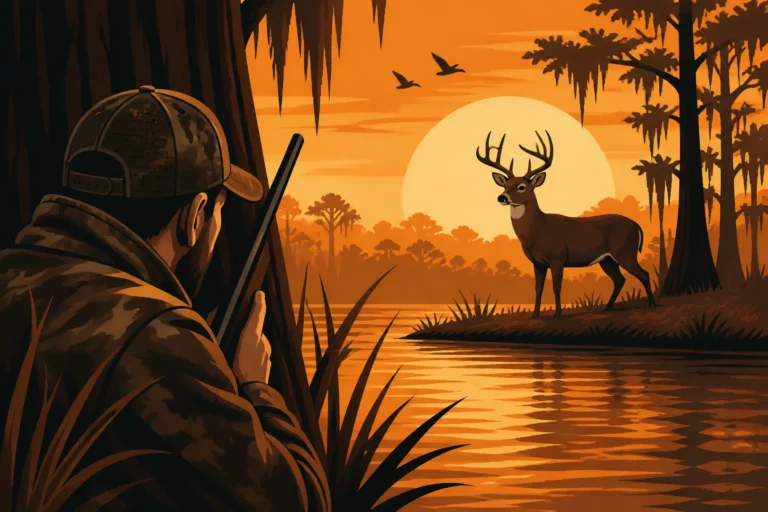
Consider a scenario in the thick bottomland hardwoods of the Pearl River Wildlife Management Area. A buck might emerge from a palmetto thicket, offering only a quartering-away shot for a fleeting second. With a repeater, you might be tempted to take it, knowing you could adjust. With a single-shot, you’re more likely to let him pass, hoping he’ll offer a broadside angle a few steps later, or come back another day. This discipline is what defines the single-shot hunter. It's not about being less effective, but about being more precise and patient.
Ethical Considerations and Shot Placement
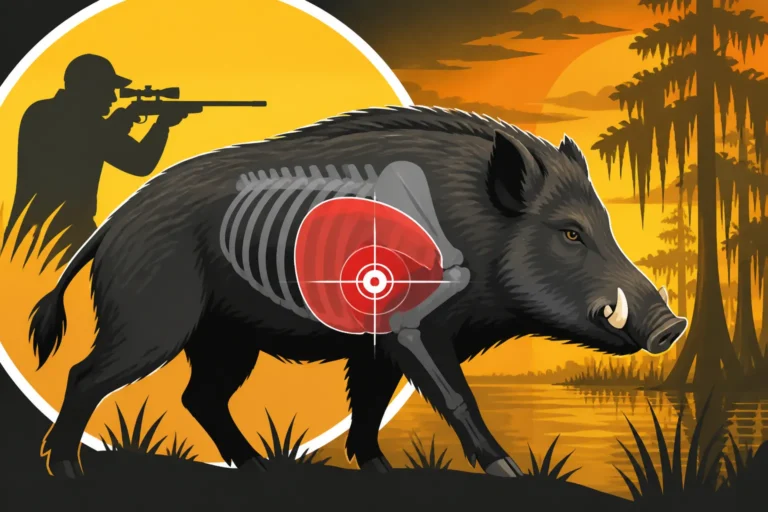
The "one shot" mentality directly ties into ethical hunting. When you only have one chance, impeccable shot placement becomes non-negotiable. You’re aiming for a clean, humane kill, and that means understanding deer anatomy intimately. This isn't the time for a Hail Mary; it's the time for a surgical strike. Practice is key, not just at the range, but visualizing shot angles on a 3D target or even a deer silhouette.
Think about the varying angles a deer might present in the field—broadside, quartering-to, quartering-away. You need to know exactly where that bullet needs to go to hit the heart-lung vitals consistently. This often means passing on shots that might be acceptable with a semi-automatic rifle. It’s about respect for the animal and ensuring a quick, clean harvest. You’re committing to making that single shot count in the most responsible way possible. Mastering your Shot Placement on a Louisiana Black Bear or any other game animal is crucial.
The Pressure of Limited Opportunity
Let's be real, public land hunting in Louisiana can be crowded, especially during prime weekends like the special primitive firearms season. You might only get one deer to walk by your stand all day, or even all weekend. The pressure of knowing that this could be your only chance can be immense. This is where your preparation truly shines. Every detail, from your entry route to your stand setup, needs to be well-thought-out to maximize that single, precious opportunity.
This pressure isn't necessarily a bad thing; it can sharpen your focus. It pushes you to scout harder, learn the deer's patterns better, and refine your woodsmanship. Imagine you’ve been sitting since dawn in a cold front, deer movement has been slow, and suddenly, a mature buck steps into a small opening. That surge of adrenaline combined with the knowledge that this is it is what makes single-shot hunting so incredibly rewarding. It’s about conquering that pressure and trusting your preparation.
Gear and Setup for Single-Shot Success
Choosing the right equipment and setting it up meticulously is paramount for single-shot breechloader hunting. Your gear needs to be reliable, accurate, and tailored to the unique challenges of a one-shot scenario. This isn't a situation where you can afford equipment failures or inconsistencies.
Choosing Your Firearm and Ammunition
Louisiana's primitive firearms seasons often dictate specific calibers and types of firearms. While muzzleloaders are common, single-shot breechloaders like a Henry Single Shot, a Ruger No. 1, or various break-action rifles from manufacturers like CVA chambered in appropriate calibers are also popular. For deer, calibers such as .45-70 Government, .35 Whelen, .44 Magnum, or .450 Bushmaster are common choices. When considering your gear, it's vital to know the Minimum Caliber for a Primitive Firearms Rifle and other specific rules.
| Caliber | Typical Bullet Weight (gr) | Pros | Cons | Ideal Range (yds) |
|---|---|---|---|---|
| .45-70 Gov't | 300-405 | Hard-hitting, excellent knockdown power | Significant recoil, rainbow trajectory | 150-200 |
| .35 Whelen | 200-250 | Flat-shooting, powerful, versatile | Less common, potentially harder to find | 200-250 |
| .44 Magnum | 200-300 | Moderate recoil, good for thick cover | Limited range in a rifle | 100-150 |
| .450 Bushmaster | 250-300 | Low recoil, good for AR platforms | Shorter range, can be expensive | 150-200 |
Beyond the caliber, the specific ammunition you choose matters. Test several brands and bullet weights to find what shoots most accurately out of your rifle. A bullet that consistently groups tight at 100 yards will give you the confidence you need when that single moment arrives. Practice not just shooting, but loading and unloading your single-shot quickly and smoothly, even if a follow-up shot isn't the primary goal. You want that muscle memory to be second nature.
Optics and Sighting Systems
A clear, reliable optic is a game-changer for single-shot hunting. A variable power scope (e.g., 3-9×40 or 2-7×32) offers flexibility for different ranges and light conditions. Ensure your scope is securely mounted and zeroed meticulously. Don't just zero at 100 yards; understand your bullet drop at 50, 150, and 200 yards. Knowing your holdovers or using a bullet drop compensating (BDC) reticle will greatly increase your confidence.
If you prefer open sights or a red dot for close-quarters hunting, particularly in dense Louisiana swamp areas like the Atchafalaya Basin, make sure they are sighted in perfectly and you’re comfortable with their limitations. For example, a red dot can be incredibly fast for quick shots in thick cover, but its precision might diminish at longer ranges compared to a magnified scope. The key is absolute confidence in your sighting system, knowing exactly where your bullet will land at various distances.
Essential Accessories for Precision
Beyond the rifle and scope, a few key accessories can significantly improve your single-shot success. A high-quality laser rangefinder is non-negotiable. Knowing the exact distance to your target removes all guesswork and allows you to make precise adjustments or holdovers. This is especially crucial when you only have one shot. Every yard matters.
Another vital accessory is a stable shooting rest. Whether it’s shooting sticks, a bipod, or simply a sturdy tree limb, a solid rest minimizes human error and allows for a more precise shot. Binoculars are also essential for identifying your target and scouting before the hunt. Using an app like GoHunt for mapping and marking locations, including potential shooting lanes and ranges, can give you a significant advantage. This combination of reliable gear and thorough preparation is what transforms a challenging hunt into a successful one.
Tactics for Maximizing Your Opportunity
With a single-shot breechloader, your tactics need to be even more refined than usual. It’s about creating the perfect scenario, positioning yourself advantageously, and making sure that when the opportunity arises, you’re ready to capitalize on it without hesitation.
Stand Placement and Approach
Effective stand placement starts long before the season. Intensive scouting is key. Look for natural funnels, pinch points, bedding areas, and prime food sources. Think about how deer will move through the terrain, especially in varied landscapes like Louisiana's piney hills or dense bottomlands. Before you even set foot in the woods for the hunt, you should be pouring over maps, and modern tools like GoHunt can give you an incredible edge, helping you pinpoint those elusive funnel points or dense bedding areas.
Consider prevailing wind directions and how they interact with the topography. Your entry and exit routes to your stand should be quiet and avoid disturbing game. For example, if you're hunting a ridge-top saddle in Kisatchie National Forest, you’d want to approach from a direction that keeps the wind in your favor, and use terrain features to mask your movement. Every detail counts when you're anticipating that one shot. Understanding the specific characteristics of Hunting the Louisiana Rut by Area can also inform your stand placement, as deer movement changes significantly during the breeding season.
Shot Selection and Practice
This is where the rubber meets the road. With a single-shot, there's no "spray and pray." You must be disciplined enough to wait for the absolute best shot. This typically means a broadside or slightly quartering-away shot at a comfortable range, ensuring you hit the vital heart-lung area. Passing on questionable shots is a sign of a mature and ethical hunter. It takes patience and sometimes means going home empty-handed, but it reinforces the integrity of the hunt.
Regular practice at the shooting range isn't just about accuracy; it's about building confidence and muscle memory. Practice shooting from various field positions—off-hand, kneeling, sitting, and from a rest—to simulate real hunting scenarios. Know your rifle's capabilities and, more importantly, your own. When that moment comes, you want to be calm, steady, and certain of your shot. The more you prepare for that single, perfect shot, the higher your chances of success.
Tracking and Recovery
Given the "one shot" nature, tracking and recovery become even more critical. A well-placed shot from a primitive firearm is incredibly effective, but sometimes, even with the best intentions, a deer can travel. Immediately after the shot, observe the deer's reaction, the direction of travel, and listen for any sounds of a crash. Mark your stand location and the exact spot where the deer was standing when you shot.
Resist the urge to rush in. Give the deer time, especially if the shot wasn't absolutely perfect. A minimum of 30 minutes, or even a few hours for questionable hits, can make all the difference in a successful recovery. When you do start tracking, look for blood, hair, bone fragments, and disturbed vegetation. Go slow, be methodical, and use your flashlight if necessary, even if it’s Blood Trailing After Dark in Louisiana. If the trail goes cold, don't hesitate to back out and return with fresh eyes or even a tracking dog, if allowed. Recovering your game responsibly is the final act of an ethical hunt.
Making the Most of the Experience
Hunting with a single-shot breechloader isn't just about the harvest; it's about the entire experience. It's a journey that connects you to the traditions of hunting and forces you to slow down and appreciate every aspect of being in the outdoors.
Patience is Your Greatest Tool
In a world that often rushes, single-shot hunting forces a delightful, deliberate pace. Patience isn't merely a virtue here; it's an indispensable tool. You're not just waiting for a deer; you're waiting for the deer, presenting the shot. This can mean long hours in the stand, quietly observing the subtle movements of the forest, the rustle of leaves, the call of a distant bird. It's in these moments of quiet anticipation that you truly connect with the environment.
This enforced patience has a way of slowing your own internal clock. The frantic energy that often accompanies modern life gives way to a deep calm. You learn to trust your instincts, to be comfortable in silence, and to appreciate the intricate dance of nature unfolding around you. When you’ve been sitting for hours, and then that opportunity finally presents itself, the feeling of earned success is incredibly profound. It's a testament to your endurance and commitment.
Enjoying the Tradition
For many, choosing a single-shot breechloader is a nod to heritage. It’s a way to connect with the methods of hunters who came before us, relying on skill, patience, and a deep understanding of the game, rather than rapid-fire technology. There’s a rustic beauty in the simplicity of these firearms, a direct link to the pioneering spirit of Louisiana's early hunters. Whether it's the satisfying "thwack" of a heavy bullet or the simple elegance of the firearm's design, there's a unique charm that repeaters often lack.
This connection to tradition often extends beyond the gun itself. It's in the camaraderie of deer camp, the shared stories, and the passing down of knowledge. It might be a family heirloom rifle, or perhaps a new purchase made specifically to embrace this challenge. Regardless, the single-shot becomes more than just a tool; it becomes a symbol of a deliberate, thoughtful approach to hunting, honoring the past while engaging with the present. It's part of the rich tapestry of Louisiana Deer Camp Traditions.
Post-Hunt Logistics and Reflection
Once the hunt is over, and if you’re fortunate enough to have harvested an animal, the work isn't done. Proper field dressing, tagging, and transporting your deer are crucial steps. Given Louisiana's often warm weather, prompt attention to game care is essential to preserve the meat. Understanding how to Field Dressing a Deer in Warm Weather quickly and efficiently will ensure your hard-earned venison is top-notch.
After all the practicalities, take a moment to reflect. Whether successful or not, what did you learn? What moments stood out? The single-shot experience tends to engrain itself deeper because of the focused effort and patience it demands. It’s not just about what you brought home, but how you earned it. Each hunt with a single-shot breechloader builds character, refines skill, and deepens your appreciation for the outdoors. It's an opportunity to grow as a hunter, one carefully aimed shot at a time.
Disclaimer
The information provided in this guide is for general informational purposes only and does not constitute legal or professional advice. Hunting regulations, seasons, and licensing requirements in Louisiana are subject to change. Always consult the most current Louisiana Department of Wildlife and Fisheries (LDWF) regulations and ensure you comply with all applicable laws before hunting. Safety should always be your top priority in the field.