Physical Demands of a Basin Deer Hunt
If you're dreaming of a deer hunt deep in the legendary Atchafalaya Basin, you're picturing an incredible adventure. But let's be real – this isn't your grandfather's leisurely stroll through a Texas high fence. The Basin is a beast, a wild, untamed labyrinth of water, mud, and dense vegetation that will test every fiber of your being. This guide is dedicated to helping you understand the real physical toll and prepare your body for the incredible, yet grueling, challenge of hunting deep within Louisiana's most iconic swamp.
Understanding the Atchafalaya Basin Environment
The Atchafalaya Basin is a marvel, a massive wetland swamp and river delta that offers unparalleled hunting opportunities. However, its very nature is what makes it so physically demanding. It's not just a wet forest; it's an ever-changing, dynamic ecosystem that requires a unique kind of grit to navigate.
The Swampy Terrain and Its Obstacles
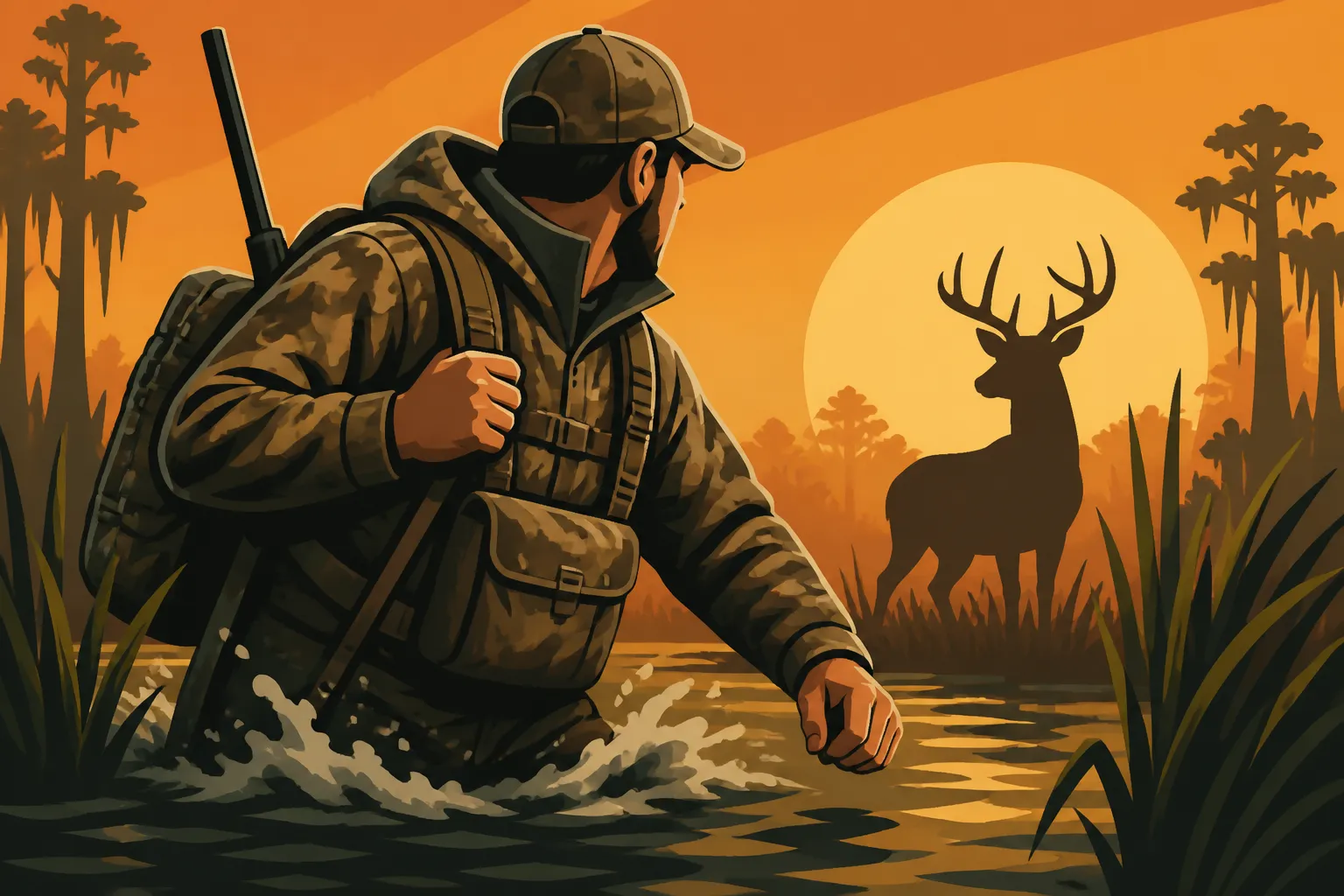
Imagine a landscape where solid ground is a luxury, not a given. That's the Atchafalaya Basin. You'll be traversing through cypress-tupelo swamps, where ancient trees rise from murky waters, their roots often hidden beneath a layer of slick, decaying vegetation. The "ground" can shift from somewhat firm earth to knee-deep, energy-sapping mud in a matter of steps. Every foot placement is a calculated risk, a balance act on slippery roots or unseen holes.
This isn't an environment where you can simply follow a well-worn trail. You'll often be pushing through dense palmetto thickets, tangled briars, and thick stands of water elms, each branch seemingly designed to snag your clothing, scratch your skin, or trip you up. The constant effort of lifting your feet from the mud, pushing through thick brush, and maintaining balance on uneven, wet surfaces adds up quickly. It's a full-body workout just to get to your hunting spot, especially when you're trying to move quietly and carefully. Reading a Basin Chute for Deer Movement can help you find deer, but getting there will be the real test.
Navigating Waterways and Dense Cover
Accessing prime deer habitat in the Basin almost always involves water. Whether it's small bayous, sloughs, or flooded timber, you'll likely be dealing with a boat, canoe, or even wading. Knowing how to safely and efficiently operate a small boat, often in tight, winding channels, is a skill in itself. Launching and retrieving can be a muddy, sweaty affair, especially if you're alone. You might find yourself having to pull your boat over submerged logs or through shallow, muddy stretches.
Once you leave the boat, the dense cover becomes your primary obstacle. Visibility is often limited, even in open timber, due to thick undergrowth. Still-hunting, a common tactic in such an environment, becomes an intense exercise in patience and physical control. Every step has to be deliberate, every movement slow and quiet. This slow, deliberate movement, while not fast-paced, is incredibly draining on your core and leg muscles, as you're constantly bracing and balancing. Scouting the area beforehand, perhaps using mapping tools like those offered by GoHunt, can give you a lay of the land, but it won't prepare you for the feeling of actually being in it. Hunting Atchafalaya Basin Swamp Deer provides excellent tactical advice, but the physical reality of applying those tactics is another matter entirely.
Common Physical Demands on a Basin Hunt
So, what does all this mean for your body? It means you're going to use muscles you didn't even know you had, and you're going to sweat. A lot. The Basin doesn't just ask for your attention; it demands your physical best.
The Challenge of Long Hauls and Heavy Loads
Let's talk about the absolute truth of Basin hunting: if you're lucky enough to harvest a deer, the real work begins. Dragging a deer, even a modest-sized doe, through thick mud, over cypress knees, and across watery sloughs is an experience that will etch itself into your memory. It's an exhausting, often multi-hour endeavor that makes a gym workout feel like a walk in the park. You're fighting suction from the mud, resistance from the water, and friction from dense undergrowth.
If you’re packing out your deer quarter by quarter, you’re not just carrying meat; you're carrying the weight of your gear, your weapon, and often muddy, wet clothing. This can easily add up to well over 100 pounds. The distance might not seem far on a map, but every foot in the Basin feels like ten on solid ground. This is where your back, shoulders, and legs get their ultimate test. Even with assistance, it's a monumental task. The thought of Dragging a Deer Out of a Swamp is enough to make anyone reconsider their fitness level.
Endurance for All-Day Stands and Stalks
A Basin hunt isn't usually a quick sit and shoot. It often involves long hours on a treestand or in a ground blind, followed by periods of intense, slow stalking. While sitting might seem easy, maintaining focus and stillness for hours in the humid, bug-laden environment can be surprisingly tiring. Your core muscles are engaged, your eyes and ears are constantly working, and your mental energy is being burned.
When you do decide to still-hunt or track a deer, your endurance is truly tested. You're moving slowly, deliberately, for extended periods. This isn't a brisk walk; it's a calculated dance with the environment, picking each footstep, pausing, listening, and observing. This sustained low-level exertion, combined with the heat and humidity, can drain your energy reserves faster than you might expect. Forget about just leg strength; your cardiovascular system and overall stamina are crucial. If you're planning a Warm-Weather Sitting Strategy in Louisiana, remember that even in the cooler months, the Basin humidity can feel oppressive.
Dealing with Heat, Humidity, and Insects
Louisiana's hunting seasons, particularly the early archery and primitive weapons seasons, often coincide with significant heat and oppressive humidity. This isn't just uncomfortable; it's a serious physical stressor. Your body works overtime to regulate its temperature, leading to increased sweating and a greater risk of dehydration. This constant battle against the elements zaps energy and can lead to fatigue, reduced focus, and even heat-related illnesses if you're not careful.
And then there are the insects. Mosquitos, gnats, and other biting bugs are a constant presence in the Basin, especially during warmer periods. While bug spray helps, the sheer number and persistence of them can wear down your mental and physical resolve. The constant swatting and irritation add another layer of fatigue and distraction to an already challenging hunt. Staying hydrated and protected from the sun and bugs isn't just about comfort; it's about maintaining your physical and mental readiness for the demands of the hunt.
Preparing Your Body for the Basin
Knowing what you're up against is the first step. The next is taking action. Preparing for a Basin deer hunt isn't something you can do a week before opening day. It requires dedicated, consistent effort to build the necessary strength, endurance, and mental toughness.
Targeted Physical Training Regimen
To truly prepare for the Atchafalaya Basin, your training needs to be specific. Focus on exercises that mimic the demands of the terrain and the tasks you'll encounter.
- Cardiovascular Endurance: This is paramount. Long hikes, especially with weight, are your best friend. Start with brisk walks and gradually increase distance and speed. Incorporate stair climbing, incline walking on a treadmill, or even running. Aim for at least 30-60 minutes of elevated heart rate exercise, 3-4 times a week. If you can find hilly terrain or uneven ground, even better.
- Leg and Core Strength: Your legs will be constantly pushing through mud, lifting over obstacles, and supporting heavy loads. Lunges, squats, step-ups (especially onto an elevated surface like a bench), and calf raises are essential. For your core, planks, Russian twists, and medicine ball exercises will build the stability needed for navigating uneven ground and dragging a deer.
- Back and Shoulder Strength: These muscle groups will be critical for carrying gear, climbing into stands, and, most importantly, pulling a harvested deer. Rows, pull-ups (or assisted pull-ups), overhead presses, and deadlifts are excellent for building this functional strength. Focus on proper form to prevent injury.
- Grip Strength: Often overlooked, but crucial. Hauling ropes, pulling a deer, even holding onto slick boat paddles – good grip strength makes a difference. Incorporate farmer's carries (walking with heavy dumbbells), plate pinches, and hangs from a pull-up bar.
Consider a comprehensive plan similar to a marathon runner's training, but with a focus on functional strength. If you're looking to book a guided experience, perhaps through a platform like BookYourHunt, having this fitness base will allow you to fully enjoy the experience rather than just survive it.
Here’s a sample breakdown of muscle groups and exercises crucial for Basin hunting:
| Muscle Group | Key Physical Demand | Recommended Exercises |
|---|---|---|
| Legs | Wading through mud, pushing through brush, climbing | Squats, Lunges, Step-ups (high steps), Calf Raises, Hill Sprints |
| Core | Balance on uneven ground, dragging deer, carrying | Planks, Russian Twists, Wood Chops, Side Planks |
| Back/Shoulders | Dragging deer, lifting gear, climbing stands | Deadlifts, Rows (Barbell/Dumbbell), Pull-ups, Overhead Press, Farmer's Carries |
| Cardio | Long hauls, all-day exertion, heat regulation | Ruck Marching (walking with weighted pack), Jogging, Stair Climbing, Swimming (if available) |
| Grip | Handling ropes, paddles, dragging straps | Dead hangs, Plate Pinches, Farmer's Carries, Squeezing a grip trainer |
Essential Gear to Mitigate Strain
While physical fitness is key, smart gear choices can significantly ease the physical burden of a Basin hunt.
- Lightweight, Durable Clothing: Choose synthetic materials that wick moisture away from your body and dry quickly. Avoid heavy cotton, which holds moisture and can make you feel heavier and colder (or hotter) in the humid conditions. Layering is always smart, even if you start off sweating.
- Quality Backpack: Invest in a comfortable, well-fitting backpack with a good hip belt. This distributes weight to your hips, taking pressure off your shoulders and back, which is vital for long hauls. Ensure it's large enough to carry all your essentials but not so bulky that it catches on every branch.
- Hydration System: A hydration bladder in your pack is often superior to water bottles. It allows you to drink continuously without stopping, which is essential for staying hydrated in the heat and humidity. Electrolyte supplements can also be a game-changer.
- Sturdy, Waterproof Boots: This is non-negotiable. You need boots that offer excellent ankle support, deep traction for mud, and are completely waterproof. Knee boots or even chest waders might be necessary depending on water levels. Nothing saps energy like wet, blistered feet.
- Navigation Tools: While not strictly physical, having reliable GPS (like a dedicated unit or a robust app on your phone with downloaded maps, even those you can explore on GoHunt) can prevent wasted energy. Getting lost in the Basin will exponentially increase your physical exertion and stress. Using the LDWF Map Tool is a must-have for scouting.
Remember, every ounce matters when you're covering difficult terrain. Choose gear that is functional, durable, and as light as possible without compromising safety or effectiveness.
Mental Fortitude and Adaptability
Beyond the physical, the Basin demands mental toughness. There will be frustrating moments: tangled lines, lost footing, swarms of bugs, missed opportunities, and the sheer effort of pushing through. Your ability to maintain a positive attitude, stay focused, and adapt to changing conditions will heavily influence your success and enjoyment.
Practice patience. Learn to accept that progress might be slow. Develop problem-solving skills for when things don't go as planned. Visualize successful outcomes, but also prepare for the grind. The mental game is just as crucial as the physical one in an environment as challenging as the Atchafalaya Basin. Embracing the wilderness, even when it tests you, is part of the allure of Hunting the Atchafalaya Basin.
In conclusion, hunting deer in the Atchafalaya Basin is an incredibly rewarding experience, but it's not for the faint of heart or the unprepared. The unique environment, with its mud, water, and dense cover, presents significant physical challenges that demand targeted fitness, smart gear choices, and unwavering mental resolve. By understanding these demands and dedicating yourself to thorough preparation, you won't just survive your Basin hunt; you'll thrive in one of Louisiana's most iconic wild places. Whether you're planning a trip through a service like BookYourHunt or venturing out on your own, make sure your body is as ready as your spirit.
Disclaimer
This article is for general informational purposes only and does not constitute professional advice. Laws, prices and regulations vary by location and change over time. Consult a qualified professional for guidance on your specific situation.