Hunting the Early-Start Deer Areas
That first crisp morning of deer season, when the air finally starts to hint at cooler temperatures, is something every Louisiana hunter lives for. But if you’re only focused on the rifle opener, you might be missing out on some incredible opportunities to tag a buck in our state’s early-start deer areas. Jumping into those first few weeks without a solid plan can lead to frustration, especially with our unique climate and the subtle shifts in deer behavior. This guide is all about giving you the lowdown on how to effectively hunt Louisiana's early-start deer areas, making sure you're prepared to make the most of those first precious days in the woods.
Understanding Louisiana's Early-Start Deer Areas
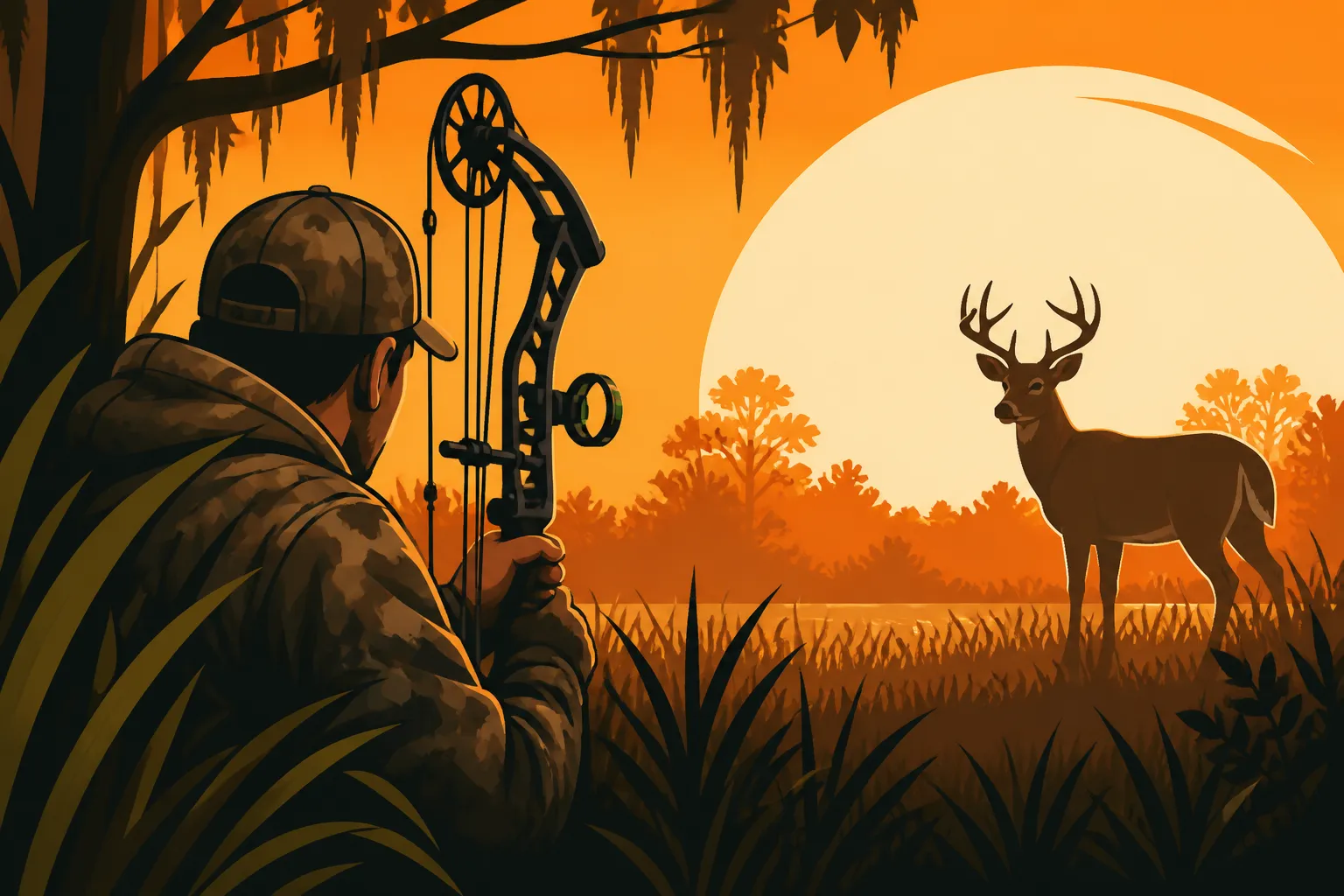
Louisiana's deer hunting landscape is diverse, carved into ten distinct deer areas, each with its own set of regulations and season dates. While the firearms season often starts later, typically in mid-October or early November, the archery season kicks off statewide on October 1st for private lands, offering a fantastic head start for dedicated bowhunters. This early window presents both unique challenges and rewarding opportunities for those willing to adapt their strategies.
Which Areas Open First?
The beauty of Louisiana's deer season structure is that many areas share the same early archery opener. Generally, all of Louisiana's ten deer areas, including the more well-known ones like Areas 1, 2, 4, 5, 6, and 9, allow archery hunting to commence on October 1st on private land. This means that from the piney hills of north Louisiana down to the central flatlands and even into some of the deeper swamps, the woods come alive with bowhunters eager to get an arrow in a deer.
The key distinction comes later with firearms seasons and specific either-sex days, but for the initial push, it's a level playing field for archers across much of the state. Understanding Louisiana's Ten Deer Hunting Areas Explained can help you pinpoint the specific regulations for your preferred hunting grounds. For instance, the general season structure might be similar, but bag limits and antler restrictions can vary. It's crucial to consult the Louisiana Department of Wildlife and Fisheries (LDWF) regulations pamphlet each year, as dates and rules can shift slightly. Being aware of these parish-by-parish nuances can make all the difference in staying legal and maximizing your hunt.
Why the Early Start Matters
The early archery season isn't just a chance to scratch that hunting itch; it's a strategic advantage. Deer are often still in their summer patterns, somewhat predictable in their movements between bedding and food sources, before the heavy hunting pressure and colder weather force them to change. Bucks might still be in bachelor groups, and while they're not yet thinking about the rut, they are consistently focused on feeding to bulk up for the coming breeding season.
This early period is also characterized by thicker foliage, which can be both a blessing and a curse. It provides excellent cover for hunters to move stealthily and get close to deer, but it can also obscure sightlines and make shot opportunities more challenging. For those hunting on public lands, getting out early can mean beating some of the crowds that inevitably show up once the firearms season begins. It’s an opportunity to observe deer behavior when they are less pressured and still operating on their natural instincts, providing valuable insights for later in the season. Plus, for those hunting with archery equipment, it offers a longer window to fill tags, which is especially beneficial if you're trying to achieve the annual bag limit.
Key Differences and Challenges of Early Season
Hunting the early-start areas in Louisiana presents a unique set of challenges compared to the colder, later parts of the season. The primary difference lies in the weather, which directly influences deer behavior, food availability, and the hunter's comfort. Ignoring these factors is a surefire way to have a miserable and unproductive hunt.
Warm Weather and Deer Behavior
Let's be real, October in Louisiana isn't exactly "crisp fall air" most years. We often deal with daytime temperatures well into the 80s, sometimes even pushing 90 degrees, coupled with that signature Gulf Coast humidity. This sweltering heat profoundly impacts deer movement. Instead of meandering through fields in broad daylight, deer become largely nocturnal, moving primarily during the cooler hours of dawn and dusk. This means your hunting window is significantly compressed.
Deer will also gravitate towards water sources and shady, dense cover where they can escape the heat and pesky insects. You'll rarely see deer out and about in open areas during midday. Their metabolism slows down, and they conserve energy. As hunters, this demands an adaptation in our approach. Long sits in a stand during the middle of the day are often fruitless and uncomfortable. Instead, focusing your efforts on the first hour or two after sunrise and the last hour or two before sunset will yield the best results. Moreover, paying close attention to wind direction is even more critical in warm weather, as deer rely heavily on their sense of smell, and the heat can amplify human scent.
Food Sources and Patterns
The early season offers a bounty of natural food sources, but they can be fleeting and location-specific. Acorns, especially the early-dropping varieties like pin oaks and water oaks, are absolute magnets for deer in areas where they are present. These highly nutritious nuts become a primary food source, drawing deer away from agricultural fields they might have frequented in late summer. However, acorn crops can be spotty year to year and even tree to tree, so scouting is vital.
Beyond acorns, deer will still browse on a variety of green vegetation, including lush forbs, young shoots, and woody browse. In agricultural areas, deer might still be hitting soybean fields or transitioning to newly available crops like corn silage. The challenge is that these food sources can change rapidly. A hot acorn flat one week might be picked clean the next, or a sudden cold snap could cause a different oak species to drop its bounty. Hunters need to be flexible and constantly scouting for the freshest sign around active feeding areas. Understanding Late-Season Food Sources for Louisiana Whitetails can provide a good contrast to what deer are eating in the early season.
Hunting Pressure Considerations
While the early archery season typically sees less pressure than the firearms opener, public lands and easily accessible private tracts can still get crowded, especially on weekends. Deer are incredibly sensitive to intrusion, and even a little human activity can push them deeper into cover or onto neighboring properties. This is particularly true in areas like Kisatchie National Forest or popular Wildlife Management Areas (WMAs).
When multiple hunters are pushing deer around, their patterns become erratic and much harder to predict. You might find deer moving in directions that don't make sense based on food and bedding, simply because they're trying to avoid people. To mitigate this, consider hunting during weekdays if your schedule allows, or focusing on less accessible areas that require more effort to reach. Learning to read the subtle signs of deer movement and understanding how pressure affects them is crucial. Sometimes, the best strategy is to avoid areas with heavy vehicle traffic or clear-cut walking paths and venture deeper into the woods where other hunters might not want to go. This can lead to encounters with unpressured deer that are still adhering to more natural routines.
Tactics for Success in Early Season
Successfully hunting Louisiana's early-start deer areas requires a shift in mindset and tactics. Forget about rattling antlers or aggressive grunting for now; the focus needs to be on stealth, understanding natural deer movement, and adapting to the warm conditions.
Still-Hunting and Ground Blind Strategies
Given the thick foliage and often limited visibility, still-hunting can be incredibly effective in the early season, especially if you have an intimate knowledge of the terrain. Moving slowly, perhaps 20-30 yards every 10-15 minutes, pausing to glass and listen, allows you to cover ground and intercept deer moving between bedding and feeding. Focus on trails that follow drainages, creek beds, or natural funnels where deer movement is concentrated. The goal isn't to walk to a stand, but to hunt while you walk. Pay close attention to wind direction and thermals, which can be tricky in the morning as the ground warms up. This method works well in areas with abundant natural cover, letting you use the terrain to your advantage.
Ground blinds are another excellent option, particularly if you're hunting a specific food source or a well-used travel corridor. They offer concealment and allow for some movement, which is a big plus in warm weather. A well-brushed-in pop-up blind or a natural ground blind built from downed limbs and palmetto fronds can make you virtually invisible. This allows you to set up close to a prime feeding area, like a fresh acorn drop or a field edge, and wait for deer to come to you. Just remember that it takes time for deer to get used to a new blind, so deploy it well in advance if possible. For public land hunters, learning how to use a Using a Ground Blind on Louisiana Public Land effectively can greatly increase your odds, as setting up a permanent stand might not be feasible or allowed.
Stand Placement for Early Movement
When it comes to treestands, the early season demands strategic placement. Deer are moving to and from bedding areas during the first and last hours of light, often along well-defined trails. Look for pinch points, saddles, or creek crossings that naturally funnel deer movement. Consider placing stands on the edges of dense cover, especially near areas with active early-dropping acorns or other preferred browse.
Because deer are largely nocturnal, setting up closer to bedding areas can increase your chances of intercepting a buck before he retreats for the day or as he emerges in the evening. This might mean getting in extra early in the morning and staying until legal shooting light is almost gone in the evening. Think about entry and exit routes that minimize disturbance to deer. You want to get to and from your stand without spooking animals that might be bedded nearby or on their way to your setup. Elevated stands can also help with scent control, especially on those still, humid mornings. For more insights on vertical positioning, check out Treestand Setups in Kisatchie National Forest. Remember, the wind is your ultimate guide, and a stand in a great location with the wrong wind is a wasted effort.
Calling and Decoy Use
While aggressive calling techniques like rattling are generally reserved for the rut, there's still a place for subtle calling in the early season. Light fawn bleats or soft doe bleats can sometimes pique the curiosity of deer, especially does and younger bucks. They're not looking for a fight; they're just checking out what's going on in their neighborhood. Use these calls sparingly and softly, mimicking the natural sounds of deer casually communicating.
Decoys can also be effective, but require careful consideration in warm weather. A single doe decoy placed near a feeding area can draw in curious deer, but you need to be mindful of its visibility and how it might appear to deer that are already wary. In areas with high hunter pressure, a decoy might actually scare deer if they associate it with human activity. If you do use a decoy, ensure it's positioned for a clean shot and that the wind is in your favor so approaching deer don't smell you first. For specific guidance on how deer respond to vocalizations, you might find valuable information in Grunt Calls in Mature Louisiana Timber when considering appropriate early season volumes.
Scouting and Preparation
Effective early-season hunting in Louisiana hinges on meticulous scouting and thorough preparation. You can’t just show up on opening day and expect success; the woods are a dynamic environment, and deer patterns change.
Pre-Season Scouting Focus
Starting your scouting efforts well before the season opens is non-negotiable for early-start areas. Deer in October are often still following summer patterns, making consistent food and water sources prime locations. Focus on identifying early-dropping acorn trees—red oaks, water oaks, and pin oaks can be golden tickets. Look for fresh mast on the ground, deer tracks, and droppings beneath these trees. If you find a patch of dropping acorns, you've found a honey hole. This is where a mapping app like GoHunt can really shine, allowing you to mark specific trees or clusters of oaks that might be dropping early. You can easily pinpoint potential food sources and plan your approach long before the season officially kicks off.
Beyond food, identify key bedding areas. These are typically thick, dense cover, often on ridges or in swamp islands, offering security and a comfortable place to escape the heat and bugs. Look for heavily used trails connecting these bedding areas to your identified food sources. These travel corridors, especially those that offer cover and run parallel to wind currents, are excellent places to intercept deer during legal shooting light. During your scouting, make sure to walk slowly, observe, and listen. You're not just looking for deer sign; you're also looking for optimal stand locations and clear shooting lanes. Early season means leaves are still on the trees, so visualize your shot opportunities from your potential stand sites.
Trail Camera Strategies
Trail cameras are your eyes in the woods when you're not there, and they are invaluable for early-season scouting. Deploy them on active trails between bedding and feeding, near fresh water sources, or directly over early-dropping acorns. Pay close attention to the time stamps on your photos. This will give you crucial intel on when deer are moving. If you're consistently getting pictures of mature bucks only after dark, it tells you they're primarily nocturnal, and you need to adjust your setup to be closer to bedding areas or catch them right at the fringes of legal light.
Experiment with different camera locations. Sometimes, placing a camera a little further back from a heavily used trail, angled to catch deer moving in both directions, can yield better results than putting it directly on a primary path. Also, consider mineral sites or strategic feeder locations (if legal in your area) to gather intel, but remember that the goal is to observe natural movement, not necessarily to bait them in. A camera like the Tactacam Reveal X Pro, for example, offers cellular capabilities, letting you get real-time updates on deer activity without having to walk in and check cards, minimizing your scent disturbance. This intel can help you decide when and where to focus your hunting efforts. For more on strategic monitoring, see Where to Hang a Camera on a Logging Road.
Gear Considerations for Early Season
Hunting in the early-start areas of Louisiana is a different ball game when it comes to gear. The weather dictates much of what you’ll need, from what you wear to how you manage your scent and what equipment you choose to bring.
Warm Weather Clothing and Scent Control
Forget your heavy insulated camo; early season in Louisiana demands lightweight, breathable clothing. Moisture-wicking fabrics are your best friend. Look for technical apparel designed for hot weather that helps pull sweat away from your body, keeping you cooler and drier. Colors that blend with the still-green foliage are also important. Brands like Sitka Gear or First Lite offer excellent warm-weather options that are both comfortable and effective. Layering is still a good idea, but think light layers that can be shed as the day warms up, or added for a slightly cooler morning.
Scent control is absolutely paramount in warm, humid conditions. Deer are already wary, and their noses are incredible. Sweat amplifies human odor, making you easier to detect. Take a scent-free shower before heading out, use scent-eliminating sprays on your clothes, and store your hunting gear in airtight containers. Consider using activated carbon or silver-infused garments designed to absorb or neutralize scent. Always play the wind, but even then, a rigorous scent control regimen will give you an edge. Many hunters even keep a change of clothes in a scent-free bag and change at their hunting spot to avoid picking up car scents or other foreign odors. Warm-Weather Sitting Strategy in Louisiana delves deeper into managing discomfort and odor in the heat.
Bowhunting Specific Gear
Since the early season is primarily an archery opportunity, your bowhunting gear needs to be dialed in. Ensure your bow is perfectly tuned, your broadheads are sharp, and your arrows are flying true. With thicker foliage, shot opportunities might be tighter, so practice shooting through small lanes and at odd angles. A rangefinder is an indispensable tool to confirm distances in the woods, especially when leaves obscure depth perception.
Consider a lightweight, compact stand that's easy to pack in and out, especially if you plan to move frequently or hunt public land. Mobility is a huge asset in the early season as deer patterns can shift. A good pair of quality binoculars will help you pick apart dense cover and identify deer at a distance without excessive movement. Don't forget your bug spray! Mosquitos and gnats can be relentless in the Louisiana woods, and constant swatting will absolutely give away your position. A Thermacell can be a game-changer for keeping bugs at bay during those long, humid sits. For those considering alternatives, it's worth noting the Crossbow Rules During Louisiana Archery Season if that aligns better with your hunting style.
Navigating Regulations and Public Land Access
Hunting Louisiana's early-start deer areas isn't just about deer behavior and tactics; it's also about understanding the specific rules and how to effectively access and hunt public land, which often experiences significant pressure.
Specific Rules for Early Areas
While October 1st marks the general archery opener across many of Louisiana's deer areas, it's absolutely vital to confirm the specific regulations for the particular area you intend to hunt. Bag limits, antler restrictions (though less common during archery, always check), and any special land-use permits can vary. For example, some Wildlife Management Areas (WMAs) might have slightly different opening dates, require a WMA permit in addition to your basic hunting license, or have specific restrictions on equipment or even how you access certain sections.
Always check the current year's LDWF hunting regulations pamphlet or their website before you head out. These details are not suggestions; they are laws, and violations can lead to hefty fines and loss of hunting privileges. It’s also crucial to understand the difference between private and public land regulations. While private lands often follow the general statewide rules for the deer area they are in, public lands, especially WMAs, often have their own unique set of rules that supersede the general parish-wide regulations. Don't assume; verify everything. This attention to detail will keep you legal and stress-free.
Public Land Access and Strategy
Louisiana offers a surprising amount of public hunting land, from Kisatchie National Forest to numerous WMAs. These early-start areas can be fantastic, but they also tend to draw a crowd. The key to success on public land is often getting away from the easily accessible spots. Most hunters won't walk more than a mile or two from their vehicle. If you're willing to put in the effort to hike deeper, paddle a kayak into remote areas, or utilize a bicycle on logging roads, you'll significantly increase your chances of finding less pressured deer.
Utilize mapping tools like GoHunt, OnX Hunt, or the LDWF's own WMA map tool to identify remote access points, potential food sources (like hard-to-reach oak flats), and thick bedding cover. These apps allow you to mark trails, stand locations, and potential pinch points, giving you a strategic advantage. When scouting, look for subtle trails that skirt property lines or lead into dense, overlooked thickets. Deer that have been pressured on public land will often seek refuge in these less disturbed areas. Additionally, be mindful of other hunters. Respect their space, and always prioritize safety. An early start on public land can be incredibly rewarding, but it demands more effort and a greater understanding of how deer react to human presence. For a more general approach to finding game, consider Scouting Louisiana Public Land Before Season.
Table: Overview of Early Archery Season in Key Louisiana Deer Areas
Here's a quick look at some general characteristics and considerations for archery hunting in key Louisiana deer areas during the early season, which typically opens October 1st on private lands across the state. Remember to always consult current LDWF regulations for the most up-to-date and specific information for your chosen hunting location.
| Deer Area | General Location | Primary Habitat | Early-Season Food Focus | Typical Challenges | Tactics to Consider |
|---|---|---|---|---|---|
| Area 1 | North Louisiana | Mixed Pine/Hardwood | Acorns (Red, Water Oaks), agricultural fields | Warm temps, thick timber, localized food sources | Still-hunt creek bottoms, focus on shade/water, trail cam on travel routes |
| Area 2 | Southwest Louisiana | Agriculture, Piney Woods, some Bottomland | Soybeans, Corn, early-dropping acorns | Heat, open fields (limited cover), deer movement tied to specific crops | Ground blinds on field edges, hunt shaded travel corridors, morning/evening only |
| Area 3 | Central/East Louisiana | Mississippi River Alluvial Valley, bottomland hardwoods | Acorns (Water, Willow Oaks), various soft mast | Flooding potential, dense swamp cover, insect pressure | Boat access to remote islands, target slough crossings, scent control critical |
| Area 4 | Central Louisiana | Kisatchie National Forest, hill country, mixed pine/hardwood | Acorns (various oaks), natural browse | Hunter pressure in accessible areas, varied terrain, fluctuating food sources | Hike deep into less-pressured areas, hunt ridge saddles, use mapping apps |
| Area 5 | Southeast Louisiana | River swamps, coastal flatwoods, agricultural | Acorns, various green browse, some ag crops | High humidity, dense palmetto thickets, significant bug pressure | Hunt swamp edges, look for elevated bedding, focus on natural funnels |
Conclusion
Hunting Louisiana's early-start deer areas is a fantastic way to extend your time in the woods and increase your odds of success, especially for bowhunters. It demands adaptability, attention to detail, and a willingness to embrace the unique challenges of warm weather hunting. By understanding deer behavior, meticulously scouting for shifting food sources, and refining your tactics for stealth and scent control, you can turn those humid October mornings into memorable hunting experiences. Don't let the heat or the crowds deter you; with the right approach, those early weeks can be some of the most rewarding of the entire season. So, get out there, embrace the sweat, and make the most of Louisiana's generous early archery window.
Disclaimer
The information provided in this guide is for general informational purposes only and does not constitute legal advice. Hunting regulations, season dates, and specific rules can change frequently. Always consult the official Louisiana Department of Wildlife and Fisheries (LDWF) regulations pamphlet and website for the most current and accurate information before planning any hunting activity. Failure to comply with all state and local hunting laws can result in penalties.