How Many Acres of Public Land Louisiana Has
One of the biggest frustrations for hunters in Louisiana is often the perception that there's just not enough public land to go around. It can feel like every good spot is locked up behind a private lease sign, leaving us scrambling for crumbs. This comprehensive guide is here to not only put a real number on the vast acreage available to public land hunters in our great state but also to equip you with the knowledge and strategies to find, access, and successfully hunt these valuable public resources.
Understanding Louisiana's Public Hunting Landscape
When you first start looking into public hunting opportunities in Louisiana, it's easy to get overwhelmed or even discouraged. The state is often celebrated for its incredible private hunting clubs and vast agricultural leases, making it seem like public access is an afterthought. However, that couldn't be further from the truth. While we might not boast the mountainous federal lands of some western states, Louisiana offers a unique and incredibly diverse array of public hunting grounds, each with its own character and opportunities.
The Numbers: How Many Acres Are Truly Public?
It’s true that Louisiana is a state rich in private land, with a strong tradition of hunting clubs and landowner-managed properties. But don't let that narrative overshadow the significant amount of land available to the public. When we talk about public hunting land, we're primarily looking at state-managed Wildlife Management Areas (WMAs), federally managed National Wildlife Refuges (NWRs), and portions of the Kisatchie National Forest. These lands, combined, offer hundreds of thousands of acres for us to explore.
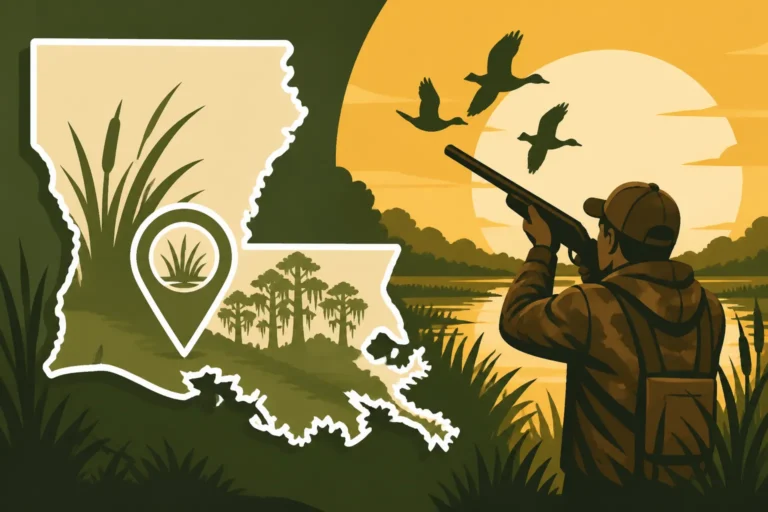
To give you a clearer picture, Louisiana is home to approximately 1.6 million acres of public hunting land. That’s right, over a million and a half acres! This isn't just a number; it represents a mosaic of habitats, from cypress-tupelo swamps and bottomland hardwoods to pine uplands and coastal marshes. It's a huge resource, and while it might not always be the easiest to access or the least pressured, it's there for those willing to put in the effort. Knowing this number can really shift your perspective from feeling limited to feeling empowered by the sheer scale of the opportunity.
Why the Perception of Limited Access Lingers
Despite these impressive figures, many hunters still feel like public land is scarce or too difficult to hunt. This perception often stems from a few key factors unique to Louisiana. First, our public lands are rarely contiguous vast blocks like you might find out west. Instead, they are often scattered, sometimes fragmented, and can be surrounded by private holdings. This makes access points critical and often requires careful scouting and mapping. Second, some of our most productive public lands, especially in the wetlands, require boat access, which can be a barrier for some hunters.
Another reason for this lingering perception is simply the sheer volume of hunters who gravitate towards private leases or family lands. It's often easier, less competitive, and provides more control over the hunting experience. However, for those who thrive on the challenge, the public lands of Louisiana offer an incredible proving ground. The stories of big bucks, limits of ducks, and gobblers harvested on public ground are numerous, proving that success is absolutely attainable for those who understand how to navigate these unique areas. It’s about knowing where to look and how to approach it, which is exactly what we’ll dive into.
The Importance of Knowing Your Options
Understanding the different types of public land available is critical to maximizing your hunting success and enjoyment. Each type—WMAs, NWRs, and National Forests—comes with its own set of rules, regulations, seasons, and habitat characteristics. What works in a sprawling WMA might not apply to a smaller, more restrictive NWR. Likewise, the tactics you employ in the pine hills of Kisatchie will be vastly different from those used in the flooded timber of the Atchafalaya Basin.
Ignoring these distinctions can lead to frustration, or worse, unintended rule violations. Instead, by learning the nuances of each land type, you can tailor your approach, improve your scouting, and increase your odds of a successful hunt. This knowledge empowers you to make informed decisions about where to spend your time, which gear to bring, and what to expect when you get there. It turns a seemingly daunting task into a series of manageable, exciting opportunities across our diverse Louisiana landscapes.
Diving Deep into Louisiana's Public Land Categories
Louisiana's public hunting lands aren't a monolithic block; they're a diverse collection managed by different agencies, each with its own mission and rules. Understanding these distinctions is paramount for any public land hunter. Think of it like knowing the difference between a grocery store, a farmer's market, and a specialty butcher shop—all offer food, but the selection, atmosphere, and even the way you shop are entirely different.
Wildlife Management Areas (WMAs): Your Go-To Spots
Wildlife Management Areas, or WMAs, are arguably the backbone of Louisiana's public hunting system. Managed by the Louisiana Department of Wildlife and Fisheries (LDWF), these areas are specifically acquired and maintained for wildlife conservation and public recreation, with hunting often being a primary focus. There are dozens of WMAs scattered across the state, ranging from small, heavily used tracts near population centers to vast, remote swamps. Some notable examples include Richard K. Yancey Wildlife Management Area, Sherburne Wildlife Management Area, and Pearl River Wildlife Management Area. Many of these areas are critical habitats for a variety of game species, offering fantastic opportunities for deer, turkey, hogs, and small game.
WMAs often have more liberal hunting seasons than other public land types, generally following the statewide deer and turkey area designations, though specific WMA regulations can differ. They're typically managed with a focus on maximizing hunting opportunities while maintaining healthy wildlife populations. This often includes habitat work like prescribed burns, food plots, and timber management. However, their accessibility and popularity can mean higher hunter pressure, especially during opening weekends or prime season dates. It's important to always check the specific WMA regulations booklet before heading out, as rules for things like ATVs, camping, and even the type of treestands allowed can vary significantly from one WMA to another. Louisiana Wildlife Management Areas are a cornerstone of our state's hunting heritage.
National Forests and Other Federally Managed Lands
When you think "National Forest" in Louisiana, one name immediately comes to mind: Kisatchie National Forest. Covering over 600,000 acres across seven parishes in central and northern Louisiana, Kisatchie offers a dramatically different hunting experience than the river bottoms and marshes of many WMAs. Here, you'll find pine uplands, rolling hills, and vast tracts of timber, providing excellent habitat for deer, squirrel, and a growing population of wild hogs. The sheer scale of Kisatchie allows for a more "big woods" hunting experience, where finding solitude is often easier than in smaller WMAs, especially if you're willing to walk a bit further from the road.
Beyond Kisatchie, there are other federally managed lands, though often with more limited or specialized hunting opportunities. These might include lands managed by the U.S. Army Corps of Engineers or smaller federal tracts. The rules on National Forest land are generally set by the U.S. Forest Service, in cooperation with LDWF, and tend to be more consistent across the forest, though local Ranger Districts may have specific nuances. For anyone looking for a different challenge or a chance to stretch their legs over rolling terrain, Kisatchie National Forest Hunting offers an invaluable resource. Always be sure to check the specific regulations for the district you plan to hunt, as some areas, like the Kisatchie Hills Wilderness, have even stricter rules regarding mechanized travel and permanent stands.
National Wildlife Refuges (NWRs): Rules and Rewards
National Wildlife Refuges are a unique and often highly productive category of public land. Managed by the U.S. Fish and Wildlife Service, these refuges are established primarily for the conservation of specific wildlife species and their habitats, with hunting and fishing often permitted as a secondary, compatible use. Louisiana is home to several NWRs, such as Tensas River National Wildlife Refuge, Catahoula National Wildlife Refuge, and Bayou Teche National Wildlife Refuge, each offering distinct hunting opportunities and typically harboring very healthy wildlife populations due to their conservation focus.
However, the "conservation first" mission means NWRs generally have the most restrictive hunting regulations. Seasons are often shorter, specific zones may be archery-only, and permits for quota hunts are common. Bag limits, shooting hours, and even the type of firearms or ammunition allowed can be different from statewide or WMA rules. For instance, some NWRs might have quota hunts for deer that require a pre-season application and draw. While these restrictions might seem cumbersome, they also lead to exceptional hunting experiences, often with higher success rates for those drawn, and the chance to encounter mature animals. It's a trade-off: more effort in planning and adherence to strict rules, but often a higher-quality hunt. Learning about Louisiana National Wildlife Refuges is crucial for anyone considering these prime spots.
Here's a quick overview of the main types of public hunting land in Louisiana:
| Land Type | Primary Manager | Primary Focus | Typical Access & Pressure | Common Hunting Opportunities | Key Distinguishing Feature |
|---|---|---|---|---|---|
| Wildlife Management Areas (WMAs) | LDWF | Wildlife Conservation, Public Recreation | Moderate to High, varies by WMA and season. Often good access. | Deer, Turkey, Hogs, Waterfowl, Small Game | Specifically managed for hunting; diverse habitats |
| National Forests | U.S. Forest Service (with LDWF) | Timber, Recreation, Ecosystem Health | Moderate, less dense in backcountry. Good road access. | Deer, Squirrel, Hogs, Turkey (less common) | Large contiguous blocks, often pine uplands |
| National Wildlife Refuges (NWRs) | U.S. Fish & Wildlife Service | Wildlife Conservation, Habitat Protection | Low to Moderate, often permit/quota based. Restricted access. | Deer, Waterfowl, Hogs (specific areas), Small Game | Strict rules and seasons; high wildlife density potential |
Navigating the Challenges and Opportunities of Public Land
Hunting public land in Louisiana is a journey, not a destination. It's often more challenging than hunting private ground, but that challenge is precisely what makes success so much sweeter. You’ll encounter crowded parking lots, thick briar patches, and sometimes, quiet woods. But with the right mindset and strategies, these challenges transform into opportunities for truly rewarding experiences.
Overcoming Pressure: Finding Solitude and Success
Let's be realistic: public land often sees more hunting pressure than private tracts. Especially during opening weekend or prime rut periods, you might find yourself surrounded by other hunters. This can be a major frustration, leading many to believe that quality hunting isn't possible on public ground. But it absolutely is! The key is to understand how deer and other game react to pressure and where they go to escape it.
Deer, for instance, are experts at finding sanctuaries. These are often the thickest, nastiest, hardest-to-reach places that most hunters overlook or simply aren't willing to tackle. This might mean wading through knee-deep water into a cypress break, pushing through an impenetrable briar thicket, or hiking a mile deeper than anyone else on a logging road. Digital mapping tools, like onX Hunt, can be incredibly valuable here, helping you identify these overlooked pockets, remote sloughs, or dense cover just a little further from established trails. The deer know these spots, and if you can get there quietly and patiently, you’ll often find unpressured animals. This strategy is all about Finding Ground Others Walk Past.
Varying Rules and Regulations Across Different Areas
One of the biggest hurdles for any public land hunter in Louisiana is the sheer diversity of rules and regulations. As we've discussed, WMAs, NWRs, and Kisatchie National Forest all operate under different management plans, which translate into different hunting seasons, bag limits, weapon restrictions, and even rules about things like ATVs, camping, and treestands. It’s not uncommon for a WMA bordering a National Forest to have completely different rules for the same species.
For example, a specific WMA might have an archery-only period followed by primitive firearms, then a limited modern firearms season, while a nearby NWR might only allow archery and shotgun with specific shot sizes during a much shorter window. Failure to thoroughly review the specific regulations for each area you plan to hunt can lead to serious fines and even loss of hunting privileges. It’s not enough to know the statewide rules; you need to know the hyper-local ones. This means dedicating time before the season to read the LDWF WMA booklet, check NWR websites, and consult Forest Service maps. Always carry a copy of the regulations with you, even if it's just on your phone, to avoid any confusion in the field. Remember to consult the specific rules for Vehicle Rules on Louisiana Public Land and Treestand Rules on Louisiana Public Land before you ever step foot in the woods.
Species-Specific Opportunities on Public Ground
Louisiana's public lands offer a truly diverse range of hunting opportunities beyond just deer. While whitetails are a primary target for many, these vast areas are also teeming with other game. For instance, our extensive bottomland hardwoods and pine forests are phenomenal for squirrel and rabbit hunting, offering a great way to introduce new hunters to the sport or just enjoy a day afield with less pressure. Many WMAs and National Forests have excellent populations of these small game species, and their seasons are often longer and less restrictive.
For waterfowl hunters, the coastal WMAs like Sabine Wildlife Management Area or sections of the Atchafalaya Basin Wildlife Management Area can provide world-class duck hunting, especially if you have boat access and are willing to navigate the marsh. Similarly, many WMAs offer strong feral hog populations, which can be hunted year-round on most public lands, providing a thrilling challenge and excellent table fare. Wild turkeys are present in many northern and central Louisiana WMAs and Kisatchie, though often requiring more intensive scouting and stealth due to their wariness. Don't limit yourself to just one species; explore the full range of game that Louisiana's public lands have to offer.
Tools and Strategies for Locating and Utilizing Public Land
Finding public land in Louisiana is only half the battle; knowing how to effectively scout, navigate, and hunt it is where real success lies. In today's world, we have more tools at our disposal than ever before, making it easier to pinpoint those hidden gems and maximize your time in the field.
Harnessing Digital Mapping for Scouting
Gone are the days when a paper map and compass were your only guides. While still valuable, modern digital mapping apps have revolutionized how we find and scout public land. Services like onX Hunt or GoHunt provide incredibly detailed satellite imagery, topographic maps, and crucial land ownership overlays right on your smartphone or tablet. These apps can instantly show you where public land begins and ends, differentiating between WMA, National Forest, NWR, and private parcels. This is absolutely critical for staying legal and avoiding trespass, especially in areas where public and private lines are not clearly marked on the ground.
Beyond just identifying public boundaries, these apps allow you to mark potential access points, pinpoint bedding areas, identify funnels, and mark potential stand locations from the comfort of your home. You can study terrain features, pinpoint water sources, and even identify subtle changes in vegetation that might hold game. Many apps also allow you to download maps for offline use, which is a lifesaver when you're deep in a WMA with no cell service. Before you even set foot on public ground, you can have a solid game plan thanks to these powerful digital tools. Consider also learning how to use onX Layers for Louisiana Land Status to gain an even greater advantage.
Leveraging State Resources and Local Knowledge
While digital apps are fantastic, don't overlook the incredible wealth of information available directly from the Louisiana Department of Wildlife and Fisheries. Their website is a treasure trove of WMA regulations, season dates, maps, and even biological survey data that can help you understand game populations. The LDWF also provides a fantastic mobile app that can help with everything from license purchasing to reporting harvests. Learning Using the LDWF Map Tool is another way to ensure you're working with the most up-to-date official information.
Beyond official channels, don't underestimate the power of local knowledge. Chat with game wardens, talk to tackle shop owners, or strike up conversations with other hunters at boat launches or parking areas (respectfully, of course). While no one is going to give away their secret spot, you can often glean valuable insights about general areas, current conditions, or common access challenges. Social media groups dedicated to Louisiana hunting can also be a source of information, though always filter it with a healthy dose of skepticism and verify with official sources.
On-the-Ground Scouting: Your Best Bet for Success
No amount of digital mapping or online research can replace actual boots-on-the-ground scouting. The internet can give you a blueprint, but walking the property reveals the true lay of the land, fresh sign, and how animals are actually using the habitat. Try to visit your chosen public land well before the season, ideally during the late summer or early fall, when vegetation is still thick but sign might be present. Look for rub lines, scrape lines, well-used trails, and natural funnels. Pay attention to food sources, whether it's acorn crops, persimmons, or browse.
During your scouting trips, map out entry and exit routes that are quiet and efficient. Identify multiple stand locations to adapt to different wind directions. Understand that even small features—a ditch, a downed log, a thicket within a thicket—can dictate deer movement. Take notes, mark waypoints on your GPS or phone, and really get to know the terrain. Public land often requires more physical effort to scout and hunt, but that effort directly correlates to your success. Scouting Louisiana Public Land Before Season isn't just a recommendation; it's a fundamental part of the journey.
Maximizing Your Experience on Louisiana's Public Lands
Hunting public land is about more than just bagging an animal; it's about the entire experience—the challenge, the learning, the connection with nature, and the respect you show to the resource and your fellow hunters. By embracing a few core principles, you can significantly enhance your time spent in Louisiana's wild places.
Respecting the Resource and Fellow Hunters
Hunting public land comes with a unique set of responsibilities. Unlike private property where you might be the only one, public land is a shared resource. This means practicing impeccable ethics and showing respect for the land and for other users, whether they are hikers, birdwatchers, or fellow hunters. Pack out everything you pack in, and if you see trash, consider taking it out with you. Leave no trace of your presence beyond your footprints.
Furthermore, recognize that other hunters are also trying to enjoy their time outdoors. Avoid setting up too close to another hunter’s established spot, keep noise to a minimum, and always prioritize safety. A friendly wave or a polite conversation can go a long way in fostering a positive environment. Remember, you are an ambassador for hunters everywhere, and your actions reflect on the entire community. One of the biggest challenges is Hunting Pressure on Louisiana Public Land, and a little courtesy can make a big difference for everyone.
Planning for Success: Logistics and Preparation
Success on public land rarely happens by accident. It's the result of meticulous planning and thorough preparation. This includes everything from physical conditioning to gear selection and understanding the specific weather patterns of your chosen area. If you're hunting a WMA that requires a long walk in, ensure you're physically capable of the trek with your gear. If you're heading into the marsh, make sure your boat is in good working order and you have all necessary safety equipment.
Consider your entire trip, from entry to exit. Where will you park? How will you retrieve an animal? Do you have backup plans if your primary spot is occupied? Think about scent control, camouflage appropriate for the local habitat, and having enough food, water, and emergency supplies. Public land often means you're further from immediate assistance, so being self-sufficient is paramount. Always check the weather forecast, especially for our unpredictable Louisiana climate, and be prepared for changes.
Expanding Your Horizons Beyond Deer Hunting
While deer hunting often dominates conversations, Louisiana's public lands offer so much more. By expanding your horizons and pursuing other species, you can extend your time in the woods, learn new skills, and experience different types of hunting. Squirrel hunting, for instance, can be a fantastic way to sharpen your tracking and still-hunting skills in the early season, long before deer season opens. Hog hunting offers a thrilling, year-round pursuit with no bag limits on private land and very liberal seasons on public.
Waterfowl hunting in the coastal marshes or flooded timber can be an unforgettable experience, though it requires specialized gear and knowledge. Even predator calling for coyotes can offer exciting opportunities in some areas. Embracing a multi-species approach not only increases your overall hunting opportunities but also deepens your understanding of the entire ecosystem. It allows you to appreciate the incredible biodiversity that Louisiana's 1.6 million acres of public land supports. Public Hunting Land in Louisiana is truly a treasure, offering a lifetime of outdoor adventure.
Disclaimer
This article is for general informational purposes only and does not constitute professional advice. Laws, prices and regulations vary by location and change over time. Consult a qualified professional for guidance on your specific situation.