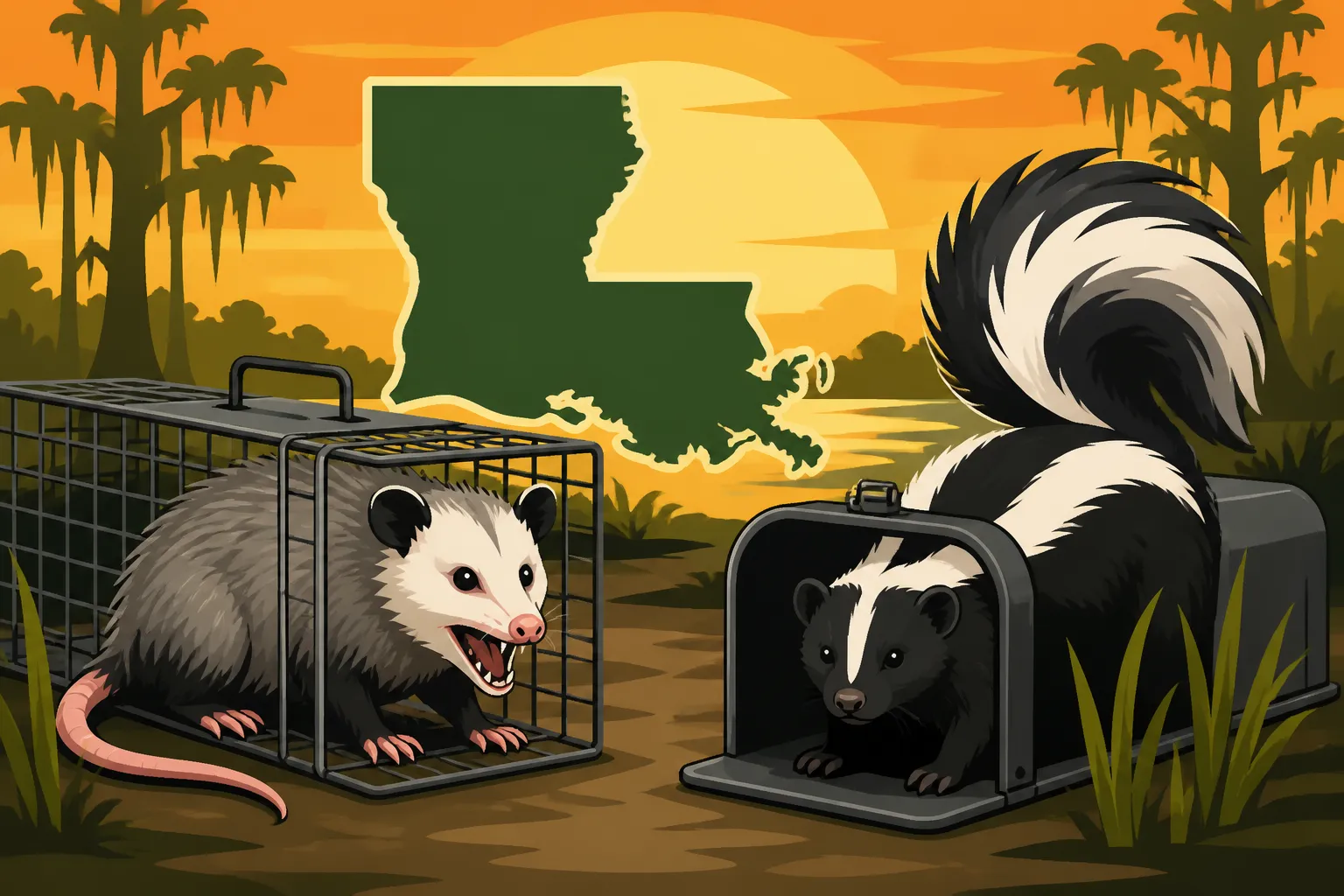
Louisiana Opossum and Skunk Trapping
Anyone who's lived in rural or even suburban Louisiana for a spell knows the frustration of uninvited guests. You put out the pet food for your beloved dog or cat, only to wake up and find it's been raided by something furry in the night. Or maybe you've got a funky smell emanating from under your porch, a tell-tale sign that a striped bandit has decided to make your crawl space its new home. Opossums and skunks, while part of our unique ecosystem, can quickly become a real headache when they move too close to home. This guide is here to walk you through the ins and outs of humanely and effectively trapping these common nuisance critters in Louisiana, helping you reclaim your space and your peace of mind.
Understanding Our Unwanted Guests: Opossums and Skunks
Before you can effectively deal with an opossum or skunk problem, it really helps to understand a little bit about their habits. These aren't just random critters; they have routines, preferences, and defensive mechanisms that you need to be aware of. Knowing what makes them tick can make your trapping efforts a whole lot more successful and, frankly, safer for everyone involved.
The Curious Case of the Opossum
Ah, the opossum. The only marsupial native to North America, and a creature that seems to be equally loved and reviled. They're often seen as creepy, but they're actually quite beneficial, eating ticks, snails, and even venomous snakes. However, their opportunistic nature is what lands them in hot water with us homeowners. Opossums are nocturnal, meaning they're most active from dusk till dawn. They're basically four-legged garbage disposals, happy to feast on anything from fallen fruit in your yard to pet food left on the porch, and especially anything that's tumbled out of an overturned trash can.
They don't build elaborate dens like some other animals. Instead, they're squatters, perfectly content to move into an abandoned burrow, a hollow log, a brush pile, or, you guessed it, a nice, dark, quiet spot under your house, deck, or shed. They're not aggressive by nature and are famous for "playing 'possum" – a involuntary defense mechanism where they enter a catatonic state when scared, rather than fighting. This can be startling, but it also means they're usually more interested in avoiding you than confronting you. Their diet and denning habits, though, put them directly in conflict with residential areas, leading many to seek trapping solutions.
The Stinky Reality of Skunks
Now, skunks are a whole different ballgame. Like opossums, they are nocturnal omnivores, and they're also not looking for a fight. They'd much rather avoid conflict, but if cornered or threatened, they have a potent defense mechanism that everyone knows about: that unforgettable, incredibly pungent spray. This oil, produced by glands near their tail, can hit targets up to 10-15 feet away with surprising accuracy, and the smell lingers for an incredibly long time on everything it touches.
Skunks are often attracted to yards because of insects, grubs, and spilled birdseed, and they love to dig small, cone-shaped holes in lawns while foraging. They'll also raid pet food and trash. For shelter, they prefer abandoned burrows, rock piles, hollow logs, and, just like opossums, the cozy, protected spaces under your home, porch, or shed. They're not particularly fast, so their spray is their primary defense. Understanding this is absolutely critical when considering trapping them, as nobody wants to end up smelling like a skunk for weeks. When these critters take up residence, you need a plan that respects their potent defense system.
Navigating Louisiana's Trapping Laws for Nuisance Animals
Before you even think about setting a trap, you absolutely need to understand the rules and regulations. Louisiana, like every state, has specific laws governing wildlife, and while opossums and skunks are often considered nuisance animals, there are still guidelines you must follow to ensure you're trapping legally and ethically. It's not just about avoiding fines; it's about responsible wildlife management.
Permits and Seasons for Opossums and Skunks
One of the biggest questions people have is whether they need a special permit or if there's a specific season for trapping these animals. Generally speaking, for nuisance animals like opossums and skunks that are causing damage to private property, Louisiana law often allows for their removal without a specific permit or during a set season. This is because they aren't considered game species in the same way deer or turkey are, and they can be year-round problems. However, this primarily applies to private land where they are directly causing issues.
If you are trapping for commercial purposes, or if you plan to use certain types of traps (like those that could harm non-target animals), or if you are on public land, the rules can change dramatically. It's always, always best practice to consult the latest regulations from the Louisiana Department of Wildlife and Fisheries (LDWF) before you start. They are the ultimate authority, and their website or local office can provide the most current and specific information for your situation. Don't just assume; confirm. You can often use mapping tools like GoHunt to verify property lines if you're unsure if your land abuts public areas where different rules might apply.
Trap Types and Relocation Restrictions
Louisiana regulations dictate not only if you can trap but also how you can trap. For opossums and skunks, live traps (cage traps) are generally the preferred and most humane method, especially for those not experienced in trapping. These traps capture the animal without injury, allowing for relocation or dispatch. However, there are rules about where and how you can relocate animals. In many cases, it's actually illegal to relocate nuisance wildlife to another area, especially public land, as it can spread disease or introduce invasive species to a new habitat. The rationale is that you're just moving the problem, potentially making it worse for someone else or for the ecosystem.
Lethal trap types, like body-grip traps (sometimes called Conibear traps) or even some types of foot-hold traps, are typically reserved for experienced trappers or licensed nuisance wildlife control operators. These can be very effective but carry higher risks of injury to non-target animals, including pets, and require a greater understanding of safe and ethical use. If you're considering anything beyond a basic live cage trap, you definitely need to be thoroughly educated on its use and legality. Always keep public safety and the well-being of other animals in mind.
Humane and Effective Trapping Methods for Opossums
When you're dealing with an opossum that has overstayed its welcome, your goal is likely effective removal, but with as much care as possible. They might be a nuisance, but they're still living creatures. Fortunately, trapping opossums is usually a straightforward affair, especially with the right equipment and a bit of patience.
Choosing and Setting Your Opossum Trap
For opossums, a medium-sized live cage trap is almost always your best bet. Look for a sturdy, wire mesh trap that's about 10x12x32 inches. Brands like Havahart are widely available and popular for this purpose. You want something large enough for the opossum to enter fully without getting stuck, but not so large that it can easily escape once triggered. Place your trap on a flat, stable surface in the area where you've seen activity. This could be near your trash cans, under your porch, or by a compromised fence line.
Before you set it, consider camouflaging the trap a little with some leaves or sticks around the edges to make it look less intimidating. You don't want to block the entrance, just soften its appearance. Make sure the trap is stable and won't rock or tip easily when the animal steps inside. You definitely don't want the trap to move unexpectedly and scare the opossum away before it triggers the door. Having a solid, inviting pathway into the trap is key to success.
Baiting Strategies and Placement
Opossums are not picky eaters, which works in your favor for baiting. Their omnivorous diet means you have a wide range of options. Some of the most effective baits include:
- Canned cat or dog food (their absolute favorite, often!)
- Overripe fruit (apples, bananas, berries)
- Vegetables (corn on the cob)
- Fish or fish-flavored cat food
- Peanut butter mixed with oats
Place a small amount of bait just inside the entrance, and then a larger, more enticing portion at the very back of the trap, behind the trigger plate. This encourages the opossum to step fully into the trap, ensuring the trigger is activated. You can also create a "bait trail" leading up to the trap entrance with small bits of food to draw them in. For example, a few drops of fish oil or a sprinkle of dry pet food leading to the cage can create an irresistible scent path. This visual and olfactory lure really increases your chances of a capture.
When deciding where to place your trap, think like an opossum. Where would you feel safe foraging at night? Along a fence line, near dense bushes, under a deck, or close to where you've seen them raiding. Avoid open, exposed areas. Always set traps in the evening, as opossums are nocturnal, and check them first thing in the morning. This reduces the time an animal spends trapped and helps prevent overheating or stress during the day. Remember, you're trying to resolve a nuisance issue, not cause undue harm or distress.
Handling and What Comes Next
Once you've successfully trapped an opossum, the next steps are crucial. Approach the trap calmly and quietly. Opossums will often "play 'possum," looking completely lifeless. Don't be fooled; they're very much alive. Wear heavy gloves to protect yourself, and handle the trap carefully to avoid startling the animal. If you need to move it, cover the trap with a blanket or tarp to reduce stress on the animal, keeping it calm and dark.
As for what comes next, remember those relocation rules. In Louisiana, it's generally discouraged or even illegal to simply release a trapped animal into a new area. The most common and recommended course of action for nuisance wildlife that cannot be relocated is humane dispatch. If you're not comfortable with this, or if you prefer another solution, contact your local LDWF office or a licensed nuisance wildlife control operator. They can provide guidance or even perform the service for you, ensuring it's done legally and humanely. Always consult the latest guidelines for your specific parish.
Specific Strategies for Trapping Skunks (and Avoiding the Spray!)
Trapping a skunk requires a bit more finesse and foresight than trapping an opossum, primarily because of that infamous spray. Your main goal, beyond capture, is to avoid getting sprayed yourself and to minimize the risk of the skunk spraying its surroundings. With the right approach, it's entirely possible to trap a skunk without incident.
The Right Trap for the Job
For skunks, a live cage trap is also the go-to, but with a critical modification: it needs to be covered. A specialized skunk trap will often have solid sides and a solid top, or you can modify a standard cage trap by covering it with a tarp, plywood, or heavy cardboard. The idea here is to create a dark, enclosed space. Skunks, when they feel threatened, will often stomp their feet, hiss, and then lift their tail to spray. If they can't see what they're spraying at, they are far less likely to discharge their scent.
The dimensions should be similar to an opossum trap, about 10x12x32 inches. Ensure the cover extends well over the trap and even down the sides, leaving just the entrance open. This creates a sense of security for the skunk once inside, and critically, prevents it from getting a visual on you when you approach. Choosing a trap that's already enclosed or easy to cover is paramount for a successful and scent-free operation.
Baits and Careful Placement
Skunks, like opossums, are opportunistic omnivores, but they have a particular fondness for certain foods. Good baits for skunks include:
- Peanut butter (especially spread on crackers or bread)
- Canned cat or dog food (fishy flavors often work well)
- Chicken scraps or bacon
- Sweet corn or corn on the cob
- Grubs or insects (if you can get them, often found by turning over rocks)
Again, set a small amount of bait near the entrance and the main portion at the back, past the trigger. The same "bait trail" technique can work well to draw them in. When placing the trap, look for areas where skunks are actively foraging, such as areas with small dug-out holes in your lawn, or near potential den sites under a shed or deck. Because skunks are very common around residential structures, you'll often find success placing traps along the edges of buildings or dense landscaping.
Just like with opossums, set your trap in the evening and check it first thing in the morning. This minimizes the time the skunk is confined and reduces the chances of them becoming overly stressed. The goal is a quick, efficient, and low-stress capture for the animal (and for you!). Remember, being patient and strategic with placement will greatly improve your chances of catching your target.
Approaching, Moving, and Releasing a Trapped Skunk
This is where all your preparation pays off. When you approach a covered skunk trap, do so slowly and quietly. Avoid sudden movements or loud noises. The skunk, being in a dark, enclosed space, won't be able to see you clearly, which is exactly what you want. Many trappers recommend approaching with a piece of plywood or a thick blanket held in front of you as an additional visual barrier, just in case.
Once you're at the trap, keeping it covered is essential. If the skunk is already in a covered trap, you're ahead of the game. If you used a standard cage trap and covered it after capture, keep the cover secure. Gently lift the trap and carry it away from your home. The steady, slow movement, coupled with the darkness, will usually keep the skunk calm. If you have to move it to a vehicle, ensure the trap is completely enclosed and stable. Remember those relocation restrictions from the LDWF. As with opossums, direct release into a new area is often not permissible. If you're unable or unwilling to humanely dispatch the animal, contacting a professional nuisance wildlife operator is your best course of action. They have the experience and equipment to handle the situation safely and in accordance with local laws.
Nuisance Animal Comparison
To help you remember the key differences in dealing with these two common Louisiana critters, here's a quick comparison:
| Feature | Opossum | Skunk |
|---|---|---|
| Primary Nuisance | Raids trash, pet food; den under structures | Spray, digging, den under structures |
| Nocturnal? | Yes | Yes |
| Main Defense | "Plays 'possum" (feigning death) | Potent, foul-smsmelling spray |
| Trap Type | Standard live cage trap | Covered live cage trap (essential!) |
| Preferred Baits | Pet food, fruits, fish, corn | Peanut butter, chicken, grubs, pet food |
| Handling Trapped Animal | Calm approach, cover for transport | VERY slow, quiet approach, keep covered |
| Relocation? | Generally discouraged/illegal | Generally discouraged/illegal |
| Odor Risk | Low (unless deceased) | Very High (if sprayed) |
Understanding these distinctions is vital for a successful and stress-free trapping experience. Whether it's the curious opossum or the cautious skunk, an informed approach makes all the difference. For further details on general small game rules that might impact nuisance animal trapping, you might check out Louisiana Small Game Season Rules. Also, understanding how to legally retrieve game from private land if an animal wanders off is important, so Retrieving Game From Private Land in Louisiana could be a helpful read. When dealing with wildlife around your home, knowing your property boundaries is crucial; resources like Finding Louisiana Property Lines or Using the LDWF Map Tool can be invaluable.
Preventing Future Critter Conflicts
Once you've successfully removed a nuisance opossum or skunk, your work isn't quite done. The real challenge is making sure they (or their friends!) don't come right back. Prevention is always the best long-term strategy, and it involves making your property less attractive to these opportunistic visitors.
Securing Food Sources
This is perhaps the single most important step. Both opossums and skunks are primarily drawn to areas where food is easily accessible.
- Trash Cans: Invest in heavy-duty garbage cans with tight-fitting, locking lids. If possible, keep them inside a garage or shed until collection day. A loose lid is an open invitation for a midnight buffet.
- Pet Food: Never leave pet food bowls outside overnight, especially if your pets eat on a porch or in a garage. Bring bowls inside as soon as your pets are done eating. This is a huge attractant.
- Bird Feeders: While lovely for birds, spilled birdseed is a feast for ground-dwelling critters. Use trays under feeders to catch fallen seed, or consider bringing feeders in at night. You might be surprised how much seed ends up on the ground, creating a smorgasbord for skunks and opossums.
- Fallen Fruit: If you have fruit trees, clean up any fallen fruit regularly. Overripe fruit on the ground is a beacon for these animals.
- Compost Piles: Keep compost piles contained in animal-proof bins. Open compost piles are essentially free buffets.
By eliminating easy meals, you make your property far less appealing, forcing them to look elsewhere for sustenance. It's a simple change that can have a dramatic impact.
Exclusion and Habitat Modification
Making your home and yard less hospitable to denning animals is another critical prevention measure.
- Seal Entry Points: Inspect your home's foundation, porch, deck, and shed for any gaps, holes, or weakened areas where animals could squeeze through. Opossums and skunks only need a small opening to gain access. Seal these entry points with heavy-gauge wire mesh, concrete, or sturdy lumber. Make sure to bury the mesh a few inches into the ground to prevent digging.
- Remove Hiding Spots: Clear away brush piles, rock stacks, old lumber, and debris from around your home. These provide ideal shelter and denning sites. The less clutter, the fewer places for them to hide.
- Trim Low Branches: If you have trees with branches hanging over your roof, trim them back. Opossums are decent climbers and might use these as access points to your attic or other elevated areas.
- Install Fencing: While more of an undertaking, a sturdy fence can be very effective. For ground-dwelling animals like skunks, the fence needs to be buried at least 6-12 inches into the ground and ideally bent outwards in an "L" shape to deter digging under it. A standard picket fence usually won't stop them from tunneling.
By taking these steps, you're essentially putting up a "No Vacancy" sign, making your property a less desirable place for opossums and skunks to call home. This proactive approach is key to long-term success. And if you're ever dealing with other nuisance animals, understanding regulations for trapping larger game like Louisiana Feral Hog Trapping Rules can give you a broader perspective on wildlife management, as often the same principles of baiting and exclusion apply, albeit with different equipment and legal considerations. Also, if you’re concerned about the broader impacts of such animals on local wildlife, you might find articles like Louisiana Predator Impact on Fawn Recruitment interesting, as these smaller predators can sometimes have a ripple effect on other species.
Disclaimer
This article is for general informational purposes only and does not constitute professional advice. Laws, prices and regulations vary by location and change over time. Consult a qualified professional for guidance on your specific situation.