Hunting Standing Cover Left After Harvest
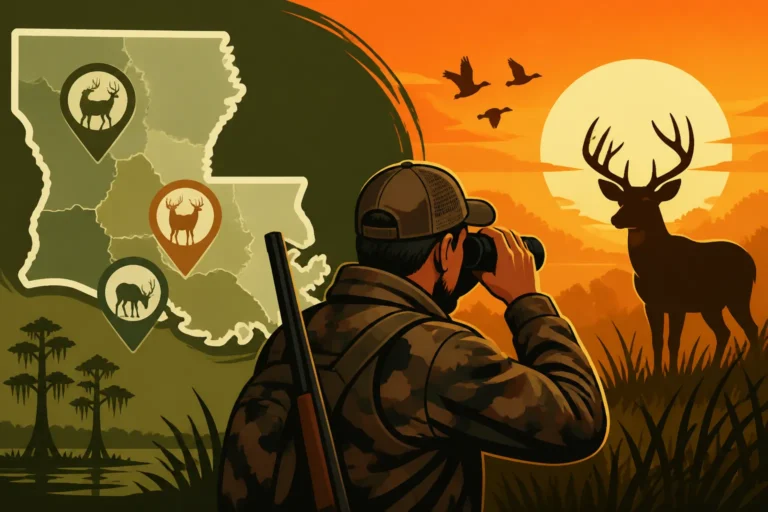
It’s a tale as old as time for Louisiana deer hunters: you’ve scouted, you’ve planned, and then the combines roll in, turning what was once perfect deer habitat into a barren wasteland overnight. Suddenly, your go-to spots are gone, and the deer seem to vanish into thin air. That feeling of frustration, like all your hard work has been undone, is totally relatable. But here’s a little secret: those smart old whitetails don’t just disappear. They retreat to the overlooked pockets of standing cover that the harvesters left behind. This guide is all about helping you uncover those hidden sanctuaries and develop effective strategies for hunting deer in the remaining standing cover after the major harvests have taken place.
The Allure of Leftover Standing Cover for Deer
When thousands of acres of corn, soybeans, or sugarcane are cut down, it creates a massive disturbance in the deer's world. Their primary sources of food and, more importantly, security are drastically reduced. This forces them to adapt quickly, and the most logical adaptation is to seek out any remaining patches of dense cover that can offer both refuge and sustenance. Understanding this fundamental shift in deer behavior is key to adjusting your hunting strategy.
Why Deer Gravitate Towards Unharvested Patches
Deer are survivalists, plain and simple. They thrive on two things: food and security cover. When vast fields are suddenly laid bare, any remaining standing cover becomes an absolute magnet. Think about a mature buck. He doesn't want to be exposed in a wide-open field, especially during daylight hours. Those leftover strips, even small ones, provide immediate visual obstruction, allowing him to feel safe enough to move and bed. It's not just about hiding from hunters; it's about hiding from coyotes, feral hogs, and anything else that might pose a threat. These areas are often overlooked by other hunters who might write off a field as "done" after harvest, making them even more attractive to pressured deer.
Imagine a small, half-acre patch of corn that, for whatever reason, didn't get harvested. To a deer, that's not just food; it's a fortress. It offers a dense canopy overhead, stalks to rub against, and crucial hiding spots. It's a quiet, safe haven in a world that just got a whole lot louder and more exposed. This is particularly true in areas where natural forest cover is fragmented, making these agricultural pockets even more vital.
Understanding the Shelter and Food Dynamic
The draw of standing cover isn't solely about shelter; it's a potent combination of both shelter and food. While the primary crop might be harvested, there are always residual grains, stalks, and weeds left behind that provide calories. A deer can spend an entire day bedded down in a dense patch of standing beans, occasionally nibbling on pods or young sprouts, without ever having to expose itself. This conservation of energy and reduced risk exposure is exactly what makes these areas so valuable.
Consider a standing cane field, for example. Even after the mechanical harvesters have gone through, there are often entire sections or edges that are too wet, too tangled, or simply missed. These patches of sugarcane provide incredibly dense thermal cover against cold fronts and torrential rains, as well as an ongoing food source. The sweet stalks are a deer delicacy, and a buck can comfortably cruise through these dense corridors, feeling completely hidden, even in broad daylight. This dual benefit—ultimate security paired with readily available food—makes these spots irresistible.
Identifying Prime Standing Cover Opportunities
Finding these overlooked goldmines requires a keen eye, good scouting skills, and sometimes, a little help from technology. It’s not about driving by at 60 mph and assuming nothing is there. It’s about slowing down, really looking at the landscape, and thinking like a deer that’s just had its home bulldozed.
Recognizing Different Crop Types and Their Value
Not all standing cover is created equal. Different crops offer varying degrees of attraction and present unique hunting challenges. Knowing what you're looking for can save you a lot of time and effort.
- Standing Corn: This is arguably the king of standing cover. The dense stalks offer incredible visual and thermal cover. Even after most of the ears are picked, deer will browse on leftover kernels, broken cobs, and tender new shoots. It's a preferred bedding area, especially for mature bucks, and they will often stage here before moving to other food sources. Hunting a Standing Cornfield in Farm Country requires careful planning due to the noise you might make moving through it.
- Standing Soybeans: These fields, when left standing, provide excellent browse and decent cover. Deer love to munch on the high-protein beans. The cover isn't as tall or dense as corn, but it's often thick enough to conceal a bedded deer. They are especially valuable if they are adjacent to timber or a water source, creating an easy transition for deer. You'll find deer making specific Entry Routes Through Standing Soybeans to access these areas.
- Standing Sugarcane: Unique to parts of Louisiana, particularly the southern parishes, these fields can be incredibly dense. Sugarcane offers supreme thermal and visual cover, acting as a massive security blanket. Deer will bed deep within these fields and browse on the sweet cane. The challenge here is the sheer impenetrability, often making it difficult for hunters to move through without making a racket.
- Thick Brush and Weedy Areas: Sometimes, the "standing cover" isn't a crop at all, but rather neglected patches of brush, tall weeds, or CRP (Conservation Reserve Program) ground adjacent to harvested fields. These areas, though not offering direct food, become critical security cover. They act as natural travel corridors and bedding areas, especially if they haven't been mowed or grazed.
Scouting for Sign and Entry Points
Once you've identified potential areas of standing cover, the next step is detailed scouting. This isn't just a casual drive-by; it’s an investigative mission. You're looking for definitive proof that deer are using these spots, and more importantly, how they're using them.
Start by utilizing modern mapping tools like GoHunt to get a bird's-eye view. This allows you to pinpoint isolated patches of standing crops, thick fence rows, or unharvested corners that might be holding deer. You can also identify natural funnels or pinch points that connect these patches to larger timber blocks or water sources. Use the aerial photos to study potential Entry Routes Through Standing Soybeans or other crop fields, looking for areas where deer might naturally enter or exit. Pay close attention to subtle changes in elevation or cover density that might not be obvious from the ground.
On foot, look for fresh tracks leading into and out of the cover. Pay close attention to the edges, as deer will often parallel the field edge before slipping into the densest part. Look for droppings, rubs, and scrapes, particularly on the timber edge bordering the standing cover. The size and freshness of tracks will tell you a lot about the deer using the area. If you find a well-worn trail leading into a thicket of standing corn, you know you're onto something. Consider setting up a trail camera on these trails, facing into the cover, to get an idea of what's using the area and at what times. This kind of detailed reconnaissance is crucial for Scouting Louisiana Public Land Before Season and applies equally to private land after harvest.
Strategic Approaches to Hunting Standing Cover
Hunting these areas requires a different mindset and different tactics than hunting typical timber or open food plots. It's often a game of patience, stealth, and understanding the nuances of how deer move and bed within dense vegetation.
Still-Hunting and Ground Blind Tactics
For dense standing cover, a still-hunting approach can be incredibly effective, albeit challenging. This involves moving extremely slowly, taking a few steps, then pausing for several minutes to glass and listen. The goal is to surprise a bedded deer or catch one moving stealthily within the cover. This is particularly effective in standing corn or cane, where visibility is limited, and deer might be holding tight.
When still-hunting, use the wind to your advantage, always moving into it. Walk against the rows of crops if possible, as this naturally slows your progress and allows you to peer down the rows. Wear quiet clothing and watch for subtle movements—a flicker of an ear, a twitch of a tail. Your eyes should be scanning for horizontal lines or patches of brown that break up the vertical pattern of the stalks. This technique is mentally demanding, but it can pay off with close-range encounters.
Alternatively, using a ground blind offers a fantastic advantage, especially if you can set it up well in advance. Position your blind along a well-used trail leading into or out of the standing cover, or on a strategic edge that offers a good view without being too exposed. Brushing In a Blind on a Field Edge is critical for success; you want it to blend in perfectly with its surroundings. Use natural vegetation to break up its outline and eliminate any unnatural shapes. A pop-up blind can also work if you deploy it strategically and rapidly, especially if deer are already conditioned to agricultural equipment in the area. Make sure your scent is managed rigorously, as deer will be moving in and out of these areas, often at odd times.
Elevated Stands and Wind Considerations
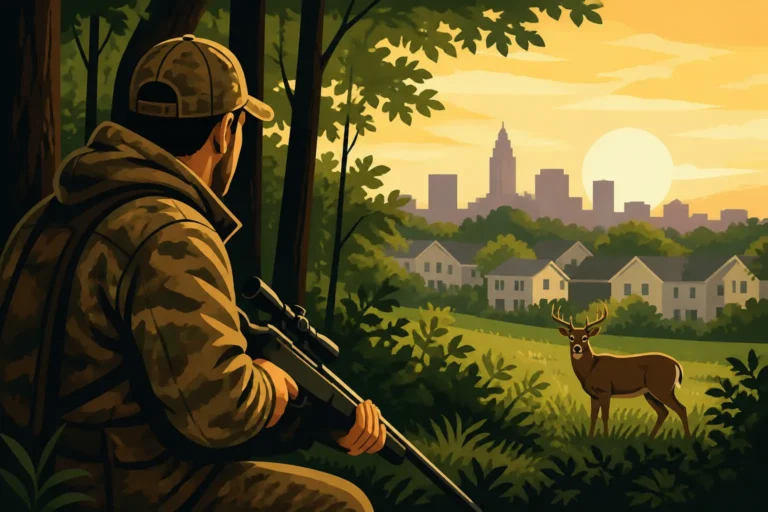
While ground blinds are great, elevated stands also have their place, especially when hunting the edges of standing cover. A well-placed treestand or box blind can give you a crucial visibility advantage over the dense vegetation. Look for stands of trees along the field edge that offer a commanding view of the remaining cover and any associated travel corridors.
The key with elevated stands is to understand how Wind and Thermals in Swamp Bottomland (or in this case, farm country) will affect scent disbursement. Even a slight breeze can carry your scent into the cover, alerting deer before they ever show themselves. Monitor the wind direction religiously and only hunt stands when the wind is favorable. For example, if deer are likely to bed deep in a standing cornfield during the day and emerge in the evening to feed in an adjacent plot, you'd want a stand on the downwind side of their expected travel path, ensuring your scent blows away from the cornfield and their approach. GoHunt can also help here by overlaying wind direction tools onto aerial maps, allowing you to visualize scent cones relative to potential stand locations.
Consider using a box blind on a sturdy platform, which can offer greater concealment and allow you to adjust your position without being seen. These are particularly effective overlooking larger patches of standing cover, especially if they are situated where multiple deer trails converge. Always scout your access and exit routes carefully, ensuring you can get to and from your stand without alerting deer that might be staged nearby.
Overcoming Challenges and Maximizing Success
Hunting standing cover isn't always easy. It's often thick, loud to move through, and can feel like trying to find a needle in a haystack. But with the right mindset and tactics, you can turn these challenges into opportunities.
Dealing with Thick Cover and Limited Visibility
The very thing that attracts deer to standing cover – its density – is also what makes it challenging to hunt. Visibility can be extremely limited, sometimes to only a few yards. This means shot opportunities can be fleeting and at very close range.
To combat this, focus on creating shooting lanes where possible. If you're using a ground blind, clear any brush directly in front of your shooting window. If you're in a treestand, use pruning shears to open up narrow lanes that offer a clear view of trails or openings within the cover. Remember, it doesn't take much of a lane to thread an arrow or bullet through.
When still-hunting, move slower than you think is necessary. Take three to five steps, then stop and carefully scan for five to ten minutes. Use your binoculars extensively, even at close range, to pick apart the cover. Look for horizontal lines, unusual shapes, or changes in color that indicate a deer. Listen intently for subtle sounds: a rustle, a twig snap, or the soft blowing of a deer. Often, you'll hear a deer before you see it. Be prepared for a quick shot, and practice shooting at close, unexpected ranges.
Adapting to Changing Conditions and Pressure
Deer behavior in standing cover isn't static; it changes with weather, hunting pressure, and the progression of the season. Being adaptable is crucial for consistent success. For example, Hunting Deer After a Cold Front can drastically alter deer movement. After a bitter cold snap, deer might be less likely to emerge into open fields, choosing instead to stay bedded deep within the thermal cover of standing crops, only moving short distances to feed on what's available inside.
Heavy hunting pressure on surrounding properties will also push deer into these dense, overlooked pockets. If neighboring areas are being heavily hunted, expect the standing cover to be holding more deer, and older, warier bucks. In these scenarios, a longer sit in a well-placed blind might be more effective than trying to still-hunt, as the deer will be hyper-sensitive to movement.
As the season progresses, and other Late-Season Food Sources for Louisiana Whitetails like green fields or mast crops become depleted, deer will rely more heavily on any remaining agricultural residue. This makes those standing patches even more valuable later in the year. Keep an eye on the surrounding fields. If all other food sources are gone, that standing cover, even if it's just stalks and stubble, might be the only game in town. Always check the latest regulations using the LDWF app or website to ensure you're compliant with all hunting laws, especially when considering different areas like those covered in Louisiana Deer Hunting Area by Area.
In summary, hunting standing cover left after harvest is a fantastic way to find pressured deer, especially those elusive mature bucks. It requires detailed scouting, strategic stand placement, and a patient, deliberate hunting approach. Don't write off a field just because the combines have been through – often, the best hunting begins after the harvest is complete.
Disclaimer
Hunting is an inherently dangerous activity. Always prioritize safety, understand and follow all Louisiana Department of Wildlife and Fisheries regulations, and obtain appropriate licenses and landowner permissions before hunting. The information provided here is for educational purposes and general guidance only; it does not replace professional instruction or local regulations.