Predator Calling Louisiana Farm Country
The distinct challenges of hunting predators in Louisiana's vast farm country often leave hunters feeling frustrated. Unlike dense timber or sprawling marshes, these open agricultural landscapes demand a completely different approach to calling and concealment. This guide will walk you through the nuances of predator calling in Louisiana's rural farmlands, offering practical advice and advanced strategies to help you connect with wary coyotes, elusive bobcats, and even the ever-present feral hogs.
Understanding Louisiana Farm Country Predators
Louisiana's farm country, while seemingly devoid of "wild" places, is actually a bustling ecosystem for various predators. These animals thrive on the abundant food sources provided by agriculture and the cover offered by hedgerows, ditches, and woodlines bordering fields. Knowing what you're up against and why they're there is the first step to success.
Key Predator Species in Agricultural Areas
When you're setting up a stand in a Louisiana farm field, you're primarily targeting coyotes, bobcats, and often, feral hogs. Each species presents its own unique challenge and requires a slightly different approach. Coyotes are the most numerous and respond readily to distress calls, but they are also incredibly intelligent and wary. You might encounter them at any time of day or night. Bobcats, on the other hand, are far more elusive, often sticking to the dense cover along field edges and making quick, silent approaches. They're often drawn to the same prey species as coyotes but move with much greater stealth. Then there are feral hogs, which aren't typically "called" in the traditional sense, but can certainly be drawn to specific areas, and whose presence affects other predator movements. Understanding what drives each of these animals is crucial for a successful hunt.
Why Farm Country is Prime Predator Habitat
The reason these predators thrive in agricultural landscapes is simple: food and opportunity. Farm fields are essentially giant buffets. Rodents, rabbits, and ground-nesting birds flourish in crops like corn, soybeans, and rice, providing a constant food supply. When fields are harvested, the remaining stubble and scattered grain attract even more small game, further concentrating prey animals. This abundance of food means predators don't have to travel far, making these areas highly attractive. Beyond food, the network of ditches, fencelines, and uncultivated edges provides vital travel corridors and secure bedding areas. These narrow strips of cover become highways and safe havens for predators moving between feeding grounds and resting spots, making them predictable ambush points for a savvy hunter.
Reading the Signs: Scouting Farm Country
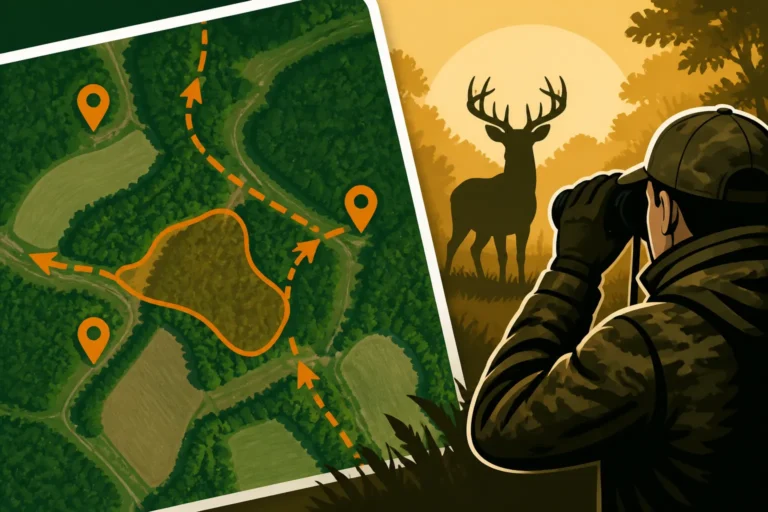
Effective predator calling begins long before you ever set up your stand. Scouting in farm country is about understanding the lay of the land and where the animals are moving. Look for tracks along dirt roads, irrigation ditches, and the edges of fields. Pay attention to scat, which can tell you what they're eating and how recently they've been in the area. Focus on pinch points—areas where cover narrows, forcing animals into predictable travel routes. These might be a small bridge over a ditch, a narrow strip of timber connecting two larger woodlots, or even a gap in a fencerow. Knowing where to expect an animal to emerge or travel will allow you to position yourself for the best shot opportunity. Don't forget to look for kill sites or areas where smaller game is abundant, as predators will naturally gravitate to these spots.
Essential Gear for Predator Calling Success
Hunting predators in Louisiana's farm country requires specific gear tailored to the unique environment. You won't be navigating dense swamps or deep woods as you might when Hunting Atchafalaya Basin Swamp Deer; instead, you'll often be in more open, exposed terrain, which changes your equipment needs significantly.
Calls: Electronic Versus Hand Calls
The choice between electronic and hand calls is a significant one for predator hunters. Electronic calls, like those from Foxpro or ICOtec, offer a vast library of realistic sounds, from rabbit distress to coyote howls and even bird sounds. They allow you to project sound across wide-open fields, adjust volume remotely, and switch calls quickly, which can be a huge advantage when trying to entice a wary animal that's hanging up at a distance. For calling in open areas, the ability to place the call away from your position, drawing attention away from you, is invaluable.
Hand calls, while requiring more skill to master, offer an intimacy and spontaneity that electronic calls sometimes lack. They are lightweight, require no batteries, and allow for immediate, nuanced adjustments to volume and tone based on the animal's response. Many seasoned hunters prefer a combination of both, using an e-caller for initial long-range attention and then switching to a subtle hand call once a predator is closer and scrutinizing the sound. A good strategy is to use the e-caller to get attention, then when the animal is within sight but cautious, use a silent approach with a hand call to seal the deal.
Optics and Shooting Aids
Given the often-open nature of farm country, quality optics are non-negotiable. A good pair of binoculars (10×42 or 12×50) is essential for scanning distant field edges, identifying approaching animals, and confirming species. Predators, especially coyotes, often approach from downwind, circling wide to get a sniff, making it crucial to spot them early. Rangefinders are also critical, as distances in open fields can be deceiving, leading to misjudged shots. Knowing the exact distance to a fence line, a clump of brush, or a distant tree can be the difference between a clean kill and a missed opportunity.
For shooting, especially with rifles, a stable rest is paramount. Bipods, shooting sticks, or even a backpack can provide the stability needed for accurate shots at varying ranges. Remember, a predator's vitals are a relatively small target, and a steady aim is crucial. When Hunting Small Private Tracts in Louisiana, you might encounter varying terrain, making versatile shooting aids even more important. Some hunters even use specialized shooting benches if they anticipate long waits in a single, static position overlooking a large field.
Weapon Choices for Different Ranges
The weapon you choose will largely depend on the typical distances you expect to engage predators in farm country. For close-range encounters, often near dense cover or smaller fields, a shotgun loaded with buckshot or heavy predator loads (like BB or T-shot) can be highly effective. The spread offers a bit more forgiveness if an animal comes in fast and close. However, shotguns have limited range.
For the more common longer shots in open fields, a rifle is usually preferred. Calibers like .223 Remington, .22-250, .204 Ruger, or even a flat-shooting .243 Winchester are popular choices. These calibers offer the accuracy and velocity needed to humanely dispatch predators at 100-300 yards or more. Consider the trajectory and bullet drop of your chosen cartridge, especially if you're engaging animals across vast, flat agricultural landscapes. Crossbows can also be effective, particularly if you're bowhunting, but require even closer ranges and careful shot placement. Ensure your chosen firearm and ammunition are legal for hunting coyotes and other predators in Louisiana, and always confirm your zero before heading to the field.
Mastering Calling Techniques
Calling predators isn't just about making noise; it's about mimicking real-life scenarios that compel a predator to investigate. It's a psychological game that requires patience, understanding, and adaptability.
Mimicking Prey Distress Calls
The bread and butter of predator calling involves distress calls. Think about a rabbit in a trap, a bird caught by a hawk, or a mouse squealing. These sounds trigger an instinctive response in predators – the chance for an easy meal. When using rabbit distress calls, start softly, then gradually increase volume and intensity, mimicking the animal's struggle. After a minute or two of calling, go silent for several minutes, scanning the area intently. Predators often approach cautiously, using cover, so you might not see them right away. Varying your calling cadence and sound intensity can make the call sound more realistic and enticing. Remember, predators in farm country, especially coyotes, can become "call-shy" if they've been hunted frequently. Sometimes, a less common distress call, like a fawn distress or bird in distress, might be more effective than the standard rabbit squeal.
Understanding Predator Vocalizations
Beyond distress calls, understanding and mimicking predator vocalizations can be incredibly effective, especially for coyotes. Howls, barks, and yips can be used for various purposes: locating coyotes, challenging a territorial male, or even eliciting a response from a pack. For example, a lone howl might be used to get a distant coyote to respond, revealing its location. A challenge howl, more aggressive and complex, can draw in a dominant male looking to defend its territory. Pup distress calls can be used to draw in adult coyotes, particularly in the early fall when pups are still with the adults. These calls often require more nuanced timing and a deeper understanding of coyote behavior, but they can be incredibly powerful tools. When using howls, especially, be aware that you might not always draw a coyote in, but you might get a response that helps you pinpoint their general location for a later setup. This is a great way to "Scouting Louisiana Public Land Before Season" for predator activity.
Timing Your Calls for Maximum Effect
The timing of your calls is just as crucial as the sounds you make. Generally, early morning and late evening are prime times, as these are when many predators are most active. However, in farm country, coyotes can be active throughout the day, especially during cooler weather or if they're particularly hungry. When you start your calling sequence, consider the environment. If it's windy, you'll need to call louder and more frequently to cut through the noise. If it's calm, more subtle, intermittent calls might be all that's needed.
Varying the duration and intensity of your calls is also important. Don't just blast a constant loop. Mimic natural pauses and fluctuations. A typical calling sequence might involve a few minutes of distress calls, followed by 5-10 minutes of silence and observation, then repeating. Sometimes, a short, sharp burst of a distress call is all it takes to trigger a response from a nearby animal that's already on the move. Experiment with different timings and listen to how the environment responds, including any distant barks or howls from your quarry.
Strategic Setups for Farm Country Success
Unlike hunting in dense forests, farm country demands creative thinking about concealment and approach. Open fields leave little room for error when it comes to positioning yourself undetected.
Utilizing Limited Cover
The biggest challenge in farm country is often the lack of dense cover. You can't just tuck yourself into a thicket of palmettos like you might when working Palmetto Thickets for Deer. Instead, you need to be strategic about using what little cover is available. Fence rows, irrigation ditches, brush piles, drainage culverts, and isolated clumps of trees are your best friends. These aren't just places to hide; they're also natural travel routes and ambush points for predators. Position yourself downwind of where you expect the predator to approach, using any available cover to break up your silhouette. A small rise in the terrain, even a slight change in elevation, can provide enough backdrop to conceal you from approaching eyes. Remember, a predator's eyes are always scanning for movement and unnatural shapes.
Wind Direction and Approach
Wind direction is arguably the single most critical factor in predator calling, especially in open country where scent travels far and wide. Predators, particularly coyotes, rely heavily on their sense of smell. They will almost always circle downwind to get a whiff of whatever is making the distress sound, confirming it's a real and vulnerable meal, and not a trap. Therefore, you must set up with the wind in your face or quartering. This means approaching your setup location from upwind, ensuring your scent is blowing away from where you expect the animal to appear. Failure to do so will almost guarantee they bust you before you even see them. Always check the wind before and during your hunt, as it can shift unexpectedly, especially in a flat landscape. Consider a multi-directional setup if you're uncertain about wind consistency, giving yourself options.
Concealment and Camouflage
In wide-open farm fields, where a predator can spot movement from hundreds of yards away, superior concealment is paramount. Full camouflage, including face masks and gloves, is essential. Break up your outline with natural elements whenever possible. A ground blind, especially one that blends seamlessly with the surrounding vegetation, can be a game-changer. These blinds not only hide you but also contain your movement, allowing you to shift and prepare for a shot without alerting sharp-eyed predators. When using a ground blind on Louisiana Public Land, ensure it's brushed in thoroughly with local vegetation to make it disappear into the landscape. Even when using natural cover, remaining absolutely still is crucial. Any sudden movement can send a wary coyote or bobcat heading for the next county. Think like the predator; what would they see, hear, or smell?
Tactics for Different Predator Species
While there's overlap in predator calling, tailoring your approach to the specific species you're targeting can significantly increase your success rates. Louisiana farm country hosts a mix, each requiring a nuanced strategy.
Calling Coyotes in Open Fields
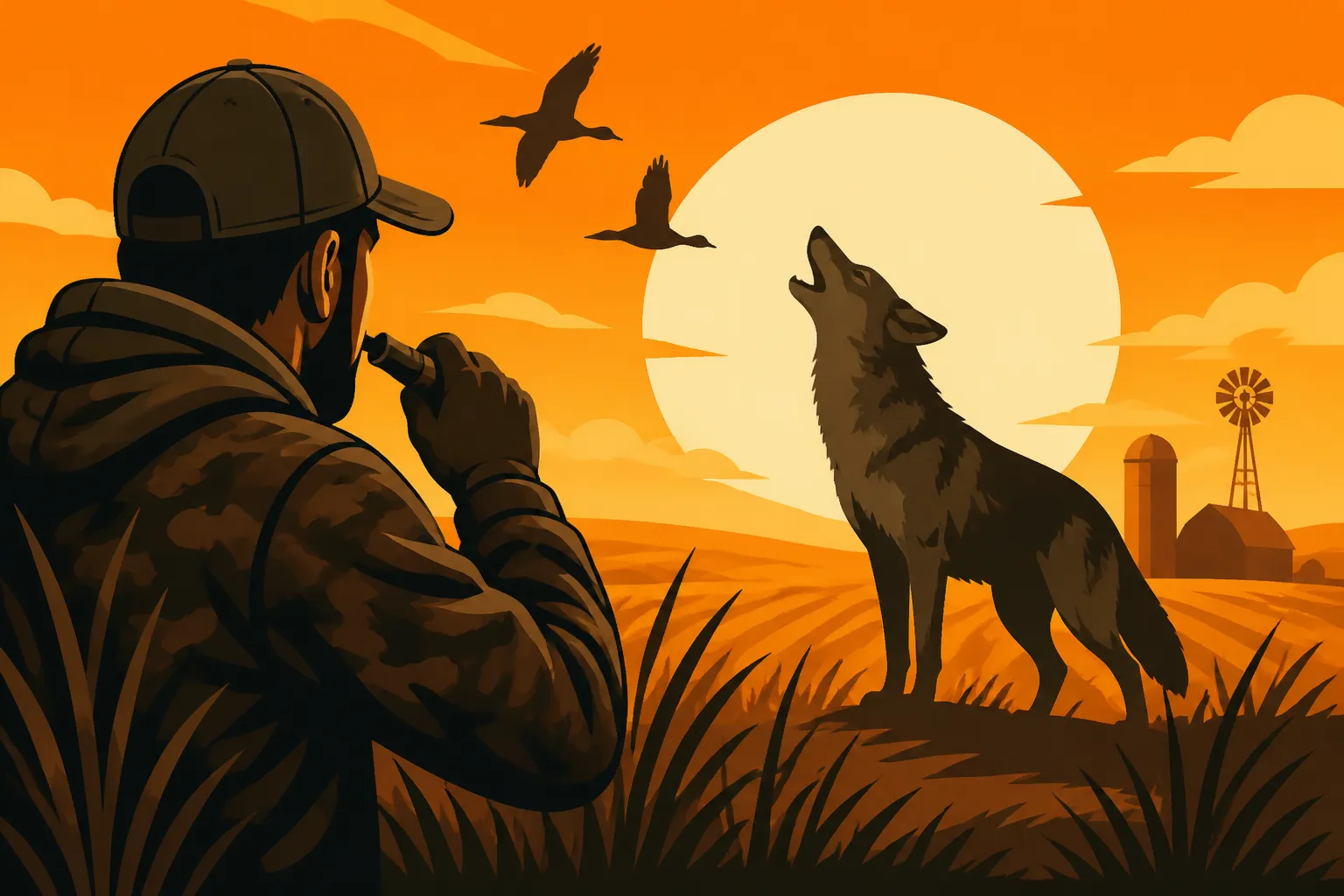
Coyotes are the quintessential farm country predator. They're intelligent, adaptable, and often respond aggressively to calls. When calling coyotes in open fields, speed and observation are key. They can cover ground quickly, and a distant howl can turn into a close-range encounter in minutes. Start with a relatively loud, intermittent distress call to grab their attention across the vast expanse. Electronic calls excel here, allowing you to place the call 50-100 yards away from your shooting position, drawing the coyote's focus away from you.
As the coyote approaches, be ready for them to circle wide, attempting to get downwind. Keep your eyes peeled on those downwind corridors and the edges of any available cover. If a coyote hangs up at a distance, becoming wary, try switching to a more subtle, higher-pitched distress call, or even a pup-in-distress sound to tap into their parental instincts. Sometimes, a short, sharp series of barks or yips can convince a hung-up coyote that rivals are moving in on its meal, triggering it to commit. Remember, coyotes are always looking for an easy meal, but they're not foolish; patience and adaptability are your best tools.
Ambushing Bobcats Near Woodlines
Bobcats are a different beast altogether. Far more elusive and cautious than coyotes, they rarely commit to a call in the open. Instead, they prefer to stick to dense cover, slinking along woodlines, hedgerows, and creek bottoms. When targeting bobcats in farm country, focus your setups along these transition zones between fields and thick cover. Your calls should be more subtle and less aggressive than for coyotes. High-pitched bird distress, mouse squeaks, or even a soft rabbit call can entice a bobcat.
The key with bobcats is patience and precise timing. They often approach silently and slowly, sometimes taking 10-15 minutes to cover even short distances. They'll use every bit of cover available, so scan intently, especially for movement in the shadows or at the base of trees. Setting up your call close to the woodline, perhaps 20-30 yards into the field, can draw them out just enough for a shot. Once you see a bobcat, stop calling immediately and prepare for the shot; any further sound might spook them. Their quick, deliberate movements mean you need to be ready to shoot as soon as they present an ethical shot opportunity.
Dealing with Feral Hogs
While not typically "called" with distress sounds like coyotes and bobcats, feral hogs are an undeniable presence in Louisiana's farm country and often targeted by hunters looking to reduce their numbers. They cause significant crop damage and can be found almost anywhere, often in groups. While distress calls might not directly lure them, the commotion created by active calling for other predators can sometimes draw their curiosity or prompt them to move through an area.
More effectively, hunters targeting hogs often use bait sites, especially in specific locations where they're causing problems, or focus on active scouting. Learning to read mud and tracks for fresh hog movement is crucial. Hunters can use thermal or night vision optics for night hunting hogs with lights on private land, which is a highly effective method where legal. For daytime hunts, focusing on dense cover where they bed down, or travel corridors between bedding and feeding areas, can be productive. While you might not "call" them in the traditional sense, understanding their movements and habits in farm country is essential for effective management.
Safety and Ethical Considerations
Hunting predators in Louisiana's agricultural areas comes with a unique set of safety and ethical responsibilities, given the proximity to human activity and livestock. These are crucial considerations, just as important as knowing your specific season dates and limits, as outlined in Louisiana's Ten Deer Hunting Areas Explained.
Hunting Near Rural Homes and Livestock
Farm country isn't wilderness. You're often hunting near homes, barns, roads, and active agricultural operations. This means extreme caution is required. Always identify your surroundings, including any residences or outbuildings, before you even consider a shot. Never shoot in the direction of a dwelling, regardless of distance, unless you have an absolutely clear, safe backdrop. Be acutely aware of any livestock in fields. A stray bullet can travel far and cause catastrophic damage or injury to animals, leading to serious legal consequences and damaging hunter-landowner relations. If you're on private land, communicate openly with the landowner about your intentions and hunting zones. On public lands that border private property, be hyper-aware of property lines and setback rules. Even though feral hogs do not need landowner permission to hunt them on private land, responsible hunting demands respect for private property and safety.
Knowing Your Backdrop and Shot Angles
In open farm fields, knowing your backdrop is paramount. A small rise, a distant woodline, or a ditch bank might seem like a good backdrop, but a rifle bullet can travel for miles, especially when fired at a shallow angle. Always ensure that any shot you take has a completely safe and impenetrable backdrop. This often means waiting for the animal to move into a position where a safe shot is possible, rather than rushing a less-than-ideal opportunity.
Consider your shot angle carefully. A shot straight into a flat field might send a bullet skipping for a very long distance. A slight elevation difference or shooting towards a natural earth bank offers much greater safety. When hunting near roads or trails, always be mindful of potential vehicle or pedestrian traffic. It’s always better to let an animal walk than to take a risky shot that could endanger others or their property. This diligence is crucial for all hunting, whether you're using a Choosing Legal Primitive Firearms Gear or a modern rifle.
Responsible Predator Management
Predator calling, especially for coyotes and feral hogs, plays a vital role in wildlife management, particularly in agricultural areas where these animals can impact livestock and crop yields. However, responsible management means more than just killing animals. It involves understanding the role predators play in the ecosystem and aiming for sustainable practices. For coyotes, selective harvesting can help manage local populations, but understand that complete eradication is often impossible and potentially detrimental.
For feral hogs, consistent pressure and removal are usually necessary due to their destructive nature and rapid reproduction rates. Always ensure you're following all Louisiana Department of Wildlife and Fisheries (LDWF) regulations for the species you're hunting. Report your harvest if required, and if you have questions about local populations or specific management needs, reach out to local wildlife biologists. Being an ethical and informed hunter contributes to the long-term health of both wildlife populations and the hunting tradition itself. Using mapping tools like GoHunt can help you understand public vs. private land boundaries and research different parcels to hunt, promoting responsible land access.
Post-Hunt Considerations
Your work isn't done after the shot. Recovering your animal, field dressing, and complying with regulations are all part of responsible predator hunting.
Tracking and Recovery in Farm Country
Even with a well-placed shot, animals can run, especially in open country. Tracking in farm fields presents its own unique challenges. While there might be less dense brush to contend with than in, say, Basin Tactics for Louisiana Swamp Deer, the short stubble or tall crops can make blood trailing difficult. Always mark the spot where the animal was standing when you shot and the last place you saw it. Take your time to systematically search for blood, tracks, or disturbed vegetation.
If the animal crosses into a thicket or woodline, slow down even further, moving carefully and looking for any sign. A good flashlight is invaluable, even in daylight, for spotting small drops of blood. If you lose the trail, give the animal some time, especially if it's wounded but not obviously dead. Sometimes, a coyotes or bobcat will lay down and expire if not pressured immediately. Returning with fresh eyes or an extra set of hands after a brief wait can often lead to recovery.
Processing and Handling Predator Carcasses
Once recovered, the ethical hunter processes their take. For coyotes and bobcats, many hunters skin them for their fur. If you plan to do this, ensure you know how to properly skin and preserve the hide. If not, consider field dressing and cooling the carcass as quickly as possible, especially in Louisiana's warm climate. While predator meat isn't typically consumed in the same way as deer or turkey, some hunters do eat coyote, and it can be used for trap bait or disposed of properly.
Feral hogs, on the other hand, offer excellent table fare. You'll want to field dress them promptly to cool the meat. Removing the entrails helps prevent spoilage, especially if you have a long retrieve. Consider carrying a cooler with ice, especially on warm days, to get the meat cooled down quickly. Always be aware of potential diseases like brucellosis that can be carried by feral hogs; wear gloves when handling and cook the meat thoroughly. Checking a Louisiana Deer Harvest Online is common, but remember to follow specific reporting guidelines for other species if required.
Regulatory Compliance and Reporting
Staying on the right side of the law is non-negotiable. Always check the current Louisiana Department of Wildlife and Fisheries regulations for predator hunting before you go afield. These regulations can change year to year and may have specific requirements for certain species or areas. For instance, while feral hogs often have liberal hunting rules, coyotes might have specific seasons or methods depending on the property type.
Understand any reporting requirements, especially for species like bobcats, which might have CITES tags or other regulations for fur bearers. Even if reporting isn't mandatory, it's good practice to keep track of your harvests. This data can sometimes be valuable for wildlife agencies in understanding population trends. Being familiar with the rules, perhaps even using the GoHunt app to keep track of regulations or private land boundaries, ensures you're hunting legally and ethically, contributing positively to the perception of hunters in Louisiana.
Disclaimer
Please note: Hunting regulations and seasons can change. Always consult the latest Louisiana Department of Wildlife and Fisheries (LDWF) regulations prior to engaging in any hunting activities. Safety should always be your top priority in the field.