Verifying Land Access Before You Book
It's one of the biggest anxieties when you're planning a hunting trip, especially when you're investing good money and precious vacation time: what if you show up and the land isn't what you expected, or worse, isn't accessible at all? Nobody wants to drive across the state, or even across the country, only to find themselves with nowhere legal to hunt. This guide is all about helping you cut through the uncertainty and verify an outfitter's land access before you ever leave home.
Why Verifying Land Access Matters More Than You Think
Picture this: you've spent months planning, saved up your hard-earned cash, bought your Louisiana Hunting Licenses and What They Cost, and maybe even invested in new gear. You're dreaming of that perfect Louisiana morning, the crisp air, and the rustle of leaves. Then you arrive at your destination, full of anticipation, only to find out that the outfitter's "private land" is actually a small, over-hunted parcel, or worse, there's a dispute over the lease, and you can't even step foot on it. It sounds like a hunter's worst nightmare, and sadly, it happens.
The Nightmare Scenario: Arriving to No Hunting Ground
This isn't just about losing money, although that's certainly a huge part of the sting. It's about wasted time, shattered expectations, and the sheer frustration of being strung along. Imagine taking a week off work, leaving your family, and traveling hundreds of miles to hunt White-Tailed Deer Across Louisiana or chase Louisiana Waterfowl on the Mississippi Flyway, only to discover the outfitter misrepresented their land. You're left scrambling, trying to find alternative public land access, which might be hours away and already packed with other hunters. It’s a gut-wrenching feeling, knowing your carefully planned adventure has dissolved into a logistical headache. You might end up on a tiny, pressured piece of land when you were promised expansive, untouched territory. This can turn a dream hunt into a major disappointment, leaving you feeling cheated and making you question future guided trips.
Understanding Different Types of Land Access
When an outfitter talks about "land access," it can mean a few different things, and it's crucial to understand the nuances. Some outfitters own vast tracts of private property, offering exclusive hunting opportunities with controlled pressure. Others might lease land from private landowners, which is very common, especially for larger operations. These leases can vary in size, duration, and the number of hunters allowed. A third scenario, less common for guided hunts but still possible, involves operating on public land, such as a Wildlife Management Area (WMA) or Kisatchie National Forest, where they guide you but the land itself is open to anyone with the proper permits. Each of these scenarios has different implications for hunting quality, potential crowding, and the outfitter's control over the property. Knowing whether you're dealing with owned, leased, or public land changes the questions you should be asking and the type of verification you'll need. For instance, hunting Public Hunting Land in Louisiana comes with its own set of regulations and public access points.
Key Questions to Ask Your Potential Outfitter
Before you even think about putting down a deposit, you need to arm yourself with information. A good, reputable outfitter will be transparent and happy to answer your questions. Be wary of anyone who seems evasive or rushes you off the phone. Your goal here isn't to be confrontational, but to be informed and confident in your booking.
Pinpointing Specific Hunting Locations
Don't settle for vague answers like "down south" or "some great deer ground." You need specifics. Ask the outfitter for the exact parish or parishes where you'll be hunting. If it's on a public WMA, ask for the specific name of the WMA. For private land, they might not give you an exact street address (which is understandable for privacy), but they should be able to provide general geographic areas, perhaps even a county or major landmark. Knowing the area allows you to do your own research on terrain, game populations, and typical hunting pressure for that region. For instance, knowing you'll be hunting in the Tensas River Basin versus the Florida Parishes gives you a much clearer picture of the kind of hunt you can expect.
Lease Agreements and Proof of Ownership
This is where you might feel a little awkward, but it's entirely reasonable to ask. Inquire about the nature of their land access. Do they own the property, or do they lease it? If it's leased, ask about the length of the lease and if they can provide a redacted copy of the lease agreement or a land-use agreement. You're not asking for personal financial details, just proof that they have a legitimate, current agreement to operate on that land. For owned property, they should be able to provide proof of ownership, perhaps through property tax records or a deed (again, redacted for sensitive information). If an outfitter balks at this, or says it's "private information," that's a significant red flag. A legitimate operation will understand your need for assurance. They might not hand over the entire document, but they should be able to offer a snippet or a letter from the landowner confirming their arrangement.
Understanding Hunter Density and Pressure
Land access isn't just about having a place to hunt; it's about having a quality place to hunt. Ask the outfitter how many other hunters will be on the property during your trip. Is it just your group, or will there be multiple groups overlapping? How many hunters do they typically accommodate on a given acreage? This is especially critical if you're targeting specific species like Wild Turkeys in Louisiana or trophy bucks. Over-pressured land rarely produces the best hunting. You want to understand their management strategy. Do they rotate hunting blocks? Do they have rest periods for certain areas? This line of questioning will give you insight into how well-managed their hunting grounds truly are and whether your experience will feel like an exclusive hunt or a crowded free-for-all.
Tools and Resources for Independent Verification
In this digital age, you have more resources than ever to do your own homework. Don't rely solely on an outfitter's word; verify it yourself. This independent research can save you a lot of heartache and money.
Using Online Mapping Platforms
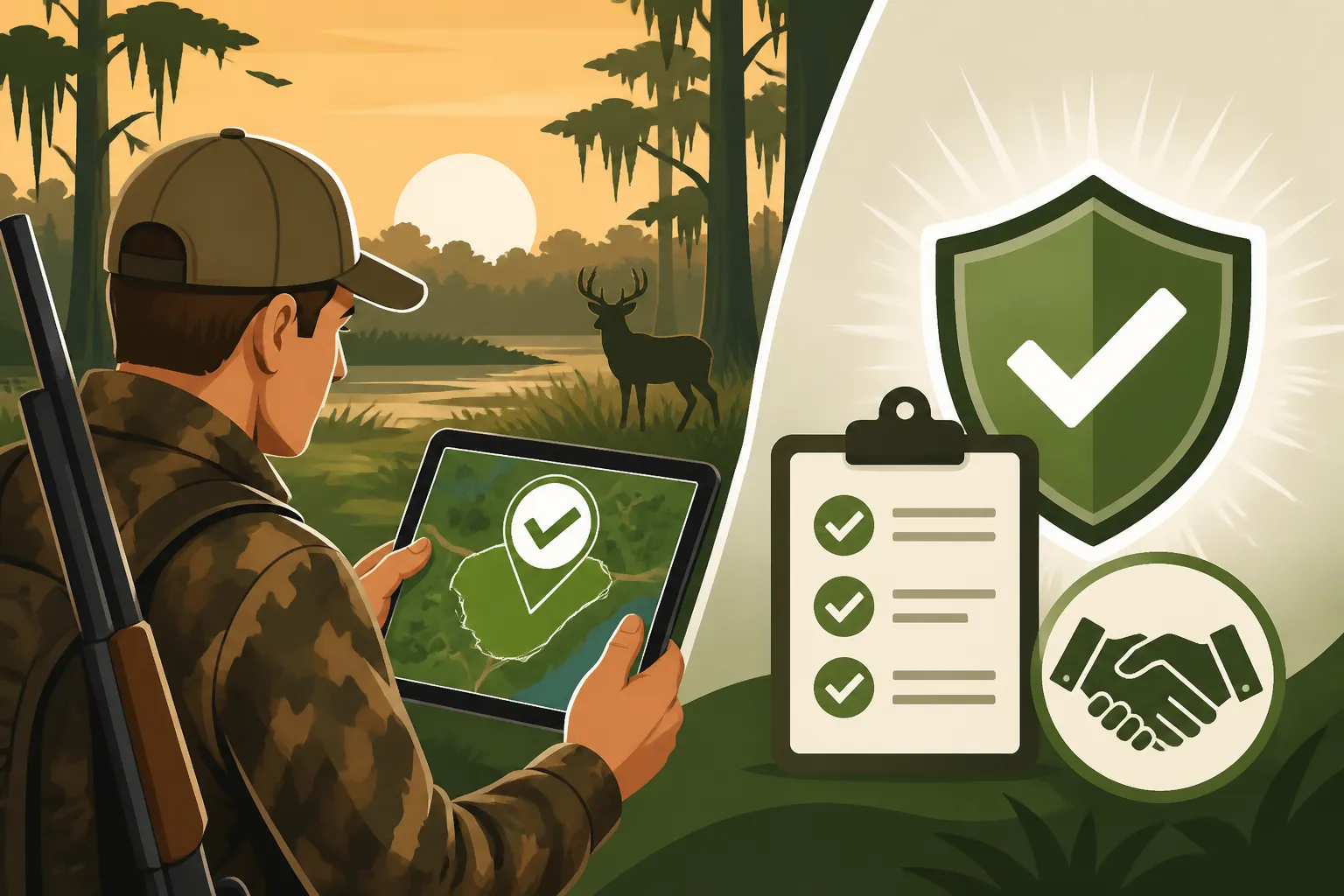
Online mapping platforms, like onX Hunt or even advanced features on Google Earth, are an absolute game-changer for hunters. These tools allow you to overlay private and public land boundaries, often showing landowner names. If an outfitter tells you they hunt a specific area, you can pull it up on one of these apps and visually confirm that the land is either public (and thus accessible) or privately owned by the entity the outfitter claims to have access to. You can see property lines, judge the topography, identify potential bedding areas or travel corridors, and even assess surrounding developments. This visual confirmation is incredibly powerful. You can confirm they're not trying to hunt a small tract surrounded by subdivisions. These maps are also excellent for Scouting Louisiana Public Land Before Season or even when trying to find Finding Ground That Sees Fewer Hunters.
Cross-Referencing with State Wildlife Agencies
The Louisiana Department of Wildlife and Fisheries (LDWF) website is an invaluable resource. You can check WMA maps, regulations, and season dates. If an outfitter claims to guide on a specific WMA, you can verify its location and ensure that guided hunting is even permitted there (some WMAs have specific rules). The LDWF also provides information on Louisiana Hunting Licenses and What They Cost and specific regulations for various game species. While the LDWF won't disclose private land leases, they are the authority on public land, and any discrepancies should raise an immediate red flag. It’s also a good place to double-check any special permit requirements, like those for hunting in one of Louisiana's Chronic Wasting Disease Zones.
Consulting Third-Party Booking Sites and Reviews
While direct verification is always best, third-party booking sites can offer an additional layer of vetting. Platforms like BookYourHunt often have their own due diligence process for outfitters listed on their site. They might require proof of insurance and land access agreements before an outfitter can be featured. However, always remember to cross-reference. Don't just trust a listing on one site. Read reviews from multiple sources. Check other hunting forums, social media groups, and independent review sites. Look for patterns in feedback, especially concerning the quality and extent of the hunting ground. If you see consistent complaints about over-crowding, small properties, or an outfitter leading hunters to public land without prior disclosure, take heed. While GoHunt is a fantastic resource for researching tags and units out west, in Louisiana, it’s more about direct outfitter engagement or leveraging platforms like BookYourHunt for potential bookings where a layer of vetting might be in place.
Red Flags and Warning Signs to Watch For
Sometimes, it's not what an outfitter says, but what they don't say, or how they react to your questions, that should raise your antenna. Trust your gut feeling, but also back it up with concrete observations.
Vague Answers and Evasiveness
If you ask specific questions about land access—like the parish, the type of land, or proof of lease—and the outfitter gives you vague, roundabout answers, or tries to change the subject, consider it a major warning sign. An honest outfitter with legitimate access has nothing to hide and will be straightforward. They should be able to confidently articulate where you'll be hunting and why that ground is productive. If they say "we have a bunch of leases all over," and can't narrow it down for your specific trip, that's not good. They should know exactly which property you'll be on. This kind of evasiveness often indicates they either don't have the access they claim, or they're trying to hide shortcomings of the property.
Unbelievable Guarantees and "Too Good to Be True" Deals
This is a classic. If an outfitter guarantees you a Boone & Crockett buck or promises a 100% kill rate on Alligator Hunting Louisiana's Coastal Marsh for an unbelievably low price, your alarm bells should be ringing. Hunting is never a guarantee, and ethical outfitters know this. These kinds of promises often come from operations that are desperate to book clients, regardless of whether they can deliver. Unrealistic claims often go hand-in-hand with inadequate land access. They might be trying to distract you from asking critical questions about the actual hunting grounds by dazzling you with promises they can't keep. If a deal seems too good to be true, it almost always is. Always research Reading Outfitter Success Claims carefully.
Lack of Digital Footprint or References
In today's world, most legitimate businesses, including hunting outfitters, have an online presence. If an outfitter has no website, no social media presence, or absolutely no reviews anywhere online, that's concerning. While some smaller, word-of-mouth operations exist, it's increasingly rare and risky. Furthermore, if they refuse to provide references from past clients, that's another major red flag. Past clients are your best source of unbiased information. Look for an outfitter who has a solid reputation, verifiable through multiple channels. Absence of evidence can be evidence of absence. A legitimate business would also be listed on reputable hunting booking sites like BookYourHunt, or their operations might be discussed on forums frequented by hunters using platforms such as GoHunt for research.
Land Access Verification: Red Flags vs. Green Lights
To help you quickly assess an outfitter's claims about land access, here's a quick comparison of what to watch out for and what gives you peace of mind.
| Feature | Red Flags (Proceed with Caution!) | Green Lights (Confidence Booster!) |
|---|---|---|
| Location Specificity | "All over the state," "our best spots" | Specific parish, WMA name, general geographic area with landmarks |
| Proof of Access | "It's private," "we don't share paperwork," evasive | Willing to provide redacted lease proof or ownership verification |
| Hunter Density | Avoids the question, "plenty of room for everyone" | Clear numbers of hunters, rotation schedule, management plan |
| Online Presence | No website, no reviews, only a personal Facebook page | Professional website, active social media, reviews on multiple platforms |
| Client References | "Privacy reasons," avoids giving contacts | Provides names and contact info of recent, satisfied clients |
| Guarantees | Promises of "trophy only," "100% kill rate" | Realistic expectations, focuses on effort and experience |
| Communication | Slow replies, high-pressure sales, vague language | Prompt, clear, honest communication, answers questions thoroughly |
Don't let the excitement of booking a hunt overshadow the critical step of verifying land access. Your due diligence before you commit can be the difference between a frustrating trip and the hunt of a lifetime. By asking the right questions, leveraging online tools, and paying attention to warning signs, you'll be much better equipped to pick a reputable outfitter and ensure your Louisiana hunting adventure lives up to your expectations. Remember, a good hunt starts with knowing where you're going to be hunting, and being sure that access is legitimate.
Disclaimer
This article is for general informational purposes only and does not constitute professional advice. Laws, prices and regulations vary by location and change over time. Consult a qualified professional for guidance on your specific situation.