Public Ground Near Lake Charles
Finding accessible public hunting land near Lake Charles can feel like searching for a needle in a haystack, especially with so much private property in Louisiana. Many hunters get discouraged, thinking they need an expensive lease or an invitation to a private club to pursue deer, ducks, or hogs. But don't throw in the towel just yet; this guide will walk you through the real public land opportunities in the Southwest Louisiana region, helping you unlock some fantastic hunting experiences.
Understanding Public Land Opportunities Near Lake Charles
Southwest Louisiana, particularly around the Lake Charles area, presents a unique blend of hunting landscapes. You've got the vast coastal marsh, sprawling piney woods, and river bottomlands, each offering different opportunities and challenges. The key is knowing where these public pockets exist and what kind of hunting they support. It’s not always easy, but with a bit of legwork and local knowledge, you can absolutely find places to pursue game.
The Diverse Landscape of Southwest Louisiana Hunting
When we talk about hunting near Lake Charles, it's crucial to understand that you're sitting on the edge of the incredibly rich Louisiana coastal zone. This means a significant portion of your public land opportunities will lean heavily towards waterfowl and marsh-dwelling species. Think ducks, geese, and maybe some marsh rabbits or even alligators if you're lucky enough to draw a tag. However, move slightly inland, and the landscape shifts dramatically to pine forests and mixed bottomland hardwoods, which are prime habitat for white-tailed deer and feral hogs. This diversity is a blessing, offering a range of hunting experiences, but it also means you need to tailor your expectations and tactics to the specific environment you're in. Knowing the terrain is half the battle; the other half is understanding the specific regulations that apply to each type of area.
For example, venturing into the marsh can mean navigating extensive waterways, requiring a boat, hip waders, or even an airboat to access certain areas. The cover is often thick, dominated by roseau cane, cattails, and various marsh grasses. Deer in these areas tend to be smaller-bodied but incredibly elusive, often moving only at night or during extreme high tides. Meanwhile, the pine uplands will feature different challenges, like deciphering timber cuts, following old logging roads, and dealing with more open visibility. You'll find deer, hogs, and even squirrel and rabbit opportunities in these zones. It's a stark contrast, and successful hunters often specialize in one or the other, or at least have a clear plan for what they're targeting in a given area.
What to Expect from Public Access
Hunting public land in Louisiana is a completely different ballgame than hunting private property, and it comes with its own set of realities. First and foremost, expect company. Especially on opening weekends or during prime times for popular species like ducks or deer, public areas can see significant pressure. This isn't necessarily a bad thing, but it means you'll need to work harder, walk further, and be more strategic in your approach. You might find yourself sharing a levee with another duck hunter or discovering a fresh set of boot prints near your favorite deer stand location. It's just part of the deal.
Secondly, you'll need to be intimately familiar with the Louisiana Department of Wildlife and Fisheries (LDWF) regulations for each specific Wildlife Management Area (WMA) or National Wildlife Refuge (NWR). These regulations can differ significantly from statewide rules and often include specific hunting dates, legal methods, harvest limits, and even permit requirements. Don't assume anything; always check the current year's hunting guide for the specific area you intend to visit. For example, some WMAs might be archery-only for deer, while others have gun seasons. Some refuges might require a drawn permit or a self-clearing check-in process. Getting caught unaware of a specific rule can quickly ruin your hunt and lead to a citation, so diligence is key. Tools like the LDWF website and official hunting guides are your best friends here.
Key Wildlife Management Areas to Explore Near Lake Charles
Southwest Louisiana is home to several fantastic public hunting opportunities. While some are a bit of a drive, they're generally within a reasonable distance for a day trip or an overnight stay from Lake Charles. These areas offer diverse habitats and target species, making them excellent choices for hunters willing to put in the effort.
Sabine National Wildlife Refuge Complex
Located southwest of Lake Charles, the Sabine National Wildlife Refuge is arguably one of the most famous waterfowl destinations in the entire state. This vast expanse of coastal marsh is a critical wintering ground for countless migratory birds, making it a duck hunter's paradise. Access is primarily by boat, and hunters often launch from designated ramps, navigating a network of bayous, canals, and marsh ponds. The challenges here are significant – unpredictable weather, tides, and knowing how to read the marsh for active feeding areas. It's a truly immersive marsh experience.
While Sabine is renowned for its duck hunting, don't overlook its potential for other marsh species. You might find opportunities for marsh rabbits, rails, and other migratory birds. However, the primary draw is the incredible concentration of ducks, including mallards, gadwall, teal, wigeon, and pintails. Hunters often use layout blinds or makeshift natural blinds along the edges of ponds or over flooded marsh areas. The regulations here are very specific, often involving special permits or lottery draws for certain dates and sections, so checking the refuge's specific rules well in advance is absolutely critical. It's a commitment, but the rewards for a successful duck hunt in Sabine can be truly memorable. For more on this, check out Hunting Cameron Parish Marsh Ducks.
Lacassine National Wildlife Refuge
Just to the east of Lake Charles, Lacassine NWR offers a different flavor of hunting. While still heavily influenced by water, it features more timbered areas and impoundments than the open marsh of Sabine. Lacassine is a fantastic spot for both waterfowl and deer, making it a versatile option for hunters looking for mixed-bag opportunities. The refuge is known for its extensive managed impoundments which draw in thousands of ducks, especially early in the season. These impoundments often have specific hunting zones and rules, sometimes requiring hunters to be present for a draw before daylight.
Beyond ducks, Lacassine provides solid opportunities for white-tailed deer and feral hogs in its timbered sections. Access can be a mix of boat and foot traffic, depending on the water levels and specific areas open for hunting. Deer hunting here often involves still-hunting along slough edges or setting up in areas with good cover and access to food sources. The pressure can be high, so finding those less-accessible pockets is often the key to success. Remember, like all NWRs, Lacassine has its own unique set of regulations, and they are usually strictly enforced. Always consult the refuge-specific hunting brochure.
Other Notable WMAs in the Region
While Sabine and Lacassine are prominent, several other WMAs and public lands offer hunting around the Lake Charles region, though they might require a slightly longer drive. Each offers its own unique habitat and species focus.
-
West Bay WMA: Located northeast of Lake Charles near Oakdale, West Bay WMA is primarily pine uplands and mixed bottomland, making it a great option for deer, hogs, squirrels, and rabbits. It's a significant tract of land, offering plenty of room to roam, though it can get busy. The habitat here is vastly different from the coastal marsh, featuring rolling hills and dense pine plantations. Deer hunting involves understanding the timber cycles and finding areas with good browse or mast crops. This WMA also offers good opportunities for small game hunters.
-
Sherburne Wildlife Management Area: Further north and east, Sherburne WMA is part of the vast Atchafalaya Basin, offering quintessential Louisiana swamp hunting. While a bit of a drive, it's worth considering for its unique basin experience. Here you'll find primarily bottomland hardwoods, cypress-tupelo swamps, and extensive waterways. Deer hunting in Sherburne involves navigating water, often by boat or canoe, and scouting for high ground, ridges, or natural funnels. Hog hunting is also excellent here, given the abundant water and dense cover. Access points can be limited, and understanding water levels is critical for a successful hunt. For more about this habitat, read Hunting the Atchafalaya Basin.
-
Pellican Point WMA and White Lake Wetlands Conservation Area: These areas, while sometimes more restricted or geared towards specific lottery hunts, represent additional marsh hunting opportunities south and east of Lake Charles. They might require special permits or have very limited public access windows, but it's worth keeping an eye on their annual schedules for unique chances at waterfowl or even marsh deer. These areas are truly wild and offer a chance to experience the solitude of the deep marsh.
Choosing the right WMA depends on what you want to hunt and how far you're willing to travel. Always check the LDWF regulations specific to each WMA before you plan your trip. Each one has its own personality and its own set of challenges and rewards.
Navigating the Challenges of Public Land Hunting
Hunting public land near Lake Charles, like anywhere else, comes with its own set of hurdles. It's not always a walk in the park, but understanding these challenges beforehand can help you prepare and ultimately increase your chances of success.
Managing Hunting Pressure
One of the biggest realities of public land hunting is dealing with other hunters. Especially during opening weekend of deer season or the peak of duck season, popular WMAs can feel like small towns. This pressure can make game skittish, push them into thicker cover, or change their patterns dramatically. To succeed, you often need to think differently than you would on private land. This might mean walking further than most hunters are willing to go, using a boat or kayak to access remote areas, or hunting during weekdays when crowds are lighter.
Another strategy is to scout for areas that are naturally harder to reach. Look at maps for dense thickets, areas surrounded by water, or terrain features that would deter less-motivated hunters. A little extra effort can often put you in front of game that hasn't been disturbed. Don't be afraid to try "off-peak" times, either. While prime morning and evening hours are popular, a mid-day still-hunt can sometimes surprise deer that have bedded down. Patience and persistence are your greatest allies when dealing with hunting pressure. It's about finding the cracks in the system where game can feel safe, even on public ground.
Scouting Before the Season
This cannot be stressed enough: scouting is absolutely essential for public land success, perhaps even more so than on private land where you might have established knowledge. Because pressure can change year to year and game patterns adapt, fresh intel is invaluable. Before the season opens, make multiple trips to your chosen WMA. Walk the trails, explore new areas, look for fresh sign like tracks, rubs, scrapes, and feeding areas. Identify bedding cover, potential travel corridors, and access points. Don't just drive by; put boots on the ground.
Scouting isn't just about finding game sign; it's also about understanding the terrain, identifying potential stand locations, and figuring out how you'll get in and out silently in the dark. Pay attention to wind direction, dominant cover, and water sources. If it's a waterfowl area, look for areas with good food sources, protected resting spots, and flight paths. Using mapping applications can be a huge asset during scouting. Scouting Louisiana Public Land Before Season delves deeper into effective scouting strategies.
Understanding Local Regulations
Every WMA and NWR in Louisiana operates under specific regulations that often differ from general statewide hunting laws. Ignorance of these rules is never an excuse, and getting a citation can put a serious damper on your season. Before you ever step foot on public land with a weapon, you need to read the current year's hunting pamphlet for that specific area, cover to cover. This includes checking for specific season dates (which might be shorter or different than private land seasons), legal weapons, bag limits, antler restrictions, and any requirements for self-clearing permits or quota hunt applications.
For instance, some WMAs have archery-only zones or specific primitive firearms dates that don't align with the general season. Others might have restrictions on tree stand types (e.g., no screw-in steps) or require you to remove your stand daily. There could be baiting bans, restrictions on the use of ATVs, or designated "no hunting" zones. Always carry a copy of the regulations, either printed or digitally on your phone, and make sure your phone is charged. The LDWF website is the authoritative source for these documents. Remember, the wardens out there are doing their job to protect the resource and ensure fair chase, and they expect you to know the rules. You can also find useful information by checking Louisiana WMA Permit Requirement.
Essential Tools for Public Land Success
To maximize your chances of success and ensure a safe, enjoyable hunt on public land near Lake Charles, having the right tools in your kit is non-negotiable. These aren't just gadgets; they're vital for navigation, planning, and safety.
Mapping Apps for Public Land
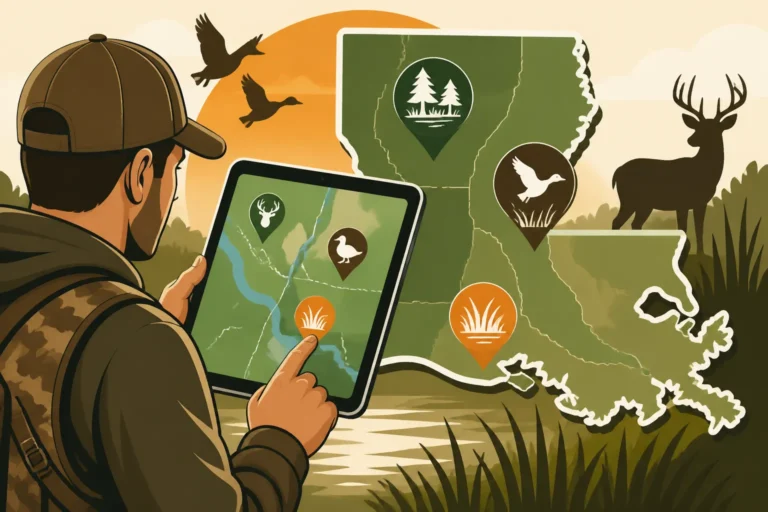
In today's hunting world, digital mapping applications are no longer a luxury; they're a necessity, especially on public land. Apps like onX Hunt have revolutionized how hunters scout and navigate. They provide detailed aerial imagery, topographical maps, and crucial landowner information, which is invaluable for ensuring you stay on public ground and avoid accidental trespass. You can mark waypoints for stand locations, game sign, or access points, track your movements, and measure distances. This is particularly useful in vast WMAs where distinguishing boundaries can be tough.
Another strong contender is GoHunt, which offers similar robust mapping features and often integrates valuable data specific to hunting applications. These apps allow you to do a lot of your "e-scouting" from home, identifying potential hotspots before you even set foot in the woods. You can layer different map types, look at property boundaries, and even check things like recent timber cuts or wetland areas. Having this level of detail at your fingertips, even without cell service in many cases (thanks to offline map downloads), provides an immense advantage. Learning to use these apps effectively is one of the best investments you can make for public land hunting. They can literally put you on game you might otherwise never find.
Physical Maps and GPS Units
While mapping apps are powerful, never underestimate the value of traditional physical maps and a dedicated GPS unit. Batteries die, phones get dropped in water, and sometimes technology just fails. A waterproof, printed topographical map of your hunting area, coupled with a compass, is an essential backup. Knowing how to read a physical map and use a compass can be a lifesaver if you get disoriented or your electronic devices fail. Many WMAs still provide paper maps at check-in stations or online that you can print.
A handheld GPS unit, while perhaps feeling a bit old-school, offers reliability that a phone sometimes can't match. They're built tough, often waterproof, and have excellent battery life. You can mark your truck, your stand, and any game sign, ensuring you can always find your way back. For areas like the Atchafalaya Basin or coastal marsh, where landmarks are few and far between, a reliable GPS is absolutely critical. It’s a peace of mind tool that every serious public land hunter should carry.
Key Gear for Southwest Louisiana Hunting
Beyond your weapon and license, specific gear can make or break a hunt in Southwest Louisiana. The climate is often warm and humid, even in winter, and you're frequently dealing with water, mud, and thick vegetation.
- Waders/Rubber Boots: If you're hunting anything near the marsh or bottomland, good quality chest waders or tall rubber boots are non-negotiable. You'll encounter mud, water, and often muck that will swallow regular hunting boots.
- Insect Repellent: Mosquitoes and gnats are a year-round nuisance. Carry potent insect repellent, and consider a Thermacell for sitting still.
- Layered Clothing: Even on a "cold" Louisiana morning, temperatures can rise significantly by midday. Dress in layers that you can easily shed. Lightweight, moisture-wicking materials are ideal. Warm-Weather Sitting Strategy in Louisiana offers more advice.
- Water and Snacks: Dehydration can sneak up on you in the humidity. Carry more water than you think you'll need, along with energy-dense snacks.
- First-Aid Kit: A basic kit with bandages, antiseptic wipes, pain relievers, and any personal medications is crucial for dealing with minor injuries far from help.
- Navigation Aids: As discussed, a charged phone with mapping apps, a backup portable charger, a physical map, and a compass are all critical.
- Headlamp/Flashlight: You'll be walking in the dark, both before dawn and after sunset. A reliable headlamp with fresh batteries (and spares) is essential.
- Knives/Processing Tools: If you're successful, you'll need a sharp knife for field dressing. Consider game bags if you have a long drag or warm temperatures.
Remember, the goal is to be prepared for anything the Louisiana outdoors throws at you. Table 1 below summarizes some key public hunting areas near Lake Charles and their primary offerings.
Table 1: Public Hunting Areas Near Lake Charles
| Public Area Name | Primary Species | Main Habitat Type | Key Access Notes | Typical Challenges |
|---|---|---|---|---|
| Sabine National Wildlife Refuge | Waterfowl, Marsh Birds | Coastal Marsh | Boat access only; specific zones, lottery hunts likely | Tides, weather, navigation, specific refuge rules |
| Lacassine National Wildlife Refuge | Waterfowl, Deer, Hogs | Impoundments, Timber | Boat/foot; some areas may require draws | Hunting pressure, specific refuge rules, water levels |
| West Bay Wildlife Management Area | Deer, Hogs, Small Game | Pine Uplands, Bottomland | Foot, designated roads | Hunting pressure, dense pine, timber activity |
| Sherburne Wildlife Management Area | Deer, Hogs, Waterfowl | Atchafalaya Basin Swamp | Boat/canoe access often required, high water | Flooding, navigation, remote access, mosquitoes |
Disclaimer
This article is for general informational purposes only and does not constitute professional advice. Laws, prices and regulations vary by location and change over time. Consult a qualified professional for guidance on your specific situation.