National Forest Camping Near Your Stand
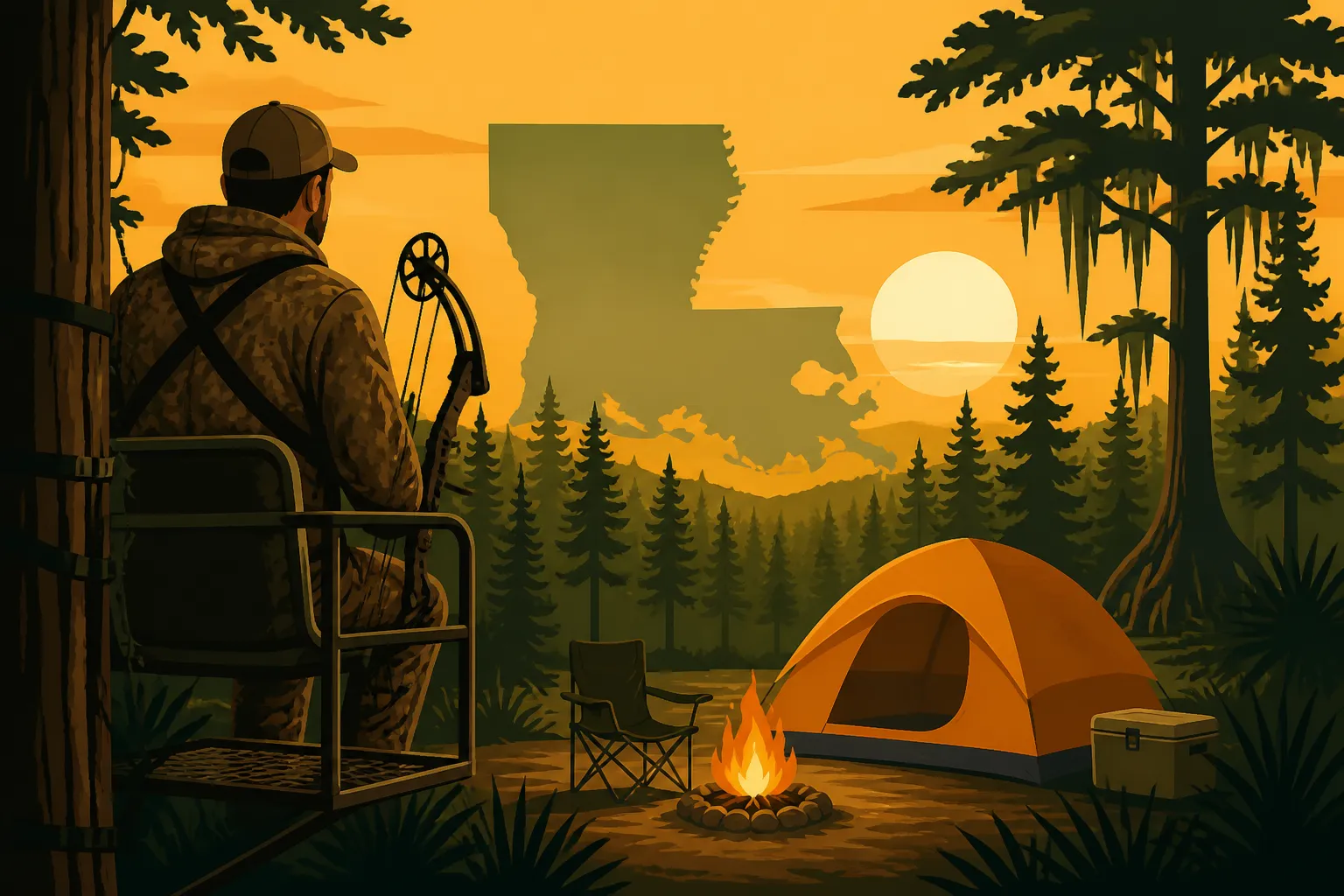
There's a special kind of freedom that comes with knowing your hunting stand is just a short walk from your tent, especially when you're deep in the timber of a national forest. No long, dark drives before dawn, no rushing back to camp at last light – just you, the woods, and the anticipation of a new day. But setting up a camp right near your hunting spot in Louisiana's national forests, particularly in places like Kisatchie, requires a solid understanding of the rules, the environment, and some smart strategies to make it both legal and effective. This guide will walk you through everything you need to know to make that stand-side camping dream a reality.
Understanding National Forest Camping Regulations in Louisiana
Louisiana might be known for its swamps and marsh, but we've also got some incredible national forest land, primarily the Kisatchie National Forest, that offers fantastic hunting opportunities. Before you even think about pounding a tent stake, you need to understand the lay of the land when it comes to camping. It's not like a designated campground with amenities; dispersed camping is a different beast entirely, but it's often the key to truly immersing yourself in the hunt.
General Dispersed Camping Rules
When you're dispersed camping, which means setting up outside of a developed campground, you're essentially on your own. The beauty of this is the solitude and the ability to choose your own adventure. However, with that freedom comes a big responsibility. The core principle for any dispersed camping in a national forest, whether you're in Louisiana or Wyoming, is "Leave No Trace." This means packing out everything you pack in, and then some. I'm talking about all trash, food scraps, and even human waste needs to be properly managed or packed out. Open fires are often permitted but come with strict rules, especially concerning fire bans or keeping them contained. You can't just cut down a live tree for firewood, and you need to be mindful of deadfall that's close by. It's about preserving the natural environment for everyone else who comes after you, and crucially, for the wildlife you're there to pursue.
Specifics for Kisatchie National Forest
Kisatchie National Forest is Louisiana's only national forest, a sprawling wilderness across several parishes, and it's where most of your national forest camping opportunities will lie. While it's generally open to dispersed camping, there are nuances. Some areas might have specific restrictions, perhaps due to sensitive habitats, ongoing timber operations, or proximity to private land. You'll typically find a stay limit, often around 14 days, which is usually more than enough for a hunting trip, but it's good to be aware. Unlike some national forests in other states, Louisiana's can be dense and wet. Choosing a high-and-dry spot is critical, especially after heavy rains. I've seen many a low-lying area turn into a bog overnight, making a miserable camp. Always check the Kisatchie National Forest website or contact a ranger district office directly before heading out. They can provide the most up-to-date information on specific rules or temporary closures in the particular ranger district you plan to hunt, like those covered in Hunting the Kisatchie Ranger District for Deer. They can also inform you about Camping Rules on Kisatchie Forest Land.
How Proximity to Your Stand Impacts Decisions
The whole point of stand-adjacent camping is to be close, but how close is too close? This is where your hunting savvy comes into play. You want to be near enough for an easy, quiet walk in the dark, but far enough not to spook game directly from your camp. Think about wind direction. You certainly don't want your campfire smoke or cooking odors drifting directly into your hunting zone. Topography, even subtle changes in Louisiana's relatively flat landscape, can create natural funnels or barriers for both sound and scent. If you're hunting deer, putting your camp between your stand and a bedding area is a recipe for an empty deer drag. Consider your approach and exit routes from both your camp and your stand. Can you get to your stand without crossing a primary travel corridor the deer use? These are critical considerations that go beyond just finding a flat spot for your tent.
Practical Strategies for Setting Up Camp Near Your Hunting Spot
Okay, so you understand the rules. Now, let's talk about the boots-on-the-ground strategy for actually finding and setting up that perfect, stealthy camp near your chosen hunting stand. It's an art form, really, blending convenience with minimal impact and maximum hunting effectiveness.
Choosing the Right Campsite
Finding the "right" campsite when you're dispersed camping for hunting is a bit like finding a good deer stand location – it's all about scouting. You're looking for a spot that's relatively flat, well-drained, and offers some natural cover. In Louisiana, finding truly "high ground" can sometimes be a challenge, but even a slight elevation change can make a huge difference in staying dry. Look for areas with mature trees that can offer some shade and act as a windbreak, but be mindful of dead snags that could come down in a storm. Think about access: how far are you willing to haul your gear? Is there a subtle trail or an old logging road that can get you close without broadcasting your presence? You want a spot that's tucked away, out of sight from other potential hunters or forest users, giving you that sense of wild solitude. Your goal isn't just to camp; it's to create a temporary, undetectable base of operations.
Another critical factor is stealth. While you want convenience, you also want to avoid disturbing the local wildlife, especially the deer, that you're trying to hunt. That means selecting a spot away from obvious game trails, bedding areas, or primary food sources. You don't want to accidentally set up camp in the middle of a major thoroughfare for rutting bucks. Consider how sound travels through the forest. Even a quiet camp can carry noise further than you'd expect on a still morning. I always try to place my camp on the downwind side of my hunting area, or at least at an angle where prevailing winds won't carry my human scent directly into where I expect deer to be moving. It’s a delicate balance, and sometimes you have to compromise a little on "convenience" for "stealth."
Minimal Impact Camping for Hunters
For hunters, minimal impact camping takes on an even deeper meaning. Beyond leaving no trace, it's about leaving as little evidence of human presence as possible. This is particularly important for scent control. Even if you're downwind, persistent camp odors can linger and alert wary deer. That means using scent-free soaps, storing food in airtight containers, and avoiding cooking strong-smelling foods right before a hunt. Packing light is also key. The less gear you have, the less you have to haul in, and the smaller your footprint. A lightweight tent, a compact sleeping system, and essential cooking tools are often all you need. Think efficiency. You're not looking for a luxury glamping experience; you're looking for a functional base camp.
When you pack out, don't just pick up your obvious trash. Do a "micro-sweep" of your campsite for any stray pieces of plastic, small wrappers, or even food crumbs. Burn your fire completely down to white ash if permitted, and then spread the ashes and cover the area with natural debris to make it look undisturbed. Your goal should be that someone walking through the area a week later wouldn't even know you were there. This discipline not only protects the environment but also enhances your hunting success by keeping the area as natural as possible. For further tips on preparing for your trip, consider Scouting Louisiana Public Land Before Season.
Using Technology for Scouting and Camp Placement
Modern technology has revolutionized how we approach public land hunting and camping. Apps like onX Hunt and GoHunt are invaluable tools for identifying potential camp spots. Before you even set foot in the woods, you can pour over satellite imagery and topo maps. Look for subtle elevation changes that could offer dryer ground, identify old logging roads or clearings that provide natural camp sites, and mark areas that might be too swampy or have heavy canopy cover unsuitable for a tent. You can use these apps to mark your stand location, potential game trails, and then strategically place your potential campsite away from those primary hunting areas, considering wind direction and approach routes. This digital scouting can save you hours of boots-on-the-ground searching, helping you pinpoint promising areas from the comfort of your home.
When you're actually in the field, these apps really shine. You can confirm your chosen campsite's location, ensuring it's on public land and not inadvertently infringing on private property (which is crucial, as you can see from onX Layers for Louisiana Land Status). You can also use them to navigate to and from your stand in the dark, ensuring you take the most direct and quiet route without getting lost in unfamiliar timber. Marking your truck's location, your camp, and your stand on your GPS can provide immense peace of mind. While cell service can be spotty in deep woods, many of these apps allow you to download maps offline, ensuring you always have your bearings, even if you’re Using LDWF Without Cell Service. This blend of technology and traditional woodsmanship is a powerful combination for effective and responsible hunting and camping.
Logistics and Gear for a Stand-Adjacent Camp
Getting all your ducks in a row for a stand-adjacent camp in Louisiana requires a thoughtful approach to gear and logistics. The bayou state's unique environment throws some curveballs that you might not encounter in other hunting destinations, so being prepared for heat, humidity, and insects is paramount.
Essential Gear for Dispersed Camping
Your gear choices are critical for comfort and functionality. Forget the heavy canvas wall tent if you're trying to stay mobile and discrete. A lightweight backpacking tent that's quick to set up and take down is ideal. Look for one with good ventilation to combat Louisiana's humidity, and a solid rainfly because pop-up showers are always a possibility. A compact sleeping pad and a sleeping bag rated for warmer temperatures are usually sufficient; even in cooler months, it rarely drops to extreme lows. Don't forget a headlamp with a red light setting for those pre-dawn walks to your stand – it preserves your night vision and is less likely to spook game. A small, portable stove for heating water and cooking simple meals is also a good idea. A quality knife, first-aid kit, fire starter, and navigation tools (even if you have a phone app, a physical compass and map are smart backups) round out the essentials. Remember, every ounce counts when you're packing it in and out, so prioritize multi-functional items.
| Item Type | Recommended Features | Why it Matters in Louisiana |
|---|---|---|
| Tent | Lightweight, good ventilation, strong rainfly | Combat humidity, prepare for pop-up showers, easy transport |
| Sleeping Bag | 30-45 degree F rating (or warmer), synthetic fill | Moderate winter temps, synthetic handles moisture better |
| Sleeping Pad | Insulated, lightweight, compact | Comfort, adds warmth from ground, easy to pack |
| Backpack | Internal frame, good lumbar support, adequate capacity | Hauling gear efficiently, comfort on longer walks |
| Headlamp | Red light setting, long battery life | Preserve night vision, minimize disturbance, hands-free |
| Portable Stove | Compact, fuel-efficient, simple design | Quick meals, hot drinks, minimal fire impact |
| Water Filter | Hand pump or squeeze filter, spare cartridges | Access to safe drinking water, reduces carry weight |
| Bug Protection | Permethrin-treated clothing, deet spray, Thermacell | Critically important for mosquitoes, ticks, gnats |
| Navigation | GPS app (onX, GoHunt), compass, paper map | Stay found, mark stands/camps, offline capability |
| First-Aid Kit | Comprehensive, waterproof bag | Handle minor injuries, bites, allergic reactions |
Food, Water, and Waste Management on the Go
When you're camping away from amenities, proper management of food, water, and waste is non-negotiable. For food, think dehydrated meals, trail mix, jerky, and other non-perishables that are calorie-dense and don't require refrigeration. Pack enough for your planned stay, plus a little extra for emergencies. Always store your food securely, preferably in an odor-proof bag or container, away from your sleeping area to deter any curious critters, from raccoons to even a black bear if you're in Louisiana's Recovering Black Bear country.
Water is heavy, so carrying enough for an extended stay can be challenging. A good water filter or purification tablets are essential. Identify potential water sources on your maps beforehand, but always filter or treat any water gathered from streams or ponds. For waste, the rule is simple: pack it in, pack it out. This includes all food wrappers, empty fuel canisters, and anything else you brought with you. For human waste, dig a cathole 6-8 inches deep and at least 200 feet from any water source, trail, or camp. Toilet paper should always be packed out in a sealed bag. This might sound like a lot of hassle, but it's part of being a responsible steward of our public lands.
Dealing with Louisiana's Environment
Louisiana's natural environment presents its own set of challenges that you absolutely need to prepare for when camping. The humidity can be relentless, making it hard for gear to dry out and increasing the sensation of cold, even at moderate temperatures. Your rain gear needs to be top-notch, and quick-drying clothing is a huge plus. The mosquitoes, gnats, and ticks are legendary. I cannot stress enough the importance of robust insect protection. Permethrin-treating your hunting clothes beforehand and carrying a good DEET-based repellent is a must. A Thermacell unit can also be a game-changer for keeping biting insects at bay around camp.
Footwear is another critical consideration. Waterproof boots are essential, as you'll likely encounter dew, wet grass, and potentially muddy conditions, especially if you're hunting areas near Hunting the Atchafalaya Basin. Even if the forecast is clear, a sudden pop-up thunderstorm can turn a dry trail into a slick, muddy mess in minutes. A dry bag for your spare clothes and sleeping bag is also a wise investment. Being wet and cold (or just miserably damp) can quickly ruin a hunting trip, so planning for the climate is key to enjoying your time afield.
The Benefits and Challenges of Stand-Side Camping
Deciding to camp near your stand isn't just about convenience; it's a calculated move with both significant advantages and potential drawbacks. Understanding these can help you fine-tune your approach for a more successful and enjoyable hunting experience.
Advantages for Early Morning and Late Evening Hunts
The most obvious benefit of camping near your stand is the ability to maximize your hunting time. Imagine waking up, stepping out of your tent, and being at your stand in 15 or 20 minutes, long before legal shooting light. This allows you to settle in quietly, giving the woods time to calm down after your subtle intrusion. No fumbling with keys, no long drives on gravel roads that might spook nearby game. You're already there, immersed in the environment. This can be particularly advantageous during the rut, when deer movement peaks at dawn and dusk. You're perfectly positioned to intercept that cruising buck at first light, or catch a deer heading to a food source just as the sun dips below the horizon. For advice on these critical times, you might want to check out Opening Weekend Tactics by Deer Area.
Furthermore, being close means less travel time and energy expenditure. This is huge, especially if you're packing in deep to an area that sees less pressure, which can often be the case when you're trying to Find Ground Others Walk Past. Instead of spending valuable time driving, you're spending it actually hunting or scouting a bit more around your camp. It fosters a deeper connection to the hunting grounds, allowing you to observe subtle changes in game movement or weather patterns that a daily drive-in hunter might miss. You become part of the rhythm of the forest.
Potential Drawbacks and How to Mitigate Them
While the advantages are compelling, stand-side camping isn't without its challenges. One of the biggest concerns is scent. Your camp is a source of human odor, and even with the best precautions, some scent will inevitably linger. A campfire, even a small one, produces smoke that can carry. Cooking smells, even from simple meals, can travel. If the wind shifts unexpectedly, or if deer move through your camp area, you risk contaminating your hunting zone. Mitigating this means extreme discipline with scent control: using scent-free everything, burying or sealing food waste, and always being mindful of wind direction when choosing your camp spot and planning your routes.
Another potential drawback is the disturbance you create. Setting up and breaking down camp, moving around your site, and even simply existing in an area can displace game. If your camp is too close or too conspicuous, you might inadvertently push deer out of the immediate vicinity. This is where stealthy campsite selection, packing light to minimize noise during setup, and using quiet gear become crucial. The goal is to be a ghost in the woods, leaving as little impact as possible. Also, consider the potential for other hunters. If you're on public land, another hunter might stumble upon your camp, or even try to set up too close. This is where good etiquette and clear communication (if you encounter someone) come into play. Being aware of Hunting Pressure on Louisiana Public Land can also inform your choice of camp location.
Respecting Other Hunters and Forest Users
Public lands are for everyone, and that includes other hunters, hikers, and recreational users. When you're dispersed camping, particularly near your stand, it's vital to be respectful and considerate. Choose a campsite that is out of sight from main trails or roads if possible. Avoid setting up right next to another hunter's vehicle or an obvious hunting access point. If you encounter other hunters, a friendly wave and a brief, respectful conversation can go a long way in preventing conflicts. Remember, everyone is out there to enjoy the outdoors.
Adhering strictly to Leave No Trace principles is perhaps the greatest sign of respect you can show. Picking up not just your own trash, but perhaps a stray piece you find, helps ensure these precious public lands remain healthy and accessible for future generations. Our Louisiana national forest land is a treasure, offering unique hunting experiences, and it’s up to all of us to maintain its integrity. Being a responsible hunter and camper means doing your part to leave the woods better than you found them.
Disclaimer
This article is for general informational purposes only and does not constitute professional advice. Laws, prices and regulations vary by location and change over time. Consult a qualified professional for guidance on your specific situation.