ATV Rules on Louisiana Forest Roads
Hunting in Louisiana offers incredible opportunities, but figuring out where you can and can't take your ATV on those winding forest roads can feel like navigating a cypress swamp blindfolded. It's a real headache when you're just trying to get to your favorite stand or scout a new area, only to be constantly wondering if you're breaking a rule you didn't even know existed. This guide aims to clear up that confusion, diving deep into the specific regulations governing ATV use on Louisiana's diverse public lands, helping you stay legal and stress-free on your next outdoor adventure.
The Maze of Rules: Why Louisiana's ATV Regulations on Forest Roads Can Be Confusing
Let's be honest, trying to understand where you can legally ride your ATV or UTV in Louisiana, especially on what seem like public "forest roads," is enough to make anyone scratch their head. It's not a simple statewide answer, and that's precisely where the frustration often begins. You might see one type of vehicle on a certain road and assume your ATV is fine, only to find out later that you've stumbled into a restricted zone. The core issue lies in the overlap of jurisdictions and how different agencies classify roads and vehicles.
Federal, State, and Local Overlap: Navigating the Authorities
One of the biggest reasons for the confusion is that you're not just dealing with one set of laws. In Louisiana, you have three main layers of authority that dictate ATV use on forest roads: federal agencies like the U.S. Forest Service (for Kisatchie National Forest), state agencies like the Louisiana Department of Wildlife and Fisheries (LDWF for Wildlife Management Areas or WMAs), and then local parish ordinances for any smaller, non-federal or non-state owned forest roads. Each of these can have entirely different rulebooks, which makes a universal understanding tough to achieve.
For instance, a road within Kisatchie National Forest might look exactly like a logging road winding through a WMA, but the rules for ATVs could be poles apart. On federal land, the focus is often on designated routes and preventing resource damage. State WMAs might prioritize minimizing disturbance to game animals or maintaining specific habitat types. Meanwhile, a parish might have very little regulation on a backwoods road or, conversely, stringent rules if it's considered a public thoroughfare, even if it's unpaved. This patchwork approach means that what you learn about one area doesn't necessarily apply to the next, forcing diligent research for every new location you explore. This constant need for verification can certainly dampen the spontaneity of a scouting trip.
Vehicle Definitions and Classifications: Is Your Ride Legal?
Another layer of complexity comes from how different agencies define "ATV," "UTV," "ORV" (Off-Road Vehicle), and even "street-legal" vehicles. What you call your side-by-side might be classified differently by the U.S. Forest Service than by the LDWF. This distinction matters immensely, as rules often hinge on whether your vehicle meets certain criteria. For example, some "forest roads" are actually open to licensed, street-legal vehicles, but not necessarily to an ATV that isn't licensed for road use.
Generally, an ATV (All-Terrain Vehicle) is designed for off-road use, often single-rider, and not typically street-legal. UTVs (Utility Terrain Vehicles), or side-by-sides, are similar but often multi-passenger and can sometimes be modified or registered for limited street use depending on state and local laws. When regulations refer to "motorized vehicles," they often mean street-legal, licensed vehicles. This distinction is crucial because if a sign says "motorized vehicles allowed on designated routes," it doesn't automatically mean your unlicensed ATV is welcome. Always check the specific wording in the regulations for the area you intend to hunt. Misinterpreting these definitions can lead to citations, which is the last thing you want when you're trying to enjoy the outdoors.
Navigating National Forest Roads: Focus on Kisatchie
Kisatchie National Forest is Louisiana's only National Forest, and it's a huge resource for hunters and outdoor enthusiasts. However, its vastness also means a significant set of federal regulations governing how you can traverse its terrain, especially with ATVs. It's not a free-for-all, and understanding the specific rules here is paramount to avoiding fines and protecting this beautiful habitat.
Designated Trails and Permitted Use: Staying on the Path
On federal lands like Kisatchie National Forest, the operative phrase for ATV use is almost always "designated routes." This means you cannot simply drive your ATV anywhere you please. The Forest Service manages these lands with a strong emphasis on conservation, and unrestricted off-road travel can lead to erosion, habitat destruction, and disturbance to wildlife. So, if you plan to use an ATV for Kisatchie National Forest Hunting, you must stick to roads or trails specifically marked and designated for ATV use.
These designated trails are usually clearly signed, and the Forest Service publishes motor vehicle use maps (MVUMs) that show exactly which roads and trails are open to which types of vehicles and during what times of the year. It's not uncommon for certain trails to be open seasonally, especially during hunting seasons, while others might be closed year-round to prevent damage or protect sensitive areas. Going off a designated trail, even just a short distance, can result in a hefty fine. Think of it like this: if you're not absolutely sure it's a designated ATV trail, assume it's not. This strict adherence helps protect the forest for everyone and ensures that wildlife, like the deer you're pursuing, aren't constantly harassed by vehicles where they shouldn't be. Understanding Camping Rules on Kisatchie Forest Land often goes hand-in-hand with knowing where you can drive to access your campsite.
License and Safety Requirements on Kisatchie Roads
Even on designated ATV trails within Kisatchie, there are usually specific requirements beyond just staying on the path. For starters, most national forests require ATVs to be registered and titled with the state, just like any other vehicle. This isn't always about being "street-legal" but about accountability and identification. You might also find age restrictions for operators and mandatory helmet laws, especially for younger riders. Safety is a huge concern for the Forest Service, and these rules are in place to protect riders from accidents on sometimes rugged terrain.
Beyond the vehicle itself, there are also common-sense rules that often become official regulations. This includes prohibitions against operating ATVs under the influence, exceeding posted speed limits, or carrying more passengers than the vehicle is designed for. While you might be tempted to load up your side-by-side with gear and buddies for a quick trip into the woods to find a good spot for Hanging a Stand on a Kisatchie Ridge, always double-check the passenger limits and safety gear requirements. Failure to comply can result in tickets, and in some cases, even impoundment of your vehicle. It's always best to err on the side of caution and ensure both your vehicle and your practices are fully compliant with federal guidelines.
Louisiana Wildlife Management Areas (WMAs) and Parish Roads
Leaving federal lands and venturing onto state-managed Wildlife Management Areas or general parish roads brings a new set of rules to contend with. While the spirit of conservation and safety remains, the specific implementation can vary significantly, requiring hunters to be extra diligent.
WMA Specific Rules: No One-Size-Fits-All Approach
Louisiana's Wildlife Management Areas are treasure troves for hunters, offering diverse habitats and game opportunities. However, when it comes to ATV use, there is no single, overarching rule that applies to all WMAs. This is a critical point that often trips up hunters. What's perfectly fine on one WMA might be explicitly forbidden on another, even if they're geographically close. This is because each WMA is managed based on its unique ecosystem, wildlife populations, and specific management goals.
For instance, some WMAs might allow ATVs on designated administrative roads or specific trails during certain hunting seasons to facilitate game retrieval or access to remote hunting zones. Others might restrict ATVs entirely, permitting only foot traffic or bicycles, especially in more sensitive or smaller areas. The best — and only — way to know for sure is to consult the specific WMA regulations for the area you plan to hunt. These regulations are typically found on the LDWF website in the form of individual WMA pamphlets, which are updated annually. You might find some WMAs allow ATVs only for game retrieval on designated roads, while others might have specific "ATV trails" for access. Without checking, you risk a citation. This is also crucial when considering Treestand Rules on Louisiana Public Land as access methods often go hand-in-hand. When you're Scouting Louisiana Public Land Before Season, be sure to download or print the WMA map and regulations for offline access, as cell service can be spotty in many remote locations.
Parish Road Considerations: When Is Your ATV Legal?
Beyond federal and state lands, you might encounter situations where "forest roads" are simply unpaved parish roads. Here, the rules can be a bit hazier and often fall under the jurisdiction of local parish governments or general state traffic laws. The key question often revolves around whether an ATV is considered a "street-legal" vehicle on these public roads.
In Louisiana, ATVs and UTVs are generally not considered street-legal vehicles unless they meet specific requirements and are registered as such, which involves things like headlights, taillights, brake lights, mirrors, and sometimes even turn signals. Even then, their use on public roads is typically restricted to crossing them at designated intersections or operating on certain low-speed, low-traffic roads where local ordinances explicitly permit it. You absolutely cannot assume that just because a road is dirt or gravel, your ATV is allowed. Driving an unregistered, non-street-legal ATV on a public parish road, even a seldom-used forest road, can lead to tickets for operating an unregistered vehicle, no insurance, and other moving violations. Always check with the local sheriff's office or parish government if you're unsure about ATV use on unpaved parish roads in a specific area. Getting caught off-guard here can be a real hassle, so verify before you venture out. Knowing Finding Louisiana Property Lines is equally important here, as inadvertently crossing onto private land without permission can lead to trespass charges.
Essential Tools for Staying Legal and Safe
Given the complexity of ATV rules across different land types in Louisiana, having the right tools at your disposal isn't just a convenience—it's practically a necessity for staying legal, safe, and successful in your hunting endeavors. Modern technology has certainly made this easier than it used to be.
Mapping Apps: Your Digital Trail Guide
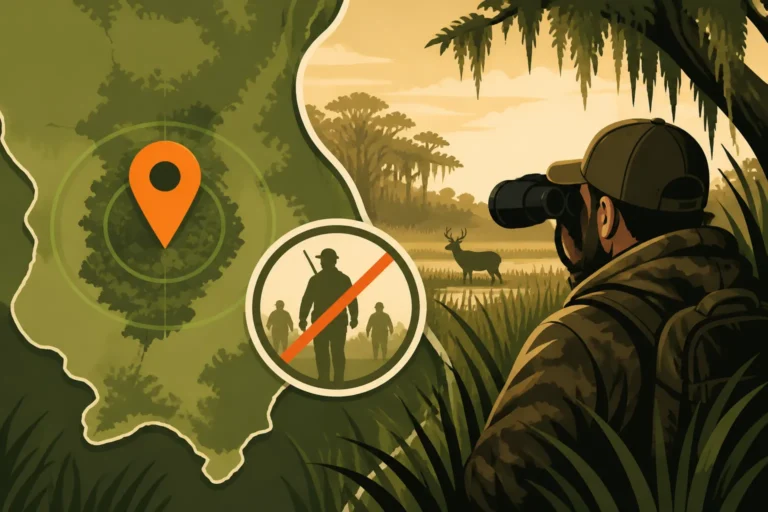
One of the most valuable tools for any hunter in Louisiana, especially when navigating public lands with an ATV, is a robust mapping application. Apps like onX Hunt have revolutionized how we understand land ownership and access. These apps provide detailed satellite imagery, topographic maps, and crucially, property lines that distinguish between private, state, and federal lands. They often include layers that show public land boundaries, roads, and sometimes even designated trails.
Imagine you're deep in Kisatchie, trying to figure out if that tempting two-track ahead is an official Forest Service road open to ATVs or an unauthorized path. With onX Hunt, you can often see the classification of the trail or road you're on, confirming whether it's a designated route. The app can also help you quickly identify if you're about to cross from a WMA where ATVs might be restricted to a parish road where different rules apply, or vice versa. This real-time understanding of your location relative to different land ownership and access rules is invaluable. It helps you adhere to Vehicle Rules on Louisiana Public Land and avoid unintentional trespass or violations. Another great option for similar mapping insights is GoHunt, which can also provide crucial data overlays. While these apps are fantastic, always remember they are tools to aid your decision-making, not official legal documents.
Official Resources: The Ultimate Authority
While mapping apps provide incredible spatial awareness, the ultimate authority on ATV rules for any given area will always be the official government resources. For state lands like WMAs, the Louisiana Department of Wildlife and Fisheries (LDWF) website is your first stop. They publish detailed hunting regulations booklets and specific WMA regulations each year. These documents will clearly outline what types of vehicles are allowed, on which roads or trails, and during what seasons. You can even check their site to understand Louisiana Hunting Licenses and What They Cost and ensure you have all the necessary permits before heading out.
For federal lands, like Kisatchie National Forest, you'll want to visit the U.S. Forest Service website for that specific forest. Look for their Motor Vehicle Use Maps (MVUMs), which are the definitive guide for where motorized vehicles, including ATVs, are allowed. These maps are updated regularly and are your best defense against inadvertently violating a federal regulation. Printing these maps or downloading them to your phone for offline use is a smart move, especially in areas where cell service is unreliable. Taking the time to cross-reference your chosen hunting area with these official resources is the single most important step to ensuring your ATV use is legal and responsible.
Understanding Louisiana ATV Rules by Land Type
To help consolidate the information, here's a quick overview of how ATV rules generally differ depending on the type of land you're on in Louisiana. Remember, this is a generalization, and always verify with the specific regulations for your chosen area.
| Land Type | General ATV/UTV Use | Key Considerations |
|---|---|---|
| Kisatchie National Forest | Restricted to designated, signed roads and trails only. Consult Motor Vehicle Use Maps (MVUMs). | Registration often required, age/helmet restrictions, no off-trail travel, seasonal closures possible. |
| Wildlife Management Areas (WMAs) | Highly variable by WMA. Some allow on designated administrative roads or for game retrieval; many prohibit. | Must check individual WMA regulations. Regulations change, specific access points, vehicle types, and seasons vary. |
| Parish/Public Roads | Generally not street-legal unless modified and registered for road use (which is rare for pure ATVs/UTVs). | May allow crossing roads at designated points. Consult local parish ordinances for specific exceptions on unpaved roads. |
| Private Land | Permitted with landowner permission. | Respect private property, be mindful of noise/disturbance, avoid trespass onto adjacent public/private land. |
Respecting the Resource and Other Users
Beyond the letter of the law, there's an unspoken code of conduct when using ATVs, especially on public land. It's about respecting the resource, the wildlife, and your fellow outdoor enthusiasts. A poorly driven ATV can ruin a hunting spot, disturb nesting birds, or simply create an unpleasant experience for someone else trying to enjoy the tranquility of the woods.
Excessive speed, driving through mudholes when you could go around, or creating new trails through sensitive habitat not only causes environmental damage but also gives ATV users a bad reputation. This can lead to further restrictions, making it harder for everyone to enjoy these areas in the future. Remember that many hunters enjoy the peace and quiet of the forest, and loud ATV activity can disrupt that experience. Consider limiting your ATV use to necessary access or game retrieval, and always drive responsibly. This means being aware of others, yielding to hikers or equestrians, and minimizing your impact on the environment. Ultimately, responsible ATV use on forest roads contributes to a positive hunting community and helps preserve Louisiana's beautiful natural spaces for generations to come.
This article is for general informational purposes only and does not constitute professional advice. Laws, prices and regulations vary by location and change over time. Consult a qualified professional for guidance on your specific situation.