Trail Camera Rules on Louisiana Public Land
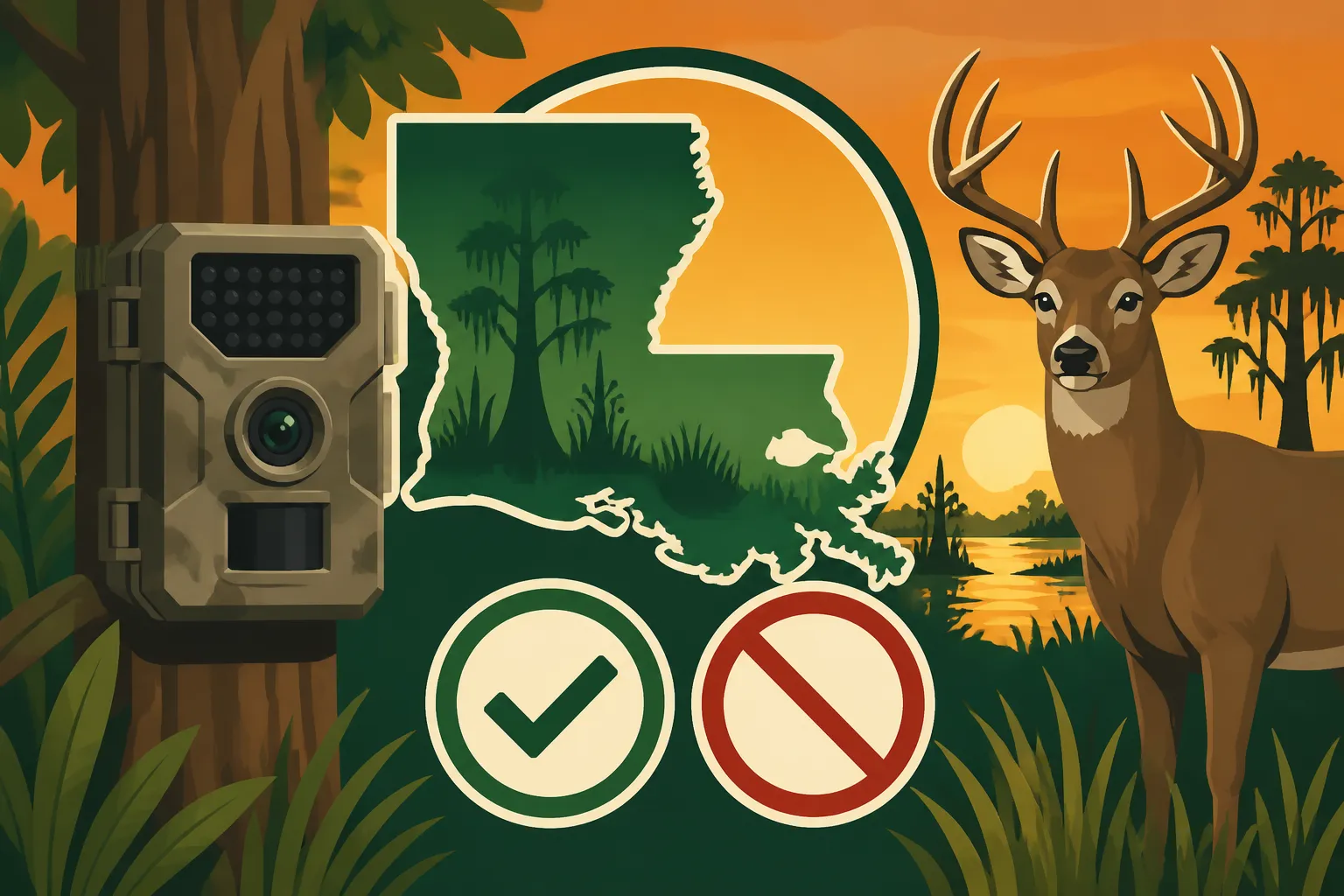
The desire to use trail cameras on Louisiana's public lands is completely understandable. We all want that extra edge, that intel on deer movement, or just the pure joy of seeing what's truly out there when we're not. But the frustration often sets in when you start looking into the rules – it feels like a tangled mess of regulations that vary not just from WMA to WMA, but also between National Forests and National Wildlife Refuges. It's enough to make you just want to leave the camera at home. This guide is here to untangle that knot, breaking down the specific rules you need to know to legally and ethically deploy your trail cameras across Louisiana's diverse public hunting grounds.
The General Landscape of Trail Cameras on Louisiana Public Land
Putting a trail camera out feels like a natural part of modern hunting, doesn't it? It's a way to scout, to learn patterns, to simply observe the wildlife without actually being there, tromping through the woods. But when you move from private land, where your rules are often your own, to public ground, that freedom tightens up considerably. It’s not just about what you can do, but what you should do, and what the various land management agencies allow.
Why the Rules Exist and Why They Vary
The core reason for rules on public land, across the board, comes down to a few key principles: conservation, fair chase, and ensuring equitable access for all users. When it comes to trail cameras, these principles can be interpreted differently by various agencies, leading to the confusing patchwork of regulations we often face.
For instance, the Louisiana Department of Wildlife and Fisheries (LDWF) manages the state's Wildlife Management Areas (WMAs). Their primary goal is to manage wildlife populations and provide public hunting and fishing opportunities, but they also have to protect the resource itself. This means they often have rules aimed at preventing habitat damage, reducing litter, and ensuring that no single hunter gains an unfair advantage or monopolizes a spot. Think about it: if everyone could nail a camera to a tree, leave it for months, and even bait a spot, the woods would quickly become less natural, more cluttered, and less enjoyable for everyone. The rules are there to maintain a semblance of wildness and fairness, even if it sometimes feels restrictive.
Similarly, the U.S. Forest Service (USFS), which oversees Kisatchie National Forest, operates under a multi-use mandate. They balance timber production, recreation, and wildlife habitat. Their rules tend to focus on "leave no trace" principles, preventing damage to natural resources, and maintaining the aesthetic value of the forest. The U.S. Fish and Wildlife Service (USFWS), managing National Wildlife Refuges (NWRs), has an even stronger conservation bent. NWRs are established primarily for the benefit of wildlife, with hunting and fishing often being secondary, carefully regulated activities. This means their camera rules are typically the most stringent, prioritizing minimal disturbance to animals and their habitat above all else. Understanding these underlying philosophies helps explain why the rules differ, rather than just what they are.
The Importance of Knowing Your Specific Public Land
This is perhaps the single most important takeaway: there is no single "Louisiana public land trail camera rule." The rules for Kisatchie National Forest are different from the rules for a state WMA, and both are vastly different from those on a National Wildlife Refuge. Just saying "I'm hunting public land" isn't enough; you absolutely need to know which agency manages that specific piece of ground.
Imagine you're hunting deer in the vast bottomlands of the Pearl River WMA, and then you decide to take a trip north to a section of Kisatchie National Forest. The tactics for hunting deer might change, but so do the rules for almost everything, including your trail cameras. What's perfectly fine on one might get you a hefty fine or your equipment confiscated on another. This is where apps like onX Hunt truly shine. They allow you to instantly see property boundaries, identifying whether you're on a WMA, National Forest, or NWR, so you can then consult the appropriate regulations. There's nothing worse than getting busted for a violation you didn't even know you were committing, all because you assumed the rules were universal.
This means before you head out with your shiny new trail camera, take the time to look up the specific regulations for the exact WMA, National Forest unit, or National Wildlife Refuge you plan to visit. Often, the LDWF website has a dedicated page for each WMA, listing specific regulations. The USFS and USFWS also have online resources, though sometimes they require a bit more digging. This isn't just about avoiding trouble; it's about being a responsible, informed hunter who respects the resource and the efforts made to manage it for everyone. You might even find it helpful to check the general rules before diving into the specifics of Louisiana Hunting Licenses and What They Cost.
Understanding Louisiana Wildlife Management Area (WMA) Trail Camera Rules
Louisiana's Wildlife Management Areas are often the most accessible and heavily hunted public lands. With that popularity comes a need for clear rules to prevent overcrowding, ensure safety, and protect the habitat. When it comes to trail cameras, the LDWF has a pretty consistent set of guidelines for most WMAs, though there are always a few exceptions to keep you on your toes.
The Core LDWF WMA Regulations for Cameras
For most Louisiana WMAs, the rules regarding trail cameras revolve around preventing damage to trees and requiring the removal of equipment when not actively in use or during specific seasonal closures. The overarching principle is "leave no trace" and ensure that public resources aren't being permanently altered or claimed.
Specifically, you are generally prohibited from using screws, nails, or any other method that would damage a tree to attach your camera. This means those screw-in camera mounts are a no-go. Instead, you'll need to rely on straps, bungee cords, or other non-damaging methods. This rule isn't just about saving trees; it's also about preventing hunters from leaving behind permanent fixtures that could guide others to a spot or be a hazard. Your camera is considered "unattended equipment" once you walk away, and WMAs have strict rules about how long unattended equipment can remain, or if it's allowed during certain times of the year at all. Many WMAs state that unattended equipment, including trail cameras, must be removed at the end of each day's hunt, or at least before certain seasonal closures like a WMA's gun season. You certainly can't leave a camera out there from archery season all the way through spring turkey.
Additionally, remember that any rules against baiting apply to trail cameras as well. You cannot use a camera in conjunction with bait on a WMA. Even if the camera itself isn't bait, if it's overlooking an illegal bait site, you're still in violation. It's vital to remember that a trail camera is a scouting tool, not a means to circumvent fair chase regulations. When planning your camera placement, consider Scouting Louisiana Public Land Before Season to maximize your chances of capturing useful images legally.
Specific WMA Variations and Seasonal Restrictions
While the general rules provide a good baseline, it's crucial to understand that individual WMAs can and do have specific regulations that might modify or add to these statewide guidelines. This is where hunters often get caught off guard. For example, some WMAs might have shorter periods during which cameras are allowed, or they might completely prohibit them during intensely managed quota hunts or specific seasonal closures.
For instance, a WMA that sees heavy waterfowl use might have stricter rules about unattended equipment during duck season, to prevent interference with other hunters or to maintain pristine habitat. Conversely, an archery-only WMA might have more relaxed rules about leaving cameras overnight during the dedicated archery season, but then impose strict removal rules once gun season begins. It's not uncommon for WMAs to close entirely for certain periods for habitat work, prescribed burns, or to allow wildlife a break from human disturbance. If your camera is out during one of these closures, it could be confiscated.
The best way to stay informed is to check the specific WMA regulations on the LDWF website before every trip. Don't rely on what you remember from last year, or what your buddy told you about a different WMA. Regulations can and do change. The LDWF's online map tool is excellent for this; you can pinpoint the WMA you're interested in and often find direct links to its specific rules. Familiarizing yourself with resources like Using the LDWF Map Tool can be a game-changer for staying compliant and informed. Always assume a WMA has specific rules that might override or enhance general ones, especially if it's a popular spot like Richard K. Yancey or Sherburne.
National Forest and National Wildlife Refuge Camera Policies
Beyond the state-managed WMAs, Louisiana also offers hunting opportunities on federal lands, primarily Kisatchie National Forest and several National Wildlife Refuges. The rules for trail cameras on these federal properties often differ significantly from WMA regulations, reflecting their distinct management goals.
Kisatchie National Forest Rules on Trail Cameras
Kisatchie National Forest, managed by the U.S. Forest Service (USFS), is a vast and varied landscape that offers some incredible hunting. Compared to many WMAs, the USFS generally has a more lenient stance on trail cameras, but with clear emphasis on preventing damage and adhering to "leave no trace" principles.
The key here is that you generally cannot damage natural resources. This means no nails, screws, or anything that pierces the bark of a tree. Straps, bungee cords, or cable locks are perfectly acceptable ways to attach your camera. While there isn't typically a strict "remove by sundown" rule like some WMAs, the expectation is that your camera is not a permanent fixture. You shouldn't leave a camera out there for months on end, especially if it's easily visible or becomes an eyesore. The USFS is keen on maintaining the natural aesthetic of the forest for all users, not just hunters.
Security is also a big concern in a place as vast as Kisatchie. While the rules don't mandate how you secure your camera, it's common sense to use a robust cable lock to prevent theft. If you're going deep into the forest, perhaps exploring areas for Hanging a Stand on a Kisatchie Ridge, a well-hidden camera can be a huge asset. Just make sure it's camouflaged and out of sight from casual passersby to minimize both theft risk and visual impact. Remember, the general "no baiting" rules apply here as well, just like on WMAs. No camera is worth a citation or losing your hunting privileges on such a magnificent public resource.
National Wildlife Refuge (NWR) Camera Regulations
If you thought WMA rules were strict, National Wildlife Refuges generally take it to another level. NWRs are managed by the U.S. Fish and Wildlife Service (USFWS), and their primary mission is wildlife conservation and habitat protection. Public recreation, including hunting, is allowed only when it is compatible with this primary mission. This often translates to very restrictive policies on unattended equipment, including trail cameras.
Many National Wildlife Refuges in Louisiana prohibit unattended equipment entirely. This means if you leave your camera and walk away, it's considered illegal. Some refuges might have specific, very short windows during which equipment can be placed and must be removed, but these are rare exceptions rather than the norm. The rationale is to minimize human disturbance to wildlife, prevent potential litter, and avoid any perception of commercial or exploitative activity. They want the refuge to remain as wild as possible.
Before you even think about taking a trail camera onto an NWR like Catahoula or Tensas River, you must check the specific refuge's regulations directly. Calling the refuge office is often the best approach, as their websites aren't always crystal clear on every single nuance, or they might have recent changes. Don't assume anything. If cameras are prohibited, and you put one out, you risk not only a fine but potentially losing your camera. It's a risk simply not worth taking when you could be exploring Louisiana National Wildlife Refuges with a clear conscience.
Here's a quick comparison of general trail camera rules for different public land types:
| Feature/Regulation | Louisiana WMAs (LDWF) | Kisatchie National Forest (USFS) | National Wildlife Refuges (USFWS) |
|---|---|---|---|
| Attachment Method | Straps, bungees (no damaging) | Straps, bungees (no damaging) | Varies, often prohibited entirely |
| Tree Damage | Prohibited (no nails, screws) | Prohibited (no nails, screws) | Prohibited |
| Unattended Equipment | Often time-limited (e.g., daily) | Generally allowed, but not permanent | Often prohibited entirely |
| Baiting in Conjunction | Prohibited | Prohibited | Prohibited |
| Seasonal Restrictions | Common, check WMA-specific rules | Less common, but closures can apply | Very common, check refuge-specific rules |
| Primary Goal of Land | Wildlife Mgmt. & Public Hunting | Multi-Use (Timber, Rec., Wildlife) | Wildlife Conservation & Habitat |
Practical Tips for Using Trail Cameras Legally and Ethically
Beyond just knowing the rules, there are practical steps you can take to make your trail camera use on public land more effective, more secure, and always above board. It’s about being a smart hunter and a respectful user of shared resources.
Essential Gear for Public Land Camera Setups
When you're setting up a camera on public land, especially where regulations about "unattended equipment" might be a bit murky or the risk of theft is higher, a few pieces of gear become indispensable.
First, security is paramount. Invest in a high-quality cable lock and a durable security box for your camera. Not only does this deter casual theft, but it also provides a robust, non-damaging way to secure your camera to a tree using a strap rather than a screw. Remember, public land sees a lot of foot traffic, and unfortunate as it is, some folks don't respect others' property.
Second, camouflage and discretion are your friends. A bright green camera housing stands out like a sore thumb against a brown tree trunk. Look for cameras with muted, natural camouflage patterns. Position your camera off the beaten path, pointing away from main trails, and use natural cover like thick brush or leaning logs to obscure it. The less visible your camera is, the less likely it is to be tampered with or stolen.
Third, long battery life and large SD cards are incredibly valuable. The fewer times you have to visit your camera, the less disturbance you cause in your hunting area. Solar-powered cameras or external battery packs can extend your camera's deployment significantly, allowing you to focus on Hunting the Rut in the Early-Start Areas rather than constantly checking batteries. Finally, consider discreetly marking your camera with your name and phone number. This can sometimes deter theft, and if it's found by a responsible individual, it allows for easy return.
Leveraging Digital Tools for Rule Compliance and Scouting
In today's hunting world, digital tools aren't just a luxury; they're essential for effective and compliant public land hunting. When it comes to trail cameras, apps like onX Hunt and resources like GoHunt can be invaluable.
onX Hunt is a game-changer for understanding land boundaries. Before you ever leave your truck, you can pull up the app and see exactly if you're standing on a WMA, a section of Kisatchie National Forest, or a National Wildlife Refuge. This immediate identification tells you which set of rules to consult. The app often provides contact information or links to regulations for specific public parcels, making it incredibly easy to ensure you're compliant. No more guessing, no more relying on old maps or vague memories. It's truly a must-have for anyone serious about Louisiana Deer Hunting Area by Area on public ground. You can use its various layers to see property lines clearly, helping you determine if you're on a piece of ground managed by the LDWF, USFS, or USFWS. This clarity is crucial, as the rules for something as simple as a trail camera can change drastically across these different land designations.
While GoHunt is primarily a Western states resource for draw odds and unit info, the concept of such scouting platforms can be applied to Louisiana using local resources like the LDWF's own mapping tools or even Google Earth combined with the state's hunting regulations. These tools can help you identify pinch points, funnels, and natural travel corridors that might be perfect for camera placement, reducing the amount of on-the-ground scouting you have to do and minimizing disturbance. Always combine these digital scouting efforts with current regulations, such as those found on the LDWF website or by calling the specific land management agency. Don't forget that many areas, especially WMAs, might require you to be signed in to hunt, even for scouting. For understanding how to navigate the digital tools, you might want to read Using LDWF Without Cell Service to prepare for those deep woods excursions.
The "Leave No Trace" Ethic and Avoiding Conflict
Beyond the written rules, there's an unwritten code of ethics when hunting public land, and it applies strongly to trail camera use. This "leave no trace" mindset isn't just about packing out your trash; it's about minimizing your impact on the environment and on the experiences of other outdoor enthusiasts.
Ethically, consider where you're placing your camera. Is it directly over a known rub line or scrape, effectively claiming that spot? Is it on a main hiking trail where non-hunters might feel uncomfortable being photographed? While legal, these actions can breed resentment and conflict among public land users. Try to be subtle. Position your camera so it's not overly obvious, and check it as infrequently as possible to reduce human scent and disturbance in the area.
Another aspect is respecting other hunters. If you come across another hunter's camera, leave it alone. Don't move it, don't steal the SD card, and certainly don't damage it. We're all out there trying to enjoy the same resource. Unfortunately, camera theft and vandalism do occur, which is another reason why robust security is so important. By adhering to both the letter and the spirit of the law, and by being mindful of your impact, you contribute to a more positive and sustainable hunting culture on Louisiana's public lands. It truly makes a difference in ensuring that public land remains a place for all to enjoy, whether for Waterfowl Hunting the Louisiana Coastal Marsh or chasing deer in the piney woods.
Disclaimer
This article is for general informational purposes only and does not constitute professional advice. Laws, prices and regulations vary by location and change over time. Consult a qualified professional for guidance on your specific situation.