Vehicle Rules on Louisiana Public Land
Navigating Louisiana's public hunting lands can feel like a maze sometimes, especially when you're trying to figure out where you can and can't drive your truck, ATV, or UTV. The rules aren't always crystal clear, and the last thing any of us wants is to accidentally break a regulation or disturb a prime hunting spot by going where we shouldn't. This guide is here to untangle those complex vehicle rules, ensuring you understand the ins and outs of motorized access on our state's diverse public hunting grounds.
Understanding the Basics: Why Vehicle Rules Exist
It's easy to get frustrated when you see a "No Motorized Vehicles Beyond This Point" sign, especially if you've got a long haul ahead of you to your hunting spot. But these rules aren't arbitrary; they're put in place for a host of really important reasons, all designed to preserve the wild spaces we cherish and ensure everyone has a fair, safe, and enjoyable experience. Louisiana boasts a significant amount of Public Hunting Land in Louisiana, and managing access is key to maintaining it.
Protecting Habitat and Infrastructure
Think about the sheer variety of terrain we have here in Louisiana – from fragile coastal marshes to dense bottomland hardwoods and rolling piney hills. Each of these ecosystems is incredibly sensitive. Unrestricted vehicle use, especially off-road, can cause severe erosion, damage delicate plant life, and even create deep ruts that become permanent scars on the landscape. This isn't just an aesthetic issue; it can destroy critical forage for deer, turkeys, and small game, and disrupt the natural flow of water, leading to further habitat degradation. Beyond the natural environment, vehicles can also damage vital infrastructure like levees, fire breaks, and access roads, costing considerable resources to repair. These rules help ensure that the land remains productive and accessible for generations of hunters to come.
Furthermore, consider the quiet beauty of a sunrise breaking over a mist-shrouded swamp. The rumbling of an unauthorized ATV can shatter that tranquility, sending game scattering and ruining the experience for other hunters who've hiked deep into the woods for peace and quiet. The regulations aren't just about preventing damage, they're about preserving the very essence of why many of us go hunting in the first place: to connect with nature on its own terms.
Ensuring Hunter Safety and Fair Chase
Vehicle rules also play a crucial role in hunter safety. On busy opening weekends, especially when many folks are out for Why Louisiana's Gun Opener Draws the Biggest Crowds, too many vehicles moving haphazardly through hunting areas can create dangerous situations. There's the obvious risk of collisions, but also the less apparent danger of creating distractions or confusing hunters who are trying to identify game. By limiting vehicles to designated routes, the risk of accidental encounters or shots fired in unsafe directions is greatly reduced.
Beyond safety, the concept of "fair chase" is deeply ingrained in hunting ethics. The use of motorized vehicles to pursue, locate, or harass game is widely considered unethical and is prohibited on public lands. This isn't just about giving the animal a sporting chance; it's about maintaining the challenge and integrity of the hunt. Imagine a hunter spending hours scouting and still-hunting, only to have a truck drive directly into the area, pushing deer out. These rules aim to level the playing field, ensuring that success comes from skill, patience, and woodsmanship, not from simply covering ground quickly in a vehicle. It's why you'll often find strict rules about when and where you can even park a vehicle in relation to prime hunting locations, encouraging foot traffic into sensitive areas.
Differentiating WMA, National Forest, and Refuge Rules
One of the biggest sources of confusion stems from the fact that vehicle rules aren't uniform across all public lands. What's allowed on a Wildlife Management Area (WMA) might be strictly prohibited on a National Wildlife Refuge (NWR) or even different within various sections of Kisatchie National Forest Hunting. Each managing agency—be it the Louisiana Department of Wildlife and Fisheries (LDWF), the U.S. Forest Service, or the U.S. Fish and Wildlife Service—has its own set of regulations tailored to the specific ecological needs and recreational goals of that particular tract of land.
For instance, Louisiana Wildlife Management Areas often have explicit schedules for when gates are open or closed to vehicular traffic, sometimes seasonally to protect breeding animals or to manage hunter access during specific seasons. National Forests might have more open access on main forest roads but close off interior trails to preserve quiet recreation areas. National Wildlife Refuges, being focused primarily on wildlife conservation, tend to have the most restrictive vehicle policies, often limiting access to only a few main roads or designated parking areas, requiring hunters to navigate the majority of the refuge on foot or by non-motorized means. It is absolutely crucial to check the specific regulations for the piece of public land you intend to hunt before you ever set tire on it.
Common Vehicle Restrictions and Exceptions
When you're planning your trip to one of Louisiana's many public hunting areas, a little bit of homework goes a long way. Don't assume that just because you can drive somewhere on one WMA, the same applies to another, or to a National Forest. Understanding the common types of restrictions will save you a headache, and potentially a hefty fine.
Designated Roads and Trails Only
This is probably the most widespread and fundamental rule across almost all public hunting lands: stick to designated roads and trails. This means no driving off-road, no cutting across fields, and no creating new paths through the woods. These designated routes are usually marked, either with signs, maps, or by being clearly maintained. If it looks like a deer trail or a faint game path, it's probably not a vehicle trail.
The reason for this rule is multi-faceted. As we discussed, it protects habitat from degradation. But it also helps concentrate human activity, creating predictable travel corridors that don't constantly disturb wildlife across a wide area. On many WMAs, you'll find a network of gravel roads or old logging trails that are open to vehicles. However, these often have seasonal closures, especially during wet periods when vehicular traffic would cause extensive damage. Always look for signage at the entrance to these roads, indicating whether they are currently open or closed. If you encounter a closed gate, that means you are closed to that area in your vehicle, no matter how much you wish it were otherwise.
ATV and UTV Usage: When and Where It's Allowed
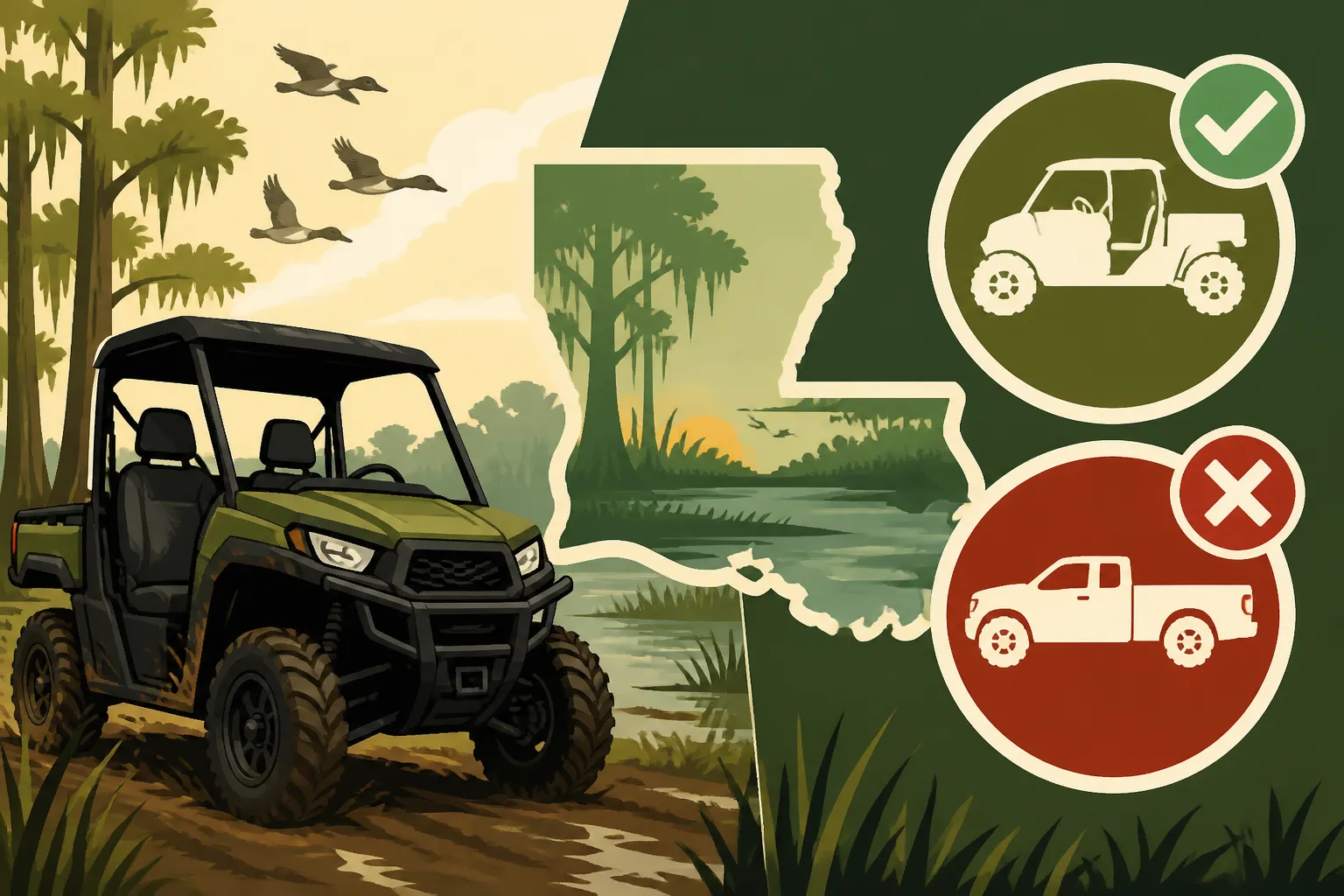
Ah, the beloved ATV and UTV – a hunter's best friend for hauling gear and game, and often a source of confusion regarding regulations. While many hunters rely on these vehicles, their use on public lands is highly regulated. Generally, ATVs and UTVs are treated much like other motorized vehicles: they are restricted to designated trails and roads. You can't just take your side-by-side ripping through the woods wherever you please.
Many WMAs and National Forests do allow ATVs and UTVs on specific trails, particularly for access to interior hunting areas or for game retrieval. However, these trails are almost always clearly marked, and there will be specific rules about their operation, such as speed limits, helmet requirements, and daylight-only operation. For example, some areas might permit ATV use only during gun seasons for deer, or only on certain days of the week. ATV Rules on Louisiana Forest Roads can be particularly strict, sometimes requiring vehicles to be street-legal to operate on certain forest roads, even if they are unpaved. Always consult the regulations for the specific area you plan to visit, paying close attention to maps that delineate ATV-allowed routes. Apps like onX Hunt can be incredibly helpful here, as they often layer public land boundaries and vehicle restrictions directly onto their maps, allowing you to quickly visualize where you can and cannot go.
Special Permits and Accessibility Considerations
In some cases, specific circumstances might allow for exceptions to general vehicle restrictions, though these almost always require special permits. For hunters with disabilities, most managing agencies offer some form of special permit that allows for motorized access to areas normally restricted to foot traffic. These permits are typically issued after an application process and verification of disability, and they come with their own set of rules, such as limitations on the type of vehicle used or the areas it can access.
Beyond accessibility, there might be very specific, temporary permits for certain activities, like retrieving a downed animal from a hard-to-reach area on a designated "game retrieval day." These are rare and usually communicated clearly by the managing agency. Never assume you can bend the rules because of a unique situation; always check with the local office or warden first. It's far better to ask and know than to assume and face penalties. You'll find that wildlife management area offices are generally quite helpful if you call them with specific questions about access and permits.
Practical Tips for Navigating Vehicle Regulations
Alright, so we've covered why the rules exist and what some of the common ones are. Now, let's talk practical application. Nobody wants to be that hunter who gets a ticket or, worse, ruins someone else's hunt. A bit of preparation can make all the difference, ensuring your time in the woods is productive and worry-free.
Essential Tools for Scouting and Planning
Before you even load your truck, good planning is paramount. The first step is to get the most up-to-date information on the specific area you intend to hunt. The LDWF website is your primary resource for Louisiana Wildlife Management Areas and their specific regulations. They typically provide detailed maps and rule pamphlets that are updated annually. I strongly recommend downloading these to your phone or printing them out, even if you think you know the area. Cell service can be spotty out there, so don't rely on live internet access.
Beyond the official documents, investing in a good mapping application like onX Hunt or GoHunt can be a game-changer. These apps overlay public land boundaries, roads, trails, and often even areas with specific vehicle restrictions onto satellite imagery. Being able to see these details on your phone or tablet while you're scouting or actively hunting can prevent accidental trespass or venturing into no-go zones. onX Layers for Louisiana Land Status can show you exactly where the public land ends and private property begins, helping you avoid mistakes. Combine this with the Scouting With the LDWF App, and you'll be well-prepared to navigate the landscape legally and effectively.
| Public Land Type | Common Vehicle Rules | ATV/UTV Access | Permit Needs |
|---|---|---|---|
| Wildlife Management Areas (WMAs) | Designated roads/trails only; seasonal closures common due to weather or hunting seasons. | Generally allowed on specific, marked trails; often restricted by season or time of day. | Special permits for disabled access, specific game retrieval, or limited entry hunts. |
| Kisatchie National Forest | Open forest roads (may be unpaved); some interior roads/trails closed seasonally or permanently. | Allowed on designated trails; may require street-legal registration for some forest roads. | Disabled hunter access permits; some areas have specific usage permits. |
| National Wildlife Refuges (NWRs) | Often very limited to main entrance roads and parking areas; emphasis on foot/non-motorized travel. | Highly restricted, often prohibited entirely or limited to very specific, short access points. | More common for disabled hunter access, but generally very few exceptions. |
Respecting Signs, Gates, and Fellow Hunters
This might seem obvious, but it's worth reiterating: respect the signs and gates. If a gate is closed, it's closed for a reason. Don't try to open it, drive around it, or assume you know better. Those gates and signs are there to protect the land and its resources, and to manage hunter access responsibly. Disregarding them not only puts you at risk of a citation but also sets a bad precedent for everyone else. Remember, you're a guest on these lands.
Part of showing respect means also being mindful of other hunters. If you're driving an ATV or UTV on an allowed trail, do so quietly and at a reasonable speed. Nothing grates more than someone flying down a trail, kicking up dust and making a racket, especially when others are trying to still-hunt or call game. Understand that your vehicle, even when legally operated, can affect the experience of others. Always be polite, yield to foot traffic, and choose your routes wisely, especially during peak hunting times. Think about Hunting Pressure on Louisiana Public Land and how your actions might contribute to it.
Consequences of Violating Vehicle Rules
Ignoring vehicle rules on public land isn't just a minor infraction; it can lead to serious consequences. At a minimum, you're likely looking at a hefty fine. Louisiana wildlife and forest rangers are diligent, and they patrol these areas specifically looking for violations that damage the land or disrupt lawful hunting. These fines can quickly add up, especially if you're found to be operating a vehicle in a prohibited area, causing environmental damage, or disturbing wildlife.
Beyond financial penalties, violations can also result in the loss of your hunting privileges, potentially for multiple years. This means no more deer season, no more turkey hunting, and no more waterfowl trips. For serious or repeated offenses, your vehicle could even be impounded. The managing agencies take these rules very seriously because the long-term health of our public hunting lands depends on adherence to these guidelines. Knowing Louisiana Wildlife Violation Penalties can be a stark reminder of the importance of compliance. Always remember that the rules are there to protect the resource and the experience for everyone, so take the time to learn them and follow them.
Disclaimer
This article is for general informational purposes only and does not constitute professional advice. Laws, prices and regulations vary by location and change over time. Consult a qualified professional for guidance on your specific situation.