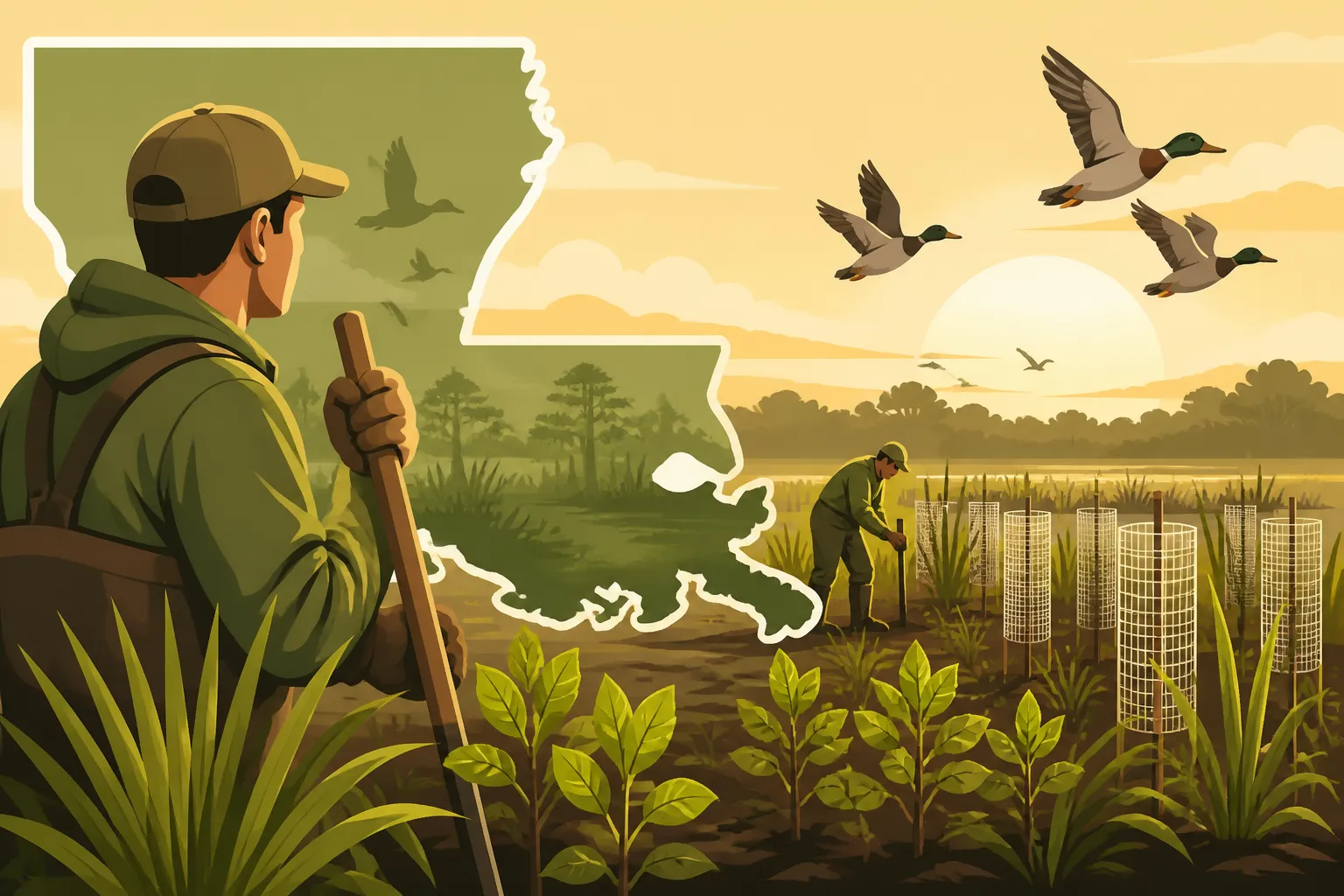
Habitat Work on Louisiana WMAs
It can be incredibly frustrating to scout a promising hunting spot on a Wildlife Management Area (WMA) only to return weeks later and find it completely transformed by a prescribed burn, a timber harvest, or unexpected water level changes. These shifts can throw your entire hunting plan out the window and leave you scratching your head. This guide will help you understand the essential habitat work that goes into managing Louisiana WMAs, why these changes happen, and how you can adapt your hunting strategies to find success even when the landscape shifts.
Why Habitat Work is Essential on Louisiana WMAs
The Louisiana Department of Wildlife and Fisheries (LDWF) manages a vast network of Wildlife Management Areas across our state, and these aren't just static tracts of land. They're living, breathing ecosystems that require active management to thrive. When you see changes on a WMA, it's rarely arbitrary. It's usually part of a carefully considered plan to improve the overall health of the land and, by extension, the wildlife that calls it home. This proactive approach ensures that our public lands remain productive for hunters and a haven for diverse species for generations to come.
Maintaining Ecosystem Health and Biodiversity
Think about the incredible diversity of Louisiana's natural landscapes – from sprawling coastal marshes to dense bottomland hardwoods and rolling piney hills. Each of these unique environments supports a different array of plants and animals, and maintaining that balance is a huge undertaking. Habitat work on WMAs isn't just about growing bigger deer or more turkeys; it's about sustaining entire ecosystems. For example, a prescribed burn in a longleaf pine forest not only clears out undergrowth for deer browse but also helps certain native plant species germinate and provides critical habitat for ground-nesting birds and smaller mammals.
Without active intervention, many of these habitats would naturally degrade over time, often becoming overgrown with invasive species or simply losing the dynamic conditions necessary for a wide variety of wildlife. By employing various habitat management techniques, LDWF biologists are working to mimic natural processes, like wildfires or floods, to keep the ecosystem healthy and resilient. This holistic approach ensures that WMAs are not just hunting grounds but vibrant ecological communities.
Enhancing Game Species Populations
While overall ecosystem health is paramount, a significant goal of habitat work on WMAs is, of course, to enhance populations of game species. Hunters directly benefit from these efforts, even if the immediate changes seem disruptive. For instance, creating food plots, managing timber, and controlling water levels are all targeted actions designed to provide better food sources, more secure cover, and improved breeding conditions for deer, turkeys, waterfowl, and small game.
Consider the impact on deer. A selective timber cut might open up the canopy, allowing sunlight to reach the forest floor and stimulate the growth of nutritious forbs and browse plants. This provides essential food that wasn't available in a dense, shaded forest. Similarly, managing water levels in marsh impoundments directly affects the availability of aquatic vegetation and invertebrates for migrating waterfowl, creating crucial resting and feeding grounds during their long journey. These efforts are often driven by detailed research and population data, aiming to provide optimal conditions for our beloved game.
Common Habitat Management Practices You'll See
If you spend enough time hunting Louisiana WMAs, you're bound to encounter various habitat management practices. Understanding what they are and why they're implemented can help you predict where game might be in response to these changes and even open up new hunting opportunities you might otherwise overlook. It's all about recognizing the rhythm of the land and how human hands are working with, or sometimes against, natural cycles.
Prescribed Burns and Their Impact
Prescribed burns are probably one of the most visible and, at first glance, alarming habitat management tools. You might roll up to your favorite WMA and see vast tracts of blackened earth, looking like a wasteland. It's easy to feel disheartened, but trust me, this is a vital part of healthy forest and grassland management in Louisiana. These controlled fires are set under specific weather conditions to achieve several critical goals: reducing hazardous fuel loads, stimulating new plant growth, and controlling undesirable or invasive vegetation.
Within weeks, sometimes even days, of a prescribed burn, you'll start to see a flush of tender, nutritious green shoots emerging from the blackened soil. This fresh forage is incredibly attractive to deer and other herbivores, offering a nutrient boost they crave. The fire also opens up the understory, making it easier for turkeys to find insects and for hunters to spot game. Areas that have recently burned, or those with varied burn histories, can be fantastic places to focus your scouting and hunting efforts. It's often where the deer will be hitting the fresh growth like a buffet. Prescribed Burns and Louisiana Hunting Closures often accompany these efforts, so always check before heading out.
Timber Management and Selective Cutting
Another common sight on WMAs is timber management, which can range from selective thinning to more significant clear-cuts. These operations, while sometimes noisy and appearing destructive in the short term, are fundamental to creating diverse wildlife habitats. Different game species thrive in different stages of forest succession. A dense, mature forest might provide mast crops like acorns, but it often lacks the sunlight penetration needed for understory browse. Conversely, a recently clear-cut area, though initially barren, quickly regenerates with thick, young growth that offers incredible cover and abundant forage for deer.
Selective cutting might involve removing certain trees to allow others to flourish, or to create small openings that encourage new growth. Over time, these managed timber stands develop a mosaic of habitat types – dense bedding areas, open travel corridors, and productive feeding zones. Understanding the cycle of timber management can give you a significant advantage. For instance, hunting the edges of a several-year-old clear-cut, where the regrowth is chest-high, can be incredibly productive for catching deer moving between dense cover and more open feeding areas. Tools like onX Hunt can be invaluable for identifying these varying timber stages and planning your approach.
Water Level Management in Wetlands
For those who chase ducks, geese, and even alligators in Louisiana's expansive wetlands, water level management is a crucial piece of the habitat puzzle. Many WMAs, especially those in the coastal marsh or floodplains like the Atchafalaya Basin, utilize sophisticated levee systems, pumps, and water control structures to manipulate water levels. This isn't just about having enough water for your pirogue; it's about cultivating food and creating ideal conditions for waterfowl.
Biologists often implement drawdowns in the late spring or summer, exposing moist soil flats to sunlight. This encourages the growth of emergent vegetation, like smartweed, millet, and other seed-producing plants that are vital food sources for ducks. Then, as hunting season approaches or migrations begin, these areas are reflooded, creating ideal foraging grounds. This precise control over water levels also influences aquatic insect populations and fish, which are important food sources for other wetland species. Observing these water cycles and understanding where ducks will find food and cover is key to success in these areas. You can often find great insights into these specific practices in posts about Waterfowl Hunting the Louisiana Coastal Marsh.
Understanding and Adapting to WMA Closures and Changes
The dynamic nature of WMA management means that the landscape can, and often will, change from season to season, or even within a single season. This requires hunters to be adaptable, proactive, and always informed. Nothing is more frustrating than driving hours to your chosen hunting spot only to find it closed, or the habitat unrecognizable. But with a little preparation, these changes don't have to derail your hunt; they can even lead to new opportunities.
Checking for Closures Before You Go
This is perhaps the single most important piece of advice for hunting any WMA: always check for closures or special regulations before you leave the house. Habitat work, like large-scale prescribed burns, timber harvesting, or even road maintenance, often necessitates temporary closures for hunter safety or to allow the habitat to recover undisturbed. These closures can be for entire WMAs, specific compartments, or even certain access roads.
The LDWF website is your primary resource, often updated with real-time closure information. Many hunters also rely heavily on the official LDWF app, which can provide maps, regulations, and notifications about changes in the field. While third-party mapping applications like onX Hunt are fantastic for identifying property boundaries, topo features, and even recent satellite imagery, they don't always reflect immediate, temporary closures. Always cross-reference with the official state sources to avoid a wasted trip. Taking the extra five minutes to confirm can save you hours of driving and immense disappointment.
Hunting Strategies in Managed Areas
Once you understand why habitat work is happening and you've confirmed your chosen WMA is open, the next step is to adapt your hunting strategy. A recently burned area, while initially bare, quickly becomes a magnet for deer and turkey due to the succulent new growth. Instead of avoiding it, consider setting up on the edges, where animals might feel more secure entering the open area to feed. Similarly, a fresh clear-cut might look like a mess, but the thick regenerating brush that emerges within a year or two provides incredible bedding cover. Bucks will often hold tight in these dense areas, especially during periods of heavy Hunting Pressure on Louisiana Public Land.
Using mapping tools from GoHunt or other platforms to analyze different habitat types and identify potential funnels or pinch points created by these changes can be highly effective. Look for the transition zones – the edges where a clear-cut meets mature timber, or where a recently burned section borders an unburned thicket. Animals will often use these transition areas for travel and security. Effective Scouting Louisiana Public Land Before Season becomes even more critical when habitat work is underway, allowing you to observe how animals are reacting to the altered landscape. Don't be afraid to adjust your approach; flexibility is a hunter's best friend on WMAs.
| Habitat Management Practice | Primary Benefit to Game Species | Common Timeframe | What Hunters Might See |
|---|---|---|---|
| Prescribed Burns | Stimulates new browse, improves visibility, reduces undesirable vegetation, creates open understory | Winter/Spring Dry Spells | Blackened ground, new green growth shortly after, reduced thickets |
| Timber Thinning | Increases sunlight to forest floor, promotes browse, improves mast production in remaining trees | Variable, often Fall/Winter | Widened tree spacing, logging roads, brush piles, increased ground cover |
| Clear-cutting | Creates dense early-successional cover, abundant browse, new bedding areas | Variable | Large open areas, heavy young regrowth in 1-5 years, increased deer activity on edges |
| Water Level Management | Cultivates waterfowl food plants, provides feeding/resting areas, manages aquatic habitat | Drawdowns in Summer, Reflooding in Fall/Winter | Exposed mudflats, new vegetation growth, impoundments with controlled water levels |
| Food Plot Plantings | Provides concentrated, high-quality forage for deer and other herbivores | Spring/Summer/Fall | Planted fields, often fenced to protect young growth, increased game presence |
| Invasive Species Control | Restores native habitat, improves forage quality and access | Year-round | Dead/dying invasive plants, native species returning |
Disclaimer
This article is for general informational purposes only and does not constitute professional advice. Laws, prices and regulations vary by location and change over time. Consult a qualified professional for guidance on your specific situation.